
如何确定风车的合理初始订单数量?
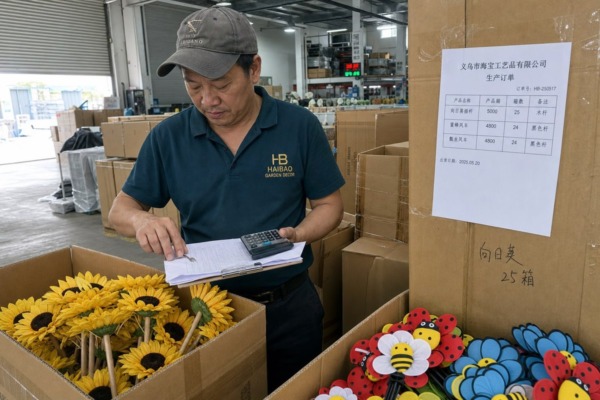
为风车选择初始订单数量让许多首次买家犯难 最低起订量 1。在我们浙江的生产线上,我几乎每个季节都能看到新经销商要么订多了,要么订少了。
风车的合理初始订单数量应覆盖一到三个月的预测销量,满足供应商的最低起订量(MOQ)——通常只需一箱——并且在计入运费、关税和仓储成本后仍留有健康的利润空间。
订太多,现金就压在仓库里。订太少,运费会吃掉你的利润,货架还会空着 色牢度 2。解决办法是一个简单的决策框架。让我用我们出口经验中的真实数字,一步一步带你了解。
在首次下单购买风车之前,我应该考虑哪些因素?
一位来自德克萨斯州的买家曾问我"别人都订多少"。我如实告诉她:没有放之四海而皆准的数字,只有影响你数字的因素。
在首次下单风车之前,请评估五个因素:您的市场需求预测、供应商的MOQ和箱装规格、季节性时机、每单位到岸成本,以及您的存储和持有成本。这些因素共同决定了一个既安全又有利可图的订购数量。

每一笔首单都是对你尚未验证的需求的一次押注。所以目标是缩小这个赌注,同时又不让它失去意义。以下是我在为新经销商提供建议时如何拆解这些因素的方法。
需求优先,而非数量
从市场需求预测开始,而不是凭直觉拍一个数字。估算你每月能卖出多少风车。利用可比产品、你的渠道流量和品类信号。风车是事件驱动型产品。在美国市场,需求在春季园艺窗口和7月4日前后会大幅飙升。如果你在二月份启动,你的首单应该能支撑你进入那个高峰,而不是越过它。
供应商MOQ vs. 你的业务MOQ
我们工厂按箱发货——一箱是最低起订量。但不同产品的每箱数量不同。向日葵花园插杆的包装方式与带蜜蜂或瓢虫角色的布艺花朵风车不同,因为花瓣形状和杆长会改变箱体尺寸。你的业务MOQ则不同。它是你自己的经济模型所能支撑的最小数量。永远不要假设工厂的最低起订量自动适合你的现金流。
关键因素一览
| 因素 | 要问的问题 | 为什么对风车很重要 |
|---|---|---|
| 需求预测 | 每月卖出多少件? | 季节性、事件驱动型产品 |
| 供应商MOQ | 这个SKU的一箱是多少? | 每箱数量因设计而异 |
| 交货时间 | 从下单到交货需要多长时间? | 海运可能需要30–45天 |
| 到岸成本 3 | 真正的单件成本是多少? | 运费可能远超低廉的单件价格 |
| 仓储成本 | 每100件占多少空间? | 风车体积大,不可堆叠 |
交期管理比大多数买家预想的更重要。如果海运补货需要六周,你的首单必须能弥合这个缺口。如果做不到,你就会在需求高峰时恰好断货。
如何在不造成库存积压的情况下计算正确的最小起订量?
在我们的仓库里,我目睹过一箱箱剩余季节性库存带来的昂贵教训。风车很快占用空间,而空间从来不是免费的。
使用此公式计算您的正确数量:预计月销售额 × 一到三个月的测试周期 + 安全库存,然后向上取整到最接近的整箱数量以满足供应商 MOQ。如果仓储成本或需求不确定性较高,则减少该数量。
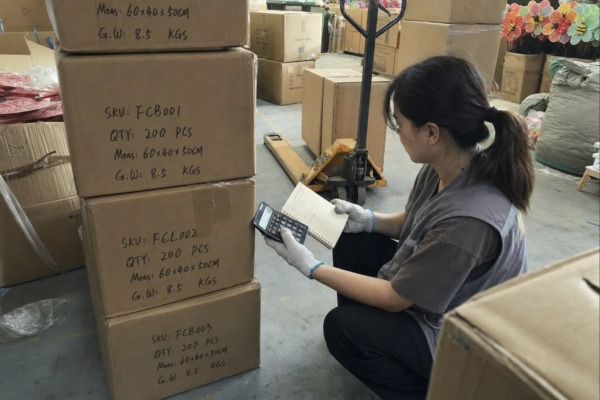
数学很简单。买家跳过的是纪律。让我展示我推荐给从我们这里采购的采购经理的完整流程。
五步计算法
- 估算每月销量。根据你的渠道规模,假设每月80个风车。
- 选择一个测试周期。两个月是常见的折中方案,即160件。
- 加上 安全库存 4 计算。为交期内的需求波动增加15–25%。这样你就达到大约190件。
- 按箱取整。如果我们该SKU的每箱装200件,你的订单就变成200件。
- 合理性检查持有成本。问问多出的10件是否会造成实际的仓储困扰。通常不会。
为什么过度备货对风车的伤害更大
风车的仓储价值比很差。它们价格低但体积大。分层花瓣设计——比如我们木杆上的彩虹五件套——不能挤压或重新堆叠而不造成损坏。这意味着每美元库存的仓储和持有成本高于紧凑型商品。一个缓慢的 库存周转率 5 对于体积大、季节性的产品来说,会同时占用现金和立方米空间。
Worked Example
| 情景 | Order Quantity | Landed Cost/Unit | Risk Profile |
|---|---|---|---|
| Under-order | 100 units | Highest (freight spread thin) | Stockout during peak |
| 平衡 | 200 units (1 carton) | 中等 | Covers 2 months + safety stock |
| Over-order | 500 units | Lowest per unit | Aging stock after July |
Economic Order Quantity 6 (EOQ) models can refine this later, once you have real sales data. For a first order, EOQ is a baseline, not the answer. Real-world constraints — carton sizes, seasonality, and lead time — should override the textbook number.
在承诺批量订单之前,我应该采取哪些样品测试步骤?
When we develop a new design — like our fabric flower pinwheels with caterpillar and ladybug centers — we always push buyers to sample before scaling. Skipping this step is the costliest shortcut.
批量订购前,请索取每个设计的实物样品,在户外测试旋转性能和色牢度,针对颜色和图案进行小规模市场测试,并确认包装在运输过程中完好无损。然后根据实际畅销的SKU锁定数量。
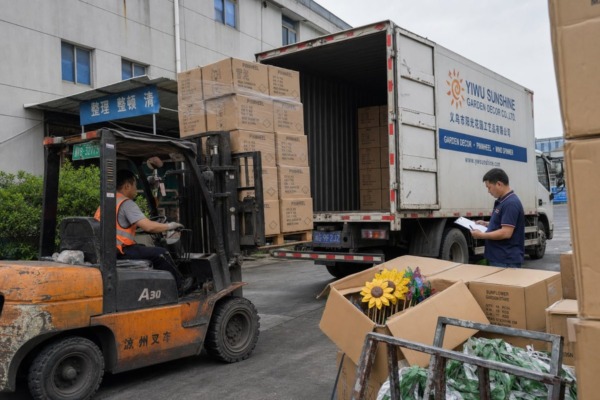
Sampling is not just quality checking. It is your cheapest form of sales velocity analysis. Here is the sequence I recommend, refined over years of OEM projects with US and European wholesalers.
Step 1: Physical Quality Testing
Get samples of every variant you are considering. Leave them outdoors for two weeks. Check whether the glossy coated petals fade in sunlight. Spin them in real wind, not just by hand. Check that the wooden bead hub does not loosen and that sticks insert cleanly into soil. Our QC team does this on every new print run, but you should verify against your own market's conditions too.
Step 2: Packaging and Transit Testing
Damaged packaging is one of the top complaints I hear from distributors. Ask your supplier to ship samples in the actual export carton. Inspect for bent petals, scratched print, and crushed corners. If the sample survives international courier handling, a palletized sea shipment will usually fare better.
Step 3: Small Market Test
List two to four designs in small quantities. Sunflower stakes, character pinwheels, and rainbow layered sets appeal to different buyers. Track which colors and patterns move fastest over 30–60 days. Watch micro-trends too — the cottagecore and DIY garden aesthetic has shifted color preferences noticeably in recent seasons. Your bulk order should weight quantities toward the proven winners, not split evenly across all designs.
Step 4: Convert Data Into Quantities
If pink fabric pinwheels sell three times faster than green in your test, mirror that ratio in your bulk order. This one adjustment does more for your inventory turnover rate than any formula.
在选择初始订单规模时,我如何平衡成本效率与风险?
The hardest trade-off I discuss with buyers is this: bigger orders lower unit cost but raise inventory risk. There is a rational middle, and it is findable with numbers.
在到岸成本后仍能满足目标利润率的前提下,选择最小的批量定价层级,以平衡成本与风险。只有在需求得到验证、交货周期较长,或价格折扣能实质性改善单位经济效益时,才增加数量。否则,保持小批量。
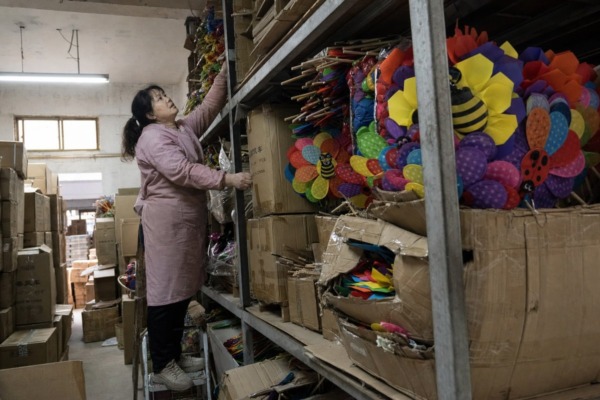
Every supplier, including us, offers bulk pricing tiers. The temptation is to chase the deepest discount. But a discount you cannot sell through is not a discount. It is a storage bill.
Run the Break-Even Math First
Unit cost optimization starts with landed cost, not FOB price. Add sea or air freight, customs duties, inbound handling, and marketing spend. Then run a 盈亏平衡分析 7: fixed costs divided by contribution margin per unit tells you the minimum units you must sell. If your test order cannot realistically reach break-even within your season, the order is too big — no matter how good the tier price looks.
When Bigger Is Actually Rational
Larger first orders make sense in three cases. First, when lead times are long and stockouts would kill your peak season. Second, when demand is already proven through a sample test or an existing channel. Third, when a price break shifts your margin meaningfully. Customized OEM designs also justify larger runs, because setup costs amortize across more units.
Scenario Comparison
| Decision Path | Cost Efficiency | Inventory Risk | 最适合 |
|---|---|---|---|
| One carton minimum | Lower efficiency | Lowest risk | Unproven SKUs, new markets |
| Two to three cartons | 平衡 | 中等 | Tested designs, seasonal ramp-up |
| Next bulk pricing tier | Highest efficiency | Highest risk | Proven demand, long lead times |
One more practical lever: attach pinwheels to anchor products. If you sell planters or patio sets, order pinwheels at a fixed ratio to those higher-margin items. This anchors your quantity to demand you already understand, which lowers forecasting risk substantially.
结论
Guessing your first order wastes cash or loses sales. The answer: forecast demand, size for one to three months, respect the carton MOQ, and scale only with proven data.
脚注
1. Authoritative e-commerce guide explaining MOQ for inventory management. ↩︎
2. Comprehensive Wikipedia entry defining colorfastness and its industrial standards. ↩︎
3. U.S. government trade resource explaining landed cost components like duties and freight. ↩︎
4. Background concept for the buffer inventory calculation described in the formula. ↩︎
5. Explains the financial metric used to evaluate how fast stock sells through. ↩︎
6. Explains the classic inventory model referenced as a baseline for order sizing. ↩︎
7. Authoritative business finance source explaining the break-even calculation method cited. ↩︎
更多文章
你可能也会觉得这些有帮助。

如何远程验证锻铁插入式组件工厂的生产能力?
Learn how to set a reasonable initial order quantity for pinwheels using MOQ, demand forecasts, and landed costs…
阅读更多 →
采购锻铁嵌件时如何评估工厂的生产能力?
Learn how to set a reasonable initial order quantity for pinwheels using MOQ, demand forecasts, and landed costs…
阅读更多 →
应该向锻铁嵌件供应商提出哪些问题以尽早识别不可靠的供应商?
Learn how to set a reasonable initial order quantity for pinwheels using MOQ, demand forecasts, and landed costs…
阅读更多 → English
 Spanish
 German
 Arabic
 Chinese