如何确认风车供应商了解美国零售检验标准?
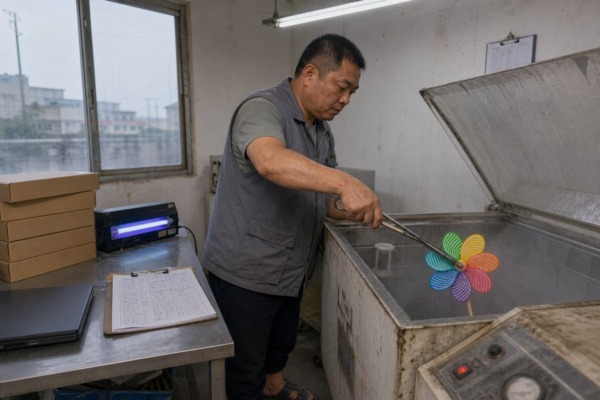
去年,一位美国买家拒收了整柜货物,因为她的风车供应商遗漏了标签规定。在我们浙江的风车生产线上,每个出口季我们都能看到这种风险。
要确认风车供应商了解美国零售检验标准,请索取合规文件(如一般符合性证书),审查其基于AQL的出货前检验流程,提出有针对性的工厂审核问题,并在批量订购前对样品进行盐雾、紫外线、跌落和化学标准测试。
这一句话涵盖了很多内容。不过,细节很重要。供应商在视频通话中可能看起来很专业,但仍然无法通过你零售商的检验。根据我的经验,唯一可靠的证明是书面文件、可见的流程和经过测试的样品。美国零售商实际检查的四个验收领域是包装、标签、外观和安全。本文逐一介绍每个验证步骤,让你能够有信心地批准供应商,而不是靠希望。
我应该要求我的风车供应商提供哪些认证来证明美国合规性?
德克萨斯州的一位采购经理曾给我发来一句话:先把你们的GCC发过来。她之前的供应商没有任何文书,她的零售商拒绝了货物。
要求提供非儿童风动旋转玩具的通用符合性证书、加州65号提案化学品的第三方实验室检测报告、若产品面向儿童则需ASTM F963认证、盐雾和紫外线测试证书,以及供应商正在为2026年CPSC电子申报做准备的证明。

有些买家在这一点上提出异议。他们说一个小型花园装饰品不需要严格的合规审查。我理解这种直觉,但它是错误的。CPSC工作人员有权在正常营业时间进入零售商店并查阅账簿和记录。如果你的供应商无法提供文件,这种风险落在你身上,而不是工厂身上。简单物品上薄弱的文书仍然会造成扣款、退货和合规纠纷。
核心文件:GCC与CPC
大多数风车是非儿童消费品。这意味着基线是CPSC合规和一般符合性证书。但你的供应商必须知道产品线何时发生转变。我们带有小垫圈和销钉组件的小风车套件可以作为儿童工艺品销售。一旦产品面向十二岁及以下儿童, ASTM F963安全标准 即适用,并且 儿童产品证书 1 取代GCC。无法解释这一区别的供应商是在猜测。
化学品和涂层文书
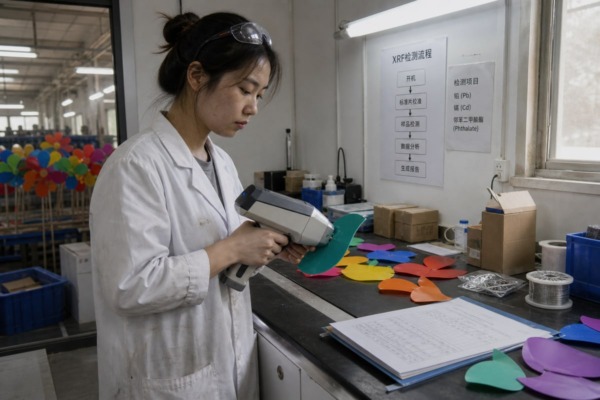
化学品文件是第二层。加州65号提案涵盖 铅、镉和邻苯二甲酸盐 2,有经验的供应商会主动检测,而不是等待要求函。来自认可实验室的铅和邻苯二甲酸盐含量报告比工厂自己的声明有分量得多。
| 文件 | 适用于 | 其证明的内容 |
|---|---|---|
| 一般符合性证书 | 非儿童风车 | 符合适用的美国消费品安全规则 |
| 儿童产品证书 | 面向儿童的风车套件 | ASTM F963和CPSC儿童要求 |
| 65号提案测试报告 | 所有销往加利福尼亚州的物品 | 铅、镉和邻苯二甲酸盐低于限值 |
| PFAS筛查报告 | 涂层或防水处理 | 符合2025–2026年亚马逊和沃尔玛的要求 |
| 盐雾和紫外线证书 | 金属和涂层部件 | 户外耐久性声明真实可靠 |
下一个合同周期有两个趋势很重要。第一, 无PFAS涂层验证 3 正成为美国主要零售商2025–2026年新要求下的一项规定。第二, CPSC的强制性电子申报 4 美国海关入境合规证书的要求将于2026年开始实施。当我们准备自己的数字证书库时,几位美国买家告诉我们,仅这一点就使我们与竞争报价区分开来。询问你的供应商证书是否可在专用网页上获取,因为数字访问现在是期望,而不是纸质文件。
我如何验证供应商的质量控制流程符合美国零售安全标准?
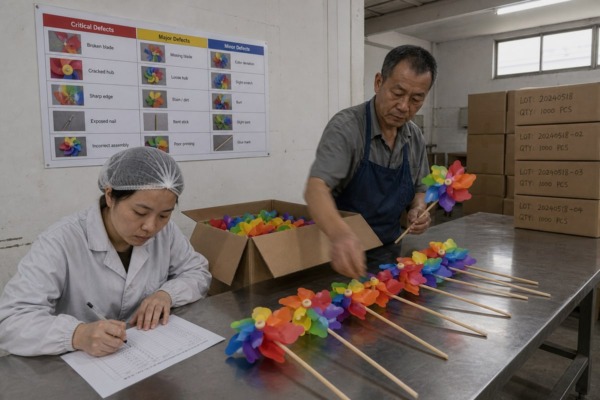
我们在浙江的最终检验室保存着一个缺陷库,里面有我们自开始向美国出口风车以来记录的所有失效模式的照片。
通过要求提供书面检验SOP、近期使用ISO 2859-1下AQL抽样的出货前检验报告、区分致命、主要和次要缺陷的缺陷分类记录、批次可追溯性文件,以及展示不合格品如何被隔离的纠正措施报告,来验证QC流程。
这里有一个我向每位新买家解释的区别。合规测试、工厂质量控制和出货前检验是三件不同的事情。合规测试证明产品在法律上可以销售。工厂质量控制在生产过程中发现缺陷。出货前检验确认成品批次在出厂前符合你的规格。供应商可能在一方面很强而在另一方面很弱。你需要所有三方面的证据,因为这才是美国零售检验标准实际要求的。
有些供应商会告诉你,检验意味着包装前的目视检查。这种说法本身就是一个危险信号。零售就绪需要明确的准则、统计抽样、文件和可追溯性。看一眼产品无法满足其中任何一项。
AQL抽样水平如何适用于风车
可信的抽样遵循ISO 2859-1。检验员根据批次大小和选定的 AQL抽样水平 5. 从每个批次中抽取规定数量的单位。然后发现的每个缺陷都会被分类。以下是我们如何对我们自己的风车和风车生产线上的缺陷进行分类:
| 缺陷等级 | 风车示例 | 典型处理方式 |
|---|---|---|
| 致命 | 尖锐外露的针尖、涂层剥落成松散碎片、禁用化学物质含量 | 零容忍;立即扣留批次 |
| 主要 | Blades that fail to spin, cracked petals, wrong labeling, off-color gradients | Lot rejected above the acceptance limit |
| 次要 | Small print smudges, slight dowel color variation, minor packaging scuffs | Accepted within a defined limit |
Ask what happens when defects exceed the acceptance number. The right answer involves isolating the lot, a documented corrective action report, rework, and re-inspection. Ask which records are retained and for how long. In our factory, incoming material inspection records, lot traceability files, and inspection reports stay linked to each production lot. If a supplier cannot show these records, the honest conclusion is that the inspection system does not exist.
在工厂审核期间,我应该问哪些问题来确认检验知识?
Years ago, an auditor stumped our team with a single question about sampling plans. That awkward moment taught us what real inspection knowledge sounds like.
在工厂审核期间,询问哪些美国标准适用于风动旋转器,什么抽样计划批准出货,缺陷如何分类和处理,谁签署最终放行,是否使用第三方实验室测试,并要求提供最近的检验报告和纠正措施记录。
An audit is not about catching people. It is about listening for fluency. A supplier who truly knows US retail inspection standards answers in specifics. A supplier who is improvising answers in generalities. Here are the ten questions I would ask, in the order I would ask them:
- What US standards or retailer requirements apply to this specific wind spinner?
- Can you provide the certificate of conformity or equivalent compliance paperwork right now?
- What inspection stages do you run: incoming, in-process, final, and pre-shipment?
- What are your critical checkpoints for balance, finish, welds, moving parts, and packaging?
- What sampling plan do you use for shipment approval?
- How do you classify major, minor, and critical defects?
- What happens when defects exceed the acceptance limit?
- Can you share a recent inspection report and a corrective action record?
- Who signs off on final release, and what training does that person have?
- Do you use a third-party lab, or in-house inspection only?
Some buyers argue that price and lead time should decide the order. I compete on budget-friendly pricing myself, so I understand the pull. But cheap sourcing with weak inspection competence usually costs more later through chargebacks, product returns, and damaged-goods claims. The audit is where you find that out before the deposit, not after.
Red Flags That Reveal an Improvising Supplier
| 危险信号 | What It Usually Means |
|---|---|
| No written inspection SOP | Quality depends on individual workers, not a system |
| Cannot name a sampling standard | Pre-shipment inspection is informal or skipped |
| No defect library or photos | Defect criteria change from lot to lot |
| Refuses to share a factory audit report | Something in the process will not survive scrutiny |
| No calibration or training records | Measurements and judgments are unverifiable |
Turn these answers into a simple approval scorecard. Score documents, process, traceability, and responsiveness separately. US retailers are already moving this direction, with multi-tier supplier mapping, certificate management, and even AI-based document validation replacing verbal assurances. Your scorecard should do the same: trust records, not promises.
在批量订购前,我如何测试样品产品以确保它们符合美国零售标准?
Every sample run forces a trade-off on our line: ship the prototype fast, or hold it a week for full testing. We now always choose the testing.
使用ASTM B117盐雾对样品进行48至96小时的测试,氙弧紫外线稳定性测试,ISTA 3A或ISTA 6-Amazon跌落测试,铅和邻苯二甲酸盐含量筛查,以及在3 mph以下启动风速和50 mph下结构存活的性能检查。
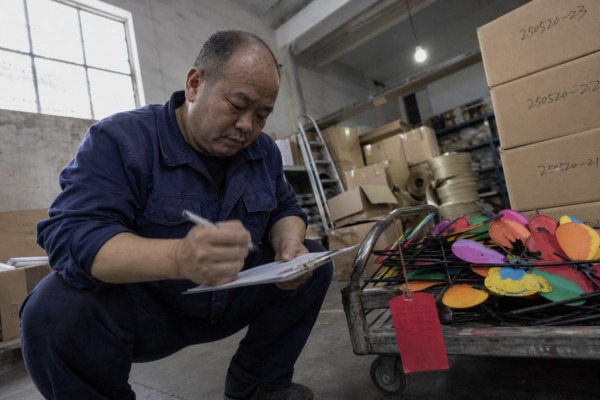
A sample that looks perfect on your desk proves very little. Our rainbow-gradient pinwheels have eight petal blades in thin plastic film mounted on a wooden dowel. They look flawless out of the box. The real questions are what happens after six months of sun, one drop in a parcel truck, and one summer storm. Sample testing answers those questions before you commit to a bulk order.
The Five Tests That Matter Most
| 测试 | 标准 | Pass Target | 为何重要 |
|---|---|---|---|
| Salt spray testing | ASTM B117 | 48–96 hours, no corrosion | Metal parts and coatings face humid US coastal climates |
| UV stability test | Xenon arc exposure | No fading or cracking | High-UV US regions destroy cheap pigments fast |
| Transit drop testing | ISTA 3A or ISTA 6-Amazon | Fins and bearings intact | Small-parcel delivery is brutal on delicate blades |
| Chemical screening | Prop 65 protocols | Lead and phthalate content below limits | Protects the California market and your listings |
| Performance check | Start-up and survival wind speed | Spins below 3 mph; survives 50+ mph | US consumers expect motion in light breezes and safety in storms |
The performance metrics deserve extra attention because most suppliers skip them. Expert factories measure a specific start-up wind speed, typically under 3 mph, because a wind spinner that sits still in a light breeze generates returns. On the other end, high-velocity structural testing at 50 mph or more confirms the spinner will not shed blades or become a projectile during a storm. We balance every petal assembly on our line for exactly this reason.
Do not run only one round. Test the golden sample, then pull random units from the pilot production lot and test again. ISTA packaging standards matter here too, because damaged packaging is one of the most common complaints I hear from US procurement managers. Where possible, send samples to a third-party lab rather than relying on factory-supplied results. Independent data closes the loop between what the supplier claims and what your retailer will actually accept.
结论
Confirming a wind spinner supplier knows US retail inspection standards takes four steps: verify documents, review QC processes, audit with sharp questions, and test samples. Documented quality beats promised quality.
脚注
1. Official CPSC portal for mandatory certification requirements for children’s products in the US. ↩︎
2. California’s OEHHA provides the definitive list of chemicals regulated under Proposition 65. ↩︎
3. The EPA is the primary authority for regulations regarding PFAS chemicals in consumer product coatings. ↩︎
4. Official information on the new electronic filing requirements for product safety certificates at US Customs. ↩︎
5. The ISO provides the international standards for AQL-based statistical sampling used in quality control. ↩︎
更多文章
你可能也会觉得这些有帮助。
如何远程验证锻铁插入式组件工厂的生产能力?
Ensure US retail compliance for wind spinners with proper certifications, AQL inspections, and durability testing before bulk orders…
阅读更多 →
采购锻铁嵌件时如何评估工厂的生产能力?
Ensure US retail compliance for wind spinners with proper certifications, AQL inspections, and durability testing before bulk orders…
阅读更多 →
应该向锻铁嵌件供应商提出哪些问题以尽早识别不可靠的供应商?
Ensure US retail compliance for wind spinners with proper certifications, AQL inspections, and durability testing before bulk orders…
阅读更多 → English
 Spanish
 German
 Arabic
 Chinese