如何评估供应商向美国市场出口的经验?
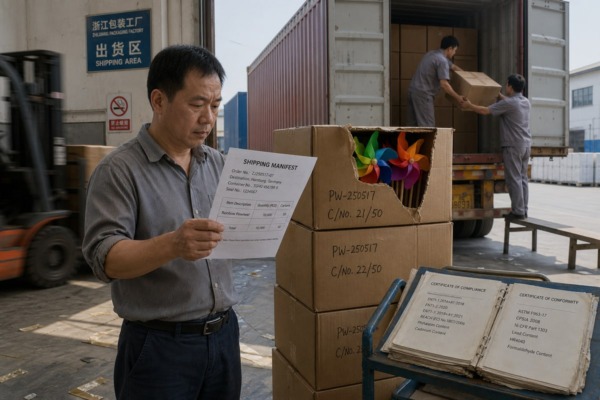
跳过对供应商向美国市场出口经验的核查,可能会让你的风车订单滞留在海关。我们的浙江工厂在经历了那次惨痛教训后,遇到了许多有同样遭遇的买家。
要评估供应商向美国市场出口的经验,请通过提单数据核实真实的美国出货记录,确认ASTM F963和CPSIA等合规认证,审查样品海关文件,核查贸易推荐人,并测试他们对美国检验和标签标准的了解程度。
美国出口经验不是单一资质,而是一组能力的集合。供应商可能向许多国家出过货,但这并不意味着他们能应对美国的规则、文件或检验。本文将评估分为四项实用检查。每项检查都为你提供具体的问题和具体的证明要求。
我应该要求风车供应商提供哪些认证来证明美国出口合规性?
去年春天,一位德克萨斯州的分销商在讨论价格之前就向我们索要了我们的 儿童产品证书 1 。这一个请求就告诉我,她之前曾被一家未认证的风车供应商坑过。
向风车供应商索取儿童产品证书,该证书须以CPSC认可的第三方实验室依据ASTM F963和CPSIA进行的检测为支撑,并提供铅和邻苯二甲酸酯合规证明、小零件检测、CPSIA追溯标签以及永久性原产国标记。

风车看起来很简单。但根据美国法律,它们通常并非如此。CPSC将任何面向12岁以下儿童营销的玩具视为儿童产品。这会触发在CPSC认可的实验室进行强制性第三方检测。供应商随后必须为每次进口提供儿童产品证书。如果供应商无法解释这一链条,他们就并未真正服务过美国市场。
真正重要的文件
以下是我期望任何一家认真的风车供应商应要求提供的合规文件。
| 文件或标准 | 涵盖内容 | 需要索取的内容 |
|---|---|---|
| ASTM F963检测报告 | 尖锐点、锐利边缘、小零件、机械危害 | 来自CPSC认可实验室的完整报告 |
| CPSIA化学品合规 | 涂料中铅含量限值90 ppm,基材中100 ppm;邻苯二甲酸酯上限0.1% | 与你的实际材料相关的检测结果 |
| 儿童产品证书 | 证明出货背后的检测 | 以往美国订单的CPC样本 |
| CPSIA追溯标签 | 产品或包装上的永久批次可追溯性 | 实际货物上标签位置的照片 |
| 原产国标记 | 永久、可见的原产地标记 | 显示标记位置的图稿 |
在我们自己的档案中,我们保存着涵盖塑料花瓣、木销涂层和组装销的检测报告。有经验的供应商还知道哪些规则不适用。风车不需要 FDA设施注册 2,因为它们不是食品或医疗用品。当供应商无需提示就能解释这一区别时,说明他们对美国产品安全标准的掌握是真实的。对只提供CE标志或EN71文件的供应商要小心。那些是欧洲产品安全标准。它们不满足美国要求,CBP合规审查不会接受它们作为替代。
在下单前,我如何核实供应商与美国分销商的合作记录?
一位采购经理曾在我们的第一次通话之前就调取了我们的提单记录。我对此表示尊重。纸面声明廉价;货运舱单不会说谎。
通过在贸易情报平台上检查提单数据、索取经脱敏处理的出口文件、与过去的美国分销商进行贸易参考核查、运行受限方筛查,以及确认重复订单而非一次性发货,来验证供应商的美国业绩记录。
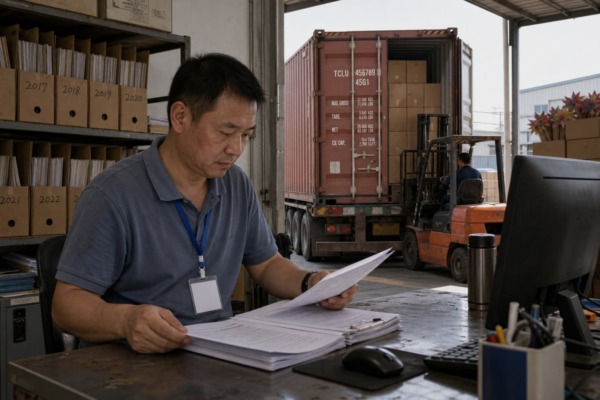
任何人都可以说自己出口到美国。你的工作是区分声明与证据。根据我的经验,避免麻烦的买家会问四个直接的问题。你们完成过美国出口订单吗?你们了解美国法规和客户检验标准吗?你们能展示美国客户案例吗,即使是匿名的?那些订单是重复性的,还是一次性的?供应商的回答比任何宣传册都更能说明问题。
从公开航运数据开始
贸易情报工具让你可以分析公开的舱单记录。 提单数据 显示出货频率、数量和产品描述。寻找跨多年的连续性。很久以前发过一个集装箱不算业绩记录,那只是一个数据点。在评估供应商向美国市场出口的经验时,模式比单一事件更重要。
贸易推荐人核查与筛查
接下来,超越数据。索要两个推荐人并做一个简短的通话。同时对照美国商务部和财政部的限制方名单进行受限方筛查。这是免费的,只需几分钟。最后,保护付款本身。在汇款前通过第二渠道确认银行信息。商业电子邮件入侵欺诈往往正是在这个阶段下手。
| 验证方法 | 其证明的内容 | 危险信号 |
|---|---|---|
| 提单数据审查 | 真实、重复的美国出货 | 多年前的一次出货 |
| 经脱敏处理的出口文件 | 发票精确度和HTS熟悉程度 | 模糊的、仅模板的样本 |
| 贸易推荐人核查 | 买家满意度和重复订单 | Refusal to share any contact |
| Restricted party screening | No sanctions exposure | Name matches on watchlists |
| Bank detail verification call | Protection from wire fraud | Pressure to pay a "new" account |
Some buyers argue that prior U.S. shipping history alone is enough. I disagree. History without compliance depth is a Level 1 supplier wearing a Level 3 badge. Check both.
关于运往美国的风车货物,我应该询问哪些关于包装和物流的问题?
Every quarter, we weigh a trade-off: stronger export cartons cost more, but crushed pinwheel blades cost far more. U.S.-bound logistics decisions always come down to details like this.
在预订任何发往美国的纸风车货物之前,请询问纸箱跌落测试标准、保护纸风车叶片的内包装、HTS编码准确性、进口商安全申报时间、Incoterms责任、报关代理协调、交货周期以及港口延误的应急计划。
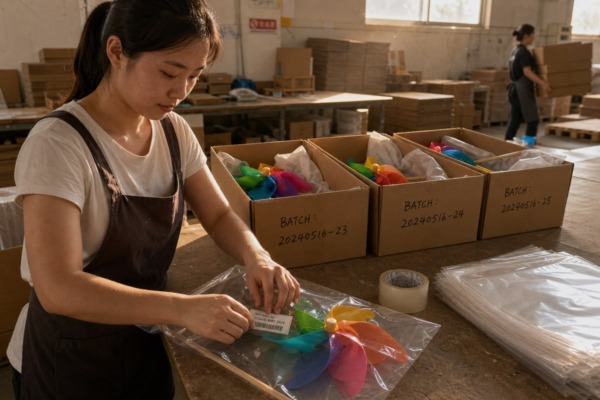
Damaged packaging is one of the top complaints I hear from American distributors. Pinwheel blades are thin plastic or mylar film. Wooden dowels can pierce cartons if packed loose. So logistics questions deserve the same rigor as price questions. I suggest asking these seven, in order.
- How do you protect blades and dowels inside the carton? Listen for poly sleeves, dividers, and secured bundles.
- What drop tests do your export cartons pass? A confident supplier describes the test, not just "strong boxes."
- What HTS code do you use for pinwheels? Toys fall under heading 9503. HTS code accuracy determines your duty rate and your CBP compliance exposure.
- How do you support the Importer Security Filing? The importer files the ISF, but the supplier must provide the data early. The filing is due at least 24 hours before vessel loading, and CBP penalties can reach $5,000 per violation.
- Which Incoterms do you quote, and who is the importer of record? This allocates duties, taxes, and risk.
- How do you coordinate with customs brokerage services and freight forwarders? Ask who manages communication when a shipment hits a problem.
- Can you provide milestone tracking? Mature suppliers share real-time updates, and some connect to visibility platforms via API.
Also probe duty knowledge. Section 301 tariffs affect many Chinese goods, and landed cost matters more than factory price. Anti-dumping duty risk is low for pinwheels today, but a supplier should know how to check scope rulings. Finally, ask whether they have completed C-TPAT certification 3 security questionnaires for U.S. importers. That signals supply chain security awareness.
| Question Area | Strong Answer Sounds Like | Weak Answer Sounds Like |
|---|---|---|
| Inner packaging | "Sleeved blades, divided layers, drop-tested cartons" | "We pack very carefully" |
| HTS and duties | "9503 classification, plus current Section 301 impact" | "The forwarder handles that" |
| ISF data | "Sent within 48 hours of booking" | "What is an ISF?" |
| Delay contingency | "Backup port and buffer stock plan" | "Delays are not our problem" |
我如何确认供应商了解美国风车的质量控制标准?
Years ago, an American inspector rejected a batch over blade rotation stiffness we considered acceptable. That failed inspection taught our team what U.S. quality control standards really demand.
通过要求供应商解释AQL检验水平、缺陷分类、出货前检验程序以及过往第三方审核结果来确认其理解程度。通过美国经销商检验的供应商能够详细描述检查点、公差和纠正措施。

U.S. distributors do not inspect casually. They inspect systematically. So the fastest test of a supplier's experience exporting to the U.S. market is to ask them to talk through an inspection. Vague answers mean no real experience. Specific answers mean they have lived through it.
Speak the Language of AQL
Most U.S. buyers use ANSI/ASQ Z1.4 sampling plans. A common setup for toys is AQL 2.5 for major defects 4 and 4.0 for minor defects, with zero tolerance for critical defects. Ask the supplier what those numbers mean for pinwheels. A fluent supplier answers instantly. A critical defect is a sharp point or a loose small part. A major defect is a blade that will not spin or a badly misprinted petal. A minor defect is slight color variance between batches. Then ask when they schedule pre-shipment inspection. The correct answer is when at least 80% of the order is packed. Any supplier who resists third-party inspectors like SGS or QIMA is telling you something important.
Traceability and Distributor-Specific Checklists
U.S. quality expectations now extend into sourcing. Under UFLPA, importers must prove supply chains are free of forced labor. Ask for a sample chain-of-custody pack tracing the plastic film and wooden dowels back to their sources. Also remember that customer inspection standards vary by distributor. Ask how the supplier absorbs a buyer-specific checklist and how they run corrective actions after a failed check.
| Level | Supplier Profile | Recommended Buyer Action |
|---|---|---|
| Level 1: Limited | No direct U.S. shipments; weak on documents and testing | Proceed only with heavy onboarding and oversight |
| Level 2: Moderate | Some U.S. orders; basic paperwork fine; adaptation gaps remain | Order with third-party inspection and tight specs |
| Level 3: Strong | Repeat U.S. customers; fluent in CPC, AQL, ISF data, traceability | Scale volume with normal supervision |
结论
Choosing blindly risks delays, rejections, and returns. Evaluate a supplier's U.S. export experience as a system—certifications, shipment records, logistics knowledge, and QC fluency—and you remove most of that risk.
脚注
1. Official CPSC guidance on the mandatory certification required for importing children’s products into the United States. ↩︎
2. Official FDA resource explaining the requirements and process for food facility registration under U.S. law. ↩︎
3. Official U.S. Customs and Border Protection page explaining the voluntary supply chain security program for international trade. ↩︎
4. Technical resource explaining the industry-standard sampling procedures and defect classifications used in U.S. quality inspections. ↩︎
更多文章
你可能也会觉得这些有帮助。
如何远程验证锻铁插入式组件工厂的生产能力?
Verify a supplier's U.S. export experience with real shipment records, ASTM F963/CPSIA certifications, and customs documents to avoid…
阅读更多 →
采购锻铁嵌件时如何评估工厂的生产能力?
Verify a supplier's U.S. export experience with real shipment records, ASTM F963/CPSIA certifications, and customs documents to avoid…
阅读更多 →
应该向锻铁嵌件供应商提出哪些问题以尽早识别不可靠的供应商?
Verify a supplier's U.S. export experience with real shipment records, ASTM F963/CPSIA certifications, and customs documents to avoid…
阅读更多 → English
 Spanish
 German
 Arabic
 Chinese