
供应商报价中 FOB 和 CIF 价格有什么区别?
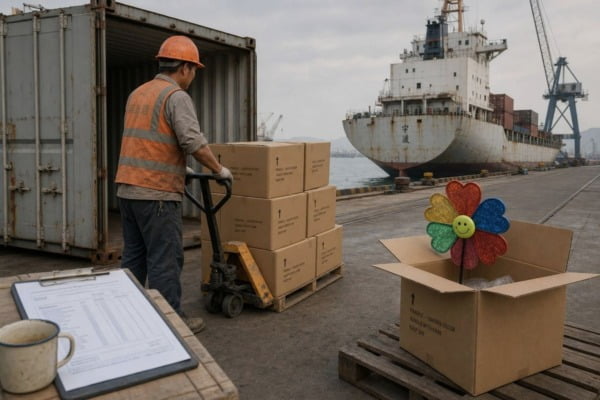
上个月,一位买家将我们的 FOB 风车报价与竞争对手的 CIF 价格 1 进行了比较,差点选错。FOB 和 CIF 价格之间的差异让她完全摸不着头脑。
FOB价格涵盖在起运港将货物交付并装载上船的费用;CIF价格则在FOB基础上加上海运运费和至目的港的最低海运保险费。在这两种术语下,货物在起运港装船后风险即转移给买方。
最后一句话让大多数买家感到意外。让我带您了解这两个术语如何改变您的报价、成本和风险。
我如何判断风车供应商的报价是FOB还是CIF价格?
在我们的浙江工厂,我们每周签发数十份 报价单,我总是把贸易术语印在单价旁边。并非每个供应商都会这样做。
检查报价中的贸易术语和指定港口。FOB报价注明起运港,如FOB宁波,且不含运费。CIF报价注明目的港,如CIF洛杉矶,并将海运费和保险费打包计入价格中。

指定港口是最快的线索。FOB 总是指向供应商所在国家的港口。CIF 总是指向您所在国家的港口。如果报价写的是"FOB 上海",那么当您的闪亮风车纸箱在上海装上船时,卖方的责任就结束了。如果写的是"CIF 纽约",卖方还要支付海运费并安排海运保险,直到货物抵达纽约。
每个价格中包含什么
根据 《2020 年国际贸易术语解释通则》 2,成本划分很明确。以下是我为我们的风车串和花园风车买家所做的分解:
| 成本项目 | FOB 报价 | CIF 报价 |
|---|---|---|
| 产品、包装、纸箱 | 包含 | 包含 |
| 到起运港的内陆运输 | 包含 | 包含 |
| 出口清关 | 包含 | 包含 |
| 装船 | 包含 | 包含 |
| 到目的港的海运费 | 买方支付 | 包含 |
| 海运保险(最低保额) | 买方安排 | 包含 |
| 目的港码头费用 | 买方支付 | 买方支付 |
| 进口关税和税费 3 | 买方支付 | 买方支付 |
含糊报价中的危险信号
有些报价只写"USD 0.45/件",完全没有术语。这很危险。我见过买家以为价格是 CIF,然后被单独的海运费发票震惊。务必以书面形式问三个问题:
- 适用哪个国际贸易术语?
- 哪个指定港口?
- 具体包含什么?
专业的供应商会毫不犹豫地回答所有三个问题。如果他们回避,就把该报价视为不完整。
从中国采购风车时,我应该选择哪种价格条款来减少运输延误?
我们的一位美国经销商曾经因为在复活节前两周丢失了时间,因为她之前供应商的 CIF 承运人选择了最便宜、最慢的路线。季节性风车销售不会原谅这样的延误。
如果运输延误损害您的业务,请选择FOB。FOB让您能够指定自己的货运代理、选择更快的船只,并直接跟踪货物运输。CIF将路线控制权交给供应商,而供应商通常选择最便宜的承运商,而非最快的。

以下是每月从宁波发运风车的人的诚实真相:当供应商在 CIF 下订舱运费时,他们的动机是成本,而不是速度。他们已经给您报了固定价格。在海运费上节省的每一美元都进入他们的利润。因此他们可能选择有两次转运的慢速服务,而不是直达航线。
在 FOB 下,您扭转了这种动机。您的货运代理为您工作。您选择承运人、船期和服务水平。您还可以直接查看 提单 4 和船舶跟踪信息,因此您确切知道您的节日库存在哪里。
一个简单的决策路径
- 您经常发货并且有货运代理? 选择 FOB。您控制运输时间,可以自己追踪延误。
- 您是第一次进口且只有一个小订单? CIF 更简单。只需在付款前以书面形式确认预计运输时间。
- Your order is seasonal (Easter, summer fairs, holiday décor)? Take FOB and book space early. Peak-season space runs out fast, and you do not want a supplier's cheap carrier deciding your delivery date.
There is another timing benefit buyers often miss. Under FOB, you usually pay freight to your forwarder around arrival, sometimes on credit terms. Under CIF, you pre-pay freight inside the supplier invoice, weeks before the vessel even sails. That difference matters for your cash flow, especially on large seasonal pinwheel orders.
Whenever I quote both terms side by side for a buyer, I explain my freight assumptions openly, because I know some competitors do not. Hidden costs are where CIF comparisons go wrong.
注意CIF价格中供应商对运费和保险的加价、低运费承运商收取的高额目的地操作费,以及海关按虚高的CIF金额估价时产生的更高进口关税。FOB表面上看起来更便宜,但你必须加上实际运费、保险费和目的地费用。

The core problem is that a CIF price bundles three things — product, freight, insurance — into one number. You cannot see the split. Industry research suggests some CIF quotes carry a 10–20% markup on the freight and insurance components. I present that as a sourced estimate, not a universal rule, but the transparency risk is real.
The destination fee trap
This one hurts the most. Some suppliers pick carriers offering rock-bottom origin rates. Those carriers recover their money through high terminal handling and "arrival" fees at the port of destination. You must pay those fees before the carrier releases your cargo. Your CIF quote looked cheap, but your total landed cost ballooned.
Comparing quotes the right way
Never compare an FOB number against a CIF number directly. Build both into a landed cost estimate:
| 成本要素 | FOB comparison | CIF comparison |
|---|---|---|
| Supplier invoice | FOB price | CIF price (freight bundled) |
| 海运 | Your forwarder's real quote | Hidden inside price |
| Marine insurance | Your policy, your cover level | Minimum Clause C cover only |
| Destination handling | Predictable via your forwarder | Unknown until arrival |
| Customs duty base | Often lower declared value | May include inflated freight |
Note that duty point. Many customs authorities calculate import duties and taxes on the CIF value. If the supplier padded the freight, you pay duty on the padding too. When one of our buyers switched from a competitor's CIF terms to our FOB Ningbo terms, her per-unit landed cost dropped even though our product price was nearly identical. The savings came entirely from freight transparency.
如果我的风车货物到达时受损,FOB和CIF条款如何影响我的责任?
The insight I share most often with new buyers comes from my own hard lessons in this trade: the risk allocation is not the same as the cost allocation. People confuse the two constantly.
在海运的FOB和CIF两种术语下,风险转移均发生在货物于起运港装上船时。如果您的风车在海上受损,在两种术语下风险均由您承担——CIF仅意味着卖方已预付保险费。

This is the single most misunderstood point in international trade. Buyers see "the supplier pays freight to my port" under CIF and assume the supplier also carries the transit risk to that port. They do not. Under Incoterms 2020, risk passes to you the moment the cargo is loaded on board at the port of shipment — for FOB and for CIF alike. Older texts said "ship's rail"; modern practice says "loaded on the vessel." Either way, once our pinwheel cartons cross onto that ship in Ningbo, the transit risk is yours.
Why CIF claims get messy
Here is the awkward part of CIF. You bear the risk, but the seller holds the insurance contract. If a container of holographic pinwheel spinners arrives with water damage, you must file the claim through a policy you did not choose, with an insurer you have never dealt with, often in the supplier's country. That creates real friction and delay.
Worse, CIF only requires minimum cover — Institute Cargo Clauses (C). That is thin protection. It typically excludes many common causes of damage. Fragile decorative goods like foil pinwheels deserve broader cover.
Protecting yourself in practice
- Under FOB, buy your own marine insurance with All Risks (Clause A) cover. You control the policy, the insurer, and the claim.
- Under CIF, ask the supplier to upgrade cover beyond Clause C and to name you as the insured party on the certificate.
- Either way, photograph cartons at loading, keep the bill of lading clean, and inspect immediately at destination so damage claims have evidence.
At our factory, we photograph every container loading for exactly this reason. Good documentation protects both sides when something goes wrong at sea.
结论
FOB and CIF split costs differently, but risk transfers at loading under both. Compare quotes by total landed cost, confirm the named port, and choose the term matching your logistics capability.
脚注
1. US government resource explaining how insurance and freight costs are allocated under different trade terms. ↩︎
2. Official source for the international commercial terms used in global trade and shipping. ↩︎
3. Official US Customs and Border Protection guide on the responsibilities of importers regarding duties and taxes. ↩︎
4. Comprehensive overview of the legal document used in shipping to acknowledge receipt of cargo. ↩︎
更多文章
你可能也会觉得这些有帮助。

如何远程验证锻铁插入式组件工厂的生产能力?
FOB and CIF prices differ in what a supplier's quotation includes; learn to spot the named port and…
阅读更多 →
采购锻铁嵌件时如何评估工厂的生产能力?
FOB and CIF prices differ in what a supplier's quotation includes; learn to spot the named port and…
阅读更多 →
应该向锻铁嵌件供应商提出哪些问题以尽早识别不可靠的供应商?
FOB and CIF prices differ in what a supplier's quotation includes; learn to spot the named port and…
阅读更多 → English
 Spanish
 German
 Arabic
 Chinese