
How to Determine If a Supplier Can Handle Urgent Replenishment Orders?

Last spring, a US distributor asked our Zhejiang workshop for 80,000 pinwheels in three weeks expedited freight options 1. Urgent replenishment orders like that expose weak suppliers fast — and can sink your season.
Um festzustellen, ob ein Lieferant dringende Nachschubbestellungen bewältigen kann, bestätigen Sie dessen Rohstoffbestand, überprüfen Sie die Werkstattkapazität und Maschinenauslastung, fragen Sie nach dem kürzestmöglichen Produktionszyklus und prüfen Sie, ob er die Planung beschleunigen kann. Validieren Sie dann die pünktlichen Lieferdaten für frühere Eilaufträge, nicht für Standardlieferungen.
Urgent replenishment is not the same as routine replenishment. Routine orders run on planned lead times and safety stock. Rush orders test a supplier under stress. In this guide, I will walk you through a practical supplier scorecard: lead times, capacity, quality control, and logistics. These are the same four checks I encourage my own buyers to run on us.
Welche Lieferzeiten sollte ich von einem zuverlässigen Windrad-Lieferanten erwarten?
Quoting a lead time is easy; hitting it is the hard part. In our export schedule, we weigh production speed against petal-forming quality every single week.
Ein zuverlässiger Windrad-Lieferant sollte dringende Bestellungen innerhalb von 24–48 Stunden bestätigen, Standarddesigns in 7–15 Tagen produzieren und kundenspezifische Eilaufträge in 15–25 Tagen versenden. Konsistente Lieferzeiten sind wichtiger als kurze Angebote, daher fragen Sie nach dokumentierter Lieferleistung.

The number a supplier quotes you is a promise. The number that matters is what actually happened on their last ten rush orders. That gap is called lead time variability 2, and it is the single best predictor of whether your urgent shipment lands on time. When we onboard a new distributor, I share our delivery log for expedited jobs separately from standard jobs. You should demand the same from any supplier you vet, because a factory can post a strong on-time delivery (OTD) rate on planned orders and still fall apart when the clock is tight.
Break the Lead Time Into Stages
Ask the supplier to split its order fulfillment cycle time 3 into steps: material preparation, film cutting, petal assembly, packing, and shipment booking. If they cannot break it down, they have never measured it. Here is what realistic timelines look like for pinwheel production based on our own workshop:
| Pinwheel Order Type | Standard Lead Time | Realistic Rush Lead Time | Main Constraint |
|---|---|---|---|
| Stock-design garden pinwheels | 15–20 days | 7–10 days | Film and dowel stock on hand |
| Custom-color petal pinwheels | 25–30 days | 15–18 days | Printed film sourcing |
| Pinwheel strings and sets | 20–25 days | 12–15 days | Assembly labor hours |
| Full custom OEM designs | 35–45 days | 20–25 days | Die-cutting tooling and sampling |
The Metrics That Reveal the Truth
Ask for three numbers: average lead time, deviation from promised lead time, and emergency order response time. A supplier that confirms rush feasibility within 24–48 hours has a real priority process. A supplier that takes a week to answer will take even longer to produce. This data-first approach should anchor your entire inventory replenishment strategy.
Wie kann ich die Produktionskapazität eines Lieferanten überprüfen, bevor ich eine dringende Bestellung aufgebe?
A procurement manager from Texas once video-called straight into our workshop and asked to see the die-cutting line running. Smart move. I wish more buyers did that.
Verifizieren Sie die Kapazität, indem Sie den Rohstoffbestand, die aktuelle Maschinenauslastung, verfügbare Notfallschichten und die Umrüstgeschwindigkeit prüfen. Fordern Sie vom Lieferanten eine schriftliche Angabe des Mindestproduktionszyklus an, bestätigen Sie die Fähigkeit zur beschleunigten Terminplanung und überprüfen Sie die Bereitschaft der Sublieferanten, bevor Sie die Eilbestellung aufgeben.
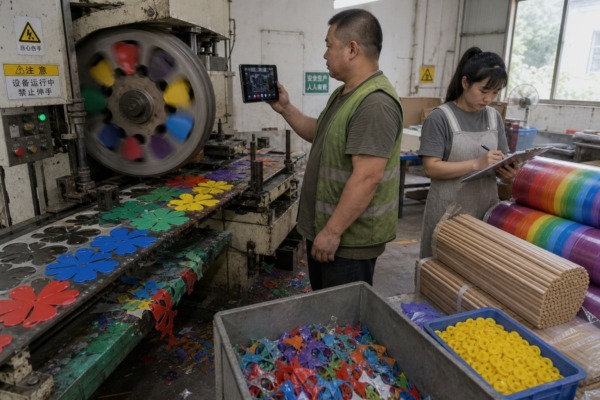
This is the check I trust most from my own daily routine: confirm the supplier's material preparation, confirm workshop capacity, verify the shortest production cycle for the urgent batch, and confirm whether they can jump the production queue. If a supplier cannot answer those four points clearly, no promise they make afterward means much. Production capacity constraints hide in places a price quote never shows you.
The Five-Point Capacity Check
| Verification Point | What to Ask | Green Flag |
|---|---|---|
| Raw material buffer | How many days of film, dowels, and grommets do you hold? | Buffers sized through safety stock optimization, not guesswork |
| Machine utilization | What is your current line utilization? | Documented spare capacity or committed emergency shifts |
| Changeover speed | How fast can you pivot a line from another job to mine? | Same-day changeover with quick-die practices |
| Sub-tier readiness | Can your film and dowel vendors surge too? | Named backup vendors with confirmed stock |
| Overflow agreements | Do you have partner factories for standard work? | Pre-signed overflow contracts that free your lines for rush jobs |
Look Beyond the Factory Walls
A factory running at full utilization cannot expedite anything, no matter its size. Also check financial health. Rush production means overtime labor and sometimes premium freight; a supplier with thin liquidity will push those costs back as demands for advance payment. Fold all of this into a proper vendor risk assessment. One fair objection I hear: some low-cost suppliers are deliberately optimized for efficiency, not speed. That can still work for you — but only if you hold extra safety stock or keep a backup vendor ready.
Welche Qualitätskontrollmaßnahmen sollte ich für Eilaufträge bestätigen?
Two summers ago, an expedited petal batch came off our die-cutter with hairline burrs. One inline inspector caught it before assembly, and that save reshaped our rush-order QC.
For rush orders, confirm the supplier keeps incoming material checks, inline inspection at each production stage, AQL-based final random inspection, and packaging drop tests. Ask for a separate accuracy record on expedited shipments, because errors on urgent orders are the most expensive to fix.

Here is the uncomfortable truth about rush orders: speed pressure is exactly when defects sneak through. A pinwheel that spins unevenly, a petal with a weak grommet, a dowel that splinters — any of these can trigger returns and chargebacks that cost far more than the expedited freight did. So when you vet a supplier, ask them to prove their QC process survives under time pressure, not just on relaxed schedules.
Checkpoints That Must Not Be Skipped
| QC Stage | Was geprüft wird | Why It Matters on Rush Orders |
|---|---|---|
| Incoming materials | Film thickness, dowel straightness, grommet fit | Bad inputs waste days you do not have |
| Inline inspection | Petal edges, spin balance, pin security | Catches defects before they multiply downstream |
| Final random inspection | AQL sampling, color match, spin function test | The last gate before the container closes |
| Packing verification | Carton drop test, inner sleeves, moisture check | Prevents damaged packaging and costly returns |
Measure Expedited Accuracy Separately
I always tell buyers to request two data sets: order accuracy on standard shipments and order accuracy on expedited ones. They are rarely the same number. Also ask for the order fill rate on past rush jobs — a supplier that quietly short-ships urgent orders is a supplier you cannot plan around. Finally, agree in advance on what happens when time is truly impossible. In our workshop, we compress QC by adding inspectors in parallel, never by removing checkpoints. If a supplier's answer to urgency is fewer inspections, walk away. The hidden cost of a rushed defect always exceeds the hours saved.
How Do I Assess a Supplier's Communication and Logistics Reliability for Time-Sensitive Shipments?
I learned the hard way that a finished pallet means nothing at the port. One missed vessel cutoff taught our team to treat logistics as part of production.
Assess reliability by testing response speed before ordering, requiring real-time status updates through WhatsApp, email, or a portal, and confirming access to expedited freight options. A dependable supplier answers urgent questions within hours, shares tracking proactively, and sits near major logistics hubs.
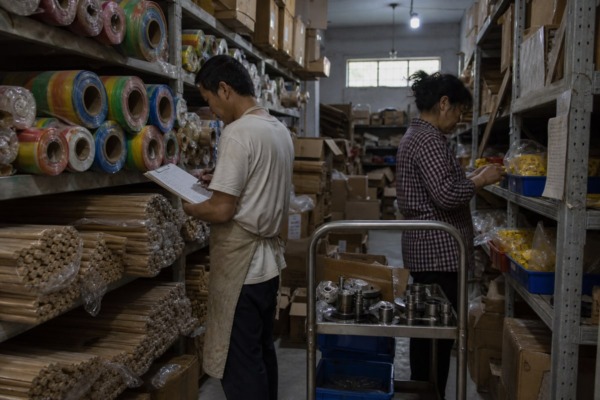
Urgent replenishment orders usually fail in the last mile of information, not the first mile of production. A shipment sitting silent for five days is a crisis you cannot manage. So test communication before money changes hands. Here is a simple three-step stress test I recommend to every procurement manager:
- Send a question outside the supplier's business hours. Note how long the answer takes. Most of my US buyers reach me on WhatsApp, and they time my replies — that first exchange predicts crisis behavior surprisingly well.
- Request a mid-quote change. Adjust quantities or split the shipment. A flexible supplier confirms the change with a revised timeline. A rigid one goes quiet.
- Ask how you will see order status. The best answer is system-level visibility: EDI links, a live portal, or API access into their material and production data. Automated acknowledgment beats a promise to keep you posted.
Geography and Freight Flexibility
Physical location shapes supply chain agility. Our factory sits within trucking distance of the Ningbo and Shanghai ports and their air-freight terminals, which means a delayed batch can still switch from sea to air without losing days in domestic transit. Ask any supplier to map their route to the nearest 24/7 logistics hub. Then put commitments in writing through a Service Level Agreement (SLA) 4 covering response time, confirmation windows, and expedited shipping triggers. One honest caveat: for highly custom pinwheel designs under volatile demand, even a capable supplier cannot guarantee every rush window. In those cases, pair your primary supplier with dual sourcing or a small strategic safety stock. Prevention is still the cheapest emergency plan.
Fazit
Urgent replenishment orders punish guesswork. Verify materials, workshop capacity, minimum production cycles, QC discipline, and logistics before the crisis hits — and rush season becomes your competitive edge.
Fußnoten
1. Authoritative resource for international trade, logistics, and supply chain competitiveness from the U.S. government. ↩︎
2. Detailed explanation of lead time concepts and their role in manufacturing and logistics predictability. ↩︎
3. Comprehensive overview of the order fulfillment process and its stages in supply chain management. ↩︎
4. Official government guidance on using service level agreements to manage supply chain and vendor risks. ↩︎
Weitere Artikel
Diese könnten Ihnen auch helfen.

Wie kann man die Produktionskapazitäten einer Fabrik für Schmiedeeisen-Steckkomponenten aus der Ferne überprüfen?
Confirm lead times, stock levels, and past rush-order OTD data to pick a pinwheel supplier that reliably handles…
Weiterlesen →
Wie beurteilt man die Produktionskapazität einer Fabrik bei der Beschaffung von Schmiedeeisen-Einsätzen?
Confirm lead times, stock levels, and past rush-order OTD data to pick a pinwheel supplier that reliably handles…
Weiterlesen →
Welche Fragen sollten Sie Schmiedeeisen-Einsatz-Lieferanten stellen, um unzuverlässige frühzeitig zu erkennen?
Confirm lead times, stock levels, and past rush-order OTD data to pick a pinwheel supplier that reliably handles…
Weiterlesen → English
  Spanish
  German
  Arabic