How to Remotely Verify a Factory’s Production Capabilities for Wrought Iron Plug-In Components?
Wiring a deposit for wrought iron plug-in components 1 to an unseen factory is scary. Fake showrooms sink whole seasons. That is why buyers video-call our Zhejiang workshop weekly.
To remotely verify a factory’s production capabilities for wrought iron plug-in components, book an unannounced live video tour of random workshop areas, request the equipment list, salt spray test reports, Material Test Reports, and ISO 9001 records, then confirm everything through a third-party remote factory audit.
I will walk you through the exact process our own buyers use on us. Each step is simple. You do not need to fly anywhere. You can run the whole check from your desk before you commit a single dollar to samples, tooling, or deposits.
Was sollte ich während einer Live-Video-Fabrikführung für Schmiedeeisenkomponenten fragen?
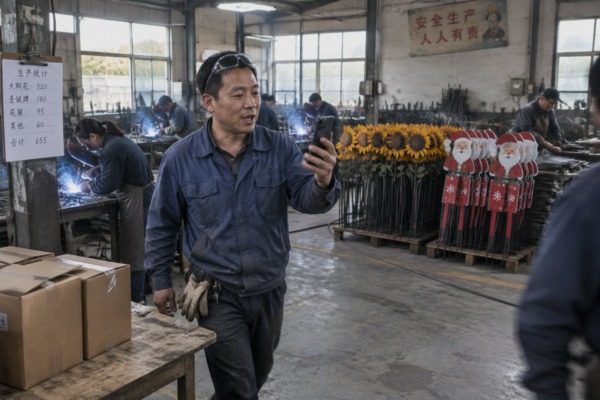
Last spring, a US procurement manager called our workshop on WhatsApp with zero warning. She asked to walk the stake-welding line live. We said yes — and won the order.
Bitten Sie während einer Live-Videofabriktour darum, zufällige Werkstattbereiche anstelle des Showrooms zu sehen, beobachten Sie, wie Bestellungen anderer Kunden in Echtzeit produziert werden, zoomen Sie auf Maschinennameplates und Schweißnähte und befragen Sie Arbeiter zu Tagesleistung, Schichten und Qualitätskontrollen im Prozess.
The single most powerful tactic is timing. Start the live video inspection without notice, or with less than an hour of warning. A real factory can turn on a camera any time. A staged one needs days to rehearse. In my experience hosting these calls, serious buyers now refuse scheduled tours entirely. They message us and say, "Show me the floor now." We treat that as a good sign, not an insult.
Demand a Random Route, Not a Showroom Script
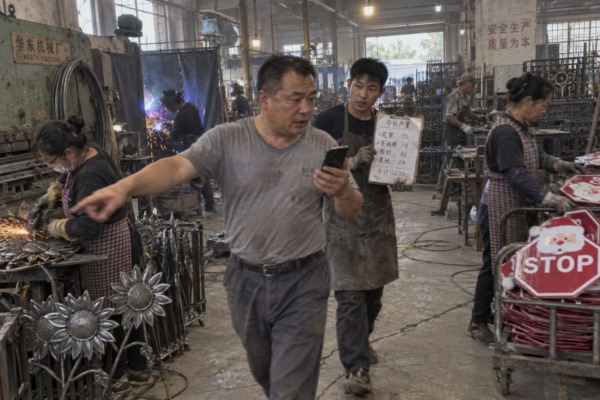
Never let the seller drive the whole tour. Pick the route yourself. Say, "Turn left." Say, "Walk to that corner." Ask them to film whatever line is running at that moment, including other customers' orders in production. Live orders for other buyers are strong proof. A Handelsunternehmen ab, das sich als Fabrik ausgibt cannot fake a busy line making someone else's wrought iron plug-in components. The showroom proves nothing. The workshop proves everything.
Fragen, die echte Fähigkeiten offenlegen
| Zu stellende Frage | What a Strong Answer Looks Like |
|---|---|
| Which orders are running today? | They name real products and show them live on the line |
| Can you zoom in on that machine nameplate? | No hesitation; brand, model, and year are readable |
| Who does your powder coating? | They walk you to an in-house booth or disclose the subcontractor openly |
| Show me today's in-process inspection sheet | A worker pulls a filled-in record on camera |
| How many workers are on this shift? | The number matches what you count on screen |
Treat this call as the first stage of your supplier vetting process, not the last. Everything you see should later match the documents you request.
Wie kann ich die Ausrüstung und Produktionskapazität einer Schmiedeeisenfabrik aus der Ferne überprüfen?
There is a trade-off we explain to every buyer: a long equipment walkthrough costs us an hour of production time, but it saves everyone months of disputes later.
Überprüfen Sie Ausrüstung und Produktionskapazität aus der Ferne, indem Sie eine vollständige Maschinenliste mit Modellen, Alter und Wartungsprotokollen anfordern, Kalibrierungsaufkleber per Live-Video prüfen, Arbeiter und Schichten während der Tour zählen und die angegebene monatliche Produktion mit der sichtbaren Bodenfläche und Ausrüstung vergleichen.
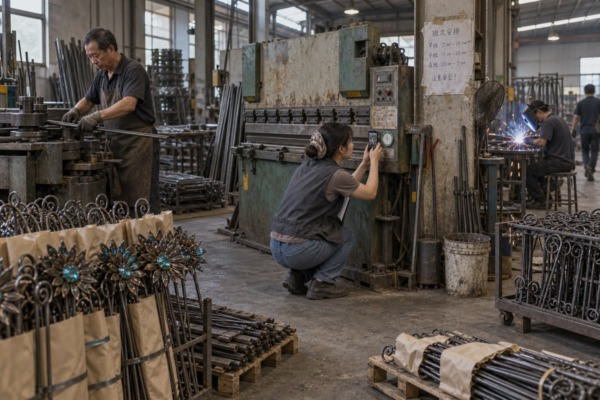
Start with paper, then confirm with pixels. Ask for a written workshop equipment list before the call. It should state machine type, brand, model, installation year, maintenance history, and the calibration status of measuring tools. On our side, we send this list within a day because it already exists for our own planning. A factory that needs a week to "prepare" a machine list probably does not have one — or does not have the machines.
Match Machines to Your Part's Process Steps
The real question is not whether the factory owns "some machines." It is whether it owns the specific equipment your design needs. For wrought iron plug-in components like garden stakes and yard signs, walk through each step.
| Process Step | Equipment to See Live | What to Check on Video |
|---|---|---|
| Cutting | Shears or laser cutter | Nameplate, material offcuts nearby |
| Bending | Press brake, rod benders | Operator running real parts |
| Welding | MIG stations | Welding procedure specification posted, clean welds |
| Punching / drilling | Punch press, drill stations | Tooling racks, current calibration stickers |
| Surface coating | Powder coating booth and curing oven | Hangers loaded, oven temperature display |
| Assembly / packing | Packing line | Cartons labeled for live orders |
Do the Capacity Math Yourself
Now run a simple production capacity assessment. Count workers on screen. Ask how many shifts run per day. Multiply against a realistic cycle time and compare the result with the claimed monthly output. If the numbers do not fit the floor space and headcount you saw, the claim is inflated. Some buyers go further and ask about power consumption during peak production, since heavy equipment leaves an energy footprint that idle floors cannot fake. Finally, ask an operator to measure a part off the line with calipers on camera. A live dimensional accuracy check tells you more than any brochure.
Welche Dokumente sollte ich anfordern, um die Produktionsstandards eines Schmiedeeisen-Lieferanten zu bestätigen?
Early in my export career, I learned that paperwork tells the truth faster than promises. A missing salt spray report once cost a competitor a container of rusted stakes.
Request the business license with Unified Social Credit Code, ISO 9001 certification, a complete workshop equipment list, salt spray test reports, Material Test Reports for raw steel, welding procedure specifications, first-article inspection sheets, and final QC logs tied to real production lots.
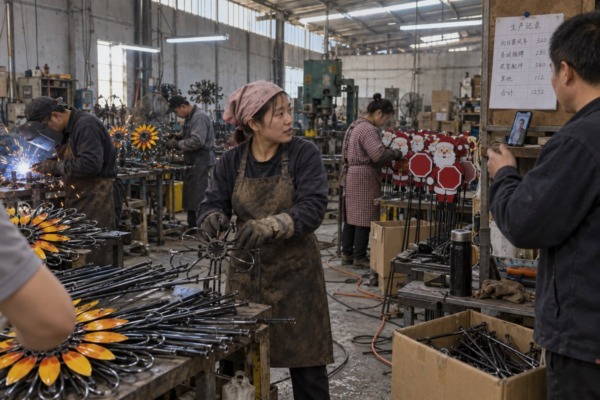
Documents do two jobs. First, they prove the company legally exists as a manufacturer, not a middleman. Second, they prove its quality management system actually runs day to day. At our factory, the two documents buyers request most are the salt spray test report 2 and the workshop equipment list, because outdoor plug-in decorations live in rain, sun, and soil. A coating that fails salt spray testing will rust in one season, and no refund fixes an angry retail customer.
The Core Document Checklist
| Dokument | Was es beweist | How to Validate It |
|---|---|---|
| Business license with Unified Social Credit Code | Legal manufacturer status | Cross-check the code in official government databases |
| ISO 9001 certificate | A working quality management system | Verify directly with the issuing certification body |
| Workshop equipment list | In-house metal fabrication capability | Match it against the live video tour |
| Salt spray test report | Coating corrosion resistance for outdoor use | Confirm the test lab and the tested lot number |
| Material Test Report 3 | Steel chemistry and mechanical properties | Trace the heat/lot number to your production batch |
| Welding procedure specification and welder records | Weld quality meets metal fabrication standards | Ask to see the posted WPS on video |
| First-article inspection and dimensional reports | The part matches your drawing | Compare measurements against your CAD tolerances |
| Final QC logs and Certificate of Conformance | Repeatable, lot-level quality control | Request logs from a recent shipped order |
Tie Every Certificate to a Real Lot
A certificate floating alone proves very little. Ask the supplier to connect each document to an actual production lot, from incoming steel to packed cartons. This traceability is the backbone of any sample testing protocol. When we run pilot batches for new designs, we attach the Material Test Report, the coating record, and the dimensional sheet to that specific run. A supplier who cannot do the same is guessing, not controlling.
How Do I Spot Red Flags When Remotely Assessing a Wrought Iron Plug-In Manufacturer?
A distributor once told me she nearly paid a deposit to a trading company with a rented showroom. The tipoff was small: every video showed the same three machines.
Red flags include refusing unannounced live video, showing only a polished showroom, dodging questions about subcontracted coating or welding, missing salt spray or material reports, output claims that outstrip visible workers and machines, and documents that fail cross-checks with issuing bodies.
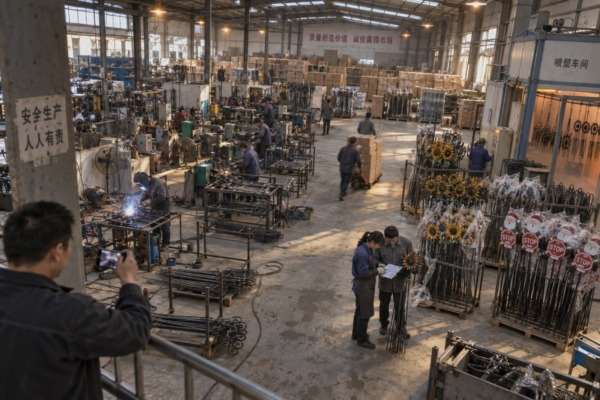
Red flags rarely arrive alone. One weak answer is normal. A pattern of them is a decision. Here is the pattern I would watch for, ranked roughly by how often it signals real trouble:
- The camera only visits one clean room. Real workshops have noise, sparks, and dust. A silent, spotless "factory" is a showroom.
- The live tour must be scheduled days ahead. Rehearsal time is staging time. Insist on a video call started on the spot.
- No other orders are visible in production. A working factory always has someone else's parts on the line.
- Subcontracting questions get vague answers. Ask directly what percentage of cutting, welding, powder coating, and packing happens in-house. Disclosed outsourcing can be managed. Hidden outsourcing destroys supply chain transparency, lead times, and accountability.
- Key documents "cannot be shared." A real supplier sends the equipment list and test reports quickly. Ours are ready because our own team uses them daily.
When to Bring in a Third Party
Now the honest objection: can't all of this be staged? Cameras can be pre-arranged. Equipment can be borrowed for a day. That risk is real, which is exactly why I recommend a third-party factory audit 4 conducted remotely. Independent auditors verify certificates with the issuing bodies, run structured live tours on their own schedule, and issue a written risk report. Combine that with an unannounced video call and a paid sample run, and staging becomes too expensive to sustain. For decorative plug-in stakes, this remote stack is usually enough. For load-bearing or structural iron parts, treat remote screening as the shortlist step and still budget for an on-site visit.
Fazit
Remote verification cannot replace every on-site audit, but unannounced video, hard documents, capacity math, and third-party checks expose fake factories fast. Demand evidence before deposits — real suppliers welcome it.
Möchten Sie die in diesem Artikel erwähnten Produkte beschaffen? Details ansehen und hier ein Angebot anfordern:
Fußnoten
1. The WCO is the global authority for classifying wrought iron products for international trade and customs nomenclature. ↩︎
2. ASTM International provides the global standards for salt spray testing to verify the corrosion resistance of metal products. ↩︎
3. ASM International is a leading authority on materials engineering and technical standards for material test reports in manufacturing. ↩︎
4. The TIC Council is the international organization representing independent third-party audit, testing, and inspection bodies. ↩︎
Weitere Artikel
Diese könnten Ihnen auch helfen.
Wie beurteilt man die Produktionskapazität einer Fabrik bei der Beschaffung von Schmiedeeisen-Einsätzen?
Verify a wrought iron plug-in factory remotely with unannounced video tours, equipment lists, test reports, and third-party audits…
Weiterlesen →
Welche Fragen sollten Sie Schmiedeeisen-Einsatz-Lieferanten stellen, um unzuverlässige frühzeitig zu erkennen?
Verify a wrought iron plug-in factory remotely with unannounced video tours, equipment lists, test reports, and third-party audits…
Weiterlesen →
How to Verify a Chinese Wrought Iron Supplier's License and Export Qualifications?
Verify a wrought iron plug-in factory remotely with unannounced video tours, equipment lists, test reports, and third-party audits…
Weiterlesen → English
  Spanish
  German
  Arabic