
How to Assess a Factory’s Production Capacity When Sourcing Wrought Iron Inserts?

A supplier once promised our Zhufeng sourcing team unlimited capacity for metal garden stakes. Then peak season hit, orders slipped, and we learned to assess a factory’s production capacity properly.
To assess a factory’s production capacity for wrought iron inserts, ask about production lines, powder coating shifts, and monthly shipments of similar products. Check blank inventory, worker counts, and the last two months of shipping documents. Always verify peak-season capacity, not just off-season availability.
Capacity is not one number. It is a chain of constraints across cutting, forming, welding, finishing, and packing. This article walks through a practical factory audit checklist, step by step. You will learn what to ask, what to inspect, and which warning signs mean walk away.
Wie kann ich die tatsächliche monatliche Produktion einer Schmiedeeisen-Einsatzfabrik überprüfen, bevor ich einen Vertrag unterschreibe?
Last spring, I toured a partner iron-art factory near Ningbo. Their brochure claimed huge volume, but the blank racks were nearly empty. That visit changed how I verify output.
Überprüfen Sie die tatsächliche monatliche Produktion, indem Sie Versanddokumente der letzten zwei Monate anfordern, den Leerbestand im Lager zählen und die Arbeiterzahlen mit dem angegebenen Volumen vergleichen. Gleichen Sie Tages-, Wochen- und Monatszahlen auf Konsistenz ab und bestätigen Sie, ob die angegebenen Zahlen nur gute Stücke zählen oder Ausschuss einschließen.
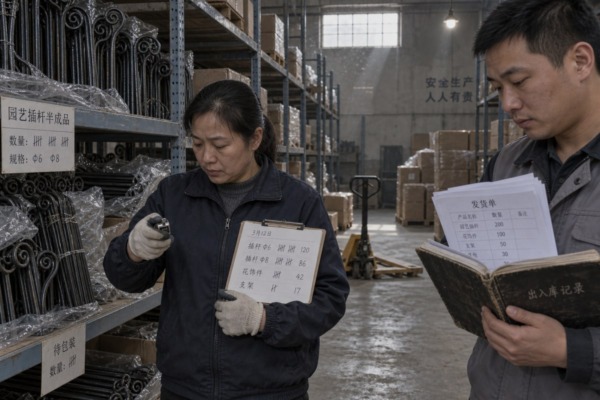
Marketing numbers and real output are two different things. In our own export work with garden decorations 1, we have seen both sides of that gap. The fix is simple: demand evidence, then test the evidence for consistency.
Translate Headline Claims Into Real Pieces
Suppliers in ornamental metalwork rarely quote finished pieces. One supplier we benchmarked lists 150 tons per month. Another claims 50 containers per year for wrought iron products. A third reports about 3,500 tons per year with around 200 machines and 150 employees. None of those figures tells you how many of your inserts they can ship. A lightweight sunflower stake and a heavy forged scroll consume very different tonnage per piece. So ask the factory to estimate capacity against your exact drawings, dimensions, material grade, and powder coating finishing spec. That single request separates serious factories from talkers.
The Documents I Always Request
| Evidence | Was es nachweist | Watch out for |
|---|---|---|
| Shipping documents from the last 2 months | Sustained fabrication throughput, not peak claims | Documents covering unrelated product categories |
| Blank / semi-finished inventory | A real buffer for batch production capacity | Empty racks during a supposedly busy season |
| Order logs over 6–12 months | Consistency across daily, monthly, and annual figures | One peak month presented as the average |
| Electricity consumption records | Machines actually run at claimed utilization | Flat power usage during claimed peak months |
| Warehouse turnover records | Real loading and delivery pace | Stock that never moves |
Then run the math. Effective capacity equals theoretical output 2 multiplied by efficiency, utilization, and quality yield. If daily output times working days does not roughly match the monthly claim, question it. And always ask whether the quoted number counts good pieces only. Some factories include rejects and rework in their totals, which quietly inflates the figure.
Welche Fragen sollte ich stellen, um die Ausrüstung und die Personalkapazität eines Lieferanten zu bewerten?
Every quote involves a trade-off we weigh at our Zhejiang facility: a single powder coating line keeps prices low, but it caps throughput hard once decoration orders stack up.
Fragen Sie, wie viele Produktionslinien laufen, wie viele Schichten die Pulverbeschichtungslinie arbeitet, die Gesamtzahl der Maschinen und Arbeiter, das Verhältnis von Fach- zu Hilfsarbeitern, die Zeitpläne für den Vorrichtungswechsel und welcher Prozentsatz der Schritte ausgelagert wird. Die Antworten sollten mit der angegebenen Produktion und der Grundfläche übereinstimmen.
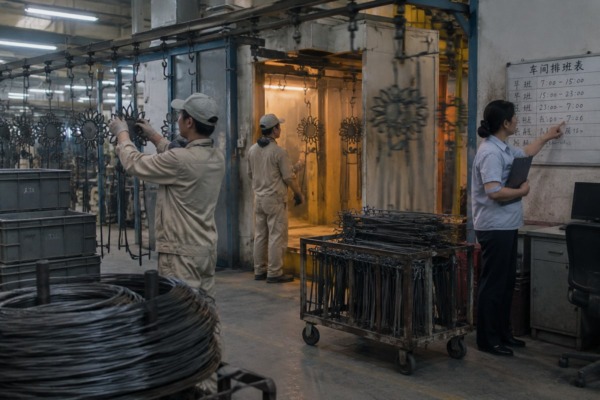
Equipment and people set the ceiling on output. But the slowest step, not the average step, determines what actually ships. So your questions should hunt for the bottleneck. Here is the question set I use before any contract, along with what a solid answer looks like.
The Question Table I Bring to Every Audit
| Frage | Warum es wichtig ist | A solid answer looks like |
|---|---|---|
| How many production lines do you run, and for which products? | Separates total capacity from capacity for your item | Specific line counts tied to product families |
| How many shifts does the powder coating line work? | Finishing is a classic bottleneck for coated inserts | Clear shift patterns, plus curing and drying floor space |
| Wie viele Maschinen besitzen Sie, und wie alt sind sie? | CNC-Biegemaschinen und Kraft hämmer setzen technische Durchsatzgrenzen | Eine Maschinenliste mit Alter und Leistung pro Maschine |
| Wie hoch ist Ihre Mitarbeiterzahl und das Verhältnis von Fachkräften zu Hilfskräften? | Komplexe kundenspezifische Schmiedefähigkeiten erfordern erfahrene Hände | Ein benanntes Verhältnis, nicht nur eine Kopfzahl |
| Wie oft ersetzen Sie Vorrichtungen und Spannmittel? | Verschleißende Werkzeuge verursachen Maßabweichungen bei Hochvolumenläufen | Ein schriftlicher Ersatzplan |
| Welcher Prozentsatz der Schritte wird ausgelagert? | Externe Lieferanten schaffen versteckte Kapazitätsengpässe | Benannte Lieferanten mit eigener bestätigter Kapazität |
| Wie handhaben Sie die Rohstoffbeschaffung in der Hochsaison? | Materialengpässe bringen Zeitpläne still zum Scheitern | Lieferantenverträge und Stahlbestand vor Ort |
| Was ist Ihre Mindestbestellmenge im Vergleich zum maximalen Monatsvolumen? | Zeigt, wo Ihre Bestellung in deren Komfortzone liegt | Eine Spanne, mit Ihrer Bestellung bequem darin |
Testen Sie die Zahlen gegeneinander
Manche Käufer argumentieren, dass eine große Gesamtkapazität ausreichend beruhigend ist. Ich widerspreche, und ich erhebe diesen Einwand bewusst: Eine Fabrik kann eine hohe Gesamtkapazität haben, aber eine geringe Kapazität für Ihren spezifischen Einsatz, wenn ihre Werkzeuge, Fertigungslinie 3, oder ihr Inspektionsteam auf etwas anderes spezialisiert ist. Prüfen Sie auch die Proportionen gegeneinander. Wenn ein Lieferant ein massives Volumen behauptet, aber 150 Mitarbeiter und 200 Maschinen meldet, dann müssen Personal, Schichten und Hallenfläche 4 alle diese Geschichte stützen. Wenn ein Bein des Dreibeins wackelt, wackelt die ganze Behauptung.
Wie bestätige ich, dass eine Fabrik meine Lieferfristen einhalten kann, ohne die Qualität zu beeinträchtigen?
Ein US-Beschaffungsmanager stellte mir kürzlich eine direkte Frage über WhatsApp: Könnte unsere Gartenstab-Linie ihre Oktober-Frist einhalten? Ihre Angst galt Verzögerungen, nicht dem Preis.
Bestätigen Sie Fristen, indem Sie historische Lieferzeiten für Aufträge ähnlicher Größe prüfen, Qualitätskontrollpunkte auditieren, Kapazitäten in der Hochsaison verifizieren und Beispielzeitpläne für kleine, mittlere und große Aufträge anfordern. Bauen Sie gestaffelte Lieferungen und Inspektionsmeilensteine in den Vertrag ein, bevor Sie etwas unterschreiben.
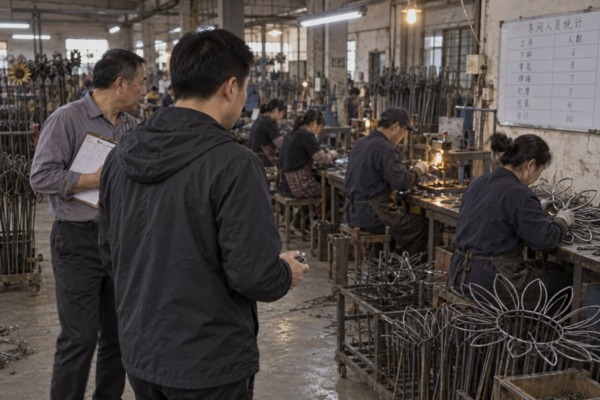
Geschwindigkeit und Qualität ziehen auf jeder Metalllinie gegeneinander. Eine Fabrik, die Ihr Volumen physisch produzieren kann, kann dennoch versagen, wenn Inspektion, Sortierung oder Nacharbeit der Oberfläche alles verlangsamen. In unserer Exporterfahrung mit den Vereinigten Staaten und Europa sind die Käufer, die Katastrophen vermeiden, diejenigen, die beide Seiten vor der Unterzeichnung überprüfen.
Warum die Hochsaison alles verändert
Hier ist der Punkt, den ich am meisten betone, weil ich ihn erlebt habe: Viele Fabriken haben in der Nebensaison reichlich Kapazität, aber ihre Auftragsbücher sättigen sich in der Hochsaison, und dann verzögern sie. Ein Angebot, das in einem ruhigen Monat gegeben wird, sagt Ihnen fast nichts über eine Lieferung, die in einem geschäftigen Monat fällig ist. Fragen Sie also direkt nach ihrem Auftragsbuch für die Hochsaison. Fragen Sie, wie sie priorisieren, wenn die Linien voll sind. Fragen Sie, was letzte Hochsaison mit den Fristen passiert ist. Ihre Antworten offenbaren die Zuverlässigkeit der Lieferkette besser als jedes Versprechen.
Schritte zur Fristüberprüfung
| Schritt | Was anzufordern ist | Warum es Sie schützt |
|---|---|---|
| Historische Lieferzeiten | Erfüllungsunterlagen für ähnlich große Projekte | Vergangene Leistung schlägt zitierte Versprechen |
| Hochsaison-Status | Aktuelles und prognostiziertes Auftragsbuch für Ihr Versandfenster | Nebensaison-Kapazität entspricht nicht der Hochsaison-Kapazität |
| Karte der Qualitätskontrollstandards | Jeder Kontrollpunkt vom Schneiden bis zum Verpacken | Hochgeschwindigkeitsläufe dürfen weder Oberfläche noch Struktur beeinträchtigen |
| Fläche der Veredelungshalle | Fläche, die nach der Beschichtung dem Trocknen und Aushärten gewidmet ist | Enge Veredelungsbereiche drosseln den Ausstoß spät im Prozess |
| Live-Verfolgung | ERP- oder Echtzeit-Meilensteinberichterstattung | Manuelle Updates verbergen Verzögerungen, bis es zu spät ist |
| Beispiel-Zeitpläne | Written schedules for small, medium, and large orders | Forces the factory to commit to realistic lead times |
Finally, resist the surge trap. Some factories can sprint for two weeks to impress a new client. Long-term sourcing decisions should rest on sustained throughput and on-time delivery history, not on a one-off burst.
Welche Warnsignale deuten darauf hin, dass eine Fabrik ihre Produktionskapazitäten übertreibt?
We learned this lesson the hard way when an outsourced forging partner missed two shipments. Since then, our team treats every impressive capacity claim as a hypothesis to test.
Warnsignale sind vage Antworten zu Prozessschritten, inkonsistente Kapazitätszahlen über verschiedene Gespräche hinweg, die Weigerung, Versandunterlagen zu teilen, Schlagzeilen zu Produktionsfläche oder Mitarbeitern, die nicht der Realität entsprechen, leerer Bestand und Kapazitätsangaben nur in Tonnen oder Quadratmetern.
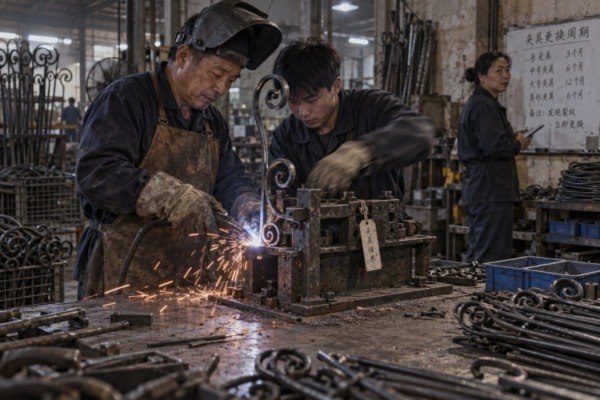
Some buyers push back on my skepticism. They argue that stated capacity is still useful because it quickly narrows the field. They are right, up to a point. A claimed number is a good filter for shortlisting. It is a terrible basis for a signature. Treat every claim as a starting point for verification, and watch for these signals.
- Capacity quoted only in vague units. Claims like 30,000 square meters of floor area, more than 200 skilled workers, or nearly 1,000 hours per week of production sound impressive. But none of them converts directly into your inserts. Demand piece-level numbers for your design.
- Figures that do not reconcile. If the daily number times working days misses the monthly claim, or the monthly number times twelve overshoots the annual figure, someone is guessing.
- Refusal to share process data. A factory hiding its shipment records, bottleneck steps, or outsourcing percentage is hiding its limits.
- Multiple sites blended into one number. Larger suppliers often combine several factories into one headline figure. Separate each site's real contribution before you trust the total.
- Empty blank racks in a claimed busy period. No semi-finished inventory means no buffer and no momentum.
- Electricity records that contradict utilization claims. Machines that supposedly run two shifts should show it in the power bill.
- Location in an environmental red zone. Government-mandated power cuts or emissions shutdowns can halt capacity overnight, no matter how many machines sit on the floor.
- Peak output sold as sustained output. Production scalability means holding volume for months, not surging for a week.
Then decide with a simple framework: approve the supplier when verified throughput, quality yield, and shipment history align with your order profile; monitor closely when evidence is partial; reject when claims and evidence diverge.
Fazit
Capacity is a chain of constraints, not a single number. Verify shipping documents, count workers and blanks, test peak-season availability, and sign only with factories whose evidence matches their claims.
Möchten Sie die in diesem Artikel erwähnten Produkte beschaffen? Details ansehen und hier ein Angebot anfordern:
Fußnoten
1. U.S. Customs and Border Protection provides authoritative guidance on trade compliance and verification for imported goods. ↩︎
2. ISO standards provide the global framework for defining and measuring production capacity and manufacturing quality. ↩︎
3. Technical overview of the powder coating process commonly used as the finishing line for wrought iron products. ↩︎
4. The International Trade Centre offers resources for businesses to manage supply chain logistics and verify supplier capabilities. ↩︎
Weitere Artikel
Diese könnten Ihnen auch helfen.

Wie kann man die Produktionskapazitäten einer Fabrik für Schmiedeeisen-Steckkomponenten aus der Ferne überprüfen?
Learn to verify a wrought iron insert factory's true production capacity with shipping records, inventory checks, and peak-season…
Weiterlesen →
Welche Fragen sollten Sie Schmiedeeisen-Einsatz-Lieferanten stellen, um unzuverlässige frühzeitig zu erkennen?
Learn to verify a wrought iron insert factory's true production capacity with shipping records, inventory checks, and peak-season…
Weiterlesen →
How to Verify a Chinese Wrought Iron Supplier's License and Export Qualifications?
Learn to verify a wrought iron insert factory's true production capacity with shipping records, inventory checks, and peak-season…
Weiterlesen → English
  Spanish
  German
  Arabic