
How to Set Up an Early Warning System for Wind Turbine Delivery Delays?
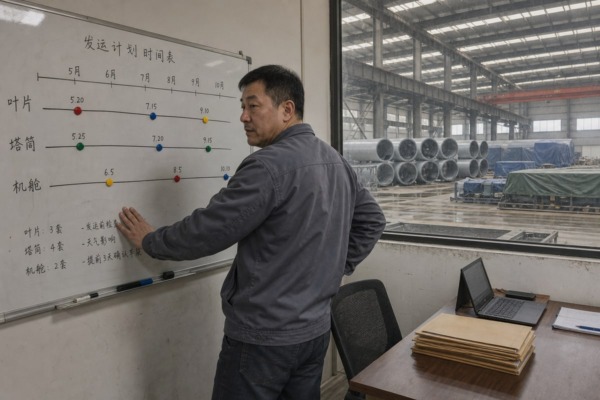
An early warning system for wind turbine delivery delays is something I learned to value the hard way — our Zhejiang factory once watched one late shipment unravel a whole season.
Para configurar un sistema de alerta temprana para retrasos en la entrega de turbinas eólicas, defina hitos críticos de entrega, establezca fechas prometidas originales como referencia, monitoree señales de proveedores, logística y clima, fije umbrales de alerta basados en la gravedad, y adjunte un manual de respuesta predefinido para que los equipos puedan acelerar, reprogramar o escalar antes de que las fechas se deslicen.
That single sentence hides a lot of practical work. In this article, I will break it into four steps. First, we find the risk indicators that appear before a delay. Second, we set communication rules with suppliers. Third, we pick tracking tools. Finally, we build a response plan that turns alerts into action.
¿Cómo puedo identificar los indicadores clave de riesgo que señalan un posible retraso en la entrega de una turbina eólica antes de que ocurra?
Years ago, a film supplier kept confirming our petal-blade order was on track — right up until the day it wasn't. That taught me delays whisper before they shout.
Los indicadores clave de riesgo incluyen hitos intermedios incumplidos por parte de los proveedores, confirmaciones más lentas, validez de cotizaciones acortada, solicitudes de depósitos mayores, escasez de espacios en buques, congestión portuaria, retenciones aduaneras, desviaciones de cronograma, agotamiento del margen de tiempo, retrasos en las fechas de congelación de ingeniería y perturbaciones climáticas. Realice un seguimiento de estos en comparación con las fechas prometidas originalmente, no con la revisión más reciente.
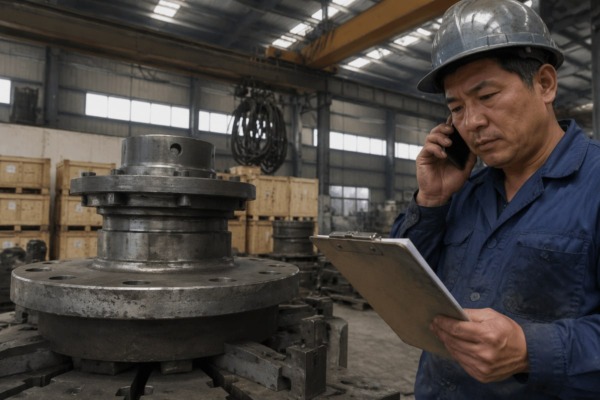
A missed ship date is the last symptom, not the first. Wind turbine components — blades, towers, nacelles, bearings, forgings, transformers — carry long lead times 1 and heavy lead time variability. By the time the shipment is officially late, your recovery options are already thin. The trick is to watch weak signals upstream, the same way turbine condition monitoring works. In one wind-energy study, gearbox temperature anomalies 2 were detected up to 37 days before failure. Delivery risk behaves the same way: the abnormal pattern shows up long before the visible failure.
Four Families of Leading Indicators
| Signal family | Examples | What it usually means |
|---|---|---|
| Supplier behavior | Slower confirmations, shortened quote validity, bigger deposit requests, missed intermediate milestones | Capacity strain or cash pressure at the factory |
| Logistics | Vessel slot scarcity, route changes, customs delays, missed pickup windows | Transport bottlenecks forming before the cargo moves |
| Project controls | Schedule drift, float burn, blocked predecessor tasks, delayed engineering freeze dates | The plan is eroding even if no date has "slipped" yet |
| External environment | Port congestion, severe weather, geopolitical and ESG risk scores, trade policy shifts | Disruption arriving from outside the supply chain |
Baseline Against Original Dates
Here is a trap I fell into myself. If your system compares progress only to the latest revised date, it quietly normalizes drift. Always keep the original promised date as the baseline. Then layer predictive analytics 3 over historical supplier performance to forecast which packages carry the widest variability. That is where your supply chain visibility effort pays off first.
¿Qué protocolos de comunicación debería establecer con mis proveedores para obtener actualizaciones en tiempo real sobre el estado de producción y envío?
One of our US procurement partners messages me on WhatsApp every Friday for photo updates. That simple rhythm has caught more problems than any software we run.
Establecer un protocolo escalonado: una cláusula contractual de alerta temprana que requiera notificación inmediata de cualquier riesgo en el cronograma, informes semanales de hitos con evidencia fotográfica, un panel compartido de excepciones, un SLA de respuesta de 24 horas y un contacto de escalamiento designado en ambas partes para desviaciones críticas.
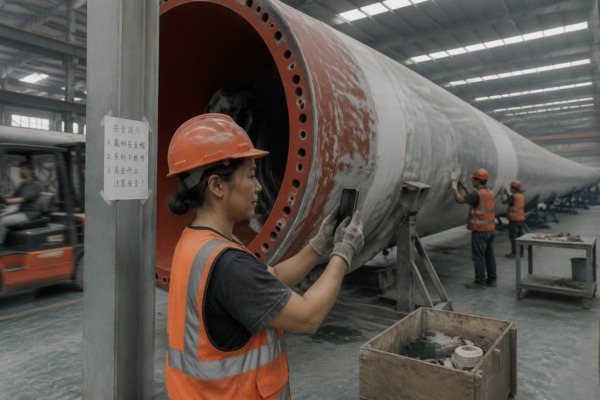
Good protocols are boring on purpose. They remove the guesswork about who says what, when, and through which channel. In our export business, the orders that go wrong are almost always the ones where updates were "on request" instead of on a fixed schedule. For wind turbine packages, where EPC project management deadlines stack cranes, crews, and vessel bookings on top of each delivery, that discipline matters even more. Here is the sequence I recommend.
- Write the early warning duty into the contract. A formal clause should oblige the supplier to notify you immediately of any potential schedule deviation — not just confirmed delays. Silence becomes a breach, not a courtesy issue.
- Define a milestone report template. Fix the format: production stage, percent complete, photos or video, next milestone date, and open risks. Consistent templates make project milestone tracking comparable week over week.
- Agree on channels by urgency. Formal reports go by email. Fast signals go by instant messaging. In my experience, a supplier who answers WhatsApp within hours but goes quiet before a milestone is telling you something.
- Set response SLAs. Every query gets an answer within 24 hours. Every flagged risk gets a mitigation proposal within 48.
- Share one exception dashboard. Both sides see the same status. Disputes shrink when the data is common.
- Review the protocol quarterly. Update it as routes, packages, and suppliers change.
The goal is simple: bad news should travel to you faster than the cargo does.
¿Qué herramientas de seguimiento o software puedo usar para monitorear mis componentes de turbinas eólicas en toda la cadena de suministro?
Every order forces a trade-off at our plant: how much visibility is worth paying for? Full sensor coverage on a pinwheel container is overkill; on a turbine blade convoy, it is cheap insurance.
Use layered tools: IoT GPS and condition sensors on components, AIS vessel tracking merged with weather data, a digital control tower to unify logistics feeds, computer vision port monitoring, and a logistics digital twin running Monte Carlo simulations to stress-test delivery schedules.
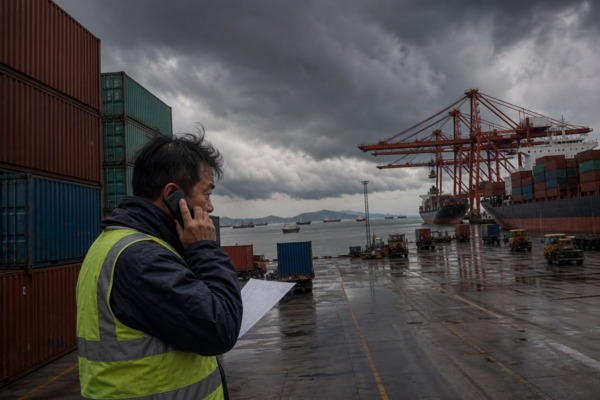
No single tool covers the whole journey. Wind turbine components pass through factories, trucks, ports, vessels, and site gates, and each handoff is a blind spot unless you instrument it. Think in layers, then integrate the layers so alerts land in one place instead of five inboxes. That integration is the heart of modern logistics risk management.
| Tool layer | What it monitors | Delay signals it catches |
|---|---|---|
| IoT GPS + condition sensors (shock, tilt, humidity) | Component location and physical state in transit | Damage events that trigger inspection holds; real-time asset tracking gaps |
| AIS vessel tracking + meteorological feeds | Ship positions and weather windows | Route deviations, storm delays, unsafe offshore transfer windows |
| Digital control tower | All logistics data in one platform | Information silos between manufacturer, carrier, and site |
| Computer vision + satellite port imagery | Congestion at key transit ports | Queues forming before authorities officially report them |
| Logistics digital twin (Monte Carlo simulation) | The whole delivery schedule under stress | Which disruption scenarios actually break the critical path |
| Project-control platforms | Schedule drift, blockers, forecasts | Float burn and blocked predecessors before dates move |
Two additions matter for oversized cargo logistics. First, run digital route surveys before transport begins — bridge clearances 4 and turn radii kill more blade deliveries than storms do. Second, consider edge-computing devices on transport units, so rerouting logic keeps working during satellite or cellular outages. And a buyer objection I hear often: "Do I need all this on day one?" No. A spreadsheet pilot with milestones and alert rules works for one project. Fragility only appears once multiple suppliers, vessels, and sites pile up.
How do I build a response plan so I can act quickly once my early warning system flags a possible delay?
The best habit in our order book is simple: set warning nodes before each delivery date, follow up early, and trigger backup plans at the first sign of slippage.
Build a response plan by mapping each alert type to a severity level, assigning a named owner with a response SLA, pre-approving playbook actions — confirm, expedite, resequence, source alternates, escalate — and documenting every event with timestamps for contract and extension-of-time records.

An alert without a plan is just anxiety with a timestamp. At our factory, we place warning nodes on the calendar ahead of every promised date, tighten the follow-up rhythm as the date approaches, and switch to the backup option the moment a delay shows its first sign. That habit scales directly to turbine deliveries. Some vendors advertise alerting windows of 24–72 hours before an issue hits the SLA — useful, but only if the response is already scripted.
Severity Levels and Pre-Approved Actions
| Gravedad | Trigger | Pre-approved action | Decision owner |
|---|---|---|---|
| Bajo | Minor drift, ample float remaining | Confirm status, increase check-in frequency | Expeditor |
| Medio | Milestone missed, buffer shrinking | Expedite parts, resequence downstream work | Project manager |
| Alto | Critical-path package at risk, backup exists | Activate alternate source or route | Procurement lead |
| Crítico | Critical-path package at risk, no backup | Commercial escalation, air freight review, contract remedies | Senior management |
Keep a human in the loop for the top two rows. Air freight, resequencing, and commercial escalation are judgment calls, not automation tasks — the system should flag risk and leave the decision to people. Let me also be honest about the limits: no early warning system eliminates uncertainty, and warning lead times will vary by package type, route, and supplier maturity. That is not a reason to skip it; it is a reason to measure it. Track alert precision, lead time gained, recovery rate, and critical-path days avoided. Those metrics turn contingency planning from a cost center into visible supply chain resilience — and the audit trail supports any extension-of-time claim later.
Conclusión
Delays rarely announce themselves. Watch the weak signals, wire them into one dashboard, and rehearse your playbook — the cheapest delay is the one you catch weeks early.
Notas al pie
1. International agency providing reports on renewable energy supply chains and manufacturing lead times. ↩︎
2. U.S. Department of Energy resource for wind turbine technology research and reliability studies. ↩︎
3. Leading professional association for technology and engineering providing research on predictive data analytics. ↩︎
4. U.S. Department of Transportation guidelines for infrastructure safety and oversized cargo transport. ↩︎
Más artículos
También podrían resultarle útiles.

¿Cómo verificar remotamente las capacidades de producción de una fábrica para componentes enchufables de hierro forjado?
Set up an early warning system for wind turbine delivery delays by tracking supplier, logistics, and weather signals…
Leer más →
¿Cómo evaluar la capacidad de producción de una fábrica al obtener insertos de hierro forjado?
Set up an early warning system for wind turbine delivery delays by tracking supplier, logistics, and weather signals…
Leer más →
¿Qué preguntas debe hacer a los proveedores de insertos de hierro forjado para detectar a los poco fiables a tiempo?
Set up an early warning system for wind turbine delivery delays by tracking supplier, logistics, and weather signals…
Leer más → English
  Spanish
  German
  Arabic