How to Determine the Minimum Order Quantity (MOQ) for Windmills?
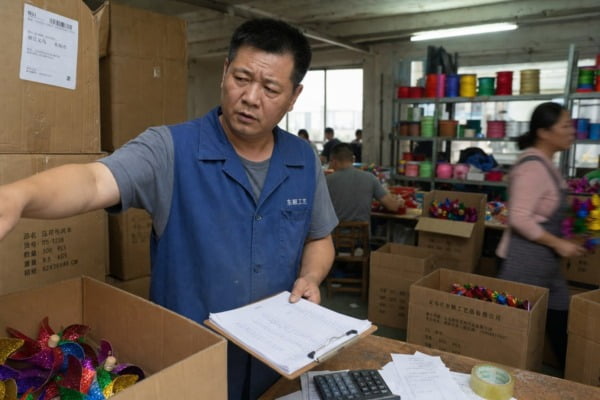
Buyers ask me about the minimum order quantity (MOQ) for windmills almost daily. Guess wrong, and you either overpay per unit or drown in unsold stock. Our production line taught me a smarter way.
To determine the minimum order quantity (MOQ) for windmills, compare the supplier’s break-even quantity against your own demand forecast, then adjust for freight, storage, and customization costs. Most decorative windmill MOQs range from 500 to 5,000 pieces, with larger orders lowering the per-unit landed cost.
That short answer hides a lot of moving parts. Freight rates, tooling costs, and inventory risk all pull the number in different directions. Let me walk you through each factor, step by step, the same way I explain it to procurement managers who visit our Zhejiang facility.
How can I negotiate a lower MOQ with a Chinese windmill supplier?
Last spring, a US distributor messaged me on WhatsApp asking to cut our standard pinwheel MOQ in half for a trial run. We said yes — but only because she framed the request the right way.
To negotiate a lower MOQ with a Chinese windmill supplier, offer a paid sample or pilot order, share a realistic annual forecast, accept standard colors instead of custom ones, and propose repeat purchase commitments. Many suppliers will accept 50–70% of the listed MOQ for promising buyers.
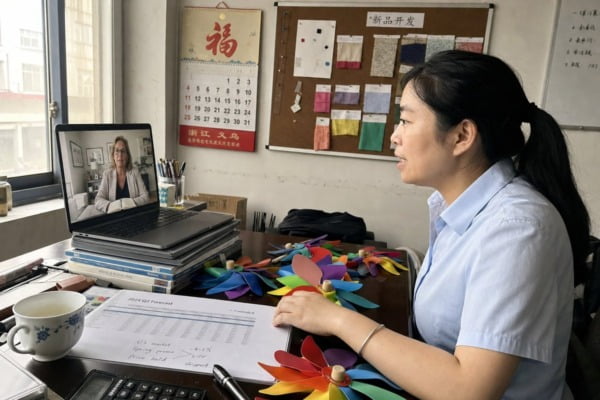
Negotiation is not about pushing harder. It is about lowering the supplier's risk. When our team quotes an MOQ, we are protecting ourselves against setup waste, idle machine time, and manufacturing overhead 1 that a tiny order cannot absorb. If you remove those risks, the MOQ becomes flexible.
What actually works at the negotiating table
Here are the supplier negotiation strategies that move the needle with factories like ours:
- Start with a paid sample order. A sample proves you are serious. It also lets our QC team confirm your spec before mass production.
- Show your forecast. If you tell me you plan to order 20,000 pinwheels per year, I will happily accept a first order of 1,000 instead of 3,000.
- Accept our existing tooling. Custom dies and printing plates are the biggest MOQ driver. Choose from our standard petal shapes and the minimum drops fast.
- Combine SKUs. Ordering 500 each of four colorways is far easier for us than 2,000 of one brand-new design, because we can batch print runs together.
- Be flexible on lead time. If we can slot your order into a gap in our schedule, lead time management works in your favor and we can waive part of the setup charge.
What to avoid
Do not open by demanding a 90% MOQ cut with no context. Do not hide that you are a first-time buyer — we always find out. And do not push the price and the MOQ down at the same time; pick one battle per order.
What factors influence the MOQ for custom pinwheel orders?
One trade-off I weigh on every quote is tooling cost versus order size. A buyer once asked for a ladybug-face pinwheel with custom-printed fabric petals, and the printing plate alone reshaped the whole MOQ conversation.
Custom pinwheel MOQs are driven by tooling and printing plate costs, minimum fabric or plastic sheet purchase quantities, color count, packaging customization, setup time per production run, and quality control sampling. More customization means higher fixed costs, which pushes the minimum order upward.
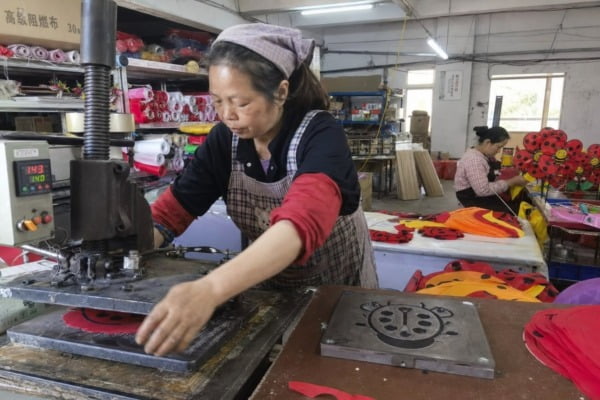
Every custom element adds a fixed cost. That fixed cost must be spread across enough units to keep the unit production cost sensible. This is basic break-even analysis 2, and it explains why a fully custom pinwheel might carry a 5,000-piece MOQ while our stock rainbow design ships at 500.
The main cost drivers, ranked
| Factor | Impact on MOQ | Why it matters |
|---|---|---|
| Custom printing plates / dies | Very high | One-time cost must be amortized over the run |
| Custom fabric or PET sheet | High | Our raw material suppliers impose their own MOQs |
| Number of colors per design | Medium–high | Each color adds a print pass and setup time |
| Custom center characters (bees, ladybugs) | Medium | New molds or hand-assembly steps |
| Branded retail packaging | Medium | Printed boxes have their own print minimums |
| Stick material (wood vs. plastic) | Low | Both are stocked; swaps cost little |
The hidden multiplier: material minimums
This surprises many buyers. Even when our factory would accept a small run, our upstream suppliers of glossy polyester fabric 3 or coated paper will not sell us half a roll. Their minimums cascade down into your MOQ. This is a supply chain logistics reality, not a negotiating tactic.
Certification and QC
Products headed for the US or EU children's market may need safety testing 4. Testing costs are fixed per design, so they behave exactly like tooling: they favor bigger runs. Our QC team also pulls inspection samples from every batch, and a tiny batch makes that sampling proportionally more expensive.
How do I calculate the right order quantity to balance cost and inventory risk?
A lesson I learned early in exporting: the cheapest unit price can produce the most expensive year. One of our European wholesalers once tripled an order for a bulk discount, then stored slow-moving stock for fourteen months.
Calculate your ideal order quantity by estimating annual demand, adding ordering and freight costs, then weighing bulk purchase discounts against inventory carrying costs of roughly 20–30% of stock value per year. Order the quantity where total landed cost per sold unit is lowest.
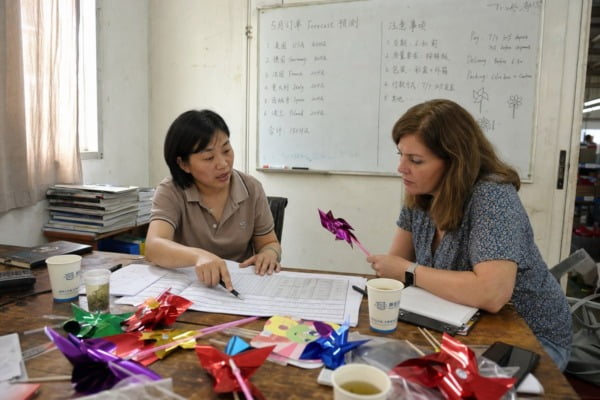
There is no universal MOQ formula, and anyone selling you one is oversimplifying. But there is a reliable process. I share this worksheet with distributors, and it applies whether you buy decorative garden windmills or wind turbine components for renewable energy procurement — the economics are identical, only the numbers scale.
The five-step worksheet
- Estimate annual demand. Use last year's sales or a conservative market test figure.
- Total the fixed costs per order. Include supplier setup fees, inspection, documentation, and inbound freight.
- Get the landed unit cost at each quantity tier. Ask your supplier for tiered pricing 5 at, say, 1,000 / 3,000 / 10,000 units.
- Add carrying costs. Warehousing, insurance, financing, and obsolescence typically run 20–30% of inventory value annually.
- Compare total cost per sold unit across the tiers. The lowest number wins — not the lowest unit price.
A simplified example
| Order size | Unit price | Freight per unit | Carrying cost per unit | True cost per unit |
|---|---|---|---|---|
| 1,000 pcs | $0.60 | $0.18 | $0.04 | $0.82 |
| 3,000 pcs | $0.52 | $0.11 | $0.08 | $0.71 |
| 10,000 pcs | $0.45 | $0.07 | $0.19 | $0.71 |
Notice the middle tier ties the largest tier. Economies of scale 6 flatten out once carrying costs bite. Here is my personal rule from years of quoting sea freight 7: always factor shipping into the math, because per-unit freight drops sharply as volume rises — generally, the bigger the order, the better the freight economics. Pinwheels are light but bulky, so shipping and freight constraints often decide the sweet spot more than the factory price does. Filling a carton, a pallet, or a container completely is where real savings hide.
Why do MOQs vary between standard and customized windmill designs?
When buyers browse our catalog, the same question keeps coming up: why is the MOQ for a stock rainbow pinwheel 500 pieces, while their custom sunflower stake design requires 5,000?
Standard windmill designs use existing tooling, stocked materials, and shared production runs, so suppliers accept small orders. Customized designs require new plates, dedicated material purchases, and separate setup, forcing suppliers to set higher MOQs to recover those fixed costs and reach break-even.
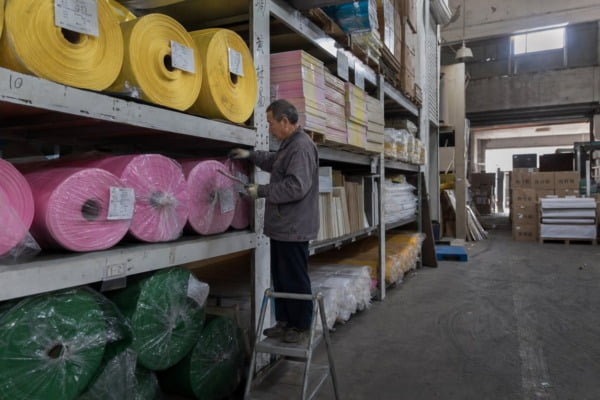
The gap comes down to one word: sharing. Standard products let a supplier share costs across many customers. Custom products make one customer carry everything alone. Once you see MOQ through that lens, every quote makes sense.
Standard vs. custom: a side-by-side view
| Cost element | Standard design | Custom design |
|---|---|---|
| Tooling and plates | Already paid off | New, buyer-funded |
| Raw material | Pulled from shared stock | Purchased specifically |
| Production scheduling | Batched with other orders | Dedicated run |
| Manufacturing overhead per unit | Low, spread widely | High on small runs |
| Safety testing | Done once, reused | May need fresh testing |
| Typical MOQ | 500–1,000 pcs | 3,000–10,000 pcs |
Why this gap will not disappear
Some buyers hope digital printing will erase custom MOQs. It helps for graphics, but it cannot fix material minimums, die-cutting setup, or assembly line changeovers. Our production line still needs about the same changeover time for a 500-piece custom run as for a 5,000-piece one. That fixed time is pure overhead on a small order.
A smart middle path
We often propose semi-custom options: standard petal shapes with your custom center character, or stock designs with custom retail packaging. This hybrid approach keeps most of the shared-cost advantage while still giving your product shelf differentiation. Distributors testing a new market almost always start here, then graduate to fully custom designs once demand is proven and larger runs are justified.
Conclusion
Guessing at MOQ costs money on both ends. Work backward from supplier break-even and your own demand, factor in freight, and negotiate with data — that is how smart windmill buyers order.
Footnotes
1. Authoritative Wikipedia entry explaining indirect costs in manufacturing processes. ↩︎
2. Explains the economic concept underlying supplier cost recovery and MOQ pricing. ↩︎
3. Provides material background on the polyester used in pinwheel manufacturing. ↩︎
4. Reliable Wikipedia overview of product safety and quality testing procedures. ↩︎
5. Explains how prices decrease as order volume increases, a core component of tiered pricing. ↩︎
6. Background concept explaining why larger orders lower per-unit costs. ↩︎
7. IMO is the UN authority governing international sea freight and shipping standards. ↩︎
More Articles
You might also find these helpful.
¿Qué certificaciones de resistencia al fuego debo verificar al comprar molinetes?
Learn how to negotiate windmill MOQ with Chinese suppliers, from break-even math to sample orders, and cut your…
Read More →
¿Cómo verificar la autenticidad de los informes de prueba al comprar turbinas eólicas?
Learn how to negotiate windmill MOQ with Chinese suppliers, from break-even math to sample orders, and cut your…
Read More →
¿Cómo comprobar si los materiales de los molinetes contienen químicos dañinos?
Learn how to negotiate windmill MOQ with Chinese suppliers, from break-even math to sample orders, and cut your…
Read More → English
  Spanish
  German
  Arabic