
How to Negotiate Flexible Order Adjustment Terms With Suppliers?

Flexible order adjustment terms are the clauses buyers forget until it hurts. Every spring, distributors message our Zhejiang pinwheel workshop begging to change orders mid-production — and rigid contracts punish them.
Negocie términos flexibles de ajuste de pedidos intercambiando certeza por flexibilidad: ofrezca pronósticos, volúmenes comprometidos o contratos más largos a cambio de bandas de cantidad escritas de ±10–20%, ventanas de cambio definidas y reglas de reparto de costos preacordadas. Documente cada condición en el contrato antes de que comience la producción.
I sit on the supplier side of this table every week. So I know exactly which asks get accepted and which get quietly rejected. In this guide, I will walk you through the clauses to request, the concessions that unlock them, the right timing, and your options when a supplier says no. Let’s get practical.
¿Qué términos flexibles de ajuste de pedidos debería pedirle a mi proveedor de pinwheels que incluya en nuestro contrato?
A US distributor once challenged me on a call: list every adjustment clause you would honestly sign. That conversation reshaped how we draft our pinwheel contracts today.
Solicite bandas de ajuste de cantidad de ±10–20%, ventanas de cambio escalonadas (congelado, semilíquido, líquido), una ventana definida de cancelación de pedidos, escalonamiento de MOQ, cambios en la fecha de entrega, derechos de reorden a precios bloqueados y reglas escritas de reparto de costos para cualquier cambio realizado después de la colocación del pedido.

Here is the core principle I follow when drafting our own agreements: the contract must state the conditions under which an order can be adjusted, the exact time windows for change orders and quantity increases or decreases, and the cost-sharing rules for any change. Vague goodwill fails. Written windows work.
Start With the Three-Zone Model
The most useful structure I have seen is the tiered flexibility window. It splits the production timeline into three zones. Each zone defines what can change and who pays.
| Zone | Typical Window (Our Pinwheel Contracts) | What You Can Change | Who Bears the Cost |
|---|---|---|---|
| Liquid | More than 25 days before production | Quantity ±20%, petal colors, designs, packaging, delivery dates | Supplier absorbs most or all costs |
| Slush | 10–25 days before production | Quantity ±10%, delivery dates, packaging details | Costs shared by a pre-agreed formula |
| Frozen | Production underway or under 10 days out | Labels and shipping instructions only | Buyer pays full change costs |
This model works because it mirrors real production. Before we buy mylar film and cut wooden dowels, changes cost us little. After die-cutting starts, every change has a price.
Clauses Beyond Quantity
Do not stop at quantity bands. Push for lead time flexibility, so delivery dates can shift by an agreed number of days with notice. Ask for Cantidad Mínima de Pedido 1 tiering, so you can mix assembled pinwheels and DIY craft kits to hit one combined MOQ. Request reorder rights at locked prices for a defined period. Finally, add a living-document clause inside your Master Service Agreement 2 that mandates a review of terms every six or twelve months. Markets shift. Your contract should be allowed to shift with them.
¿Cómo convenzo a mi proveedor para que acepte cambios de cantidad o diseño después de realizar el pedido?
Each change request forces a trade-off on our side: idle die-cutting machines and wasted mylar film versus a frustrated long-term buyer. Buyers who grasp that math usually win a yes.
Convenza a los proveedores reduciendo su incertidumbre en lugar de pedirles que la absorban. Ofrezca previsiones de demanda continuas, volúmenes anuales comprometidos, contratos más largos, pagos fiables o una prima de precio modesta. Luego proponga reglas escritas de control de cambios para que cada ajuste siga un proceso predecible y previamente acordado.

Understand why suppliers resist first. When you place an order for 50,000 rainbow pinwheels, we immediately commit working capital. We buy film rolls, schedule printing, book labor, and reserve line capacity. A sudden change strands those commitments. Your job is to show that saying yes will not cost us more than saying no.
Trade Something the Supplier Values
Flexibility is rarely free, and buyers who expect it for free usually stall. The good news: what suppliers want most is predictability, and predictability is cheap for you to give.
| Qué ofreces | Flexibility It Typically Unlocks | Why the Supplier Says Yes |
|---|---|---|
| Rolling 3-month demand forecast | Priority capacity and wider adjustment bands | Better demand forecasting accuracy lets us pre-plan materials |
| Committed annual volume | MOQ relief, reorder rights, design-change windows | Guaranteed volume offsets change-related waste |
| 12–24 month contract | Locked volume-based pricing tiers with a ±15% band | Long horizon justifies short-term disruption |
| Clean, automated payments | Extended change windows and faster approvals | Payment reliability protects our cash flow |
| Capacity reservation fee | Line time secured without fixed SKU commitments | We get paid for uptime, you decide the mix late |
Use Structural Tools, Not Just Charm
Two mechanisms make late changes physically possible. First, postponement: we can print and die-cut the base petal shapes early, then delay final assembly, packaging, or labeling until your latest demand signal arrives. Second, a circular buy-back clause: if you adjust an order downward, we credit or repurpose the excess raw materials into your next production run. Some of our larger distribution partners go further and adopt a light Vendor Managed Inventory 3 model, sharing sell-through data so we adjust production before a formal change order is even needed. Frame every request around interests, not positions, and put the agreed process in writing.
¿Cuál es el mejor momento para sacar a relucir la flexibilidad de pedidos durante las negociaciones de precios?
One lesson took me years to learn: buyers who request flexibility after squeezing our lowest quote nearly always hear no. Timing decides everything in these talks.
Plantee la flexibilidad de pedidos con antelación — antes de que se fije el precio final, idealmente durante la etapa de RFQ, las renovaciones anuales de contratos o al comprometerse a volúmenes mayores. Los proveedores incluyen la flexibilidad en las cotizaciones; pedirla después parece una concesión gratuita y normalmente se rechaza o se penaliza con un precio más alto.
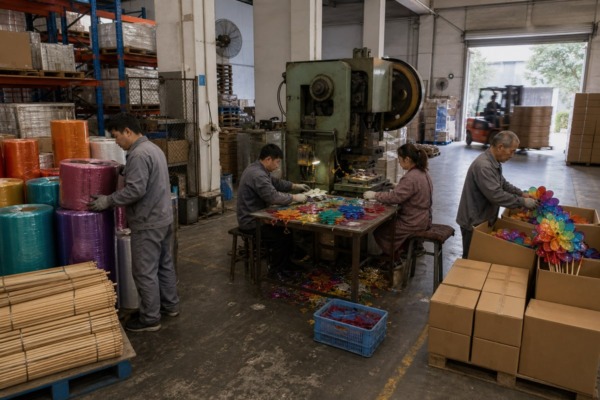
Think of flexibility as a product feature with a cost. If you ask for it while the quote is still open, we can build it into the price honestly. If you ask after we have cut our margin to the bone, there is nothing left to fund it. That is why flexible order adjustment terms belong in the first negotiation round, right beside price and MOQ.
The Four Best Negotiation Moments
| Moment | Your Leverage | Qué pedir |
|---|---|---|
| RFQ or first order | Competitive tension between suppliers | Baseline adjustment band and order cancellation window |
| Annual contract renewal | Proven track record and forward volume | Wider bands, an SLA, extended payment terms |
| A volume step-up | New committed spend | MOQ tiering and reorder rights at locked prices |
| Scheduled contract review | The living-document clause you added earlier | Term updates matched to market shifts |
Bundle Flexibility With the Commercial Package
Smart buyers negotiate flexibility, payment terms, and delivery cadence as one bundle. Standard payment benchmarks like Net 30, Net 60, and Net 90 give you a shared reference point; extended terms align your cash outflow with actual inventory turnover. A phased structure works well here — for example, 45-day terms initially, moving to 60 days after six months if volumes grow as projected. Pair this with smaller, more frequent deliveries. That single change cuts your costos de mantenimiento de inventario 4, lets you correct orders faster, and nudges the whole relationship toward just-in-time procurement. Finally, anchor performance in a Service Level Agreement with pre-negotiated penalties and rewards tied to fulfillment flexibility and lead-time agility. When we sign an SLA like that with a distributor, both sides know exactly what a missed notice window costs — and disputes almost disappear.
What should I do if my supplier refuses to adjust the order once production has started?
Last summer, a European client wanted petal colors swapped after our printing run was half finished. We refused the reprint — but found three other ways to help.
First, ask exactly what production stage your order has reached and which units remain changeable. Then negotiate partial solutions: adjust unstarted units, delay final packaging, split shipments, or resell excess stock. Offer to share change costs, and add written adjustment windows to your next contract.

A refusal at this stage is rarely final. It usually means "not the way you asked." Your job is to shrink the request until it becomes affordable for the supplier. Here is the escalation path I recommend to our own buyers, because it is the path that actually works on our factory floor.
- Map the production status. Ask which steps are done: film printed, petals die-cut, dowels cut, units assembled, goods packed. Only completed steps are truly frozen.
- Target the unstarted portion. If 40% of units are not yet assembled, propose applying your quantity or design change to that portion only.
- Invoke postponement. Ask the supplier to finish base manufacturing but hold final assembly, labeling, or packaging until you confirm final demand.
- Offer cost-sharing. Volunteer to cover a fair share of scrapped materials or rebooked labor. This one gesture converts most refusals into negotiations.
- Redirect the excess. Split shipments across warehouses, push surplus toward your safety stock levels, or ask for a buy-back credit on unused raw materials.
- Fix the contract afterward. Whatever the outcome, negotiate defined change windows and cost-sharing rules into the next agreement so this never repeats.
Handled this way, even a hard refusal becomes a stress test that improves your supply chain agility. In the petal-color case I mentioned, we applied the new colors to the unprinted half, postponed packaging by ten days, and split the shipment. The client kept their launch date. Nobody ate a catastrophic loss.
Conclusión
Rigid orders create risk; vague promises create disputes. Written adjustment windows, quantity bands, and cost-sharing rules protect both sides. Negotiate flexible order adjustment terms early — then honor them.
Notas al pie
1. Wikipedia defines minimum order quantities and their role in manufacturing and supply chain management. ↩︎
2. Wikipedia provides a standard definition and legal framework for Master Service Agreements in commercial relationships. ↩︎
3. Britannica explains the supply chain strategy where suppliers manage inventory levels based on buyer data. ↩︎
4. Statista provides data and insights into inventory management practices and their economic impact. ↩︎
Más artículos
También podrían resultarle útiles.

¿Cómo verificar remotamente las capacidades de producción de una fábrica para componentes enchufables de hierro forjado?
Negotiate flexible order adjustment terms by trading forecasts or volume commitments for written quantity bands, change windows, and…
Leer más →
¿Cómo evaluar la capacidad de producción de una fábrica al obtener insertos de hierro forjado?
Negotiate flexible order adjustment terms by trading forecasts or volume commitments for written quantity bands, change windows, and…
Leer más →
¿Qué preguntas debe hacer a los proveedores de insertos de hierro forjado para detectar a los poco fiables a tiempo?
Negotiate flexible order adjustment terms by trading forecasts or volume commitments for written quantity bands, change windows, and…
Leer más → English
  Spanish
  German
  Arabic