
How to Negotiate Flexible Order Adjustment Terms With Suppliers?

Flexible order adjustment terms are the clauses buyers forget until it hurts. Every spring, distributors message our Zhejiang pinwheel workshop begging to change orders mid-production — and rigid contracts punish them.
通过以确定性换取灵活性来协商灵活的订单调整条款:提供预测、承诺量或更长期合同,以换取书面的±10–20%数量区间、明确的变更窗口和预先约定的成本分摊规则。在生产开始前,将所有条件记录在合同中。
I sit on the supplier side of this table every week. So I know exactly which asks get accepted and which get quietly rejected. In this guide, I will walk you through the clauses to request, the concessions that unlock them, the right timing, and your options when a supplier says no. Let’s get practical.
我应该要求风车供应商在合同中包含哪些灵活订单调整条款?
A US distributor once challenged me on a call: list every adjustment clause you would honestly sign. That conversation reshaped how we draft our pinwheel contracts today.
要求±10–20%的数量调整区间、分级变更窗口(冻结、半冻结、流动)、明确的订单取消窗口、MOQ分级、交货日期调整、锁定价格下的重新订购权,以及下单后任何变更的书面成本分摊规则。

Here is the core principle I follow when drafting our own agreements: the contract must state the conditions under which an order can be adjusted, the exact time windows for change orders and quantity increases or decreases, and the cost-sharing rules for any change. Vague goodwill fails. Written windows work.
Start With the Three-Zone Model
The most useful structure I have seen is the tiered flexibility window. It splits the production timeline into three zones. Each zone defines what can change and who pays.
| Zone | Typical Window (Our Pinwheel Contracts) | What You Can Change | Who Bears the Cost |
|---|---|---|---|
| Liquid | More than 25 days before production | Quantity ±20%, petal colors, designs, packaging, delivery dates | Supplier absorbs most or all costs |
| Slush | 10–25 days before production | Quantity ±10%, delivery dates, packaging details | Costs shared by a pre-agreed formula |
| Frozen | Production underway or under 10 days out | Labels and shipping instructions only | Buyer pays full change costs |
This model works because it mirrors real production. Before we buy mylar film and cut wooden dowels, changes cost us little. After die-cutting starts, every change has a price.
Clauses Beyond Quantity
Do not stop at quantity bands. Push for lead time flexibility, so delivery dates can shift by an agreed number of days with notice. Ask for 最低起订量 1 tiering, so you can mix assembled pinwheels and DIY craft kits to hit one combined MOQ. Request reorder rights at locked prices for a defined period. Finally, add a living-document clause inside your Master Service Agreement 2 that mandates a review of terms every six or twelve months. Markets shift. Your contract should be allowed to shift with them.
下单后,我如何说服供应商接受数量或设计变更?
Each change request forces a trade-off on our side: idle die-cutting machines and wasted mylar film versus a frustrated long-term buyer. Buyers who grasp that math usually win a yes.
通过减少供应商的不确定性来说服他们,而不是要求他们吸收不确定性。提供滚动需求预测、承诺的年度采购量、更长期的合同、可靠的付款或适度的价格溢价。然后提出书面的变更控制规则,使每一次调整都遵循可预测的、预先约定的流程。
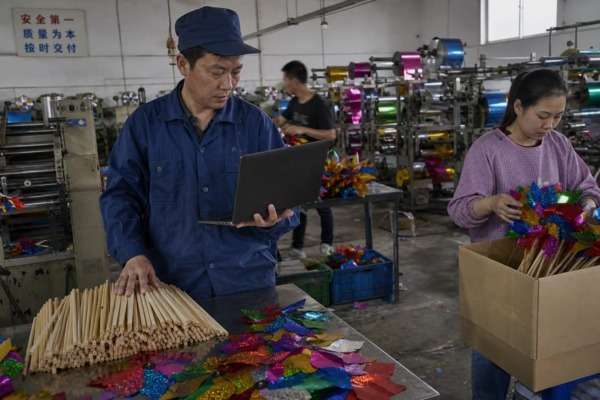
Understand why suppliers resist first. When you place an order for 50,000 rainbow pinwheels, we immediately commit working capital. We buy film rolls, schedule printing, book labor, and reserve line capacity. A sudden change strands those commitments. Your job is to show that saying yes will not cost us more than saying no.
Trade Something the Supplier Values
Flexibility is rarely free, and buyers who expect it for free usually stall. The good news: what suppliers want most is predictability, and predictability is cheap for you to give.
| 你提供什么 | Flexibility It Typically Unlocks | Why the Supplier Says Yes |
|---|---|---|
| Rolling 3-month demand forecast | Priority capacity and wider adjustment bands | Better demand forecasting accuracy lets us pre-plan materials |
| Committed annual volume | MOQ relief, reorder rights, design-change windows | Guaranteed volume offsets change-related waste |
| 12–24 month contract | Locked volume-based pricing tiers with a ±15% band | Long horizon justifies short-term disruption |
| Clean, automated payments | Extended change windows and faster approvals | Payment reliability protects our cash flow |
| Capacity reservation fee | Line time secured without fixed SKU commitments | We get paid for uptime, you decide the mix late |
Use Structural Tools, Not Just Charm
Two mechanisms make late changes physically possible. First, postponement: we can print and die-cut the base petal shapes early, then delay final assembly, packaging, or labeling until your latest demand signal arrives. Second, a circular buy-back clause: if you adjust an order downward, we credit or repurpose the excess raw materials into your next production run. Some of our larger distribution partners go further and adopt a light Vendor Managed Inventory 3 model, sharing sell-through data so we adjust production before a formal change order is even needed. Frame every request around interests, not positions, and put the agreed process in writing.
在价格谈判中,何时是提出订单灵活性的最佳时机?
One lesson took me years to learn: buyers who request flexibility after squeezing our lowest quote nearly always hear no. Timing decides everything in these talks.
尽早提出订单灵活性要求——在最终定价锁定之前,最好是在询价阶段、年度合同续签时,或承诺更大采购量时。供应商会将灵活性计入报价;事后提出看起来像是免费让步,通常会被拒绝或以惩罚性价格回应。
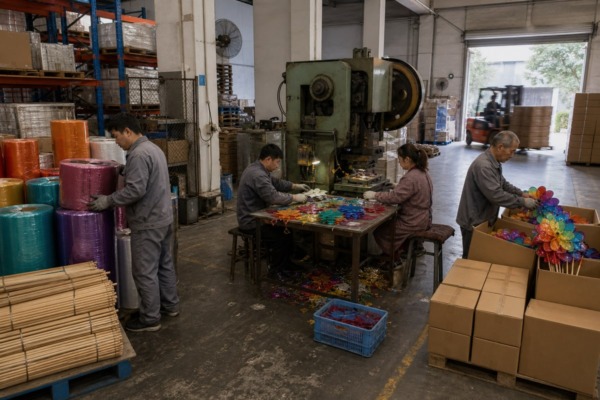
Think of flexibility as a product feature with a cost. If you ask for it while the quote is still open, we can build it into the price honestly. If you ask after we have cut our margin to the bone, there is nothing left to fund it. That is why flexible order adjustment terms belong in the first negotiation round, right beside price and MOQ.
The Four Best Negotiation Moments
| Moment | Your Leverage | 应要求提供什么 |
|---|---|---|
| RFQ or first order | Competitive tension between suppliers | Baseline adjustment band and order cancellation window |
| Annual contract renewal | Proven track record and forward volume | Wider bands, an SLA, extended payment terms |
| A volume step-up | New committed spend | MOQ tiering and reorder rights at locked prices |
| Scheduled contract review | The living-document clause you added earlier | Term updates matched to market shifts |
Bundle Flexibility With the Commercial Package
Smart buyers negotiate flexibility, payment terms, and delivery cadence as one bundle. Standard payment benchmarks like Net 30, Net 60, and Net 90 give you a shared reference point; extended terms align your cash outflow with actual inventory turnover. A phased structure works well here — for example, 45-day terms initially, moving to 60 days after six months if volumes grow as projected. Pair this with smaller, more frequent deliveries. That single change cuts your inventory carrying costs 4, lets you correct orders faster, and nudges the whole relationship toward just-in-time procurement. Finally, anchor performance in a Service Level Agreement with pre-negotiated penalties and rewards tied to fulfillment flexibility and lead-time agility. When we sign an SLA like that with a distributor, both sides know exactly what a missed notice window costs — and disputes almost disappear.
What should I do if my supplier refuses to adjust the order once production has started?
Last summer, a European client wanted petal colors swapped after our printing run was half finished. We refused the reprint — but found three other ways to help.
First, ask exactly what production stage your order has reached and which units remain changeable. Then negotiate partial solutions: adjust unstarted units, delay final packaging, split shipments, or resell excess stock. Offer to share change costs, and add written adjustment windows to your next contract.

A refusal at this stage is rarely final. It usually means "not the way you asked." Your job is to shrink the request until it becomes affordable for the supplier. Here is the escalation path I recommend to our own buyers, because it is the path that actually works on our factory floor.
- Map the production status. Ask which steps are done: film printed, petals die-cut, dowels cut, units assembled, goods packed. Only completed steps are truly frozen.
- Target the unstarted portion. If 40% of units are not yet assembled, propose applying your quantity or design change to that portion only.
- Invoke postponement. Ask the supplier to finish base manufacturing but hold final assembly, labeling, or packaging until you confirm final demand.
- Offer cost-sharing. Volunteer to cover a fair share of scrapped materials or rebooked labor. This one gesture converts most refusals into negotiations.
- Redirect the excess. Split shipments across warehouses, push surplus toward your safety stock levels, or ask for a buy-back credit on unused raw materials.
- Fix the contract afterward. Whatever the outcome, negotiate defined change windows and cost-sharing rules into the next agreement so this never repeats.
Handled this way, even a hard refusal becomes a stress test that improves your supply chain agility. In the petal-color case I mentioned, we applied the new colors to the unprinted half, postponed packaging by ten days, and split the shipment. The client kept their launch date. Nobody ate a catastrophic loss.
结论
Rigid orders create risk; vague promises create disputes. Written adjustment windows, quantity bands, and cost-sharing rules protect both sides. Negotiate flexible order adjustment terms early — then honor them.
脚注
1. Wikipedia defines minimum order quantities and their role in manufacturing and supply chain management. ↩︎
2. Wikipedia provides a standard definition and legal framework for Master Service Agreements in commercial relationships. ↩︎
3. Britannica explains the supply chain strategy where suppliers manage inventory levels based on buyer data. ↩︎
4. Statista provides data and insights into inventory management practices and their economic impact. ↩︎
更多文章
你可能也会觉得这些有帮助。

如何远程验证锻铁插入式组件工厂的生产能力?
Negotiate flexible order adjustment terms by trading forecasts or volume commitments for written quantity bands, change windows, and…
阅读更多 →
采购锻铁嵌件时如何评估工厂的生产能力?
Negotiate flexible order adjustment terms by trading forecasts or volume commitments for written quantity bands, change windows, and…
阅读更多 →
应该向锻铁嵌件供应商提出哪些问题以尽早识别不可靠的供应商?
Negotiate flexible order adjustment terms by trading forecasts or volume commitments for written quantity bands, change windows, and…
阅读更多 → English
 Spanish
 German
 Arabic
 Chinese