
我如何判断供应商的锻铁配件价格是否合理?
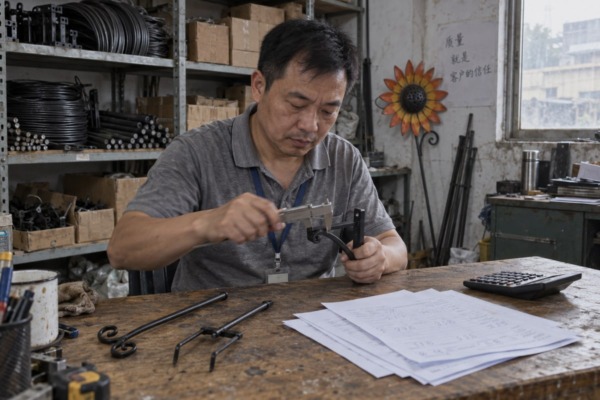
上个月,我为我们花园桩产品线比较了三份锻铁配件报价——价格差距令人震惊 钢材市场行情 1。付多了,利润就没了。付少了,质量就垮了。
当供应商的锻铁配件价格处于相同尺寸、材料等级、表面处理和数量的市场范围内,并且报价单将原材料、加工、涂层、包装和运费分开列明时,这个价格就是合理的。至少比较三份规格完全相同的报价,并核查当前的钢材市场行情。
这个答案听起来简单,但每一步都有陷阱。我在这张桌子的两边都坐过——从我们浙江工厂向买家报价,也从我们自己的分供应商处采购金属部件。下面,我将带你详细了解我如何判断一份报价是诚实的、注水的,还是危险地低廉。
在评估锻铁配件报价时,我应该比较哪些因素?
一位美国采购经理曾给我发来两份"完全相同"的报价,但它们毫无相似之处——一份按件计价,一份按公斤计价。我们的出口团队每周都会看到这种混乱。
比较产品类别、管件尺寸、连接类型、材料等级、壁厚、表面处理、重量和订单数量。确认价格是按件、按千克还是按批次计算,以及每份报价中是否包含制造、涂层、检测、包装和运费。
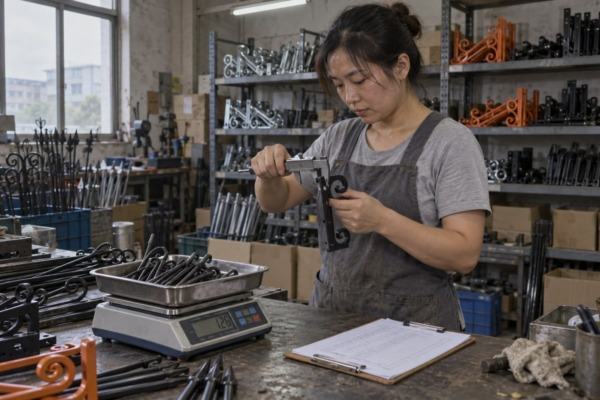
在比较任何数字之前, 先对齐规格。以下是我在审核用于我们装饰产品的金属杆、插脚和支架报价时使用的清单:
| 因素 | 为何重要 | 要向供应商询问什么 |
|---|---|---|
| 产品类别 | 装饰性和工业配件的定价方式不同 | "这是装饰性的、可锻的、铸造的,还是真正的锻铁?" |
| 材料等级 | 决定强度和价格基础 | "它符合哪些ASTM标准?" |
| 壁厚/重量 | 最大的隐藏成本杠杆 | "在报价中注明每件重量" |
| 表面处理 | 涂层使基础成本增加20–30% | "是否包含镀锌或粉末喷涂?" |
| 计价单位 | 按件还是按公斤,差别巨大 | "两种单位都报价,以便我交叉核对" |
| 数量 | 数量触发批量订单折扣 | "你们的阶梯价格门槛是多少?" |
先确定产品类别
"锻铁配件"这个说法被随意使用。在水暖供应中,类似部件通常是可锻铸铁、铸造铸铁或球墨铸铁,有各自的产品目录价格表。在装饰性金属制品中,它指的是大门、支架和栏杆,设计复杂度决定成本。价格区间证明了这一点:锻铁原材料大约每磅2到5美元,简单装饰件20到100美元,栏杆每线性英尺70到200美元,大门每线性英尺200到600美元。与此同时,一个螺纹 可锻铸铁 2 1/2英寸弯头可能只需3.08美元,而1英寸90°弯头约3.29美元。
比较前先统一单位
我将每份报价都换算成每件成本和每公斤成本。一份报价可能包含更重的部件或更好的涂层。如果不统一单位,你就是在拿苹果和锚比。
我如何判断低价是否意味着材料或工艺质量较低?
在我们浙江的粉末喷涂线上,削减涂层厚度每件能省下真金白银——但会让我们失去每一个复购订单。低价报价通常恰恰隐藏了这种选择。
低价往往意味着壁厚减薄、粉末涂层变薄、焊缝强度不足,或者材料从熟铁或锻铁被替换为廉价铸件。订购前应通过索取轧制厂检测报告、涂层厚度规格、焊缝样品以及对确切材料标准的确认来核实质量。
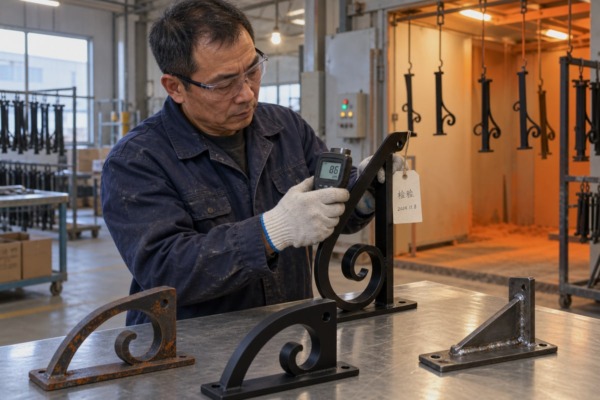
钢材价格是透明的。任何人都可以查看实时市场行情。所以当一家工厂的报价远低于同行时,这个差距不可能来自更便宜的钢材。根据我的经验,它来自三个地方:壁厚、涂层厚度或焊接偷工。我教过我自己的采购员,把异常低的报价视为危险信号,而不是便宜货。
| 被削减的是什么 | 如何显现 | 长期风险 |
|---|---|---|
| 壁厚 | 更轻的部件,外观相同 | 负载下弯曲、开裂 |
| 粉末涂层微米数 | Glossy at delivery, thin under a gauge | Rust within one or two outdoor seasons |
| Welding process | Spot welds instead of full seams | Joint failure, product returns |
| Material swap | Cast iron sold as wrought iron | Brittleness, poor corrosion resistance |
The Forged Steel Comparison Test
True wrought iron has lower carbon content and higher ductility than cast iron, which justifies a real price premium. The same logic applies in any forged steel comparison: labor-intensive hand-forging or repeated hammering costs more than mass-produced casting. If a supplier claims hand-forged quality at casting prices, one of those claims is false.
Demand Mill Test Reports
I ask for mill test reports on the raw material and a written spec for coating thickness. Surface finish quality is measurable, not a matter of opinion. Remember that hot-dip galvanizing or powder coating typically adds 20% to 30% to the base price — a quote that includes coating at bare-metal prices deserves scrutiny.
除了单价之外,我还应该注意哪些隐藏成本?
Packaging is the trade-off we debate every season at our factory: thicker cartons cost more upfront but prevent the damage claims that destroy a distributor's margin.
注意模具和铸模费用、切割和螺纹加工费、镀锌或粉末喷涂附加费(会增加20%到30%)、测试和认证费、包装成本、最低起订量罚款、运费和物流成本以及进口关税。始终比较总到岸成本,而不是单价。

The unit price is only the opening line of the story. When we quote OEM projects for US and European wholesalers, I insist the full cost picture goes on paper, because surprises at invoice time kill trust. Here is where the hidden money sits:
| 隐藏成本 | When It Appears | 典型影响 |
|---|---|---|
| Tooling / mold fees | Custom shapes and intricate patterns | One-time charge, sometimes significant |
| Cutting and threading | Non-standard lengths or connections | Per-piece surcharge |
| Galvanizing / powder coating | Added after the base quote | +20–30% on base price |
| Testing and certification | Regulated or branded orders | Fixed fee per batch |
| Minimum order quantity | 小批量试单 | Higher per-unit price below MOQ |
| Freight and logistics costs | Always — often quoted separately | Varies by volume, route, and season |
| Import duties | At customs in your market | Depends on HS code and origin |
Two more traps deserve attention. First, weight-based bulk pricing: suppliers often unlock meaningful bulk order discounts only at specific tonnage thresholds, so ask exactly where those breaks sit before you fix your order size. Second, reclaimed or specialty pieces: guides on salvaged ironwork show total costs far above the sticker price once restoration, adaptation, transport, and fitting are added. A cheap purchase price can become an expensive project.
My rule is simple. I build a landed-cost sheet for every serious quote: unit price, plus every line above, divided by usable pieces received. Damaged packaging that causes returns belongs in that math too — a lesson our export team learned early and never forgot.
我如何验证供应商的定价符合行业标准?
I learned to track steel prices the hard way, after a supplier blamed a sudden increase on "the market" — the market had actually dropped that quarter.
通过跟踪实时钢铁市场价格、要求提供原材料、弯曲、焊接、表面处理、包装和利润的成本明细,并与已公布的经销商价格表进行对标,来验证定价。公平的锻铁配件价格应处于相同规格的已记录市场价格区间内。
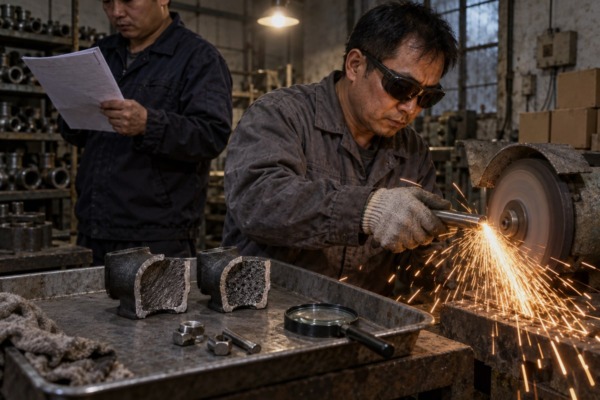
Track Raw Material Market Trends
全球 iron ore 3 and scrap metal indices are the primary drivers of shifting market rates, and they are public. Before I negotiate anything, I check current steel pricing. Raw material market trends tell you instantly whether a supplier's "price increase" is real or invented. This is the single most powerful verification tool available, and it costs nothing.
Use the Six-Part Cost Breakdown
I require every quote to be split into six parts: raw material, bending and forming, welding, surface treatment, packaging, and profit. Honest factories provide this willingly. Evasive ones refuse — and that refusal is itself an answer. With the breakdown in hand, I can challenge any single line instead of arguing about a lump sum.
Benchmark Against Published Price Sheets
Compare against distributor price sheets, not just retail web listings, because contractor and retail pricing differ sharply. Regional context matters too:
| Benchmark | Typical Range |
|---|---|
| Raw wrought iron stock | $2–$5 per pound |
| Simple ornamental items | $20–$100 per piece |
| Threaded malleable elbows | ~$3 per piece |
| Indian dealer listings (cast/ductile) | INR 120–300/kg |
| Indian directory listing | INR 82/kg |
| US marketplace items | ~$14–$650 per item |
A quote that looks expensive in one market may be normal in another.
When a Premium Is Justified
Higher prices are fair when backed by real value: ISO certification, documented ASTM standards compliance 4, short lead times, or custom fabrication. Specialty work commands more too — authentic puddled iron with verified slag inclusion for historical restoration, metallurgical compatibility checks that prevent galvanic corrosion against antique iron, precision machining for legacy pipe diameters, and carbon-neutral production using electric arc furnaces all carry legitimate premiums. The question is whether the premium is explained, not whether it exists.
结论
A fair wrought iron fittings price is never just the lowest number. Match specifications, demand cost breakdowns, benchmark steel rates, and compare landed costs — then buy with confidence.
有兴趣采购本文提到的产品?在此查看详情并索取报价:
脚注
1. The global hub for metal trading, offering real-time pricing data for steel and other industrial metals. ↩︎
2. Professional engineering society providing standards for malleable iron and other materials used in piping and fittings. ↩︎
3. Provides global data and statistics on iron ore and steel production trends for industry benchmarking. ↩︎
4. The leading authority for technical standards for materials, products, systems, and services including iron fittings. ↩︎
更多文章
你可能也会觉得这些有帮助。
如何远程验证锻铁插入式组件工厂的生产能力?
Compare wrought iron fittings price quotes by matching spec, unit basis, and coating to spot fair pricing and…
阅读更多 →
采购锻铁嵌件时如何评估工厂的生产能力?
Compare wrought iron fittings price quotes by matching spec, unit basis, and coating to spot fair pricing and…
阅读更多 →
应该向锻铁嵌件供应商提出哪些问题以尽早识别不可靠的供应商?
Compare wrought iron fittings price quotes by matching spec, unit basis, and coating to spot fair pricing and…
阅读更多 → English
 Spanish
 German
 Arabic
 Chinese