
How Do I Calculate Landed Cost for Wrought Iron Fittings to My Warehouse?
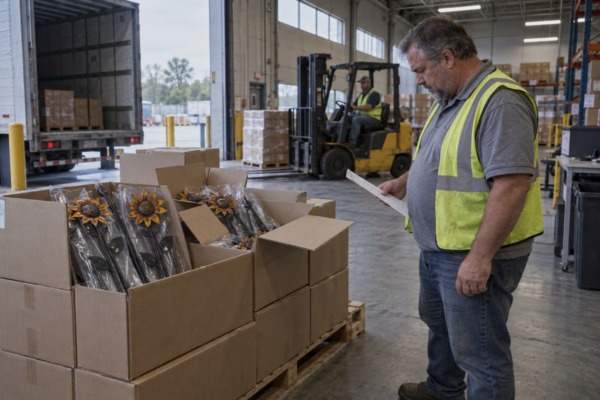
Last year, a buyer priced our wrought iron garden fittings off the factory invoice alone. Her margin vanished at customs. Calculating [landed cost](https://zhufengpinwheels.com/?p=930) for wrought iron fittings prevents that shock.
要计算锻铁配件的到岸成本,请将出厂价、内陆运输费、出口报关费、海运费、保险费、目的地清关费、关税和税费、港口费、仓库拆箱费以及损坏津贴相加。将总额除以收到的可销售单位数量,即可得出到仓库的真实单位成本。
That formula sounds simple. In practice, most importers miss two or three line items. Below, I break down every cost layer, show a worked example, and flag the fees that quietly kill margins.
计算锻铁管件的到岸成本时,应包含哪些费用?
My costliest early lesson came from quoting a garden stake order EXW and watching the buyer's forwarder bill her twice for origin charges. Cost stacking starts with clear definitions.
包括工厂发票价值、国内卡车运输至港口、出口报关、海运费、货物保险、目的地清关费、关税和税费、港口费用、仓库拆箱以及损坏损失津贴。每一项成本都必须分摊到单个单位。

Here is the working formula I share with every distributor who buys metal garden décor from our Zhejiang factory. Unit landed cost = factory value ÷ quantity + domestic trucking + export declaration + 海运 1 + insurance + destination clearance, duty and Section 301 tax + port miscellaneous fees + warehousing and devanning + damage-loss allocation. The key discipline is allocating every charge to a single product. Many buyers only count the factory price. They skip taxes and logistics. Then their gross margin forecast falls apart at the warehouse door.
A Worked Example for 500 Fittings
Assume you buy 500 wrought iron fittings at $4.00 FOB Ningbo. Here is how the stack builds:
| Cost Line | 金额 | Per Unit |
|---|---|---|
| Factory invoice (500 × $4.00) | $2,000 | $4.00 |
| Ocean freight (LCL share) | $450 | $0.90 |
| Import insurance premiums (0.4% of value) | $8 | $0.02 |
| Duties, 301 tariffs, MPF, HMF | $760 | $1.52 |
| Brokerage, terminal, port fees | $280 | $0.56 |
| Inland delivery and devanning | $350 | $0.70 |
| Damage allowance (2%) | — | $0.15 |
| True landed cost | ~$3,848 | ~$7.85 |
That $4.00 fitting really costs almost double at your dock.
Watch Your Incoterms
Incoterms decide which costs already sit inside the supplier quote. An EXW price pushes origin trucking and export declaration onto you. FOB includes them. CIF also includes freight and insurance. Double counting freight is one of the most common errors I see. Also decide upfront which inventory valuation methods your accountant will use, because capitalized landed cost flows straight into your balance sheet.
从中国进口锻铁配件时,我如何计入关税和税费?
A procurement manager in Ohio once messaged me on WhatsApp, shocked that duties on her iron fittings order nearly matched the factory invoice. Tariff stacking on Chinese steel is real.
将锻铁配件归入正确的HS编码,通常为品目7307,然后将基础税率、针对中国商品的301条款关税、可能适用的232条款钢铁关税、0.3464%的MPF以及海运货物0.125%的HMF叠加到您的海关价值上。

Duty math starts with HS code classification. Wrought iron fittings generally fall under Chapter 73 2, and often heading 7307 specifically. Do not guess based on the product name. A wrong code can trigger penalties, retroactive duty bills, or shipment holds. We always confirm the code with the customs broker before our clients place large orders, because one digit changes the entire calculation.
The Duty Layers That Stack on Chinese Iron
| Duty Layer | Typical Rate | Applies When |
|---|---|---|
| Base HTS duty | Varies by subheading | Always |
| Section 301 tariff | Often 25% | Goods of Chinese origin |
| Section 232 steel tariff | 25%+ | Covered steel/iron articles |
| MPF | 0.3464% (with min/max caps) | Most formal US entries |
| HMF | 0.125% | Ocean freight arrivals |
| AD/CVD | Can exceed 100% | Products under trade remedy orders |
The Two Traps Buyers Miss
First, anti-dumping duties and countervailing duties. Iron pipe fittings are frequent targets of trade remedy orders. These duties are not shown on basic landed cost calculators, and they can exceed 100% of value. Always run an AD/CVD scope check before ordering.
Second, customs valuation assists. If you supply your Chinese factory with proprietary molds, dies, or tooling, US customs requires you to add that tooling value to your declared customs value. We remind our OEM clients of this whenever we build custom tooling for their designs.
哪种运输方式能为我提供锻铁管件最准确的到岸成本?
Every season, our export team weighs the same trade-off: fill a full container from our Zhejiang warehouse, or ship smaller LCL lots faster. The choice changes cost accuracy dramatically.
Full container load (FCL) ocean freight gives the most accurate landed cost for wrought iron fittings because rates are fixed per container, weight limits are clear, and per-unit allocation is simple. LCL adds variable handling fees, while air freight is rarely economical for heavy iron.

Wrought iron is heavy, dense, and bulky relative to its value. That profile makes freight the second-biggest cost driver after duties. Here is how the three main methods compare for cost predictability:
| 方法 | Cost Predictability | 最适合 | Watch Out For |
|---|---|---|---|
| FCL ocean | High — one fixed container rate | Large orders that fill 20'/40' | Container weight limits on dense iron |
| LCL ocean | Medium — charged by CBM/weight | 小批量试单 | Layered handling and devanning fees |
| 空运 | Low value for money | Urgent samples only | Chargeable weight punishes dense metal |
Why FCL Wins on Accuracy
With FCL, one container rate covers thousands of units. You divide once and your allocation is done. With LCL, freight forwarding charges arrive in fragments: origin consolidation, destination deconsolidation, and warehouse fees that appear after booking. Each fragment blurs your per-unit math.
Surcharges You Must Model
Base ocean rates are never the full story. Add the Bunker Adjustment Factor (BAF) for fuel volatility and Peak Season Surcharges (PSS) from roughly August through October. For heavy fittings, also confirm your inland drayage carrier can handle the container weight, because overweight iron loads sometimes require tri-axle chassis at extra cost.
For mixed shipments, allocate freight by weight across SKUs. Weight-based allocation is defensible for dense iron goods. Use value-based allocation for insurance and ad valorem duties instead.
What Hidden Fees Do I Often Miss When Estimating Landed Cost for My Wrought Iron Fittings Order?
During one devanning inspection at a client's warehouse, we counted chipped coatings, bent stakes, and a surprise chassis fee on the drayage invoice. Hidden costs hide in plain sight.
Commonly missed fees include terminal handling charges, customs brokerage fees, chassis and drayage surcharges, demurrage, warehouse devanning, damage-loss allowances, currency conversion spreads, and the inventory carrying cost of capital tied up during long ocean transits. Each one silently erodes your projected gross margin.
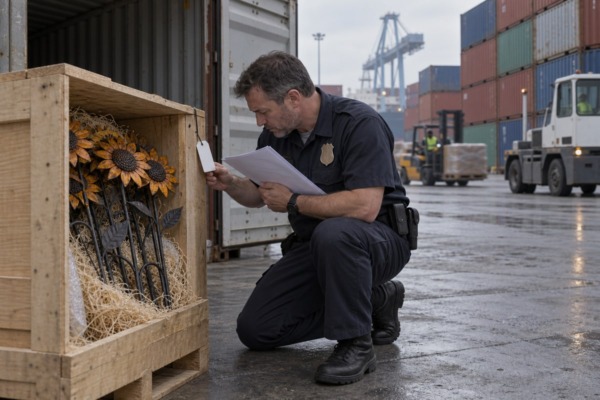
Small fees do the most damage on budget-priced hardware. A $150 brokerage bill 3 barely matters on electronics. On low-margin iron fittings, it can erase the profit on dozens of units. Run through this checklist before you finalize any landed cost estimate:
- Terminal handling charges at both origin and destination ports.
- Customs brokerage fees for entry filing, document handling, and any inspection charges.
- 滞箱费和滞港费 if your container sits at the port or your dock too long.
- Chassis fees and liftgate service on the final delivery leg — heavy palletized iron often needs both.
- Devanning and receiving labor at your warehouse, especially for floor-loaded containers.
- Damage and shortage losses — divide by sellable units received, never units ordered.
- Currency conversion spreads — convert every invoice to one base currency using a consistent policy.
The Costs Finance Teams Add
Two forward-looking items deserve a line in your model. First, the inventory carrying cost of capital. Ocean transit for iron fittings can tie up cash for five to eight weeks, and that opportunity cost belongs in the true cost to warehouse. Second, carbon border rules. The EU's 碳边境调节机制 4 already requires importers to report embedded emissions on iron and steel goods, and a carbon price will follow. If you sell into Europe, start collecting emissions data from your supplier now. Some logistics teams keep landed cost narrow for customs purposes, while finance teams extend it for pricing. Both views are valid — just pick one definition and align your inventory valuation methods with it.
结论
Landed cost is a decision-making number, not a customs formula. Stack every cost, allocate per unit, and your margins on wrought iron fittings will survive contact with reality.
有兴趣采购本文提到的产品?在此查看详情并索取报价:
脚注
1. Official US agency regulating oceanborne international transportation for the protection of importers. ↩︎
2. Authoritative US government database for Harmonized Tariff Schedule codes and duty rates. ↩︎
3. Official US government resource for understanding customs broker roles and import entry fees. ↩︎
4. Official European Commission portal for the Carbon Border Adjustment Mechanism affecting iron and steel imports. ↩︎
更多文章
你可能也会觉得这些有帮助。

如何远程验证锻铁插入式组件工厂的生产能力?
Calculate landed cost for wrought iron fittings by adding freight, duties, and fees to factory price, then divide…
阅读更多 →
采购锻铁嵌件时如何评估工厂的生产能力?
Calculate landed cost for wrought iron fittings by adding freight, duties, and fees to factory price, then divide…
阅读更多 →
应该向锻铁嵌件供应商提出哪些问题以尽早识别不可靠的供应商?
Calculate landed cost for wrought iron fittings by adding freight, duties, and fees to factory price, then divide…
阅读更多 → English
 Spanish
 German
 Arabic
 Chinese