如何比较风车串供应商报价以获得公平价格?
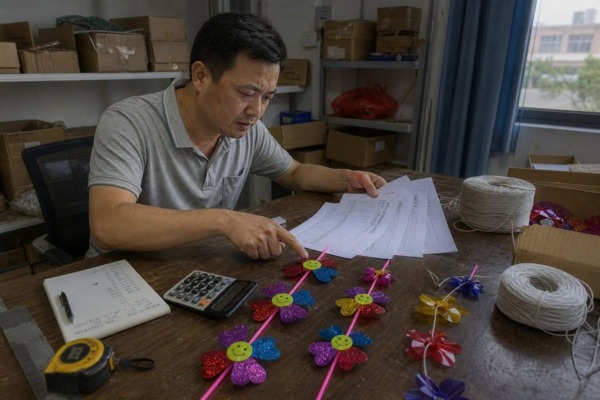
比较风车串供应商报价有时让我有点抓狂——而我还写这些报价 玩具安全合规 1。在我们浙江的生产线上,我看到买家选了最低的数字然后后悔。一份报价隐藏了运费。另一份悄悄把箔花瓣换成了更薄的薄膜。等集装箱到货时,“便宜”的交易比诚实的交易花费更多。解决办法是一个简单、可重复的比较方法,我将带你一步步了解。
为了公平比较风车串供应商的报价,请将每份报价统一到相同的串长、风车数量、风车材质和绳索材质,然后计算包含运费、包装费和关税的总到岸成本。评分供应商时,应综合质量控制、交货周期和保修,而不仅仅是标称单价。
让我逐步拆解。我们将看看如何剖析一份报价、发现隐藏成本、判断低价背后的质量,并在批量订单前提出正确的问题。
我如何拆解风车串报价以准确比较供应商?
一位买家曾发给我三份"完全相同"的报价让我审核。没有一份是相同的。一根串是 3 米带 8 个风车;另一根是 2 米带 6 个。同样的产品名称,不同的产品。
将风车串报价拆解为五个部分:串长、每串风车数量、风车材质、绳索或钢丝材质以及计价单位。在比较之前,将每个供应商的报价换算为每米或每个风车的价格,并要求对总价报价提供逐项明细。
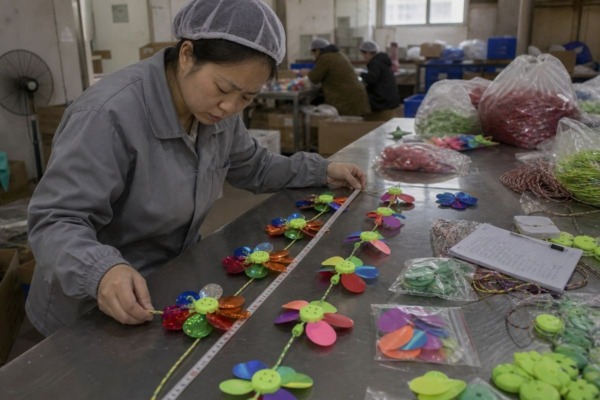
这是我从多年风车串报价中学到的核心真相:价格由四个变量驱动,而供应商很少以相同方式披露全部四个变量。串的长度很重要。串上风车的数量更重要,因为每个风车都会增加材料、 组装人工 2, 和包装体积。然后风车材料——闪亮的全息箔、普通光泽薄膜或更厚的模压塑料花瓣——会显著影响成本。最后,绳子材料本身,无论是尼龙绳、编织聚酯还是镀锌铁丝,都会改变价格和户外使用寿命。
从标准化询价单开始
在收集报价之前,在你的询价评估流程中明确确切规格。注明串长、风车数量、 花瓣材料、绳子材料、数量和包装。当所有供应商回答相同的范围时,比较才成为可能。当他们不这样做时,你就是在比较猜测。
归一化到共同单位
将每份报价重新表述为每个风车的价格或每米成品串的价格。一根 2.10 美元带 6 个风车的串,实际上每个风车比一根 2.60 美元带 8 个风车的串更贵。
| 报价要素 | 供应商 A | 供应商 B | 需要检查什么 |
|---|---|---|---|
| 串长 | 2 米 | 3 米 | 每米价格 |
| 每串风车数量 | 6 | 8 | 每个风车价格 |
| 花瓣材料 | 全息箔 | 普通 PET 薄膜 | 厚度、抗紫外线性能 |
| 绳子材料 | 尼龙绳 | 编织聚酯 | 抗拉强度等级 |
| 单价 | $2.10 | $2.60 | 归一化,而非原始数据 |
如果供应商只给出一个总价,要求将材料、人工、包装和运费作为单独项目列出。任何认真的工厂都能在一天内提供这些。我们的工厂可以。
在审查风车绳供应商报价时,我应该注意哪些隐藏成本?
我见过一位经销商学到的最昂贵教训,涉及一份她误读为门到门报价的 FOB 报价。运费和物流成本增加了 22%,她从未预算过。
注意排除的运费、不匹配的国际贸易术语、进口关税、包装升级、样品和模具费用、MOQ驱动的库存成本以及付款期限的融资影响。在宣称任何风车绳报价最便宜之前,始终计算每单位的总到岸成本——产品价格加上运费、保险、税费和关税。
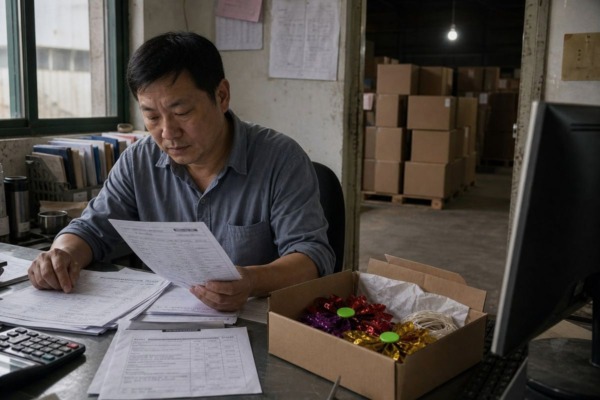
隐藏成本很少是故意隐藏的。通常,它们隐藏是因为两份报价是在不同条款下写的。一个供应商报 FOB 宁波。另一个报内陆工厂的 EXW。第三个报到你仓库的 DDP。三个标价都是真实的,但在你标准化国际贸易术语之前,没有一个是可比的。
建立到岸成本视图
总拥有成本是唯一公平的基础。对于装饰性风车串,这意味着在单价之上增加几个层次:
| 隐藏成本 | 为什么它会扭曲比较 | 如何消除它 |
|---|---|---|
| 运费和保险 | Included in some quotes, excluded in others | Ask for FOB and CIF/DDP versions |
| Import duties and tax | Vary by HS code and destination | Confirm the HS code in writing |
| 包装 | Bulk poly bags vs. retail-ready header cards | Specify packaging in the RFQ |
| Sample and tooling fees | Charged upfront by some, waived by others | Request them as separate line items |
| MOQ effects | Low unit price at 20,000 pcs raises inventory carrying cost | Model your real sell-through rate |
| Payment terms | 30% deposit vs. 100% upfront changes cash cost | Compare effective financing impact |
Ask What Is Not Included
The single most powerful question in quote review is: "What is excluded from this price?" Omissions—carton markings, drop-test packaging, replacement parts for damaged pinwheels—are where surprise costs live. In our experience exporting to the US and Europe, packaging alone can move a quote 5–10%, because a string of six foil flowers survives ocean freight only if the carton and inner dividers are engineered for it. A quote that skips protective packaging looks cheaper until the returns start. For long-term programs, some buyers also negotiate index-linked pricing in their procurement contract terms, so raw material swings in plastic film or wire adjust the price fairly for both sides.
我如何判断低价报价是否意味着更低的质量控制标准?
Whenever a competitor undercuts our pinwheel string price by 20%, I get curious rather than worried. There are only so many places that money can come from.
可疑的低报价通常意味着更薄的花瓣膜、更弱的绳索、跳过质检环节,或是在户外会褪色的未稳定塑料。下单前,请通过索取材料测试报告、样品、旋转和拉力测试、ISO质量标准文件,以及供应商在线检验流程的照片来进行核实。
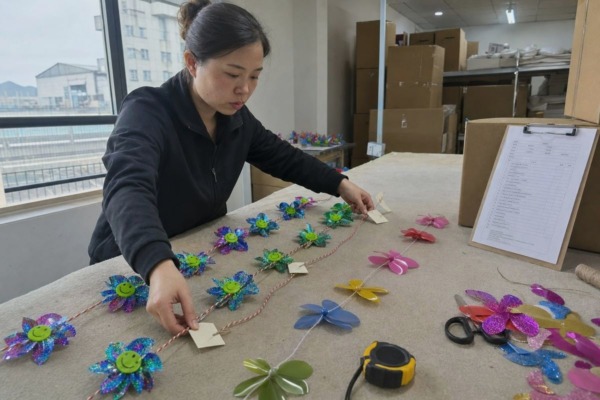
Price cuts have to come from somewhere. In pinwheel strings, they typically come from five places, and each one shows up later as a customer complaint. Thinner foil petals tear in the first strong wind. Non-UV-stabilized film fades from vibrant rainbow to washed-out pastel within a season. Cheaper rope with low tensile strength ratings snaps under tension when strings are hung across a storefront. Undersized grommets and pins let spinners wobble or fall off. And skipped inspections let all of the above ship undetected.
What Evidence to Demand
At our factory, every batch of pinwheel strings passes a spin test, a pull test on the cord, and a color-fastness check before packing. Any supplier with real quality control can show you the same. Ask for:
- Material test reports for the petal film and rope, including breaking load limits on the cord.
- Confirmation of UV-stabilized polymers if the product is for outdoor garden display.
- Galvanized wire specifications or a corrosion resistance coating spec if the string uses metal wire instead of textile cord.
- Certifications such as ISO 9001 3, plus toy-safety compliance like EN standards for products sold as children's items in Europe.
- A small trial order or pre-shipment sample before scaling to full volume.
Compare Cost Drivers Honestly
Sometimes a low quote is legitimate. Efficient tooling, better film sourcing, and high-volume production 4 genuinely lower cost—that is how we keep our own pricing budget-friendly without cutting material grade. The test is transparency. A factory that lowers price through efficiency will happily explain how. A factory that lowers price through material substitution will dodge the question. If the supplier resists sending samples, refuses a line-item breakdown, or cannot name the film thickness, treat the low number as a warning, not a win.
为确保大宗订单获得公平价格,我应该向供应商询问哪些问题?
One of my favorite American buyers negotiates over WhatsApp with a single spreadsheet. Her questions are short, specific, and impossible to dodge. Her orders almost never go wrong.
要求供应商确认确切规格、报价有效期、按数量分级的批量订单折扣、交货时间预估、质量控制与检验程序、损坏货物保修、付款条件以及报价不包含的内容。然后使用加权评分卡来比较答复,而不仅仅是价格。
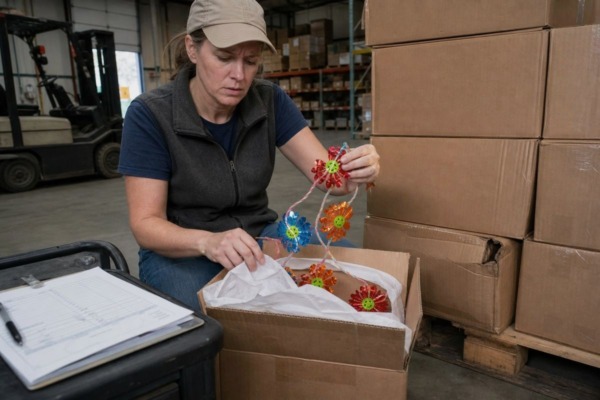
Good questions do two jobs. They fill in the blanks a quote leaves open, and they reveal how a supplier behaves under pressure. A vendor who answers quickly and precisely before the order will usually communicate the same way when a shipment issue appears. A vendor who goes vague at the quoting stage will vanish when you need them most.
The Question Checklist
Work through these systematically:
- Can you confirm the string length, pinwheel count, petal material, and rope material in writing?
- What are your bulk order discounts at each volume break point—5,000, 10,000, 20,000 strings?
- What are your lead time estimates in peak season versus off-season, and what happens if you miss them?
- What inline and pre-shipment QC steps do you perform, and can I appoint a third-party inspection?
- What is your policy on damaged packaging or broken pinwheels on arrival?
- What exactly is excluded from this quote?
- How long is the quote valid, and is pricing fixed or index-linked to raw materials?
- Can you customize petal colors, string length, or packaging for my regional market—for example, stronger UV specs for high-sun regions?
Score the Answers, Not Just the Price
Build a weighted scorecard so your decision stands up internally:
| 标准 | Suggested Weight | 好的回答是什么样的 |
|---|---|---|
| 总到岸成本 | 35% | Full line-item transparency, clear tiers |
| Quality assurance | 25% | Documented QC steps, samples, test reports |
| 交期可靠性 | 15% | Realistic dates with penalty or remedy terms |
| 定制能力 | 10% | OEM/ODM development support |
| Payment and warranty terms | 10% | Balanced deposits, clear damage policy |
| Responsiveness | 5% | Same-day, specific replies |
Once the matrix is complete, negotiate with evidence. Show suppliers exactly where they lag a competitor and ask if they can close the gap. In my experience, honest factories sharpen their terms when they see a fair, structured comparison—because they know they will win on value.
结论
A fair price matches the same spec, same terms, and lowest real risk. Normalize the quotes, total the 到岸成本, verify quality, and score suppliers—then decide with confidence.
脚注
1. Updated CPSC business guidance page for toy safety standards and compliance requirements. ↩︎
2. US government source for labor cost data and manufacturing assembly statistics. ↩︎
3. Official international standard for quality management systems. ↩︎
4. Federal program supporting manufacturing efficiency and production standards. ↩︎
更多文章
你可能也会觉得这些有帮助。
如何远程验证锻铁插入式组件工厂的生产能力?
Compare windmill string supplier quotes by normalizing length, pinwheel count, and materials, then weigh total landed cost against…
阅读更多 →
采购锻铁嵌件时如何评估工厂的生产能力?
Compare windmill string supplier quotes by normalizing length, pinwheel count, and materials, then weigh total landed cost against…
阅读更多 →
应该向锻铁嵌件供应商提出哪些问题以尽早识别不可靠的供应商?
Compare windmill string supplier quotes by normalizing length, pinwheel count, and materials, then weigh total landed cost against…
阅读更多 → English
 Spanish
 German
 Arabic
 Chinese