
如何理解锻铁配件的分级定价?

混乱的报价会迅速消耗预算。在我们浙江的生产线上,我们每个月都能看到买家误读锻铁配件的分级定价——然后默默多付了不该付的钱。
锻铁配件的阶梯定价意味着单价随着订单数量跨过设定阈值而下降。要理解它,需识别每个价格断点,确认报价包含的内容,计算每单位的总到岸成本,并选择节省额超过你持有成本的那一档。
这听起来很简单。但在实际操作中,报价隐藏着细节。有些层级包含运费。有些不含涂层。有些最低起订量与你的销售节奏不匹配。本文逐步拆解整个体系,让你能够自信地读懂任何报价。
当我订购锻铁配件时,每个数量层级的批量价格折扣由哪些因素决定?
有一天早上,在我们的粉末喷涂生产线上,我们两次生产了同一款向日葵地插——一次200件,一次5,000件。单件成本差距连我们自己的团队都感到惊讶。
每个数量层级的批量价格折扣由工装与设置摊销、批量生产效率、原材料采购议价能力、表面处理批次、包装整合以及运费经济性决定。供应商设定其单位成本下降的阈值,然后将部分节省让利给买家。
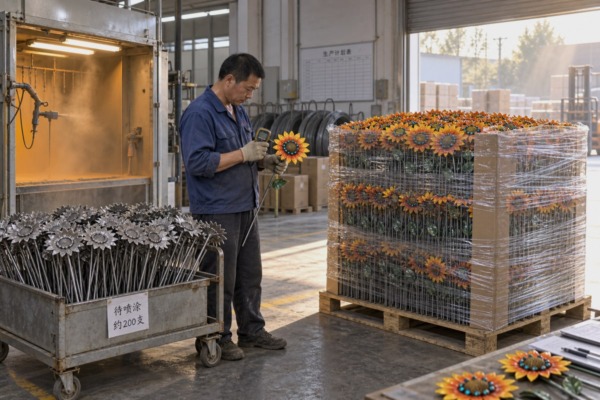
每一个层级的存在,都是因为在这个数量下生产中的某些环节变得更便宜。没有任何部分是随机的。当我们为出口装饰性金属制品定价时,我们首先梳理自己的成本,然后在那些成本真正下降的地方设定价格分界点。
典型层级阶梯
工业金属配件供应商通常遵循这样的阶梯。它反映了我们在行业中看到的情况:
| 数量层级 | 典型作用 | 定价行为 |
|---|---|---|
| 10–100件 | 样品或试订单 | 最高单价;开机成本分摊到少量产品上 |
| 500件 | 商业最低起订量 | 第一个真正的批量订单定价层级 |
| 2,000件 | 标准批发批量 | 单价明显降低 |
| 5,000件 | 全批次生产 | 大幅数量折扣 |
| 10,000+件 | 一揽子采购订单 | 最优条件,通常基于合同 |
分级定价与数量折扣
这两种模式看起来相似,但计费方式不同。在累进分级定价中,订单的每个区段按各自的价格计费。订购600件,分界点为1–99、100–499和500+,你可能需要支付三种不同的价格,混合成一个有效价格。在简单数量定价中,一旦你跨过门槛,一个较低的价格适用于整个订单。务必询问报价使用的是哪种模式。总额可能差别很大。
每个分界点背后的因素
模具和工装成本在第一层级中占比较大,在高批量生产中则被摊薄。手工锻造的装饰细节比机器冲压部件每件需要更多人工,因此手工制作会缩小各层级之间的差距。一些供应商还会将价格与 铁矿石和废钢 1 市场挂钩,在原材料成本变动时调整层级。可锻铁配件遵循同样的逻辑,因此这个框架适用于各类金属品类。
定制如何影响我的锻铁配件订单的分层定价结构?
一位美国采购经理曾问我,为什么她的定制渐变涂装让我们报价翻了一倍 最小起订量。她的问题直击定制制造如何重塑每个定价层级的核心。
定制化会提高每个层级的入门价格,并且通常会提高最低订购量。定制模具、独特材料规格和特殊表面处理会增加设置成本,而这些成本只有在更高产量下才能摊销,因此定制配件通常需要更大的订单量才能出现有意义的批量折扣。

定制工作改变了计算方式,因为它在第一件产品发货之前就增加了固定成本。在我们的 OEM项目 2, 中,新模具、新色彩渐变或新地插长度都会触发开机准备工作。这些工时必须在某个环节回收,而它们最集中地落在较低层级上。
每个定制元素如何影响你的层级
| 定制元素 | 成本表现 | 对你的层级的影响 |
|---|---|---|
| 定制模具或工装 | 固定的一次性费用 | 大幅提高小层级价格;在5,000+件时逐渐消失 |
| 表面处理(热浸镀锌、粉末喷涂、裸材) | 每批次产线开机 | 在同一数量区间内形成不同的价格层次 |
| 手工锻造装饰细节 | Labor per piece | Flattens tier discounts, since labor barely scales |
| Custom packaging or branding | Per-unit plus setup | Adds cost at every tier; setup fades with volume |
| Recycled or carbon-neutral material | Certified premium | Adds a percentage across all tiers; valued by ESG-focused contractors |
Quantity Tiers vs. Spec Tiers
Here is a distinction many buyers miss. Some suppliers quote spec tiers instead of quantity tiers: a standard proposal, an upgraded one, and a premium one, each with different material specifications and finishes. When we develop decorative products with distributors, we often present both dimensions—three spec levels, each with its own quantity ladder. Always confirm which type of tier a quote describes before you compare it against another supplier. Comparing a premium spec tier against a competitor's standard quantity tier is the fastest way to draw the wrong conclusion. If sustainability certification matters for your wholesale distribution channel, ask whether the ESG premium applies uniformly or shrinks at scale.
我可以验证不同价格档次的锻铁配件质量标准是否保持一致吗?
Every large order forces a choice in our workshop: run batches faster or hold sampling discipline. We choose sampling every time, because tier discounts mean nothing if quality slips.
是的。质量应在各定价层级之间保持一致,因为层级反映的是生产经济性,而非材料等级。通过将材料规格锁定在合同中、封存黄金样品、要求提供产前样品、在每个批量中应用基于AQL的检验,以及比较批次间的涂层厚度来验证这一点。

The fear behind this question is reasonable. Buyers worry that a lower unit price means cheaper iron or thinner coating. In a well-run factory, it does not. The discount comes from amortized setup, batch efficiency, and consolidated freight—not from swapping standard carbon steel 3 for something weaker. But you should never take that on faith. Verify it.
A Step-by-Step Verification Process
- Lock the material specifications in writing. The contract should name the steel grade, coating type, and coating thickness. These must not change between tiers.
- Seal a golden sample. Both sides sign and keep an approved reference piece. Every future batch gets judged against it.
- Request a pre-production sample for each new tier. A 5,000-piece run should start the same way a 500-piece run did.
- Use AQL-based random sampling at inspection. Statistical sampling scales fairly with order size, so bigger orders get proportionally rigorous checks.
- Check the details that drift first. In our experience, coating thickness, weld cleanliness, and paint gradient consistency are the first things to slip under production pressure—so measure those.
- Book third-party inspection for large tiers. For blanket purchase orders, an independent pre-shipment inspection is cheap insurance.
- Compare batches over time. Keep one retained piece from each shipment. Line them up quarterly and look for drift.
When a supplier resists any of these steps, treat that as a red flag, not a negotiation quirk. Consistency is a process, and honest factories can show you theirs.
运输成本和MOQ要求如何影响我应为锻铁配件选择哪个定价层级?
Shipping decorative metalwork to the United States taught us a hard lesson: the biggest tier discount can vanish inside a half-empty container or a crowded warehouse.
选择单位总落地成本最低的层级,而不是报价最低的层级。要考虑运费条款、最低起订量、仓储费用以及库存占用的资金。只有当单位节省额超过这些持有成本时,才升级到更高层级。

Here is the principle I push hardest with every buyer: do not stare at the unit price—run a full unit cost analysis on the landed total. Tiered prices fall as orders grow, but larger orders tie up more capital, occupy more warehouse space, and raise your dead-stock risk. My rule for finding the marginal balance point is simple: move up a tier only when the unit price reduction is greater than your capital interest plus warehousing cost per unit. Below that line, the "discount" is an illusion.
Landed Cost Beats Unit Price
Consider this simplified example for one buyer's situation:
| Order Size | Quoted Unit Price | Freight per Unit | Capital + Storage per Unit | True Landed Cost per Unit |
|---|---|---|---|---|
| 400 pcs | $2.10 | $0.45 | $0.05 | $2.60 |
| 500件 | $1.90 | $0.38 | $0.07 | $2.35 |
| 2,000件 | $1.70 | $0.25 | $0.28 | $2.23 |
| 5,000件 | $1.62 | $0.22 | $0.55 | $2.39 |
Notice the pattern. The 2,000-piece tier wins, and the 5,000-piece tier loses despite its lower sticker price. Slow-moving stock ate the discount.
The Threshold Trap
Never sit just below a price break. In the example above, ordering 400 pieces is the worst possible move—adding 100 units drops the whole order into a cheaper tier and improves freight consolidation at the same time. Check every quote for this trap before signing.
Also confirm the freight terms behind each tier. Ex-works pricing 4 pushes supply chain logistics costs onto you; freight-inclusive tiers bundle them in, which suits bulk order pricing but hides the true breakdown. Some suppliers now offer extra discounts for EDI or automated ordering, since it cuts their administrative overhead—worth asking about if your wholesale distribution operation runs on integrated systems.
结论
Tiered pricing rewards volume, but the cheapest unit price can hide expensive mistakes. Calculate landed cost, lock quality specs, dodge threshold traps, and order where real savings actually begin.
有兴趣采购本文提到的产品?在此查看详情并索取报价:
脚注
1. USGS provides official data and market analysis for iron ore and steel scrap commodities. ↩︎
2. Explains the role of Original Equipment Manufacturers (OEM) in custom fabrication and industrial production. ↩︎
3. ISO provides global standards for material specifications and quality management systems in manufacturing. ↩︎
4. The ICC maintains the official Incoterms, including Ex-works, used in international trade and shipping. ↩︎
更多文章
你可能也会觉得这些有帮助。

如何远程验证锻铁插入式组件工厂的生产能力?
Learn how tiered pricing for wrought iron fittings works, from price break points to landed costs, so you…
阅读更多 →
采购锻铁嵌件时如何评估工厂的生产能力?
Learn how tiered pricing for wrought iron fittings works, from price break points to landed costs, so you…
阅读更多 →
应该向锻铁嵌件供应商提出哪些问题以尽早识别不可靠的供应商?
Learn how tiered pricing for wrought iron fittings works, from price break points to landed costs, so you…
阅读更多 → English
 Spanish
 German
 Arabic
 Chinese