如何验证风车供应商对美国市场的环境合规性?
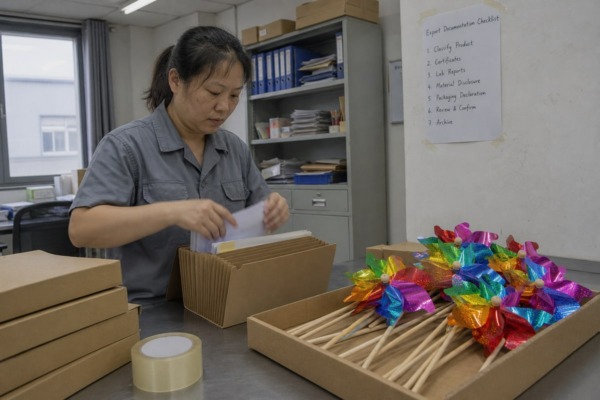
一份薄弱的文件就可能让一批风车货物滞留在美国海关。在我们浙江的生产线上,验证风车供应商的环境合规性早在任何集装箱发运之前就已开始。
要验证风车供应商对美国市场的环境合规性,首先对产品进行分类,然后索取儿童产品证书或一般符合性证书、来自CPSC认可实验室的第三方检测报告、完整的材料披露和包装声明,并用有据可查的证据确认每一项环保声明。
这个答案听起来很简单。但在实践中,大多数合规失败的发生,是因为买家收集了错误的文件,或者信任了他们从未核实过的文件。问题会在之后显现:海关扣留、零售商拒收、产品退货,以及在时间压力下昂贵的重新检测。解决办法是建立清晰的验证流程。在本指南中,我将带你了解应索取的具体认证、如何对照CPSIA和REACH检查材料、工厂审核中应检查什么,以及如何在批准发货之前读懂第三方实验室报告。
对于美国环保合规,我应该要求我的风车供应商提供哪些认证?
一位来自德克萨斯州的采购经理曾在WhatsApp上给我们发消息,只问了一个问题:"把你的环境证书发给我。"我不得不解释说,并不存在单一的证书。
如果风车是儿童产品,请要求提供由CPSC认可的第三方实验室检测支持的儿童产品证书,否则要求提供一般符合性证书,以及ASTM F963测试报告、加州65号提案文件和供应商的ISO 14001认证。

分类决定一切。一个带有花朵形聚酯薄膜叶片、装在木销上的风车,可以是儿童玩具、花园装饰品或促销新奇品。每条路径都承担不同的法律负担。如果你的风车面向儿童营销,CPSIA要求由 CPSC认可的认可实验室 1, 进行检测,出具书面儿童产品证书,并在可行的情况下提供永久性追踪信息。如果它是一般消费品,进口商通常需要基于合理检测程序的一般符合性证书。注意谁承担法律责任:美国进口商,而非仅海外工厂,通常是负责提供完整合规文件的一方。
必备证明与锦上添花的文件
我告诉每一位买家要把这两个层面分开。法律证明不可协商。可持续发展文件能建立信任,但不能替代法律层面。
| 文件 | 类型 | 它证明什么 |
|---|---|---|
| 儿童产品证书 | 必备(儿童产品) | 基于CPSC认可实验室检测的CPSIA合规 |
| 一般符合性证书 | 必备(非儿童产品) | 符合适用的消费品规则 |
| ASTM F963检测报告 | 必备(玩具) | 玩具标准下的机械和化学安全 |
| 加州65号提案评估 | 必备(加州销售) | 铅、镉、邻苯二甲酸盐等受限物质已处理 |
| ISO 14001认证 | 锦上添花 | 工厂有运作良好的环境管理体系 |
| 经核实的环境产品声明 | 锦上添花 | 经独立审查的环保性能声明 |
一些较小的工厂会反驳说,对低风险新奇物品进行全面第三方检测太昂贵。我理解成本压力。但折中方案是基于风险的验证,而不是跳过文件。面向儿童的产品和涂漆或涂层部件会受到严格审查。简单、低风险的SKU可以用较轻的文件应付。永远行不通的是零文件。
我如何确认供应商使用的材料符合CPSIA和REACH安全标准?
去年春天的一次来料质检中,我们的团队注意到一批颜料色母粒的色调略有变化。供应商未告知我们就更换了来源。我们停下了生产线。
为每个组件申请完整物料清单和完整材料披露,然后将每种材料与CPSIA邻苯二甲酸盐和铅限量、REACH SVHC清单以及TSCA限制进行比对,并用与您确切生产批次相关的当前第三方实验室报告确认结果。
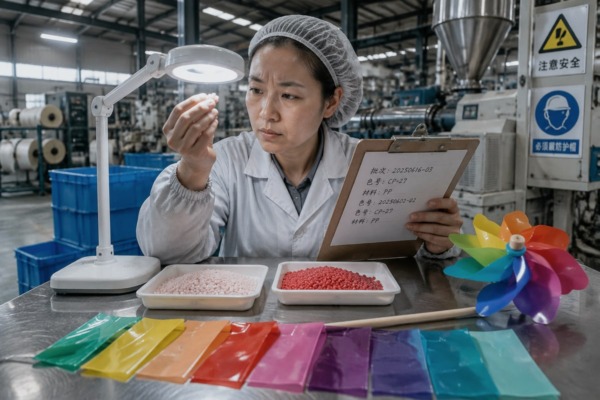
材料是合规成败的关键所在。典型的风车看起来简单,但它所含的化学物质比大多数买家预想的要多。仅我们的彩虹花瓣设计就包括PP或PET叶片基材、印刷白色条纹图案、黄色塑料轮毂、金属销紧固件、扣眼,以及可能带有涂饰的木销。每一个输入项都可能隐藏着 受限物质.
将每个组件映射到其化学风险
我建议在下单前建立一个简单的风险图。以下是我们为买家分解自己产品的方式:
| 组件 | 材质 | 关键化学风险 | 相关规则 |
|---|---|---|---|
| 花瓣叶片 | PP / PET / 聚酯薄膜 | 邻苯二甲酸盐、颜料中的重金属 | CPSIA、ASTM F963、65号提案 |
| 印刷图案 | 油墨和涂层 | 铅、镉、溶剂残留 | CPSIA lead limits, Prop 65 |
| Hub and grommets | 模塑塑料 | Phthalate plasticizers, REACH SVHCs | CPSIA, REACH |
| Pin fastener | Metal | Lead content, sharp point hazards | CPSIA, ASTM F963 |
| 木销 | Natural wood, possible coating | Formaldehyde, coating chemicals | TSCA, Prop 65 |
The Toxic Substances Control Act matters here because it governs chemical substances 2 entering U.S. commerce, and coated wood parts can trigger questions. REACH is technically a European regulation, but many U.S. retailers use its SVHC list as a screening benchmark, so a supplier who passes REACH screening gives you extra assurance.
Watch the emerging PFAS issue
State-level PFAS restrictions are expanding fast. My practical advice: mandate "Total Fluorine" laboratory testing on plastic and film parts now. It is a proactive, inexpensive screen against the "forever chemical" bans rolling through state legislatures. Sustainable material sourcing also starts here; you cannot claim clean inputs without disclosure data. Some buyers are even adopting Digital Product Passport data structures early, so their material records are ready if U.S. transparency mandates arrive.
在工厂审核期间,我应该注意哪些方面来验证供应商的环境实践?
The trade-off I weigh with every buyer is audit depth versus order size. A full on-site supply chain audit costs time and money, so I help buyers focus on what actually reveals risk.
在工厂审核期间,验证供应商的ISO 14001环境管理体系的实际运行情况:检查废物和废水处理、化学品储存、材料可追溯性记录、监管链文书以及变更控制程序,并将您看到的情况与测试报告和官方披露信息进行交叉核对。

Certificates on a wall mean little if the floor tells a different story. When buyers visit our Zhejiang facility, I encourage them to follow the material flow from incoming inspection to packed cartons. That walk exposes more truth than any document folder. Here is the audit sequence I recommend:
- Start at incoming materials. Check whether raw material lots carry supplier declarations and batch labels. Ask to trace one lot of PET film back to its source. This tests chain-of-custody documentation, which should provide a verifiable paper trail from raw material origin to your U.S. port of entry.
- Inspect chemical storage. Inks, adhesives, and coatings should be labeled, sealed, and logged. Loose, unlabeled drums are a red flag for uncontrolled substitutions.
- Review waste, water, and energy management. A supplier with real ISO 14001 certification will show documented procedures for waste segregation, wastewater handling, and energy tracking, not just a framed certificate.
- Test the change-control system. Ask a direct question: "What happens if your pigment supplier changes a masterbatch?" A good factory shows a written trigger for renewed review and re-testing. This is where our own QC caught that unannounced pigment switch.
- Verify claims against evidence. If the supplier markets "eco-friendly" or "recycled" materials, ask for substantiation that would satisfy the FTC Green Guides. Vague green language without proof is a greenwashing liability that lands on you, the importer.
For high-stakes programs, some buyers now deploy "shadow auditing," cross-referencing supplier reports with local environmental NGO data and even satellite imagery to detect undisclosed waste dumping. That level suits large contracts. For most pinwheel orders, a disciplined on-site walk plus document cross-checks catches the majority of problems. And if you also care about end-of-life, audit for circular compatibility, meaning materials that domestic upcycling programs can actually process.
在发货前,我如何使用第三方实验室检测报告来验证供应商的合规性?
A hard lesson from our early exporting years: a buyer once received a test report from another vendor that looked perfect, until someone checked the sample description. It described a different product entirely.
通过确认实验室出现在CPSC认可列表中、将报告日期和样品描述与您的采购订单进行匹配、对照CPSIA、ASTM F963和Proposition 65限值检查测试参数,并在材料或工艺发生变化时要求重新测试,来验证第三方实验室测试。
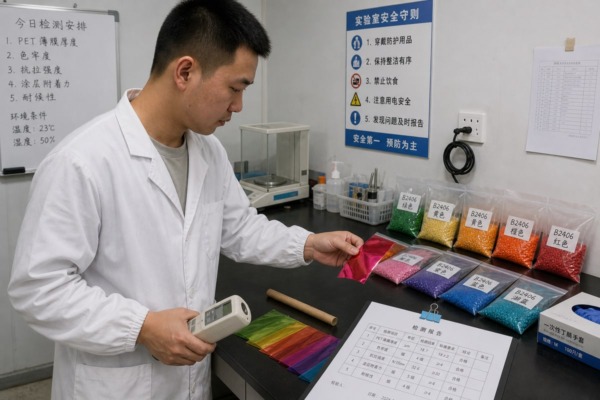
A test report is only as good as your verification of it. The U.S. market leans heavily on independent certification to protect label integrity; EPA's ENERGY STAR program requires third-party certification for covered products for exactly this reason. Apply the same logic to your pinwheel orders. A supplier's in-house test sheet is not acceptable evidence for a children's product. Third-party acceptance is the standard that matters.
Build a Minimum Viable Evidence pack
Before finalizing any purchase order, require what compliance teams call a Minimum Viable Evidence pack: current lab test reports, the applicable certificate, the supplier's legal entity details, and written confirmation that materials and processes have not changed since the last test. Here is how I teach buyers to inspect each report:
| 检查点 | 需要核实的内容 | 危险信号 |
|---|---|---|
| Laboratory identity | Lab is on the CPSC-accepted accredited list | Unknown lab, no accreditation number |
| Sample description | Matches your exact SKU, colors, and materials | Generic description or different product |
| Report date | Recent, and after the last material change | Report older than the current material spec |
| Tested parameters | Covers phthalate and lead limits, heavy metals, ASTM F963 clauses | Missing parameters or partial testing |
| Results versus limits | Actual values sit below regulatory thresholds | "Pass" stamps without numeric values |
| Applicant name | Matches your supplier's legal entity | Third-party trading company with no link |
One more procedural point worth knowing: EPA's small business compliance resources 3 note that certain violations can be self-disclosed within 21 days of discovery. That means your compliance program needs a remediation and disclosure procedure, not just a filing cabinet. Keep every report, certificate, and declaration in an organized compliance file for customs, retailers, and regulators. When we prepare pre-shipment documentation packages for U.S. distributors, we assemble this file before the container is booked, because fixing paperwork after a customs hold always costs more than building it right the first time.
结论
Verify credentials, confirm materials and processes meet U.S. environmental rules, and re-check after every change. Evidence-based due diligence before importing beats crisis management after a customs hold.
脚注
1. Official CPSC directory for verifying accredited laboratories required for mandatory children’s product safety testing. ↩︎
2. EPA overview of the Toxic Substances Control Act and its role in regulating chemical safety in commerce. ↩︎
3. EPA resource for small businesses regarding environmental compliance, self-disclosure policies, and regulatory assistance. ↩︎
更多文章
你可能也会觉得这些有帮助。
如何远程验证锻铁插入式组件工厂的生产能力?
Learn the exact certifications, lab tests, and audit steps to verify a pinwheel supplier's environmental compliance before shipping…
阅读更多 →
采购锻铁嵌件时如何评估工厂的生产能力?
Learn the exact certifications, lab tests, and audit steps to verify a pinwheel supplier's environmental compliance before shipping…
阅读更多 →
应该向锻铁嵌件供应商提出哪些问题以尽早识别不可靠的供应商?
Learn the exact certifications, lab tests, and audit steps to verify a pinwheel supplier's environmental compliance before shipping…
阅读更多 → English
 Spanish
 German
 Arabic
 Chinese