How Do Pinwheel String Packaging Formats Meet Retail Display Requirements?
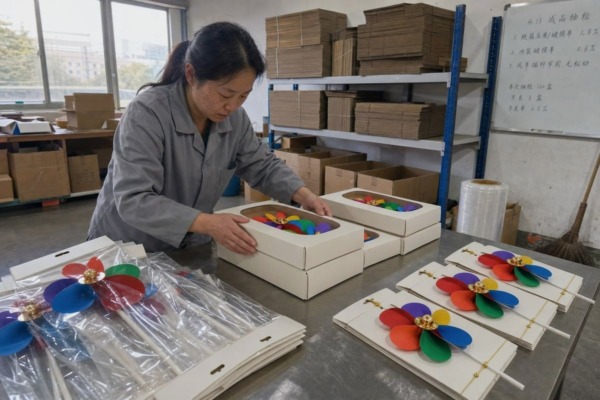
Pinwheel string packaging formats can make or break a retail order corrugated box design 1. I learned this the hard way when a beautiful shipment from our Zhejiang factory arrived crushed at a US distributor’s warehouse. Rejected pallets, chargebacks, and an angry buyer followed. That painful lesson pushed us to redesign every packaging format we offer around one question: will it survive and sell on the shelf?
تلبي تغليف الخيوط بنمط الدوّار متطلبات العرض في متاجر التجزئة عندما يجمع بين هيكل جاهز للرف، ورؤية واضحة للمنتج، وأبعاد محددة حسب المتجر، وملصقات متوافقة. أفضل الأشكال — أكياس OPP مع بطاقات علوية، وعلب ملونة مخصصة، وعبوات جاهزة للتعليق — تحمي المنتج أثناء النقل مع عرضه فورًا على الرف أو الخطاف أو المنضدة.
Below, I break down how to choose the right format, reduce damage risk, satisfy retailer compliance standards, and customize packaging for your brand. Let’s start with shelf appeal.
كيف يمكنني اختيار تغليف خيوط الدولاب الذي يعزز جاذبية الرفوف في المتاجر؟
A buyer from a US craft chain once told me something I never forgot: shoppers decide in three seconds. Our pinwheel strings had one blink of an eye to earn a second look on her pegboard wall.
اختر تغليفًا يُظهر المنتج بوضوح، ويُعلّق أو يقف بشكل أنيق، ويوضح طريقة الاستخدام بنظرة واحدة. أكياس OPP الشفافة مع بطاقات رأس مطبوعة تحقق أقوى جاذبية على الرفوف لسلاسل الزهور الدوّارة، لأن المتسوقين يرون الألوان فورًا بينما تحمل البطاقة العلامة التجارية ومعدات التعليق.
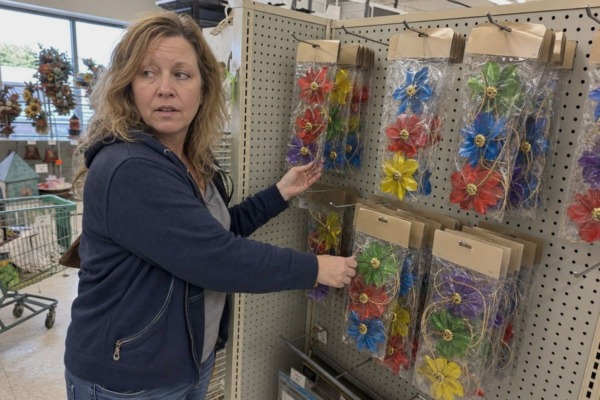
Shelf appeal is not decoration. It is a system of product visibility, format fit, and merchandising efficiency working together. At our factory, we offer three core formats for pinwheel strings, and each one wins in a different retail setting. This flexibility matters, because the same rainbow pinwheel garland sells very differently in a dollar store, a garden center, and a party supply chain.
The three formats we build most often
| Format | Best Retail Setting | Shelf Appeal Strength | Relative Cost |
|---|---|---|---|
| OPP bag + header card | Pegboard walls, impulse buy placement near checkout | Full product visibility, low cost | Lowest |
| Custom printed color box | Premium shelf, gift sections, chain stores | Strong branding, window options | Medium |
| Card-backed pack (blister or tie-mounted) | Counter displays, spinner racks | Product held flat and neat | Low to medium |
We can produce the printed card, pack in an OPP bag, or build a fully custom color box — the packaging form is flexible, and we adapt it to each buyer's channel. That flexibility is the real answer to shelf appeal, because no single format wins everywhere.
Why visibility usually beats decoration
Pinwheel strings sell on color. A fully closed box hides the exact thing shoppers want to verify: the vividness of the pinks, yellows, and blues, and the quality of the plastic film. Transparent product showcasing, through a clear bag or a generous window cutout, lets customers confirm color and material without breaching the seal. In our experience exporting to the US and Europe, windowed or clear packs consistently outperform closed boxes for this category.
There is one exception. Gift-oriented retailers sometimes prefer a printed color box because it photographs better online and supports a higher price point. So before choosing, ask your retailer one question: does the shopper buy with their eyes on the product, or on the brand?
Match the front panel to the fixture
The front face must also carry required label information on the principal display panel. Rules in some markets tie minimum label area 2 to package shape, so a narrow header card can run out of legal space fast. We size our header cards with label area in mind, not just graphics.
What packaging formats reduce damage risk for pinwheel strings during shipping and display?
Damaged packaging is one of the most common pain points our distributor clients raise, and I understand why. A bent header card or crushed corner turns a sellable unit into markdown stock before it ever reaches the shelf.
Formats that reduce damage risk combine a rigid backing card or box, an anti-tangle internal wind, a sealed OPP bag against moisture and dust, and a shelf-ready master carton with dividers. Structural integrity must survive multi-directional forces during palletizing, ocean freight, and in-store handling.
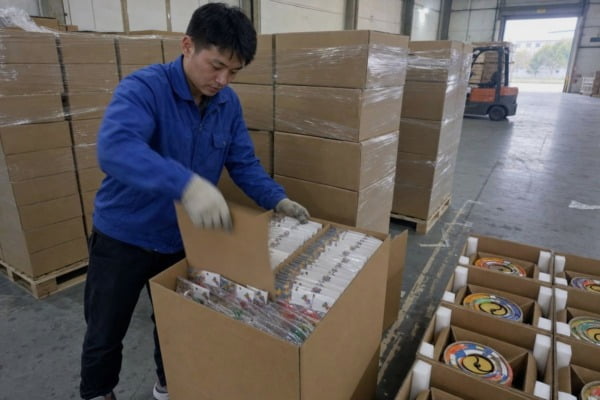
Protection is engineered in layers, not in one heroic outer box. When we redesigned our export packaging after that early crushed shipment, we mapped every stress point from our Zhejiang production line to a US store shelf. The result was a layered defense that adds very little cost but cuts damage claims dramatically.
The four protective layers
- Primary layer — the wind. Pinwheel strings tangle. A friction-fit cardboard core or a figure-eight wind around a backing card allows sequential release when the shopper unpacks. Tangled product drives returns, and returns are what our buyer Olivia-type clients hate most.
- Secondary packaging — the retail unit. The OPP bag seals out dust and humidity during ocean transit 3. The header card or color box gives the unit its rigidity. Thin, floppy packs look fine in a mockup but collapse in real store conditions.
- Master carton — the shipping unit. We use corrugated cartons 4 with internal dividers so units cannot shift, rub, or crush each other. Corner crush and label scuffing are the two biggest transit killers for this category.
- Pallet layer — the freight unit. Proper stacking patterns, edge protectors, and stretch wrap manage the multi-directional forces of forklifts and container movement.
Damage risk by format
| Packaging Format | Transit Damage Risk | Display Damage Risk | Notes |
|---|---|---|---|
| Loose OPP bag only | High | High | Cheapest, but cards bend and strings tangle |
| OPP bag + rigid header card | Low | Low | Our recommended standard for peg display |
| Custom color box | Very low | Low | Best protection; watch corner crush in cartons |
| Bulk carton, no inner pack | High | Very high | Requires in-store repacking; avoid for retail |
The trade-off is real: more protection means more material and cost. Our approach is to put rigidity where the fixture demands it — the backing card for a peg wall, the box walls for a shelf stack — and remove material everywhere else. That is footprint optimization applied to protection, and it keeps our pricing competitive without gambling on damage.
How do I ensure my pinwheel string packaging meets my retailers' display and hanging requirements?
Every buyer spec sheet I have reviewed over the years tells the same story: rules are never universal. One US grocery chain demanded Euro-slots at an exact position; a South American wholesaler wanted round hang holes; a European garden retailer required carton height limits for their shelf trays.
Request your retailer's compliance spec first, then match hang-hole type, pack dimensions, carton size, and labeling to it exactly. Confirm Euro-slot or round-hole placement, planogram integration measurements, principal display panel content, and shelf-ready packaging features like perforated open trays before mass production.

Retailer compliance standards are a strategic issue, not paperwork. The same pinwheel string SKU may need three different packaging versions if it sells to a mass merchant, a grocery chain, and a specialty craft retailer. On our production line, we treat each retailer version as its own specification, because a single wrong hole position can get an entire pallet rejected at the distribution center.
The compliance dimensions that matter most
Hanging hardware. Pre-punched Euro-slots let store staff hang packs on standard peg hooks instantly, with no additional hardware. Some retailers accept round holes; others mandate the Euro-slot shape for their fixtures. We die-cut both, but only after the buyer confirms which one their planogram uses.
Dimensions and planogram fit. Retail shelf space is allocated by planogram, and your pack must fit its assigned facing width 5 and height. A pack even one centimeter too wide breaks planogram integration and frustrates store teams. We hold tight tolerances on card width and bag seal position for exactly this reason.
Shelf-ready and display-ready features. Many chains now require shelf-ready packaging 6: master cartons with perforated fronts that convert into display trays, so staff move product from warehouse to shelf with minimal repacking. Others order counter units or small point-of-purchase displays for impulse buy placement near tills. Each fixture family has different structural demands, so we design for one fixture, never for "all retail" in general.
Labeling and panel rules. The principal display panel must carry required information, and minimum label areas can depend on package shape. Segmented or unusually shaped fronts shrink usable space, so we verify label layouts during the card design stage, not after printing.
A practical pre-production checklist
- Obtain the retailer's written packaging and pallet spec before tooling.
- Confirm hang-hole type, position, and load rating.
- Verify unit dimensions against the planogram facing.
- Approve master carton counts, weight limits, and height limits.
- Check label content, language, and panel placement for the destination market.
- Run a pre-shipment inspection against the spec, not just against the sample.
We build this checklist into our QC process because our distributor clients answer to their retailers, and we answer to our clients. One rejected pallet damages three relationships at once.
What customization options are available for pinwheel string packaging to match my brand?
An OEM request last year asked us for something specific: the buyer wanted her logo, her Pantone colors 7, and a bilingual card — but at a price her sub-distributors could still profit from. That project shaped how we now present customization options.
Available customizations include printed header cards with your logo and colors, sealed OPP bags in custom sizes, fully custom color boxes with windows, barcode and bilingual labeling, and tailored inner counts. The packaging form itself is flexible — card, bag, or box — under OEM/ODM development.

Customization works best when it sits on a standardized structural base. Custom display formats maximize shelf impact, but every new die-cut and box structure adds tooling cost and lead time. So our recommendation to procurement managers 8 is simple: standardize the structure, customize the graphics. That keeps your cost per unit low while your brand still owns the shelf.
What we can customize, layer by layer
| Layer | Customization Options | Typical Use |
|---|---|---|
| Header card | Logo, Pantone colors, artwork, bilingual text, barcode, Euro-slot | Brand identity and compliance |
| OPP bag | Size, thickness, printed or clear, resealable options | Protection plus product visibility |
| Color box | Full custom print, window cutouts, matte or gloss finish | Premium retail and gifting |
| Inner pack | Pinwheel count per string, color assortments, wind style | Channel-specific merchandising |
| Master carton | Retailer marks, shelf-ready perforation, divider layout | Merchandising efficiency in-store |
Emerging options worth considering
Sustainability requests keep growing, especially from European buyers. We can shift header cards and boxes toward paper-based components and reduce plastic film weight without losing shelf impact. Some clients also add QR codes to their cards, linking shoppers to display ideas or setup videos — a small print change that adds value at zero structural cost.
Because we run OEM/ODM collaborative development from our Zhejiang facility, artwork revisions, sample rounds, and pre-production approvals all happen with the same team that manufactures the pinwheels themselves. That removes the coordination gap between product factory and packaging supplier that so often causes delays and mismatched quality.
Conclusion
Weak packaging turns great pinwheel strings into rejected pallets and markdowns. The fix is systematic: match the format to the fixture, layer in protection, follow each retailer’s spec, and customize graphics on a standardized base. Get those four things right, and your pinwheel string packaging becomes a merchandising asset instead of a liability.
Footnotes
1. Wikipedia entry covering box components and internal dividers. ↩︎
2. Federal guidelines on the Fair Packaging and Labeling Act regarding required label area and placement. ↩︎
3. Authoritative industry body providing data and standards for global ocean freight operations. ↩︎
4. Industry association providing technical standards and benefits of corrugated packaging materials. ↩︎
5. Explanation of planogram metrics including product facings and shelf width allocation. ↩︎
6. Global standards and guidelines for designing efficient shelf-ready packaging for retail environments. ↩︎
7. Official source for the Pantone Matching System used for brand color consistency in packaging. ↩︎
8. Professional definition of procurement and the role of procurement managers in supply chain management. ↩︎
More Articles
You might also find these helpful.

What Fire Retardant Certifications Should I Check When Buying Pinwheels?
Discover how pinwheel string packaging formats balance shelf appeal, protection, and retailer compliance—choose OPP bags, color boxes, or…
Read More →
How to Verify Authenticity of Test Reports When Purchasing Wind Turbines?
Discover how pinwheel string packaging formats balance shelf appeal, protection, and retailer compliance—choose OPP bags, color boxes, or…
Read More →
How to Check if Pinwheel/Windmill Materials Contain Harmful Chemicals?
Discover how pinwheel string packaging formats balance shelf appeal, protection, and retailer compliance—choose OPP bags, color boxes, or…
Read More → English
  Spanish
  German
  Arabic