How to Verify a Wind Turbine Supplier’s Factory Inspection Report?
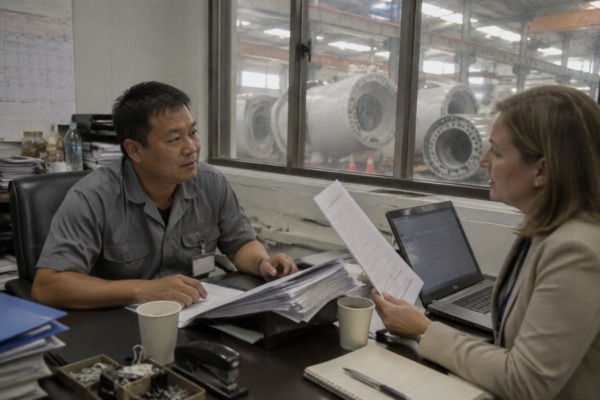
A wind turbine supplier’s factory inspection report can look perfect and still be fake. Hosting third-party inspections at our own Zhejiang factory taught me exactly how buyers get fooled.
To verify a wind turbine supplier’s factory inspection report, confirm the issuing body and report number on the certifier’s official website, match serial numbers and inspection scope to your order, review nonconformities and corrective-action closure, and cross-check the factory’s legal entity, address, and certification records independently.
That is the short version. The longer version is a repeatable method. I have sat on the factory side of many inspections, and I have reviewed reports as a buyer of raw materials too. Verification is not the same as acceptance. A report only earns your trust when you can trace who issued it, what was inspected, what evidence was captured, and whether every problem was truly closed. This guide walks through each step of that supply chain due diligence process.
How can I tell if my wind turbine supplier's factory inspection report is authentic?
Last year a buyer forwarded us a competitor's audit report to compare against ours. The certifier's logo was real. The report number was not. That memory still shapes our advice.
You can confirm authenticity by taking the agency number and report number printed on the document and querying them on the certification body's official website. Genuine reports return matching records; forged wind turbine factory inspection reports fail this lookup or show mismatched dates, scopes, or factory names.

Authenticity comes before content. A beautifully detailed report from a fake issuer is worthless. So I always tell buyers to start with provenance, not findings.
Query the Report Number at the Source
Every legitimate third-party inspection report 1 carries two identifiers: the agency or office number of the issuing body, and a unique report number. Take both numbers to the certifier's official website and run the lookup. Do not use a link printed inside the PDF, because forgers sometimes build lookalike verification pages. Type the certifier's real domain yourself. If the portal returns no record, or the record shows a different factory, date, or turbine model, stop the purchase conversation until the supplier explains it. In my experience, honest suppliers respond within a day. Evasive ones go quiet.
Separate Third-Party Reports From Internal Checklists
Here is a common objection I hear: the supplier says their internal QA dossier is "basically the same thing." It is not. Internal quality control matters, but it is not independent verification. A genuine third-party report is signed by the named technical expert who actually walked the floor, and it contains traceable evidence, not just ticked boxes.
| نقطة تفتيش | What to Verify | Where to Check |
|---|---|---|
| Report number | Exists in the issuer's database and matches date and scope | Certification body's official website |
| Agency number | The issuing office is real and accredited | Accreditation body directory |
| Inspector identity | A named, signed technical expert performed the work | Direct email or call to the certifier |
| Factory legal entity | Name, address, and Unified Social Credit Code match | Official business registry |
| Revision control | Issue date, version, and amendment history are shown | Document header and footer |
For Chinese factories, cross-reference the address and legal entity against the business license and the Unified Social Credit Code. This confirms the production site is not a shell company or an unvetted sub-contractor.
What key details should I check to confirm the inspection report matches real production standards?
Every inspection we host forces a trade-off: reviewing every document takes days, while sampling takes hours. Wind turbine buyers face the same tension, only with far higher stakes.
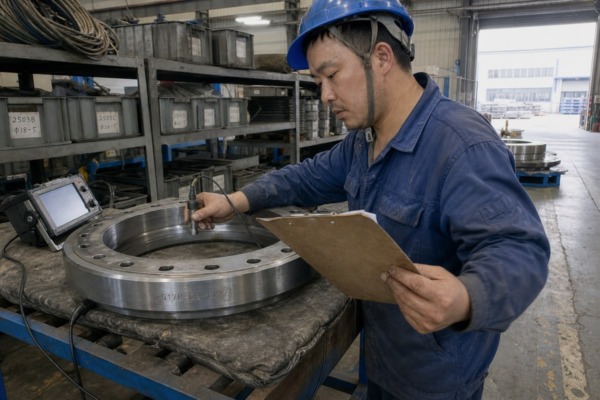
Check that the report ties specific serial numbers to Material Test Certificates, NDT records, calibration certificates for test equipment, and IEC 61400-aligned hold points in the Quality Assurance Plan. Then compare documented capacity and headcount against promised lead times to confirm real production capability.
A report can prove an inspection happened without proving the factory is consistently capable. That is the objection every skeptical buyer should raise, and the answer lies in traceability, not page count.
Demand Component Traceability Down to the Batch
The strongest single check is what I call the material traceability linkage. The serial numbers in the inspection report should connect to the specific mill test reports for the raw steel and the composite resin batches used in that exact unit. If the report only says "the batch passed," you have no component traceability at all. DNV GL's project-certification approach 2 expects surveillance records to include workshop qualifications, drawings, procedures, inspection sheets, Non-Destructive Testing reports, and personnel qualifications. Use that list as your benchmark for technical specification compliance.
Verify the Testing Behind the Findings
Findings are only as good as the instruments behind them. Ultrasound units used on blades and borescopes used inside gearboxes need valid, current calibration certificates in the report's appendices. A dimensional accuracy check performed with an uncalibrated tool proves nothing.
| Evidence Type | ما الذي تثبته | Request If Missing |
|---|---|---|
| Material Test Certificate | Raw steel and resin batches meet specification | Mill test reports linked to serial numbers |
| NDT reports | No hidden weld or laminate defects | Ultrasonic and radiographic records per unit |
| Calibration certificates | Test results are metrologically valid | Appendix with instrument IDs and expiry dates |
| QAP hold points | Process followed IEC 61400 standards for the turbine class | The Quality Assurance Plan itself |
| Factory Acceptance Test record | The finished unit performed as specified | FAT protocol with witnessed signatures |
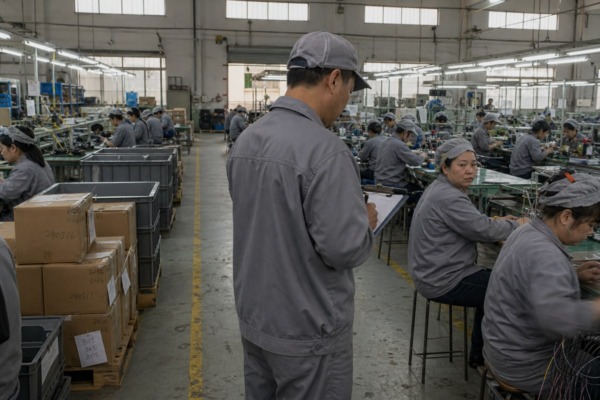
Two more checks round this out. First, compare the production capacity 3 and headcount stated in the report against the lead times your supplier promised; a mismatch means quality will be sacrificed for speed. Second, ask whether critical data such as bolt torque values and curing temperatures were uploaded to the turbine's cloud-based lifecycle profile. Digital twin synchronization is becoming a real credibility signal, and its presence shows the Quality Management System runs on data, not paperwork.
Which third-party certification bodies should I trust when reviewing my supplier's inspection documents?
A procurement manager in the United States once messaged me on WhatsApp: which stamps actually mean something? My answer was shorter than she expected.
Trust accredited international bodies such as DNV, TÜV Rheinland, TÜV SÜD, SGS, Bureau Veritas, Intertek, and UL Solutions for wind turbine inspection documents. Each maintains an official online verification portal, holds recognized accreditation, and employs technical experts who sign the reports they personally perform.

Not all stamps carry equal weight. Here is how the widely recognized bodies compare for wind turbine work, and how to verify each one.
| Certification Body | Known For | How to Verify Their Report |
|---|---|---|
| DNV | Type and project certification, manufacturing surveillance | Certificate register on the official DNV site |
| TÜV Rheinland / TÜV SÜD | Type certification to IEC 61400 standards | Certipedia and official certificate databases |
| SGS | Pre-shipment and in-process third-party inspection | Direct report authentication via SGS offices |
| Bureau Veritas | QMS audits and marine/energy inspection | Official certification directory |
| Intertek | Supplier audits and product testing | Report validation through Intertek portals |
| UL Solutions | Small wind and component certification | Online certification database |
Accreditation Is the Layer Behind the Logo
A body is only as trustworthy as its accreditation. Check that the certifier is accredited by a recognized national accreditation body 4 under the ILAC or IAF umbrella, and check that the specific scope of accreditation covers wind turbine inspection. A lab accredited for textiles cannot credibly certify a nacelle. Specialist firms matter too: WindGuard, for example, notes that its commissioning inspections always result in a detailed written inspection report, which reinforces the professional norm that real inspections produce formal, signed evidence.
Short and Authoritative Beats Long and Homemade
Buyers sometimes push back when a reputable body issues a lean report. I understand the instinct, but a twelve-page DNV surveillance report with clear scope, evidence, and signatures is more trustworthy than a hundred-page supplier-produced dossier with none of those things. Also keep the distinction clear: شهادة ISO 9001 5 tells you the Quality Management System is audited; it does not certify the turbine itself. You need both the system-level certificate and the product-level inspection evidence before you can rely on either.
What red flags should I watch for that might indicate a falsified or outdated inspection report?
The most expensive lesson from my export career: a flawless-looking report with zero recorded defects is usually hiding something. Real inspections always find something worth writing down.
Watch for zero nonconformities, missing serial numbers, absent photos, unsigned pages, no revision control, generic boilerplate, and dates or addresses that conflict with certification records. Recycled reports from earlier production runs and internal checklists disguised as third-party inspection are the two most common forgeries.
I keep a mental blacklist of warning signs, built from years of seeing both honest and dishonest paperwork. Here are the ones that matter most, roughly in the order I check them.
- A perfect Non-Conformance Report log. Zero documented defects usually signals a superficial audit. A credible report details specific deviations and their verified corrective actions. Some schemes, such as the ICC-SWCC process for small wind certification, expect corrective actions to be resolved within about 30 days of the inspection. Open items with no closure path are a serious problem.
- Photos that prove nothing. Images should show the actual inspected unit, with serial numbers visible, matching the written findings. Generic or stock-looking photos are a classic recycling trick. Increasingly, buyers run high-resolution report photos through AI-driven visual analysis to catch fiber waviness in blade laminates or uneven paint thickness that a human inspector missed.
- Dates that do not line up. An inspection date before the stated production date, or a report older than the current certification cycle, means you are looking at an outdated or reused document.
- No named inspector, no signature. Anonymous reports carry no authority. Someone competent must own the findings.
- Scope that does not match your order. A generic checklist covering "wind turbines" rather than your specific model, component, and manufacturing stage tells you the inspection was a paperwork exercise. A checklist-heavy report can look thorough and still be weak if it lacks document references and traceability.
- Missing ESG evidence where it was promised. Modern reports increasingly embed labor-safety verification and energy-consumption data needed for green financing and carbon-border compliance. If your contract required these metrics and the report omits them, ask why.
When a report conflicts with certification records, or the claims exceed what the evidence supports, escalate. Request the underlying check sheets, insist on a new independent inspection, and hold payment milestones until the gap is explained.
الخاتمة
A forged inspection report can sink an entire wind project. Verify the issuer, the numbers, the evidence, and the closures — then trust the paper. That habit protects every order.
الحواشي
1. The TIC Council is the global industry association for independent third-party inspection and certification bodies. ↩︎
2. DNV is the leading authority for the project-certification approach in the wind energy sector. ↩︎
3. The WTO provides resources on monitoring global production capacity and trade statistics. ↩︎
4. ILAC is the international organization for the national accreditation body oversight mentioned in the text. ↩︎
5. Official ISO page for the quality management standard used to audit factory systems. ↩︎
المزيد من المقالات
قد تجد هذه مفيدة أيضًا.

كيفية التحقق عن بُعد من قدرات إنتاج المصنع لمكونات التوصيل المصنوعة من الحديد المطاوع؟
Learn to verify a wind turbine supplier's factory inspection report by checking issuer records, serial numbers, and corrective…
اقرأ المزيد →
كيفية تقييم قدرة إنتاج المصنع عند توريد إدخالات الحديد المطاوع؟
Learn to verify a wind turbine supplier's factory inspection report by checking issuer records, serial numbers, and corrective…
اقرأ المزيد →
ما الأسئلة التي يجب أن تطرحها على موردي إدخالات الحديد المطاوع لاكتشاف غير الموثوقين مبكرًا؟
Learn to verify a wind turbine supplier's factory inspection report by checking issuer records, serial numbers, and corrective…
اقرأ المزيد → English
  Spanish
  German
  Arabic