
How to Allocate Budget Between Product Cost and Logistics for Windmills?
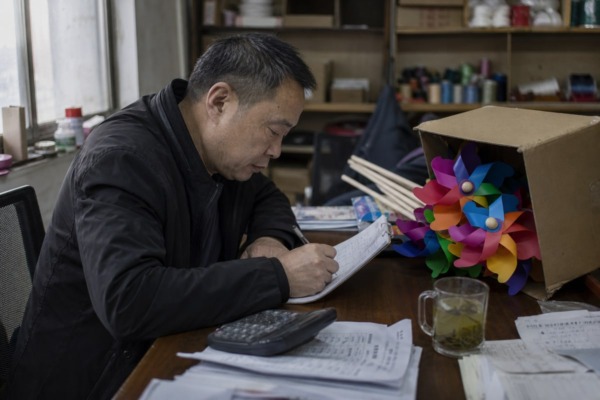
Every season, buyers ask our Zhejiang factory how to split budget between product cost and logistics for windmills. Get it wrong, and margins vanish before your container leaves port.
For decorative windmill and pinwheel orders, allocate roughly 55–65% of total budget to product cost, 25–35% to combined domestic and international logistics, and 5–10% to customs, sampling, and contingency. Split product value, sampling fees, inland freight, ocean freight, and clearance charges into separate line items before ordering.
That short answer hides a lot of detail. The right split changes with order size, shipping mode, and customization level. Below, I walk through how we build these budgets with our distributors, step by step.
How do I calculate the true landed cost of pinwheels before setting my budget split?
Last spring, a US distributor sat in our Zhejiang showroom with a competitor's quote. The unit price looked great, yet her landed cost per pinwheel was nearly double.
Calculate true landed cost by adding unit product price, sampling and tooling fees, domestic freight to port, international ocean or air freight and insurance, customs duties and clearance charges, and destination delivery. Divide the total by order quantity to reveal the real per-pinwheel cost before setting any budget split.
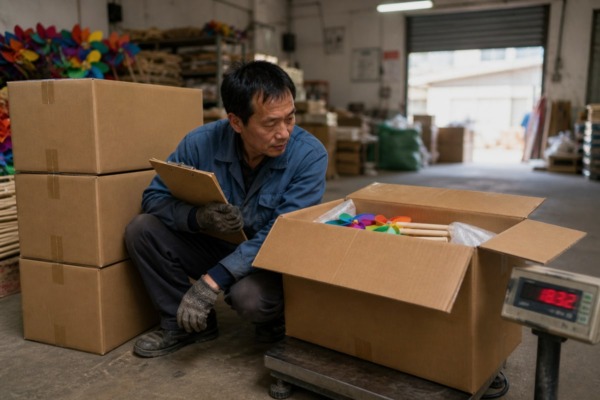
Landed cost is the foundation of any sensible procurement strategy. If you skip this step, every percentage split you set afterward is guesswork. In my experience, buyers who anchor on the FOB unit price alone almost always underestimate their real cost per piece.
The Five Cost Buckets We Split on Every Quote
On every quotation we prepare, we break the budget into five separate pools: product value, sampling fees, domestic freight from our factory to the port, international logistics 1, and customs clearance miscellaneous fees. We never lump them into one "equipment cost" line. This mirrors what the utility-scale wind industry learned the hard way: when turbine manufacturing costs and transport are budgeted together, logistics overruns hide inside the product line until it is too late.
| Cost Component | What It Covers | When You Pay It |
|---|---|---|
| Product value | Petals, dowels, hubs, grommets, assembly, packaging | Deposit plus balance before shipment |
| Sampling fees | Prototypes, custom color matching, die-cut tooling | Before mass production starts |
| Domestic freight | Factory to Ningbo or Shanghai port, handling | At booking or included in FOB |
| International logistics | Ocean or air freight and insurance | At shipment or destination |
| Clearance and misc. | Duties, brokerage, port fees, last-mile delivery | On arrival |
A Simple Landed Cost Formula
Use this: (product value + sampling + domestic freight + international freight and insurance + clearance and delivery) ÷ total units = true landed cost per pinwheel. Say a hypothetical 10,000-piece order costs $4,000 in product value, $200 in samples, $150 in inland trucking, $1,400 in ocean freight 2, and $450 in duties and fees. The landed cost is $0.62 per piece, not the $0.40 unit price on the invoice. Good supply chain management starts with seeing that gap clearly.
What percentage of my total budget should I allocate to logistics versus product cost for pinwheel orders?
Every quotation we prepare forces one trade-off: thicker mylar petals raise product cost, but lighter cartons cut freight. Where you draw that line defines your whole budget split.
Allocate approximately 55–65% to product cost, 20–30% to international logistics, 3–5% to domestic freight and sampling, 5% to customs and clearance fees, and hold 5–10% as contingency. Shift the logistics share upward for air freight, small orders, or long inland delivery legs.
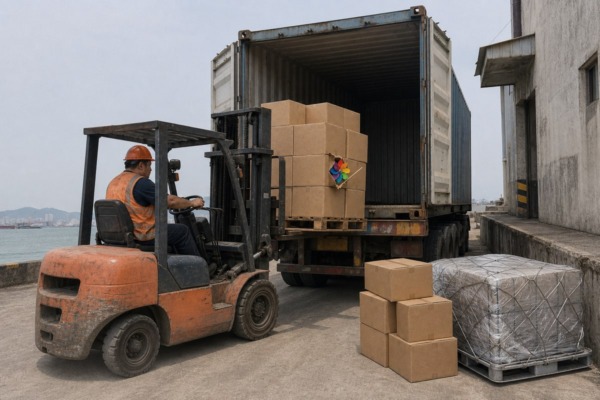
Percentages are useful anchors, but the honest answer is that the split is scenario-based, not fixed. The wind energy sector proves this point at scale. Onshore wind projects typically put 65–75% of capital expenditure (CAPEX) into turbine hardware, with 10–20% going to logistics and installation and commissioning. Offshore, the logistics share jumps to 20–30% of CAPEX because of specialized vessels, and some studies peg logistics at 18% of the Levelized Cost of Energy 3 (LCOE) and around 17% of annual operating spend. Same product category, wildly different splits, all driven by delivery conditions.
Pinwheels follow the same logic at a smaller scale. Our products are feather-light, so freight cost is driven by cube, not weight. That makes shipping mode the biggest swing factor in your budget between product cost and logistics.
| Scenario | Product Cost | Int'l Logistics | Sampling + Inland | Customs & Fees | Contingency |
|---|---|---|---|---|---|
| Full container, sea freight | 60–65% | 18–22% | 3–4% | 4–5% | 5–8% |
| LCL sea shipment | 55–60% | 24–28% | 3–5% | 5% | 5–10% |
| Air freight (rush/seasonal) | 45–55% | 30–38% | 3–4% | 4–5% | 8–10% |
Some buyers push back with a product-first argument: spend everything on quality and treat freight as a commodity. Others argue logistics-first: cheap product means nothing if it arrives late or crushed. Both views hold truth, but the resolution is simple. Put your extra budget wherever your biggest risk sits. For remote delivery or peak-season shipping, weight the logistics side. For heavily customized petals, protect the product and QC budget first.
How can I reduce shipping costs without sacrificing quality control on my windmill shipments?
On our packing line, we once fit dramatically more pinwheel kits into one container simply by shipping petals flat and bundling dowels separately. That test reshaped how we quote freight.
Reduce shipping costs by shipping pinwheels unassembled as flat-pack kits, consolidating orders into full containers, booking sea freight early, optimizing carton dimensions, and using pre-shipment inspections. Never cut costs by skipping inspection or downgrading packaging, because damage claims and returns erase any freight savings.

Wind turbine developers face oversized cargo transportation problems that demand specialized transport equipment 4, route surveys, and police escorts. Pinwheels have the opposite problem: they are cheap to move but expensive per cubic meter when shipped assembled. The savings logic is the same in both industries. One wind-sector finding shows that shifting 3–5% of product budget into modular component engineering can cut specialized transport surcharges by around 15%, because parts fit standard dimensions. Our flat-pack kits apply that exact principle in miniature.
Our Proven Cost-Cutting Sequence
- Ship unassembled kits. Die-cut petal sheets, dowel bundles, pins, and grommets pack flat. Assembled pinwheels ship mostly air. This single change delivers the biggest volume reduction we know.
- Consolidate to FCL. LCL rates carry handling surcharges per cubic meter. Combining two seasonal orders into one full container usually beats two separate LCL shipments.
- Book sea freight early. Rates spike before Western spring and summer selling seasons. We advise our distributors to confirm orders 90–120 days ahead of their retail window.
- Right-size cartons. We design master cartons around pallet and container dimensions so no paid space ships empty.
Where You Must Not Cut
Quality control stays untouched. Our team runs incoming material checks, in-line spin tests on hubs, and a final random inspection before sealing cartons. We also drop-test export cartons, because damaged packaging is one of the most common complaints US buyers raise with Chinese suppliers. A saved dollar on freight means nothing against a returns claim, a chargeback, or a lost sub-distributor. Protect freight and insurance coverage, too; insuring a low-value, high-volume shipment costs little and covers the worst case.
My hardest lesson exporting decorations: the costs that kill margins never appear on the proforma invoice. They surface at ports, customs desks, and return warehouses.
Hidden costs include sampling and mold fees for custom petals, packaging and artwork changes, pre-shipment inspection fees, customs clearance surcharges, currency fluctuation, demurrage, and returns handling. Reserve 5–10% of your total budget as a contingency float to absorb these before they hit your margin.

Customization is where hidden costs breed. When a buyer asks us for a new petal shape, a rainbow gradient, or branded hub printing, several one-time charges appear that first-time importers rarely budget. None of them is large alone. Together, they can quietly consume the profit on a small trial order. That is why we tell every new partner to hold a 5–10% contingency float on top of the visible line items. The wind industry does the same at massive scale: an 8–10% logistics contingency fund is standard practice there, because delivery delays on turbine projects can cost over $200,000 per MW per day. Your exposure is smaller, but the principle is identical, and lenders reviewing your project financing or trade credit will respect a budget that shows it.
| Hidden Cost | Typical Trigger | How to Budget for It |
|---|---|---|
| Sampling and die-cut tooling | New petal shapes or custom sizes | One-time fee; often credited back on bulk orders |
| Artwork and printing plates | Branded packaging or hub logos | Quote before approving designs |
| Third-party inspection | Buyer-mandated pre-shipment QC | Fixed fee per man-day; book early |
| Customs exams and surcharges | Random inspection, HS code disputes | Part of the 5–10% contingency float |
| Currency fluctuation | Long lead times between deposit and balance | Fix pricing terms or hedge on large orders |
| Demurrage and detention | Slow pickup or clearance at destination | Pre-clear documents; confirm trucking early |
| Returns and damage handling | Crushed cartons, defective units at retail | Fund via packaging upgrades and QC, not hope |
Why the Contingency Float Is Non-Negotiable
We split every budget into product value, sampling fees, domestic freight, international logistics, and clearance miscellaneous fees, then add the 5–10% buffer as its own line. When nothing goes wrong, that float rolls into the next order. When something does go wrong, it saves the relationship. Buyers who plan the budget between product cost and logistics this way stop treating surprises as emergencies and start treating them as line items.
Conclusion
Splitting budget between product cost and logistics is not guesswork. Separate every line item, calculate landed cost, protect QC, and keep a 5–10% float. Your margin will thank you.
Footnotes
1. Official ITA resource for international supply chain and logistics services. ↩︎
2. Regulatory information on ocean freight carriers and maritime commerce from the Federal Maritime Commission. ↩︎
3. Comprehensive report on renewable power generation costs and LCOE metrics from an intergovernmental agency. ↩︎
4. Updated DOE page detailing logistical challenges and infrastructure for wind energy components. ↩︎
More Articles
You might also find these helpful.

Welche Brandschutz-Zertifizierungen sollte ich beim Kauf von Windrädern prüfen?
Learn how to split budget between product cost and logistics for windmills, with a proven 55-65% cost, 25-35%…
Read More →
Wie überprüfe ich die Echtheit von Prüfberichten beim Kauf von Windturbinen?
Learn how to split budget between product cost and logistics for windmills, with a proven 55-65% cost, 25-35%…
Read More →
Wie kann ich prüfen, ob Windrad-/Windmühlenmaterialien schädliche Chemikalien enthalten?
Learn how to split budget between product cost and logistics for windmills, with a proven 55-65% cost, 25-35%…
Read More → English
  Spanish
  German
  Arabic