
How to Set a Reasonable Budget for Purchasing Pinwheel Strings?
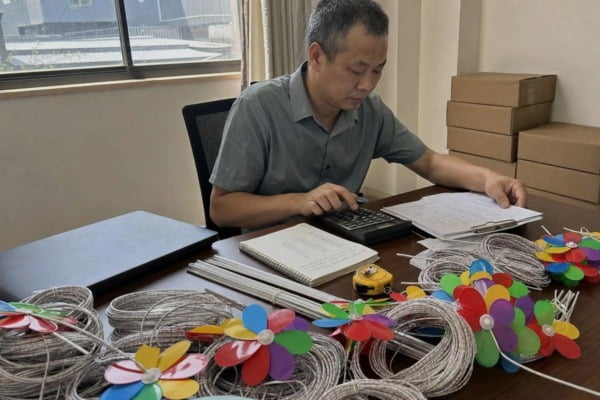
Buyers often ask me how to budget for pinwheel strings. On our production line in Zhejiang, I see orders fail not from product cost, but from ignored freight and hidden fees. One miscalculation can wipe out your margin before the container even ships. The fix is a simple, complete budgeting framework.
To set a reasonable budget for pinwheel strings, calculate the true landed cost per string: product price plus shipping, hardware, and customization fees. Since pinwheel strings are cheap and lightweight, freight efficiency matters most. Budget annually based on usage, quality tier, and replacement frequency, adding a 10–15% buffer.
That is the short answer. Below, I will walk you through each step. We will cover unit cost math, key budget factors, quality trade-offs, and the hidden costs that catch most buyers off guard.
How do I calculate the true cost per unit when budgeting for pinwheel strings?
Last spring, a US distributor sent me two quotes to compare. One looked 20% cheaper on paper. After we ran the landed-cost math together, it was actually more expensive per foot.
Calculate true cost per unit by dividing total landed cost — product price, shipping and handling fees, hardware, and duties — by total usable length. Measure cost per linear foot, not cost per string, because string length and pinwheel spacing determine how much coverage you actually get.
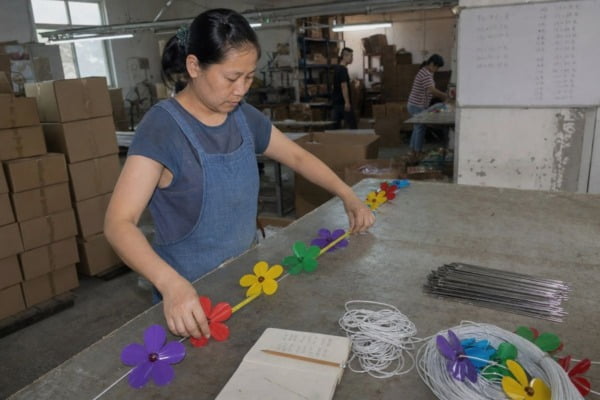
The sticker price tells you very little. Two suppliers may both quote "one pinwheel string," but one string might be 6 feet long with pinwheels every 12 inches, and the other 10 feet long with pinwheels every 18 inches. That is why I always push buyers toward unit price per foot as the base metric.
Step-by-step landed cost formula
Here is the simple process we recommend to procurement managers:
- Take the quoted product price for the full order.
- Add shipping and handling fees, plus any import duties 1.
- Add mounting hardware costs if they are not included.
- Add customization surcharges, if any.
- Divide the total by the number of linear feet in the order.
That final number is your true unit price per foot. Use it for every vendor price comparison, and the "cheap" quotes often stop looking cheap.
Why linear feet beats string count
Pinwheel spacing drives volume. If your display area needs 200 feet of coverage, strings with 12-inch spacing use more pinwheels per foot than strings with 18-inch spacing. More pinwheels per foot usually means a higher price per foot, but also a denser visual effect.
| Quote | Price per string | Length | Cost per foot | Pinwheel spacing |
|---|---|---|---|---|
| Supplier A | $4.00 | 6 ft | $0.67 | 12 in |
| Supplier B | $5.50 | 10 ft | $0.55 | 18 in |
| Supplier C (bulk 100-pack) | $3.20 | 8 ft | $0.40 | 15 in |
As the table shows, the highest per-string price can deliver the lowest cost per foot. Bulk purchase discounts amplify this: 100-pack sets often cut the per-unit cost dramatically compared to small retail packs.
What factors should I consider before setting my pinwheel string purchase budget?
In our export business, one lesson repeats itself: for lightweight products like pinwheels and pinwheel strings, the freight decision shapes the budget more than the product price does.
Before setting a pinwheel string budget, consider usage frequency, display duration, material durability, order volume, freight method, and customization needs. Because pinwheel strings are inexpensive and lightweight, product cost usually stays within budget — shipping efficiency and replacement cycles are the real variables.
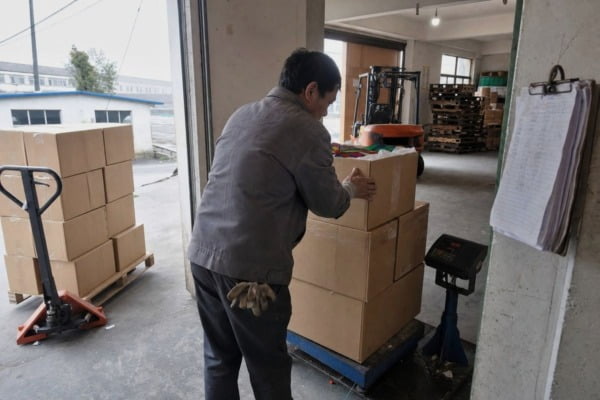
From my own experience running exports to the United States, South America, and Europe, the product itself rarely breaks a budget. Pinwheel strings are cheap to make and very light. The main question I ask every buyer is whether the freight arrangement is cost-effective. If it is, the order almost always lands within budget. If it is not, no product discount will save you.
Define your use case first
Start by clarifying what the strings are for. A weekend festival needs event-grade strings: thin-gauge, low-cost, temporary. A permanent storefront or garden installation needs architectural-grade strings with reinforced core lines that withstand constant torque and weather. Over-specifying wastes money. Under-specifying causes early failure and product returns — a pain point I hear about constantly from distributors.
Estimate annual consumption, not one-time cost
A reasonable budget for pinwheel strings is usually an annual or seasonal budget, not a one-off number. Similar string-based hobbies show the same pattern: casual users spend far less per year than heavy users. So estimate first, then convert usage into a budget range:
| Buyer type | Typical usage | Suggested annual budgeting approach |
|---|---|---|
| Casual / one event | 1–2 short displays per year | Small starter order, minimal spares |
| Regular seasonal buyer | 3–5 events or seasonal décor | Mid-range strings, one seasonal restock |
| High-use / permanent | Continuous outdoor display | Premium UV-treated strings, scheduled replacements, contingency fund |
Watch for timing and volume levers
Two levers reliably lower your spend. First, bulk purchase discounts: consolidating your annual need into one or two larger orders cuts per-unit cost and freight cost per piece. Second, seasonal discounts: ordering in a factory's off-peak months often earns better pricing and shorter lead time for delivery. I always tell buyers like Olivia, our typical US procurement contact, to lock in Q1 orders for summer displays.
How can I balance quality and cost when sourcing pinwheel strings on a budget?
There is a trade-off I weigh with every OEM order: a thinner Mylar blade shaves pennies off the quote, but a UV-treated PP blade survives two summers instead of one.
Balance quality and cost by matching the quality tier to usage intensity. Choose budget PVC or Mylar strings for short events, mid-range PP plastic for seasonal use, and UV-stabilized premium strings for permanent displays. Paying roughly 20% more for UV treatment can quadruple lifespan.
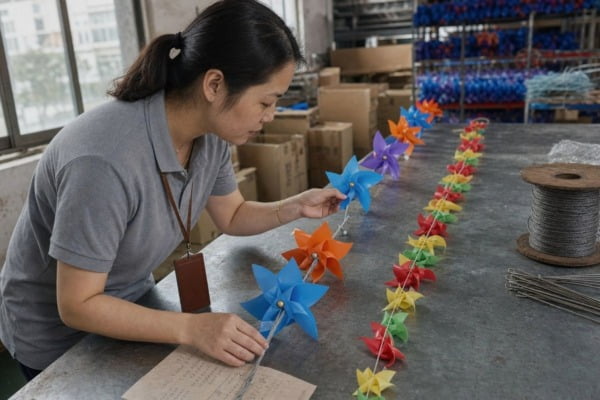
Some buyers hold a strict low-budget view: buy the cheapest usable strings and replace them only when they fail. I understand the logic, and for a one-day carnival it genuinely works. But for anything longer, that approach quietly raises your total cost. Cheap blades fade, crack, and stop spinning, and every replacement cycle adds fresh shipping and handling fees on top of new product cost.
Other buyers take the quality-first view and want premium everything. That over-specifies for temporary use. The honest answer sits in the middle: quality should follow duty cycle.
Match material to duty cycle
Material durability is the core quality variable. Here is how the common tiers compare:
| Quality tier | Typical material | Best for | Expected outdoor life | Relative cost |
|---|---|---|---|---|
| Budget | Thin Mylar / basic PVC | One-off events, indoor décor | Weeks to ~3 months | Lowest |
| Mid-range | Standard PP plastic | Seasonal displays, retail promotions | ~6 months | Moderate |
| Premium | UV-stabilized PP 2, reinforced core line | Gardens, permanent installations | 2+ years | ~20% above mid-range |
Use variable density to stretch the budget
One tactic I recommend often: place high-density, higher-quality pinwheel strings in primary sightlines — entrances, stages, photo spots — and use lower-density, cheaper strings or bunting in peripheral areas. You get maximum visual impact per dollar without upgrading the entire installation.
Verify quality specifications before ordering
Whatever tier you choose, get the quality specifications in writing: blade material and thickness, hub type, line strength, and colorfastness 3. On our QC line, we spin-test samples from every batch before packing. Rigorous QC at the factory prevents the returns and damaged-goods disputes that destroy budgets after delivery. Reputable wholesale suppliers will share these specs and samples willingly.
A buyer once emailed me, frustrated: her "complete" order from another vendor arrived without wire ropes or ties, and sourcing them locally added nearly a fifth to her project cost.
Account for mounting hardware, tensioning components, customization surcharges, packaging, freight volumetric weight, duties, and spare stock. Hardware alone can add 15–20% if excluded from quotes, and air freight on bulky pre-assembled strings can exceed the product cost itself.
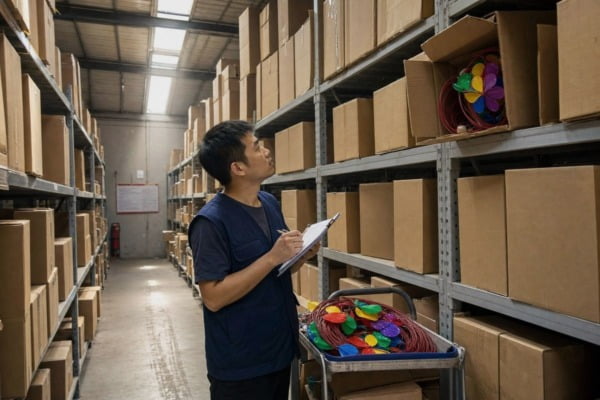
Hidden costs rarely appear on the first quote. They appear at installation, at customs, or when the wind picks up. In my years exporting decorations, I have learned to walk buyers through a checklist before they sign off on any budget. Here are the items that most often surprise them.
Hardware and installation extras
Confirm whether the quote includes wire ropes, steel cables, or specialized ties. Purchasing these separately typically inflates the total project budget by 15–20%. For any run exceeding 40 feet, you also need structural tensioning hardware — turnbuckles or heavy-duty springs — to prevent line sag and mechanical failure in high winds. These parts are cheap when bundled at the factory and annoying to source later.
Customization and MOQ thresholds
Customization options like logo printing or custom color matching carry surcharges, and factory-direct pricing usually requires a Minimum Order Quantity 4 of 500 to 2,000 units. If your volume sits below the MOQ, either budget for the surcharge or negotiate a mixed order. We handle OEM/ODM development 5 regularly, and getting the artwork approved early also protects your lead time for delivery.
Freight, packaging, and buffer stock
Pinwheel strings are light, so sea freight 6 is usually very efficient — this is why most orders land comfortably within budget. But pre-assembled strings are bulky, and volumetric weight 7 can make air freight painfully expensive. Ship flat-packed by sea whenever your timeline allows. Also budget for protective packaging; damaged cartons lead to returns, and returns cost more than the packaging ever would. Finally, add a 10–15% spare stock buffer for breakage and accelerated wear. Just-in-time buying reduces inventory, but for recurring displays, a small backup stock avoids emergency air shipments — the single most expensive mistake in this category.
Conclusion
Budget pinwheel strings by landed cost per foot, match quality to usage, and plan freight wisely. Do that, and your order will land within budget — every time.
Footnotes
1. Official International Trade Administration guide on import tariffs and customs fees. ↩︎
2. Wikipedia entry on polypropylene explains the material used in premium UV-treated pinwheel strings. ↩︎
3. ISO standards body relevant to textile and material colorfastness testing specifications mentioned. ↩︎
4. Wikipedia background on MOQ concept referenced when discussing factory-direct pricing thresholds. ↩︎
5. Wikipedia explains OEM concept referenced regarding custom manufacturing arrangements for buyers. ↩︎
6. Wikipedia background on freight transport relevant to sea freight efficiency for lightweight goods. ↩︎
7. Industry authority for freight standards relevant to volumetric weight calculations in air shipping. ↩︎
More Articles
You might also find these helpful.

Welche Brandschutz-Zertifizierungen sollte ich beim Kauf von Windrädern prüfen?
Set a realistic pinwheel strings budget by calculating true cost per linear foot, not per string, and adding…
Read More →
Wie überprüfe ich die Echtheit von Prüfberichten beim Kauf von Windturbinen?
Set a realistic pinwheel strings budget by calculating true cost per linear foot, not per string, and adding…
Read More →
Wie kann ich prüfen, ob Windrad-/Windmühlenmaterialien schädliche Chemikalien enthalten?
Set a realistic pinwheel strings budget by calculating true cost per linear foot, not per string, and adding…
Read More → English
  Spanish
  German
  Arabic