
How Do I Know If a Supplier’s Payment Terms Are Reasonable?

Supplier payment terms confused me too when I started quoting pinwheel orders from our Zhejiang factory. Buyers feared losing deposits. We feared unpaid goods. Somebody always felt exposed.
A supplier’s payment terms are reasonable when they match the risk, order size, relationship stage, and industry norm. A 30% deposit with balance before shipment is standard for custom goods; Net 30 suits established relationships; demands for 100% upfront through untraceable channels are red flags.
That is the short answer. Below, I will break down each part of it, using real numbers and real scenarios from our export business, so you can judge any quote you receive.
Welche Zahlungsbedingungen sollte ich von einem zuverlässigen Windrad-Lieferanten erwarten?
Last spring, a first-time buyer from Texas asked me why we wanted a deposit at all. Her previous supplier had offered open credit. That supplier later vanished mid-production.
Ein zuverlässiger Lieferant verlangt in der Regel eine Anzahlung von 30%, wobei die restlichen 70% vor dem Versand bei Erstbestellungen bezahlt werden. Nach 3–6 Monaten pünktlicher Zahlungen sind Netto-30-Bedingungen eine faire Grundlage, während Netto 45 oder Netto 60 für große, vorhersehbare, wiederkehrende Mengen geeignet sind.

Payment terms are not one number. They are a package: timing, deposits, early payment discounts, and late payment penalties. In our experience exporting pinwheels and pinwheel strings to the United States, South America, and Europe, the right package depends on where the relationship stands. Trade credit is earned, not given on day one.
The Negotiation Ladder by Relationship Stage
Here is the ladder we actually use, and it matches common industry benchmarks:
| Relationship Stage | Typical Terms | Why It Is Reasonable |
|---|---|---|
| New buyer, first order | 30% deposit, 70% before shipment | Neither side has a track record yet |
| New buyer, small trial order | COD or Net 15 | Low value, low risk for both parties |
| 3–6 months of on-time payment | Net 30 or Net 45 | Payment history justifies trade credit |
| High-volume, recurring buyer | Net 45 or Net 60 | Volume and predictability offset the financing cost |
| Large seasonal or one-off order | Milestone payments (e.g., 30-40-30) | Payments track real production progress |
Note the country context too. UK guidance sets a default 30-day payment period if no date is agreed, and B2B contract terms 1 generally should not exceed 60 days unless expressly agreed and not grossly unfair. So "reasonable" also depends on jurisdiction, not just negotiation style.
One more benchmark. General B2B in the US treats Net 30 terms as the common baseline, while heavy manufacturing and construction often run Net 60 to Net 90. Decorative goods like our pinwheels sit closer to the Net 30 side because production cycles are short.
Wie kann ich erkennen, ob ein Einzahlungsprozentsatz zu hoch oder zu riskant ist?
The trade-off I weigh on every quote is simple: the deposit must cover our raw material outlay, but it must never make the buyer carry our whole risk.
Eine Anzahlung von 30% ist die Branchennorm für Sonderanfertigungen. Bis zu 50% können bei stark individualisierten Designs oder schwankenden Materialkosten angemessen sein. Alles über 50% verlagert zu viel Risiko auf dich und verdient eine genaue Prüfung, insbesondere ohne Meilenstein-Schutz.
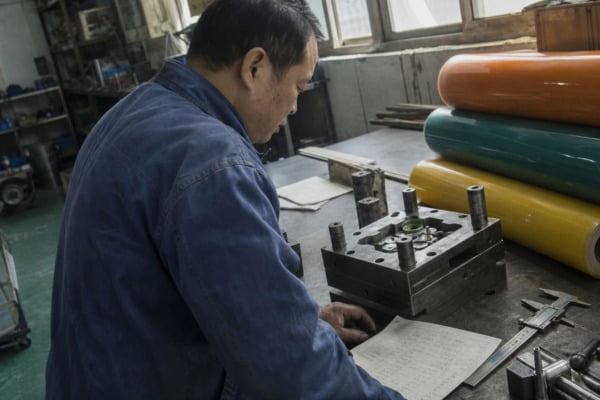
Why does the 30% figure keep appearing? Because it roughly matches what a factory spends before production locks in. When we run a custom pinwheel order — say, holographic petals in a buyer's brand colors — we buy film, print plates, and injection molds upfront. The deposit covers that exposure. It is proportionate. That is the test: a deposit is reasonable when it mirrors the supplier's real sunk cost, and unreasonable when it exceeds it.
Deposit Benchmarks by Order Type
| Order Scenario | Fair Deposit Range | Risk Signal If Higher |
|---|---|---|
| Stock designs, repeat order | 0–20% | Supplier may have cash flow trouble |
| Standard custom order | 30% | Above 40% needs justification |
| Heavy customization or new tooling | 30–50% | Ask for the tooling cost breakdown |
| Volatile input costs (film, resin) | 30–50%, or a 50/50 split | Request price-lock in return |
| Milestone structure for big orders | 30-40-30 tied to stages | Milestones must map to real deliverables |
The Channel Matters as Much as the Percentage
Here is a rule I insist on from my own experience: pay deposits only through legal, traceable payment channels. That means a bank transfer to the company's corporate account — the name on the account should match the name on your contract and invoice. I have heard too many stories of buyers wiring deposits to a "sales manager's" personal account and having zero recourse afterward. A legitimate factory will never resist corporate-account payment. If a supplier pushes you toward personal accounts, cash apps, or untraceable transfers 2, the percentage no longer matters. Walk away.
Also weigh currency risk. During periods of high FX volatility, shortening payment terms for international vendors reduces the hidden risk premium suppliers bake into unit pricing. A smaller deposit paid sooner can beat a larger one paid later.
Sollte ich Lieferanten vertrauen, die volle Zahlung vor der Produktion verlangen?
A procurement manager once forwarded me a competitor's quote demanding 100% before production, at a price 15% below ours. She asked if the deal was too good to be true. It was.
Nein. Forderungen nach 100% Zahlung vor der Produktion sind in den meisten Fällen ein großes Warnsignal. Sie können auf finanzielle Instabilität oder betrügerische Absichten hindeuten. Legitime Ausnahmen sind selten: winzige Musterbestellungen oder langjährige, vertrauenswürdige Partner, die Vorauszahlung für einen Rabatt wählen.

Let me be clear about my own position, because it may sound contradictory. Our factory does require prepaid deposits — that is normal and I defend it. But a deposit and full prepayment are completely different animals. A 30% deposit shares risk. A 100% upfront demand transfers all risk to you before a single petal is die-cut.
Think about what full prepayment removes from the relationship. You lose your only leverage over quality. If the shipment arrives with warped spinner hubs or faded film, the supplier already has your money. You lose your leverage over schedule. Shipping delays hurt far more when nothing motivates the factory to prioritize your container. And you lose your legal position, because you performed your entire contractual obligation before the supplier performed any of theirs.
The Few Legitimate Exceptions
- Sample orders under a few hundred dollars, where invoicing costs exceed the risk.
- A buyer voluntarily prepaying to capture a meaningful early payment discount.
- A supplier burned by that specific buyer's past non-payment — which says more about the buyer.
Questions to Ask Before You Consider It
If a supplier insists on full prepayment, ask why in writing. Ask for a factory audit, verifiable business licenses, and references from buyers in your market. Ask whether they will accept an escrow or milestone alternative instead. A genuine factory with real production capacity will usually accept 30/70 for a serious buyer, because the deposit already covers their material exposure. A supplier who refuses every risk-sharing structure, while dangling an unusually low price, fits the classic fraud pattern: collect money, deliver nothing or deliver junk. Cheap plus prepaid plus untraceable is the most expensive combination in sourcing.
What Payment Terms Actually Protect My Business If Something Goes Wrong?
The lesson that shaped our contract template came from a damaged-packaging claim years ago. Because the balance payment was tied to a pre-shipment inspection, the buyer had leverage — and we fixed everything before the container left Ningbo.
Milestone payments tied to verified deliverables protect you best: a 30% deposit, balance released only after passed inspection, all terms written into the contract, paid through traceable corporate bank channels, with agreed remedies for defects, delays, and late payment penalties on both sides.

Protection does not come from paying less. It comes from tying money to proof. Every stage of payment should correspond to something you can verify: an approved sample, a passed inspection report, a bill of lading. This is basic accounts payable optimization, but many buyers skip it because it feels adversarial. It is not. Our best customers use these structures, and we prefer them too, because they remove ambiguity for both sides.
A Protective Payment Structure, Stage by Stage
| Phase | Payment | What You Verify First |
|---|---|---|
| Contract signing | 30% deposit | Corporate account name matches the contract |
| Pre-production | 0% | Approved pre-production sample, in writing |
| Mid-production (large orders) | Optional 40% | Photo or video evidence of production progress |
| Vor Versand | Balance (70% or 30%) | Third-party or buyer QC inspection passed |
| Post-delivery (mature relationships) | Net 30 balance | Goods received and checked in your warehouse |
Match Terms to Your Cash Conversion Cycle
Protection also means protecting your own cash flow management. Run this practical test: if you pay suppliers in 30 days but collect from your customers in 90, you carry a 60-day funding gap that supplier terms must help close. Track your Days Payable Outstanding against your collection cycle, and negotiate terms that keep your working capital cycle balanced rather than chasing the longest possible window.
Also do the discount math. A 2/10 Net 30 offer equates to roughly a 37% annualized return. If your cost of capital 3 is lower than that, paying early is not generosity — it is one of the best investments on your books. Supply chain finance tools can bridge the gap when it is not.
Finally, put everything in the contract or master agreement, not just on invoices. Procurement negotiation only counts when it is documented: payment window, deposit percentage, inspection rights 4, remedies for defects, and penalties for delay on both sides. Symmetry is the fairness test — if the supplier wants late payment penalties from you, you deserve delay penalties from them.
Fazit
Reasonable supplier payment terms balance risk on both sides: a fair deposit, milestone-linked balances, traceable corporate payment channels, and written contracts. Anything that forces one party to finance the other is not.
Fußnoten
1. Authoritative guide on international payment methods and standard commercial terms in global trade. ↩︎
2. Official US government resource for identifying and avoiding fraudulent payment methods and scams. ↩︎
3. Definition of the financial metric used to evaluate the trade-off between early payment and financing costs. ↩︎
4. Overview of quality assurance and inspection processes used to verify deliverables in manufacturing contracts. ↩︎
Weitere Artikel
Diese könnten Ihnen auch helfen.

Wie kann man die Produktionskapazitäten einer Fabrik für Schmiedeeisen-Steckkomponenten aus der Ferne überprüfen?
Learn how to evaluate a supplier's payment terms by risk, order size, and relationship stage, with real deposit…
Weiterlesen →
Wie beurteilt man die Produktionskapazität einer Fabrik bei der Beschaffung von Schmiedeeisen-Einsätzen?
Learn how to evaluate a supplier's payment terms by risk, order size, and relationship stage, with real deposit…
Weiterlesen →
Welche Fragen sollten Sie Schmiedeeisen-Einsatz-Lieferanten stellen, um unzuverlässige frühzeitig zu erkennen?
Learn how to evaluate a supplier's payment terms by risk, order size, and relationship stage, with real deposit…
Weiterlesen → English
  Spanish
  German
  Arabic