How to Find Reliable Chinese Suppliers for Pinwheels/Windmills?
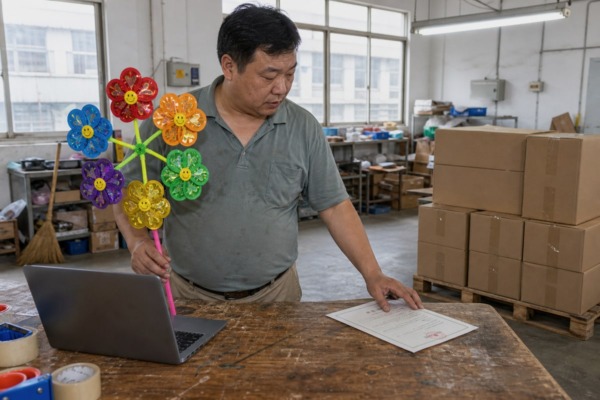
Finding reliable Chinese suppliers for pinwheels sounds simple—until a container arrives with faded blades and crushed cartons. Many buyers reach our Zhejiang production line only after learning that lesson.
Reliable Chinese suppliers for pinwheels and windmills are found by searching B2B platforms and trade fairs, confirming true manufacturer status through business-license checks, cross-checking the company’s website, LinkedIn, Instagram, and Facebook, requesting samples, verifying quality control, and placing a small trial order before scaling up.
The word “windmill” causes confusion online. Some listings mean wind turbines. Others mean decorative pinwheels, wholesale garden wind spinners, or bulk party favors. This guide focuses on decorative pinwheels and garden windmills. I will walk you through vetting, quality control, OEM/ODM negotiation, and shipping, step by step.
What Should I Look for When Vetting a Pinwheel Manufacturer in China?
Early in our export business, we lost an order because a trading company undercut us using our own product photos. That taught me how blurry supplier listings look from abroad.
Vet a pinwheel manufacturer by confirming its registered business scope includes manufacturing, checking three or more years of platform history, reviewing verified badges and third-party audits, matching its specialization to decorative pinwheels, and cross-referencing its official website and social media channels for consistent, real production content.
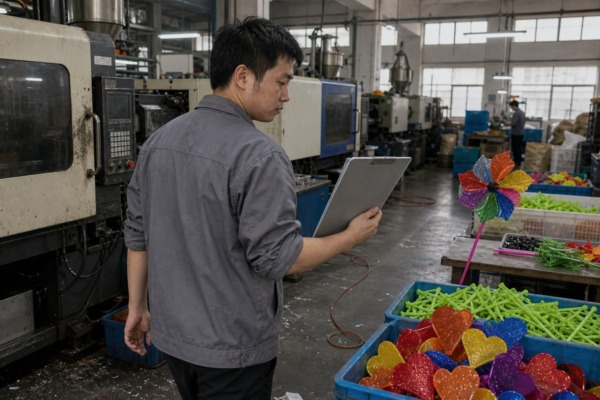
The first filter is simple: are you talking to a factory or a middleman? Made-in-China alone lists around 374 manufacturers and suppliers for pinwheels. Related wind categories show 100+ to 2,000+ "verified" factories, and many of those are actually turbine companies. So volume is not your problem. Filtering is.
Manufacturer vs. Trading Company
Direct factories give you better custom specs, tighter price control, and real production visibility. Trading companies add a margin and a communication layer. Here is how I would compare them:
| Signal | Real Factory | Trading Company |
|---|---|---|
| Business scope | Registered as "manufacturing" | Registered as "trading" or "import/export" |
| Product range | Deep in one niche (pinwheels, pinwheel strings, outdoor lawn ornaments 1) | Wide, unrelated catalog |
| Photos | Same workshop, consistent lighting, real machines | Stock images, mixed styles |
| Custom molds | Can quote tooling directly | Must "check with the factory" |
| Factory tour | Offers video walkthroughs quickly | Delays or deflects |
Cross-reference the supplier's Chinese legal name 2 on the National Enterprise Credit Information System. Confirm the registered scope says manufacturing, not just trading. Also note the region. Zhejiang clusters like Yiwu and Taizhou are the primary global hubs for injection-molded plastic crafts and seasonal outdoor decor. Our own team of 50 sits in this ecosystem, which keeps material and tooling suppliers close.
Check Beyond the Platform Badges
Some buyers rely only on Alibaba verified suppliers and gold or diamond member badges. Those badges help, but they are signals, not proof. In my experience, the fastest reality check is the one I recommend to every new client: look the company up across its website, LinkedIn, Instagram, and Facebook. A real factory posts real production content over years. A shell listing cannot fake that history easily. Then confirm in person if you can—Canton Fair exhibitors and the Yiwu International Commodities Fair let you meet factory owners face to face.
How Can I Verify a Supplier's Quality Control Process Before Placing an Order?
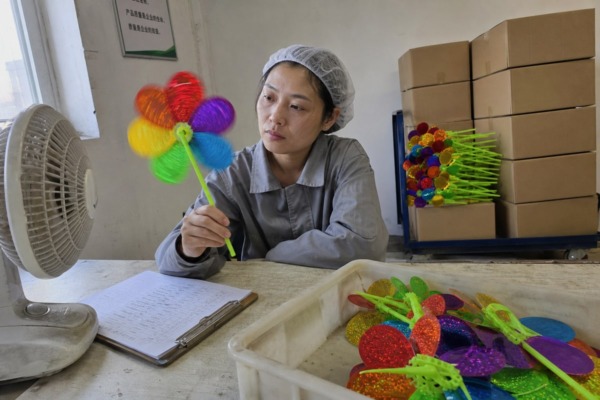
Our QC team pulls random pinwheels off the line every two hours and spins them under a fan before packing. Most buyers never see that step—unless they ask.
Verify a supplier's quality control by requesting a Golden Sample, asking for their inspection checklist and defect tolerances, running a live WeChat virtual factory audit, hiring third-party factory audit services, and reviewing relevant product safety certifications before approving mass production.
Quality problems rarely start at the end of the line. They start with materials. So your verification should follow the same path the product does. Here is how I would structure a quality control inspection review before wiring any deposit.
Ask for a Golden Sample First
A Golden Sample is the approved reference unit that mass production must match. For pinwheels, it matters more than buyers expect. Ask the factory to confirm UV-stabilizer levels in the plastic or foil blades. Without UV stabilizers, holographic petals fade and turn brittle after weeks of sun. A garden spinner is an outdoor product. Test the sample outdoors, not on your desk.
Audit the Process, Not Just the Product
You do not need a plane ticket. We run virtual factory audits over WeChat live video for overseas clients. Ask to see three areas in real time: the raw material warehouse, the assembly line, and the QC station. A factory with nothing to hide will show you within a day or two. For larger programs, professional factory audit services can inspect on your behalf.
| QC Checkpoint | What to Verify | Why It Matters |
|---|---|---|
| Incoming materials | Resin grade, foil thickness, UV stabilizer | Prevents fading and brittle blades |
| In-process checks | Spin balance, pin and grommet fit, glue strength | Stops defects before packing |
| Pre-shipment inspection | Random sampling against the Golden Sample | Catches batch drift before loading |
| Documentation | Test reports and product safety certifications | Required for toys sold in the US and EU |
If your pinwheels will be sold as children's toys, ask what safety test reports 3 the factory can support for your market. Reports for the US and EU differ, and a serious supplier will know which apply.
What Questions Should I Ask During OEM/ODM Negotiations with a Pinwheel Factory?
One US procurement manager opened our WhatsApp chat with a single line: who owns the mold? That question told me she had been burned before. Our negotiation went smoothly after that.
During OEM/ODM negotiations, ask about minimum order quantity, mold ownership and design exclusivity, material options such as GRS-certified recycled resins, sampling fees and lead times, packaging customization, defect-rate tolerances, and whether your custom pinwheel design will be protected from resale to other buyers.
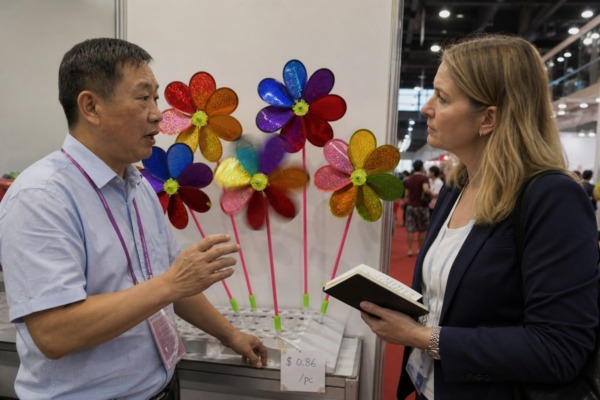
OEM/ODM talks are where reliable suppliers separate themselves from catalog resellers. When we develop customized promotional pinwheels with a brand, the questions the buyer asks in week one shape the whole project. A trading company stalls on tooling questions. A factory answers them the same day.
Here are the questions I would put on the table, and what each answer tells you:
| Question | What a Good Answer Sounds Like |
|---|---|
| What is your minimum order quantity per design and color? | Clear tiers, with lower MOQs for stock colors and higher for custom prints |
| Who owns the custom mold, and is my design exclusive? | You pay tooling, you own the mold, and it is never run for other buyers |
| Can you work with GRS-certified recycled resins? | Yes, with a price delta and a sample plan, since sustainable garden products are in rising demand |
| What are sample costs and lead time? | A fixed fee, often credited against the first order, with dates in writing |
| What defect rate do you accept at final inspection? | A stated tolerance tied to an inspection standard, not "don't worry" |
| Can packaging be customized for retail? | Header cards, PDQ displays, and barcodes handled in-house or nearby |
| What is your monthly supply capacity? | A real number—many craft factories quote around 10,000 pieces per month per line—plus honesty about peak season limits |
Two more points from experience. First, exclusivity only means something in writing. If you invest in a custom mold for a flower-cluster spinner or a rainbow petal design, get mold ownership into the contract. Second, match the product to the deal structure. Bulk party favors and giveaway pinwheels compete on unit price and MOQ flexibility. Retail-grade outdoor lawn ornaments compete on materials and packaging. A factory that quotes both the same way has not thought about your business.
How Do I Avoid Shipping Delays and Damaged Packaging When Sourcing from China?
Every quote we prepare balances two numbers: carton strength and freight cost. Thicker cartons protect glittery pinwheel blades, but they add weight and volume. Getting that balance wrong ruins shipments.
Avoid shipping delays and damaged packaging by booking production in the July–August off-season window, choosing knock-down flat-pack designs to cut CBM, specifying export-grade cartons with drop-test requirements, using an experienced freight forwarder, and confirming a pre-shipment inspection before final payment.
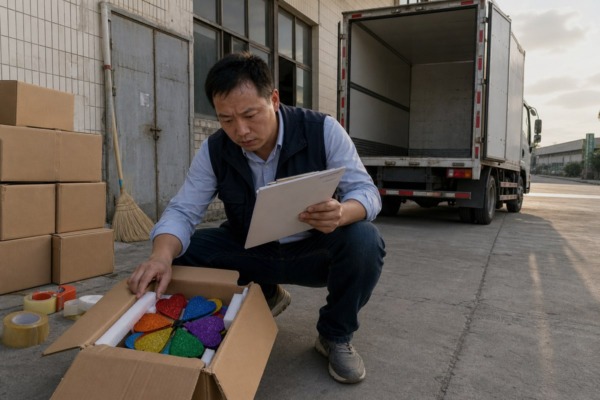
Pinwheels are light but bulky. That combination punishes careless planning twice: once on freight cost, and again on damage claims. Shipping delays and crushed packaging are the two complaints I hear most from distributors, so let me break down how we prevent both.
Time Your Production Window
Chinese factories run on a seasonal rhythm. Orders surge before Lunar New Year, and lead times stretch. The smartest buyers schedule production during the July–August "golden window." Capacity is open, pricing is more competitive, and your goods land well before spring garden season. A supplier advertising 15-day delivery may be honest in August and impossible in December. Ask for lead times by month, not a single number.
| Timing Factor | Peak Season Risk | Golden Window Advantage |
|---|---|---|
| Production slot | Queues before Lunar New Year | Open capacity, faster starts |
| Pricing | Surcharges and rush fees | Off-season negotiating room |
| Freight space | Tight bookings, rolled containers | Easier vessel space |
Cut Volume and Protect the Goods
Ask about knock-down (KD) flat-pack designs. Shipping blades, poles, and grommets unassembled—like a DIY pinwheel kit—dramatically reduces cubic meters and per-unit freight cost. It also protects fragile assembled spinners from crushing. Then specify packaging in writing: export-grade double-wall cartons, inner poly bags for glittery foil blades, and a drop-test requirement before sealing.
Finally, control the handoff. Reliable freight forwarding 4 from China matters as much as the factory itself; a good forwarder flags customs issues before they become delays. On marketplace orders, trade assurance protection ties your payment to on-time shipment. And never release final payment before the pre-shipment inspection report lands in your inbox.
Conclusion
Reliable pinwheel sourcing is a filtering process: confirm real manufacturers, verify QC with samples and audits, negotiate OEM terms in writing, and plan shipping early. Start with one small trial order.
Footnotes
1. Leading global non-profit that manages the Global Recycled Standard for sustainable manufacturing. ↩︎
2. Official Chinese government portal for verifying business registration and manufacturing scope. ↩︎
3. U.S. government resource for business compliance with toy safety and manufacturing regulations. ↩︎
4. Official U.S. agency overseeing international ocean transportation and freight forwarding regulations. ↩︎
More Articles
You might also find these helpful.
¿Qué certificaciones de resistencia al fuego debo verificar al comprar molinetes?
Vet Chinese pinwheel and windmill suppliers with confidence: learn business-license checks, sample testing, and trial orders to avoid…
Read More →
¿Cómo verificar la autenticidad de los informes de prueba al comprar turbinas eólicas?
Vet Chinese pinwheel and windmill suppliers with confidence: learn business-license checks, sample testing, and trial orders to avoid…
Read More →
¿Cómo comprobar si los materiales de los molinetes contienen químicos dañinos?
Vet Chinese pinwheel and windmill suppliers with confidence: learn business-license checks, sample testing, and trial orders to avoid…
Read More → English
  Spanish
  German
  Arabic