
How to Manage RMB Exchange Rate Risks When Procuring Wind Turbines?
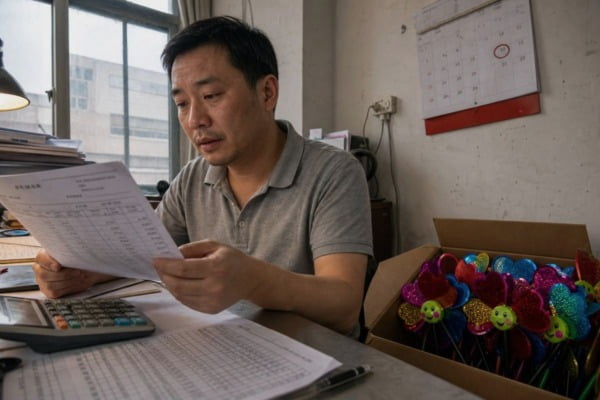
RMB exchange rate risk quietly eats procurement budgets. At our Zhejiang factory, I have watched buyers lose their negotiated savings to FX volatility between deposit and final payment.
Para gestionar los riesgos del tipo de cambio del RMB al adquirir turbinas eólicas o rotores de turbina, confirme la moneda de cotización antes de firmar, fije el tipo de cambio USD en la fecha del pedido, divida los pagos en hitos, agregue cláusulas de ajuste por tipo de cambio y cubra grandes exposiciones con contratos a plazo de divisas o cuentas multidivisa.
Currency risk is not a finance-only problem. It starts the moment you request a quote. Let me walk you through each stage, from pricing to payment, using what we do daily with our export clients.
¿Cómo puedo fijar tipos de cambio favorables del RMB antes de realizar mi pedido de pinwheel?
Last spring, a US distributor delayed her pinwheel order by three weeks waiting for a "better rate." The RMB strengthened instead, and her landed cost rose. Our team learned to fix rates early.
Fija la tasa solicitando una cotización denominada en USD que se liquide al tipo de cambio en la fecha del pedido, pagando tu depósito de inmediato para congelar parte de la exposición, y pidiendo a tu proveedor que mantenga esa tasa por escrito hasta el pago del saldo final.

Here is our own policy at Zhufeng, and I state it plainly because it removes most of the guesswork: we transact at the USD price fixed on the day you place your order. Once your PO is issued and the deposit is received, the exchange rate that applied that day governs the whole contract. The RMB can move for the next 90 days of production and shipping, and your price does not. That is transaction exposure management built into the commercial terms, not bolted on afterward.
Not every supplier in the wind turbine supply chain 1, or in the decorative pinwheel trade, offers this. So you need a checklist before money moves.
Steps to lock your rate before ordering
- Ask whether the quote is in RMB or USD. Never assume.
- Ask which date's exchange rate governs: quote date, order date, or payment date.
- Get the rate commitment written into the proforma invoice 2.
- Verify the beneficiary account and legal entity receiving payment.
- Pay the deposit promptly. Early conversion reduces uncertainty on that tranche.
Why the order-date rate matters
The gap between inquiry and final settlement often spans 60 to 120 days. PBOC monetary policy 3 shifts, trade headlines, and offshore Renminbi CNH market swings can all move the rate inside that window. Fixing the rate at order date collapses that entire window to a single, known number. It converts a floating cost into a firm one, and it costs you nothing except decisiveness.
¿Qué términos de pago debería negociar con mi proveedor de Zhejiang para minimizar el riesgo cambiario?
One trade-off I discuss with nearly every buyer: a lower deposit protects your cash flow, but a larger deposit converts more of your exposure early. There is no free option, only a chosen balance.
Negociar un depósito del 30% al realizar el pedido con el saldo contra documentos de envío, insistir en que la moneda de liquidación y la fecha de tasa aplicable aparezcan en la factura proforma, dividir pedidos grandes en tramos por hitos, y añadir una cláusula de ajuste de tipo de cambio con tope para movimientos más allá de una banda acordada.
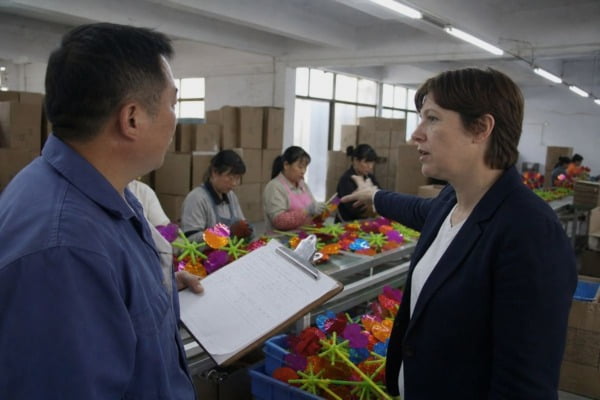
Payment structure is your first hedge, and it is free. Before any derivative or bank product, the terms on your PO decide who carries the currency risk between deposit, production, shipment, and final settlement. In our export contracts to the United States, South America, and Europe, we spell this out line by line, because vague terms are where disputes are born.
Common payment structures compared
| Payment structure | FX risk for buyer | Cash flow impact | Best for |
|---|---|---|---|
| 100% upfront (T/T) | None after payment | Heavy | Small trial orders |
| 30% deposit / 70% before shipment | Medium on the 70% | Balanced | Standard container orders |
| Milestone tranches (3–4 payments) | Averaged across dates | Smooth | Large seasonal programs |
| Letter of credit at sight | Depends on rate clause | Bank fees apply | First-time counterparties |
Milestone tranches deserve special attention. Paying in three or four installments tied to production stages averages your effective exchange rate over the construction or production period. You will never hit the best rate, but you will never eat the worst one either. That averaging effect is exactly what large wind project developers do with turbine milestone payments, and it works just as well on a pinwheel program.
Clauses worth writing in
Include price escalation clauses that only trigger beyond a defined band, for example plus or minus 3%. Inside the band, the price holds. Outside it, both parties share the movement by a stated formula. Also confirm cross-border settlement details: the receiving entity name must match the contract party, and the currency stated must match the invoice. These small checks prevent expensive surprises.
¿Cómo calculo el costo real de importación de mis molinetes de turbina eólica cuando el RMB fluctúa?
A procurement manager once compared our quote against a competitor's and picked the cheaper headline number. Two months later she came back: the "cheaper" order had cost 6% more after the RMB moved.
Calcule el costo real de importación sumando el precio EXW, flete, seguro, aranceles y entrega terrestre, luego aplique el tipo de cambio real en cada fecha de pago más una contingencia cambiaria del 3–5%, y pruebe el total frente a movimientos del RMB del 3%, 5% y 10%.

The cheapest quote is not always the lowest-cost purchase once FX is included. That is the single most important lesson I share with distributors comparing Chinese suppliers. A headline unit price tells you nothing about the currency terms behind it. An RMB-linked quote from one factory can end up costing more than a fixed USD quote from another, even when it starts 4% lower on paper.
The landed cost formula, step by step
- Start with the EXW or FOB unit price and multiply by quantity.
- Add ocean or air freight, insurance, and origin charges.
- Add import duty and any applicable tariffs at destination.
- Add destination port fees and inland trucking.
- Convert each payment tranche at the rate that actually governs that payment date.
- Add an FX contingency reserve of 3–5% if any tranche floats.
Sensitivity analysis example
Run your numbers through simple scenarios. Here is a sample on a $50,000 pinwheel order where 70% of the value floats until shipment:
| RMB movement | Effect on floating 70% | Total budget impact | Verdict |
|---|---|---|---|
| RMB weakens 3% | Buyer saves ~$1,050 | Favorable | Windfall, don't plan on it |
| No movement | $0 | Neutral | Baseline plan |
| RMB strengthens 3% | ~$1,050 extra cost | Manageable | Contingency absorbs it |
| RMB strengthens 5% | ~$1,750 extra cost | Margin pressure | Buffer nearly exhausted |
| RMB strengthens 10% | ~$3,500 extra cost | Serious | Hedging was justified |
Renewable-energy developers have reported that exchange-rate variation between bid and final supply agreement caused significant EPC cost increases and delays. The same math applies at our scale. When we quote a container of garden spinners, we encourage buyers to model the full risk-adjusted cost, not just the FOB line. It makes comparisons honest, and it usually makes our order-date rate lock look even better.
¿Debería usar contratos a plazo o cuentas multidivisa para proteger mi presupuesto de adquisiciones?
Buyers often ask me this over WhatsApp, expecting a one-word answer. The honest reply depends on three things: exposure size, payment timing, and whether your bank gives you decent hedging access.
Utilice contratos a plazo de divisas cuando las fechas de pago sean fijas y la exposición sea lo suficientemente grande como para que una variación del 5% perjudique los rendimientos; utilice cuentas multidivisa para pedidos recurrentes más pequeños, donde mantener saldos en RMB o USD le permita programar las conversiones con flexibilidad sin costos de derivados.

Both tools work. They solve different problems, so present this as a decision framework rather than a rivalry.
Quick comparison
| Factor | Currency forward contracts | Multi-currency accounts |
|---|---|---|
| What it does | Locks a fixed future rate | Holds funds in RMB/USD for flexible timing |
| Best exposure size | Large, one-off or milestone payments | Small to medium recurring orders |
| Cost | Bank margin, possible collateral | Account fees, spread on conversion |
| Certainty | Total rate certainty | Partial; you still choose when to convert |
| Complexity | Documentation, treasury oversight | Low; most trade banks offer them |
A simple decision framework
Small exposure with short lead time: contract clauses and payment timing are usually enough. Skip derivatives. Medium exposure: add an FX buffer to your budget and consider a single forward on the balance payment. Large or multi-stage exposure: combine contract protections, forwards or currency swap agreements 4, and treasury oversight. Sophisticated buyers sometimes tap the offshore Renminbi CNH market through Hong Kong or Singapore banks for deeper liquidity and more flexible instruments than onshore products allow.
Now, the objections. Some finance advisors say hedge everything. I push back: hedging introduces cost, paperwork, and execution complexity, and for a $30,000 pinwheel order the forward's bank margin can exceed the risk it removes. Others say FX is purely a treasury issue to handle after procurement terms are set. In my experience exporting for years, that ordering is backward. Currency responsibility should be settled in the quotation and PO stage first, and financial hedging strategies should cover only the residual exposure that contract design cannot remove. When your supplier already settles at the order-date USD rate, as we do, your residual exposure may be close to zero, and the whole derivative question becomes optional.
Conclusion
Currency swings can quietly erase your negotiated savings. Fix the settlement currency early, split payments, model landed cost honestly, and hedge only material residual exposure. We lock your USD price on order day.
Footnotes
1. Authoritative joint agency of the WTO and UN providing resources for international trade and supply chains. ↩︎
2. The International Chamber of Commerce sets global standards for commercial invoices and trade documentation. ↩︎
3. Official source for Chinese monetary policy which directly influences RMB exchange rate volatility. ↩︎
4. International financial institution providing data and standards for global currency derivatives and swap markets. ↩︎
More Articles
You might also find these helpful.

¿Qué certificaciones de resistencia al fuego debo verificar al comprar molinetes?
Lock in RMB exchange rate risk early: fix your USD rate at order date, split payments, and use…
Read More →
¿Cómo verificar la autenticidad de los informes de prueba al comprar turbinas eólicas?
Lock in RMB exchange rate risk early: fix your USD rate at order date, split payments, and use…
Read More →
¿Cómo comprobar si los materiales de los molinetes contienen químicos dañinos?
Lock in RMB exchange rate risk early: fix your USD rate at order date, split payments, and use…
Read More → English
  Spanish
  German
  Arabic