
How Can I Negotiate a Small Trial Order When Buying Wind Turbines?

A small trial order when buying wind turbines sounds easy—until the supplier quotes a sky-high MOQ. On our Zhejiang production line, I watch buyers hit that wall every week.
Para negociar un pedido de prueba pequeño al comprar turbinas eólicas, solicite el 40–60% del MOQ indicado, ofrezca una prima del 10–30% sobre el precio unitario, acepte especificaciones estándar y proporcione un plan de compra posterior por escrito. Enmarque el pedido como un proyecto piloto que comparte el riesgo con el proveedor.
Our factory builds decorative wind turbines and pinwheel strings for distributors across the US, South America, and Europe. My core belief is simple: place a small trial order first, test the quality, the lead time, and the logistics, verify the supplier’s real capability, and only then commit to bulk purchasing. Below, I break the negotiation into four practical parts.
¿Qué términos de MOQ debo esperar al solicitar un pedido de prueba pequeño para turbinas eólicas?
Every quote I prepare balances two numbers: our setup cost and the buyer's first order size. When those numbers fight, the MOQ conversation begins.
Espere que los proveedores acepten pedidos de prueba a aproximadamente el 40–60% de su Cantidad Mínima de Pedido (MOQ) estándar, generalmente con un recargo del 10–30% en el precio unitario, solo configuraciones estándar, términos de pago más cortos y una carta de intención por escrito que cubra el volumen futuro.
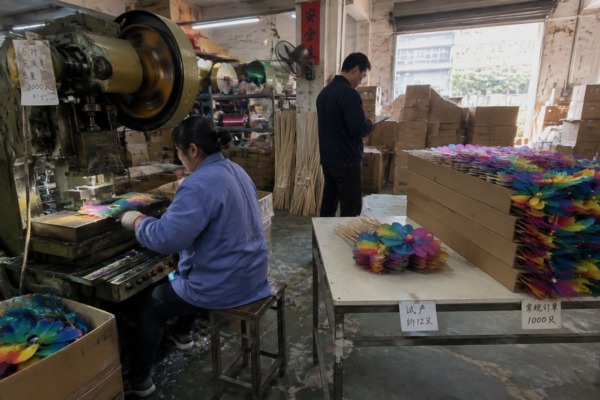
El Minimum Order Quantity (MOQ) is not a random number. In our workshop, every production run of decorative wind turbines requires a die-cutting setup for the petal blades, a print calibration for the gradient film, and a bulk purchase of wooden dowels. Those fixed costs 1 stay the same whether we make 500 units or 5,000. So when a buyer asks for a small trial order, the real question is: who absorbs those fixed costs?
Trade-Offs That Unlock a Lower MOQ
The strongest trial requests answer that question before I even ask it. Here is how the trade works in practice:
| MOQ Concession You Request | What You Offer in Return | Why the Supplier Says Yes |
|---|---|---|
| 40–60% of the stated MOQ | A 10–30% unit price premium | The margin per run stays intact |
| One MOQ split across color variants | A single production run with shared setup | One changeover instead of three |
| Units below any MOQ at all | Purchase from overstock or a cancelled order | It clears dead inventory |
| Waived tooling minimums | Standard configuration only, no custom molds | No new engineering cost |
Use Modular Procurement to Bypass the MOQ
One tactic I rarely see buyers use is modular procurement. Ask directly: do you have overstock, or stock from a cancelled project? We often hold finished goods from postponed orders. Buying those units bypasses the standard MOQ entirely, because the setup cost was already paid.
Finally, put your growth signal in writing. A short letter of intent describing your follow-on purchase plan does more for me than any verbal promise. It turns a one-off favor into a pilot project phase of a real relationship.
¿Cómo me aseguro de que se cumplan los estándares de control de calidad durante un pedido de prueba de turbina eólica?
Last spring, our QC team rejected a full batch of petal blades because the color gradient drifted between print runs. That failure reshaped how I handle every trial order.
Asegure los estándares de control de calidad aprobando una muestra dorada antes de la producción, redactando los criterios de aceptación en la orden de compra, exigiendo una inspección previa al envío con muestreo AQL, añadiendo cláusulas de garantía de rendimiento y vinculando el pago final a un informe de inspección aprobado.

A trial order only proves something if the quality bar is defined before production starts. In our OEM supplier relationship with overseas distributors, the buyers who get consistent results all follow the same sequence. Here is the process I recommend:
- Approve and seal a golden sample. Both sides keep an identical, signed reference unit. Every dispute gets settled against it, not against memory.
- Write acceptance criteria into the purchase order. For our decorative wind turbines, that means exact color codes, film thickness, dowel dimensions, and a spin test under light airflow. Vague words like "good quality" protect nobody.
- Request in-production photos or video. A five-minute video from the line catches drift early, when fixing it is still cheap.
- Book a pre-shipment inspection with AQL sampling. Standard AQL sampling levels give you a statistical check without inspecting every unit.
- Tie the final payment to a passed report. This single clause aligns incentives better than any argument later.
Stick to Certified, Proven Models
Choose the supplier's standard, proven designs for a trial. Experimental or heavily customized units require extra engineering support that suppliers resist providing on small orders, and customization can erase the entire benefit of trialing small.
Trade Data for Goodwill
Offer a data-for-discount swap. We once shipped a trial to a US distributor who reported back sell-through rates, return reasons, and packaging damage photos. That real-world performance data was worth a genuine price concession to us. For larger machines, the same logic supports performance guarantee clauses tied to measurable output.
What Shipping and Logistics Options Work Best for a Small Wind Turbine Trial Shipment?
A procurement manager from the US once messaged me on WhatsApp: the samples were perfect, but half the shipment arrived crushed. Packaging, not product, nearly killed that deal.
For small wind turbine trial shipments, use express courier for orders under one cubic meter, LCL sea freight for larger trial volumes, and consolidated shipping to cut logistics and shipping costs. Always specify reinforced export cartons and cargo insurance in writing.

Logistics and shipping costs hit small orders hardest, because you cannot spread freight across thousands of units. So the shipping mode must match the trial size, not your future rollout. Here is how I guide buyers:
| Shipping Option | Ideal para | Typical Transit | Cost Profile |
|---|---|---|---|
| Express courier | Under 1 CBM, urgent trials | Roughly 1–2 weeks | High per kg, low total spend |
| Flete aéreo | 1–3 CBM, time-sensitive trials | Similar to courier, plus customs | Medium overall |
| LCL sea freight | 2–10 CBM trial orders | Roughly 4–6 weeks | Low per unit, but handling fees add up |
| FCL sea freight | The full rollout after the trial | Roughly 4–5 weeks | Lowest per unit at volume |
Protect the Cargo Like It Matters
Damaged packaging causes returns, and returns kill trial economics. We pack our wind turbines with the petal blades and wooden dowels separated, in reinforced five-layer export cartons 2, and we run internal drop tests before any new packaging design ships. Ask your supplier to describe their packaging test process. If they cannot, that answer is itself a QC result.
Timing Is a Negotiation Lever
Flexibility on delivery windows is currency. If you accept our preferred production slot, a below-MOQ run becomes far easier to schedule. Remember the contrast with utility-scale projects: those deals involve a technical site assessment, grid connection requirements, operation and maintenance (O&M) 3 planning, and delivery schedules negotiated roughly a year in advance. Decorative garden wind turbines skip all of that, which means logistics is your main variable—so negotiate it deliberately, including Incoterms and insurance, in writing.
How Can I Negotiate Fair Pricing on a Low-Volume Wind Turbine Order Without Sacrificing Quality?
Early in my export career, I dropped our price too fast to win a small order. We shipped thinner film to protect the margin, and the buyer never came back.
Negotiate fair pricing by accepting a 10–30% trial premium, locking future unit price scaling into a master supply agreement, offering value instead of discounts—co-marketing case studies, reference sites, performance data—and using phased escrow payments to protect both parties.
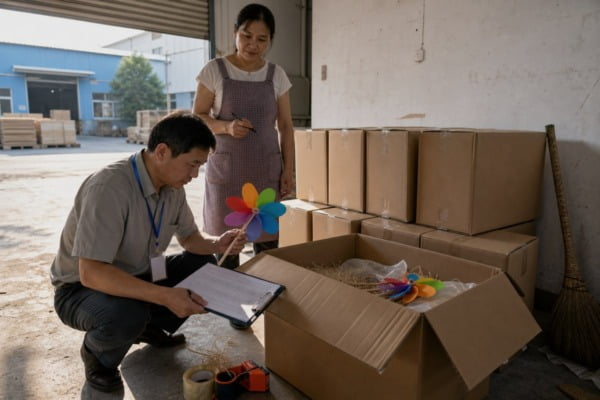
The biggest buyer objection I hear is this: a supplier may agree to a small order but raise the price until the economics collapse. That risk is real. The answer is to set your walk-away premium before the negotiation starts. If the quoted premium exceeds roughly 30% over volume pricing, the supplier is telling you the relationship is not worth it to them—walk away.
Trade Value, Not Just Price
Below your ceiling, stop fighting over the number and start trading value. These levers cost you little and mean a lot to the factory:
| Negotiation Lever | What It Costs You | What the Supplier Gains |
|---|---|---|
| Buy-back or trade-in clause | Nothing if KPIs are met | Confidence the trial converts to a fleet order |
| Co-marketing case study | Time documenting results | Proof for entering your niche or region |
| Reference or beta test site | Hosting occasional visits | A live showcase for regional prospects |
| Phased escrow payments | Minor administrative effort | Evidence you hold funds for the full rollout |
| Technical training partnership | Staff learning basic assembly and upkeep | Lower after-sales burden on remote orders |
Lock In the Path to Volume Pricing
Frame the trial as a Proof of Concept phase inside a master supply agreement. Write the unit price scaling tiers into that agreement now, so the trial premium automatically disappears at defined volumes. Then think in Total Cost of Ownership 4 terms. A slightly higher trial price that buys verified quality, tested logistics, and locked future pricing is cheaper than a discounted order that fails at retail. For large turbine buyers, committing to a long-term service agreement gives the supplier recurring O&M revenue; in our decorative lines, a replacement-parts program plays the same role. Either way, quality survives because the supplier's margin does.
Conclusión
Start small and test everything—quality, lead time, logistics—then scale with confidence. A well-negotiated trial order turns supplier risk into shared opportunity and a lasting partnership.
Notas al pie
1. Explains the economic concept of costs that remain constant regardless of the quantity of goods produced. ↩︎
2. The International Trade Administration provides resources for businesses on international shipping, logistics, and export requirements. ↩︎
3. IRENA provides authoritative data on the operational and maintenance requirements for wind energy technologies. ↩︎
4. Provides a comprehensive overview of calculating the total cost of acquiring and operating a product over its lifecycle. ↩︎
Más artículos
También podrían resultarle útiles.
¿Cómo verificar remotamente las capacidades de producción de una fábrica para componentes enchufables de hierro forjado?
Negotiate a small trial order for wind turbines by offering 40-60% of MOQ, a fair price premium, and…
Leer más →
¿Cómo evaluar la capacidad de producción de una fábrica al obtener insertos de hierro forjado?
Negotiate a small trial order for wind turbines by offering 40-60% of MOQ, a fair price premium, and…
Leer más →
¿Qué preguntas debe hacer a los proveedores de insertos de hierro forjado para detectar a los poco fiables a tiempo?
Negotiate a small trial order for wind turbines by offering 40-60% of MOQ, a fair price premium, and…
Leer más → English
  Spanish
  German
  Arabic