
How to Handle a Supplier Suddenly Changing Their Quoted Price During Windmill Procurement?

A supplier suddenly changing their quoted price during windmill procurement can wreck margins overnight. On our pinwheel production line in Zhejiang, we sit on both sides of that shock.
When a windmill supplier suddenly changes a quoted price, first check the contract for firm-price or validity terms, then demand documented proof of the cost increase, negotiate a fair cost split, and activate a backup supplier if you cannot reach agreement. Document every step in writing.
That answer sounds simple. In practice, each step has traps. I have raised prices myself when resin costs spiked, and I have pushed back on my own upstream vendors when their increases smelled opportunistic. In this guide, I will walk through both sides so you can tell a real cost shock from a bluff, and respond without losing the deal or your margin.
How can I verify if a mid-negotiation price increase from my windmill supplier is legitimate?
Last spring, our PET film vendor raised prices mid-order and blamed the market. We asked for their resin invoices. Half of the increase vanished by the next morning.
Verify a mid-negotiation price increase by demanding an itemized cost breakdown covering materials, labor, and freight, then checking each claim against independent commodity indices like steel, resin, or Producer Price Indexes. A legitimate increase matches documented input costs; an opportunistic one hides margin expansion behind vague market talk.
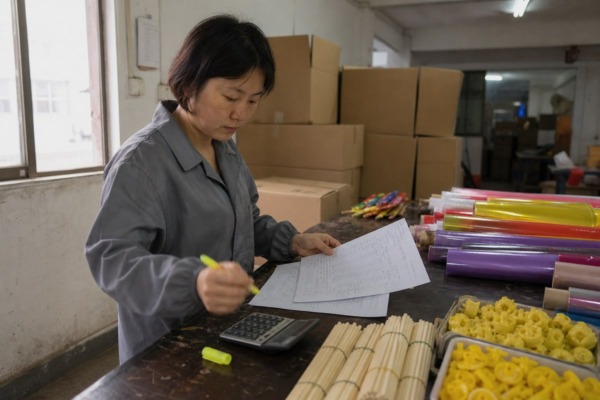
That resin story taught me the golden rule of verification: never accept a general market statement as proof. Raw material price volatility is real, but it is also the easiest excuse to abuse. Whether you are buying garden pinwheels by the container or components in the wind turbine supply chain, the verification logic is identical.
Demand a Granular Cost Breakdown
Ask the supplier to itemize the increase line by line. For our pinwheels, that means film, wooden dowels, pins, grommets, labor, and freight. A supplier who refuses to itemize is telling you something. A supplier who itemizes gives you numbers you can test.
Check Every Claim Against Independent Benchmarks
Match each line to a public data source. This is where general inflation stops masking margin expansion.
| Cost Driver Claimed | Independent Verification Source |
|---|---|
| Metals (steel, copper) | Published commodity exchange benchmarks |
| Plastics and resin | Producer Price Indexes 1 for polymers |
| Flete marítimo | Container freight rate indices |
| Labor | Regional wage statistics for the supplier's country |
| Energy | Local industrial power tariff announcements |
Logistics and freight volatility deserves special attention, because shipping rates swing harder than most inputs and suppliers know buyers rarely track them.
Run a Should-Cost Analysis
Build your own model of what the product should cost using current inputs. Then negotiate from data, not feelings. One useful anchor from regulated renewable energy procurement 2: one public guideline requires a requested escalation to reach at least two standard deviations from a ten-year historical mean before it counts as extraordinary. That is a very high bar. Hold your supplier to a similar standard of proof, even in a private deal.
What steps should I take when my pinwheel supplier tries to renegotiate pricing after I've placed an order?
A US buyer once messaged us on WhatsApp in a panic. Her previous pinwheel supplier demanded more money after the Purchase Order 3 was signed. Here is what we advised.
After an order is placed, pause payment, review your Purchase Order terms for fixed-price language, request written justification with supporting documents, separate genuine cost increases from added margin, negotiate trade-offs like volume commitments or faster payment, and escalate to your dispute resolution process if the supplier refuses.

Timing changes everything here. A price change before you award the order is annoying but legal in most cases. A price change after a signed Purchase Order is a different animal, because the supplier is asking you to amend a binding agreement. Your leverage is much stronger, so use it in a disciplined sequence.
- Pause, do not react. Stop any pending deposit or balance payment. Money already in the supplier's account is leverage you gave away.
- Re-read your Purchase Order terms. Look for fixed-price language, quote validity dates, and any clause allowing contractual price adjustments. If the price is firm, say so in writing and cite the clause.
- Require written justification. Ask for manufacturer documentation, supplier invoices, or published price sheets. Verbal explanations do not count.
- Split the increase in two. Push the supplier to separate the non-negotiable cost portion from the discretionary margin portion. In my experience, most suppliers concede the margin half quickly once it is named out loud.
- Trade value instead of cash. Offer a longer-term supply agreement 4, a guaranteed volume commitment, or faster payment in exchange for holding the original price. Big wind turbine buyers do the same at scale, trading accepted increases for extended warranties or cheaper long-term service agreements. The total cost of ownership matters more than the sticker price.
- Highlight your readiness. A confirmed, ready-to-ship order is guaranteed revenue for the supplier. Remind them that certain income today beats a speculative higher-priced order tomorrow.
- Escalate formally if talks stall. Invoke the dispute resolution process in your contract before you abandon the order.
Suppliers will object that the original quote assumed a shorter decision cycle or stable commodity prices. That is sometimes fair. But the honest answer to a stale quote is a documented, formula-based adjustment, not an arbitrary new number sprung on a signed order.
How do I protect my business with contracts that prevent sudden price changes during windmill procurement?
Every quote we issue forces a choice: lock a firm price and absorb resin swings ourselves, or add an escalation clause and risk scaring buyers away. Both carry cost.
Protect your business with firm-price clauses for short procurement cycles, defined quote validity windows, narrow price escalation clauses tied to published indices, symmetric indexation that forces decreases when markets cool, mandatory written notice periods with documentation, and a clear dispute resolution process written into every Purchase Order.

Sudden repricing during windmill procurement is usually a contract problem, not a negotiation problem. If your paperwork is silent, every price becomes an opinion. After years of exporting pinwheels to the US, South America, and Europe, we learned to fix pricing rules before the first container ships, not after the first dispute.
The Clauses That Matter Most
| Cláusula | What It Does | Ideal para |
|---|---|---|
| Firm-price clause | States the price cannot be revised during the contract period | Short-duration orders, seasonal buys |
| Quote validity window | Sets a sunset date after which the quote expires | Preventing stale-quote disputes |
| Price escalation clause | Allows adjustment only on defined triggers tied to published indices | Long-term or multi-year supply deals |
| Symmetric indexation | Forces prices down when the same index falls | Stopping temporary surcharges from becoming permanent |
| Written notice requirement | Requires advance notice plus documentation before any increase is considered | All contracts |
| Force Majeure clauses | Define genuine impossibility events, separate from ordinary cost pressure | Keeping cost inflation out of the excuse category |
Match the Pricing Model to the Timeline
Fixed-price contract risks cut both ways. A firm price protects you on a 60-day order, but on a two-year framework it can push a squeezed supplier toward quality shortcuts or non-performance. Public procurement practice reflects this: bid prices are typically treated as fixed unless the contract explicitly allows escalation, and government guidance increasingly recommends designing that escalation language at the solicitation stage rather than improvising later. For longer deals, tie contractual price adjustments to Producer Price Indexes, cap the adjustment, and define the trigger precisely. Utility-scale wind buyers go further with back-to-back hedging, aligning supplier increases with inflation triggers in their Power Purchase Agreements to protect project returns. And always keep the paper trail: quote dates, revisions, emails, and approvals win disputes.
Should I switch suppliers if they keep changing their quoted prices, or is it better to negotiate?
We lost a wholesale client years ago over a price dispute we handled badly. That lesson taught us when a buyer should walk and when they should talk.
Negotiate when the increase is documented, market-driven, and the supplier's quality and reliability are strong. Switch when repricing is repeated, undocumented, or timed to exploit your deadlines. Either way, qualify a backup supplier first, because leverage in windmill procurement comes from real alternatives, not threats.

Here is the quick decision view I share with procurement managers who source pinwheels from us:
| Señal | Negotiate | Switch |
|---|---|---|
| Increase backed by invoices and indices | ✔ | |
| Repeated repricing with no documentation | ✔ | |
| Strong quality history and low defect rates | ✔ | |
| Increase timed right before your peak season | ✔ | |
| Supplier offers formula-based adjustment | ✔ | |
| Supplier refuses any written justification | ✔ | |
| High switching cost: custom molds, tooling, colors | ✔ |
Why Negotiation Usually Wins First
Switching looks clean on paper, but it carries hidden costs. New molds, new color matching, new QC baselines, new logistics testing. Our custom pinwheel buyers know that requalifying a factory takes real time, and a cheap unknown supplier can cost more in returns and damaged packaging than a fair increase from a proven one. Good vendor risk management weighs the whole relationship, not one invoice.
When Walking Away Is Right
Repeated, undocumented repricing is a behavior pattern, not a market event. My own rule, learned the hard way: check the contract terms, confirm the reason for the increase, negotiate how the cost gets shared, and if no agreement is possible, activate the backup supplier. That last step only works if it exists. A sound strategic sourcing strategy keeps at least one qualified alternate vendor warm at all times, even paying slightly more for small trial orders to keep them engaged. Re-bidding also creates competitive tension that often brings the original supplier back to the table with a better number, no ultimatum required.
Conclusión
Sudden repricing can gut your margins fast. Verify the claim, enforce your contract, trade value not cash, and keep a backup supplier ready before you ever need one.
Notas al pie
1. Official US government source for tracking price changes at the producer level across industries. ↩︎
2. IRENA provides global standards and data for renewable energy procurement and market trends. ↩︎
3. Wikipedia overview of the legal and commercial functions of a purchase order in trade. ↩︎
4. Authoritative source for standard supply agreement frameworks and procurement best practices. ↩︎
Más artículos
También podrían resultarle útiles.

¿Cómo verificar remotamente las capacidades de producción de una fábrica para componentes enchufables de hierro forjado?
Verify a supplier's sudden windmill price increase with itemized cost breakdowns and commodity indices, then negotiate confidently instead…
Leer más →
¿Cómo evaluar la capacidad de producción de una fábrica al obtener insertos de hierro forjado?
Verify a supplier's sudden windmill price increase with itemized cost breakdowns and commodity indices, then negotiate confidently instead…
Leer más →
¿Qué preguntas debe hacer a los proveedores de insertos de hierro forjado para detectar a los poco fiables a tiempo?
Verify a supplier's sudden windmill price increase with itemized cost breakdowns and commodity indices, then negotiate confidently instead…
Leer más → English
  Spanish
  German
  Arabic