
How Can I Confirm a Wind Turbine Supplier Will Provide Export Documents on Time?
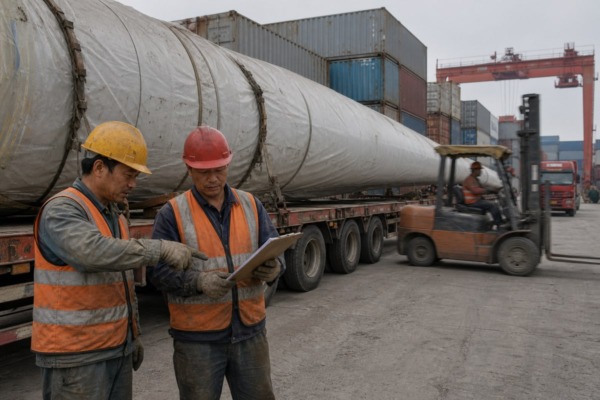
A missing Certificate of Origin 1 once trapped our factory’s shipment in customs for days. With wind turbine supplier export documents, the stakes multiply—one late certificate can strand million-dollar cargo.
Confirm timely export documents by requiring a written document matrix in the supply contract: name each document (commercial invoice, packing list, Bill of Lading, Certificate of Origin), assign an owner, set deadlines before cargo handoff, and tie penalties or payment milestones to on-time delivery.
That answer sounds simple. In practice, most buyers accept a vague “we can provide them” from the supplier. This article shows you how to turn that promise into a schedule, a named owner for each form, and a pre-shipment signoff process. I ship export cargo every week from Zhejiang, and I will share what actually works on both sides of the deal.
What Export Documents Should I Request Before Placing My Wind Turbine Order?
Last spring, a US buyer asked me on WhatsApp for our full export file before ordering pinwheels. Wind turbine buyers should demand the same clarity at far larger scale.
Before placing a wind turbine order, request the commercial invoice, packing list, Bill of Lading draft, Certificate of Origin, export license if applicable, and destination-specific technical certificates. Ask for a document matrix naming each form, its owner, and its deadline relative to shipment.
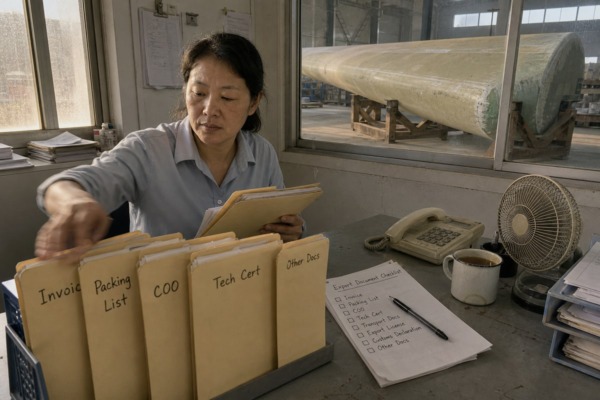
The word "export documents" hides three very different categories. If you only ask for "the paperwork," you will get whatever the supplier finds easiest. You need to name each category and check it separately.
Three Categories You Must Separate
Core shipping documents move the cargo. Customs documents clear the cargo. Technical compliance documents prove the cargo is legal to import. A wind turbine shipment needs all three chains to line up before anything moves, because oversized components, origin claims, and country-specific rules are all checked before customs clearance is granted.
| Documento | Typical Owner | Propósito | When You Need It |
|---|---|---|---|
| Factura comercial | Proveedor | Declares value and product facts | Draft before booking; final before handoff |
| Lista de empaque | Proveedor | Matches cargo to invoice | Same timing as invoice |
| Bill of Lading | Carrier via forwarder | Title and transport contract | Draft at booking; final at sailing |
| Certificate of Origin | Supplier / chamber | Origin claim, duty treatment | Before customs filing |
| Export license or permit | Proveedor | Legal permission to export | Before production ends, if required |
| Technical certificates | Proveedor | Conformity, sector approvals | Before customs filing |
Destination rules change the list. Canadian wind-tower import documentation should identify the exporter, producer, factory, shipment origin, customer, importer, country of origin, and a detailed product description. India's wind-manufacturing portal lists the commercial invoice, Bill of Lading, packing list, IEC and ISO certificates, undertakings, and utilization reports for certain duty-related processes. US buyers may face Section 232 questions, and Australian buyers deal with ABF requirements. Some European buyers now also request Mecanismo de Ajuste en Frontera por Carbono 2 (CBAM) data as part of the initial export file. So there is no universal checklist. Build yours around your destination, and confirm it with your customs broker before you sign.
How Can I Verify a Supplier's Track Record for On-Time Documentation?
Early in our export business, we lost a repeat customer because a delayed Certificate of Origin stalled her customs clearance. Since then, we let buyers verify everything before signing.
Verify a supplier's documentation track record by requesting redacted sample documents from past shipments, customer references for your destination country, proof of a dedicated export compliance team, and official registry checks of their business license and export credentials—never rely on provided copies alone.

Talk is cheap in sourcing. Any supplier will say "no problem" when you ask about paperwork. The suppliers who actually deliver on time can prove it, and the proof follows a clear sequence.
A Five-Step Verification Process
-
Check the registry, not the copy. For Chinese suppliers, cross-verify the Unified Social Credit Code and export license validity through official government registries. A scanned copy can be outdated or edited. A registry lookup cannot.
-
Ask them to name every document. A capable supplier can list, unprompted, exactly which forms they will issue for your destination. Hesitation here signals they have never shipped there. Ask directly: "Have you exported this product category to my country before?"
-
Request redacted samples. We share sample invoices and origin certificates with sensitive data blacked out. Any experienced exporter can do the same within a day or two. This shows their real formatting quality and data consistency.
-
Confirm a dedicated documentation owner. Large manufacturers often have slow internal approval chains. Ask who personally prepares and signs export files, and whether they run a trade compliance or export compliance team. One named owner beats a shared inbox.
-
Run a dry-run audit. For high-value cargo, schedule a documentation dry run 60 days before shipment. Some buyers also require uploads to a shared Supplier Document Exchange portal so both sides can track version status in real time.
Remember that document timelines can be measured, not assumed. India, for example, has published issuance timelines of 9 days by sea and 3 days by air for certain wind-related customs certificates after a complete application. If a government can commit to a number, your supplier can too. Ask for their standard document lead time in writing.
What Contract Terms Should I Include to Guarantee Timely Paperwork Delivery?
There is a trade-off we weigh in every supply agreement our factory signs: tight document clauses feel heavy during negotiation, yet they cost far less than one held container.
Include a document matrix as a contract annex, make documentation delivery a condition precedent to payment, set deadlines in business days before cargo handoff, define Incoterms responsibilities clearly, and add penalty or escalation clauses for missed document milestones.
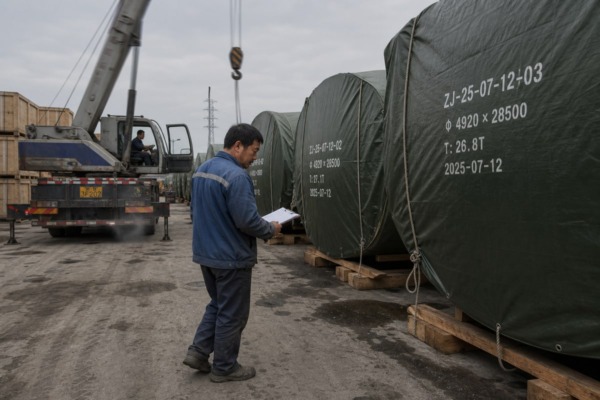
Some buyers push back here. They say a trusted vendor's promise should be enough. I understand the instinct, but trust does not stop a customs hold. Late paperwork can cost more than late hardware, because demurrage, storage fees, and missed sailings pile up daily. The contract is where "on time" gets defined, and these are the clauses that do the work.
The Clauses That Actually Protect You
| Contract Term | What It Does | Por Qué Importa |
|---|---|---|
| Document matrix annex | Lists each document, owner, reviewer, and deadline | Removes all ambiguity about "the paperwork" |
| Condition precedent | Blocks payment release until documents are verified | Turns paperwork into a financial deliverable |
| Deadline standard | "Documents ready X business days before cargo handoff" | "Documents at shipment" is too late for many customs filings |
| Incoterms clarity | Defines handoff point and document responsibility | Prevents supplier–forwarder–broker finger-pointing |
| Letter of Credit terms | Ties bank payment to specific compliant documents | Banks reject inconsistent files, forcing accuracy |
| Performance bond | Financial backstop for major delivery failures | Useful on multi-shipment turbine projects |
| Escalation path | Named contacts and response times when deadlines slip | Catches problems before vessel cut-off |
Two of these deserve emphasis. First, the condition precedent clause is the strongest lever available. When payment cannot release until every certificate is verified, documentation stops being clerical admin and becomes a revenue event for the supplier. Second, establish a governance rhythm: a recurring review call with a defined owner for each document type, so risks escalate before the vessel cut-off date, not after. Draft documents come first, then final signed versions, then amended copies if cargo details change. Write that sequence into the annex too.
What Red Flags Signal a Supplier Might Delay My Export Documents?
Our documentation team runs a pre-shipment check on every order leaving our Zhejiang facility. That habit taught us the warning signs that separate reliable exporters from risky ones.
Red flags include vague promises like documents at shipment, refusal to share draft or sample paperwork, no named documentation owner, inconsistent data between invoice and packing list, no experience with your destination country, and resistance to written deadlines or escalation terms.
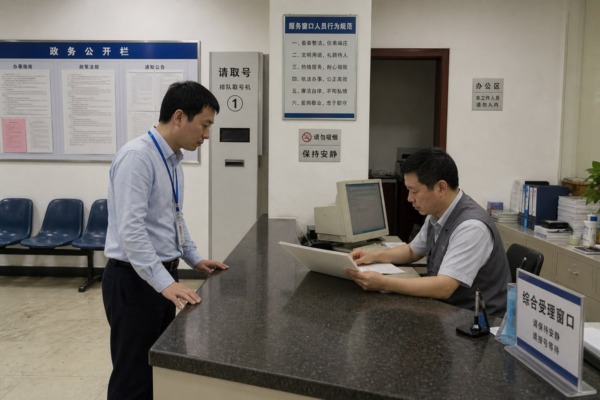
Most document delays are predictable. They come from a short list of causes: incorrect HS classification 3, mismatched invoice and packing data, missing signatures, incomplete origin statements, late certificate issuance, vessel schedule changes, and slow internal approvals. Wind projects are especially exposed because components are oversized, ship in stages, and often involve break-bulk project cargo, where one delayed certificate blocks an entire shipment. Here is how the warning signs map to action.
| Señal de alerta | What It Usually Means | What To Do |
|---|---|---|
| "Documents at shipment" promise | No pre-clearance workflow exists | Demand a days-before-handoff standard |
| Won't share redacted samples | Little real export history | Ask for references or walk away |
| No named document owner | Slow internal approval chain | Require an owner in the contract |
| Invoice and packing list don't match | Weak internal data control | Run a dry-run audit before production ends |
| Resists early drafts | Fears exposure of gaps | Explain drafts prevent rework, not delay |
| Only offers paper copies | Cannot meet digital portals | Require export-ready digital files |
Some suppliers argue that export documents are the freight forwarder's job. That is only half true. The supplier controls the product facts, origin data 4, serial numbers, and packing data. If those inputs are late or wrong, no broker can complete the customs filing on time. Others claim that insisting on early drafts slows the deal. In my experience, the opposite holds: early drafts cut rework and prevent last-minute surprises, which matter far more on oversized cargo than on standard palletized freight.
Watch the trends too. Customs systems increasingly accept electronically signed files and validate completeness on submission. Advanced buyers now use AI-driven regulatory mapping to flag mismatches against destination rules, blockchain-based smart Bills of Lading for immutable timestamps, and even workflow simulations that predict bottlenecks from regional holiday cycles or port strikes. A supplier who cannot generate clean digital files quickly will struggle in modern supply chain logistics, and your lead time will absorb the damage.
Conclusión
Do not accept vague promises. Turn wind turbine supplier export documents into a written matrix, contract deadlines, named owners, and pre-shipment signoff—because late paperwork costs more than late hardware.
Notas al pie
1. Authoritative source for international trade document standards and the issuance of certificates of origin. ↩︎
2. Official European Commission page detailing the requirements and implementation of the Carbon Border Adjustment Mechanism. ↩︎
3. The World Customs Organization’s official page for the Harmonized System used for global product classification. ↩︎
4. Official WCO resource explaining the rules and importance of origin determination in international trade. ↩︎
Más artículos
También podrían resultarle útiles.

¿Cómo verificar remotamente las capacidades de producción de una fábrica para componentes enchufables de hierro forjado?
Confirm export documents on time by requiring a written document matrix with named owners, deadlines, and contract penalties…
Leer más →
¿Cómo evaluar la capacidad de producción de una fábrica al obtener insertos de hierro forjado?
Confirm export documents on time by requiring a written document matrix with named owners, deadlines, and contract penalties…
Leer más →
¿Qué preguntas debe hacer a los proveedores de insertos de hierro forjado para detectar a los poco fiables a tiempo?
Confirm export documents on time by requiring a written document matrix with named owners, deadlines, and contract penalties…
Leer más → English
  Spanish
  German
  Arabic