如何评估风力发电机组供应商是否支持产品改进?
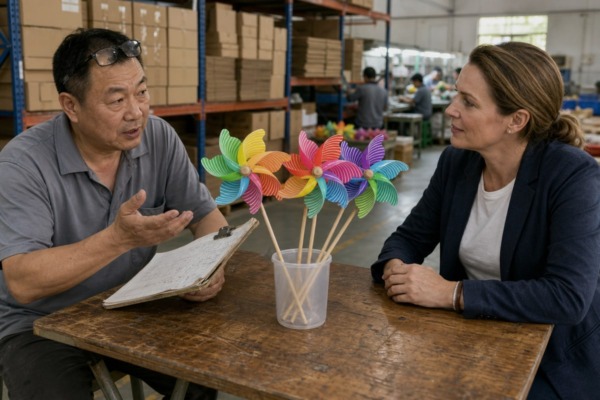
选择一个真正支持产品改进的风力发电机组供应商很难。我在运营我们的浙江风车生产线时学到了这一点,当时买家不断问一个问题:你能改进这个吗?
通过核实有记录的OEM/ODM流程、根据您的反馈调整设计的意愿、PDCA和根本原因分析等结构化质量方法、透明的KPI,以及对变更请求的快速、有成本的响应(包括明确的打样费用和时间表),来评估风力发电机组供应商的产品改进支持。
这个答案听起来很简单。在实践中,大多数买家只有在第一批缺陷货物到达后才发现真相。因此,我在下面将评估分解为四个实际问题。您可以在签署任何订单之前使用它们,无论您是采购公用事业规模机器还是像我们花园风车这样的装饰性风力发电机组。
我应该问什么来确认我的供应商提供真正的OEM/ODM支持?
去年春天,一位美国采购经理在WhatsApp上给我发消息:你们的工厂做真正的ODM,还是只是换标签?她的怀疑来自三家过度承诺的供应商。
索取近期的OEM/ODM案例研究、针对您设计的可行性评审流程、自有工装或模具能力、附带报价的原型制作成本的样品交付周期,以及具名的工程联系人。真正的OEM/ODM支持体现在文档和样品上,而不仅仅是快速的应允。
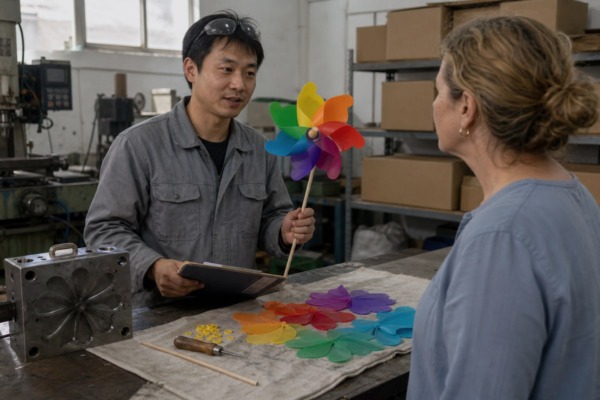
真正的OEM/ODM支持意味着供应商能够将您的想法贯穿设计、模具、打样和批量生产。虚假支持意味着他们购买通用零件并将您的标志贴在包装上。当您谈论修改可行性时,差异最快显现出来。在我们的浙江工厂,每个定制风车项目都从可行性讨论开始。花瓣形状能否干净地模切?聚酯薄膜能否保持彩虹渐变印刷?修改后的模具和首批样品将花费多少?我们在切割任何东西之前将这些答案书面化。无法在第一次对话中讨论设计变更、工艺调整和打样成本的供应商可能无法控制自己的生产。
揭示真实能力的问题
| 要问的问题 | 薄弱的回答 | 有力的回答 |
|---|---|---|
| 我能看一个最近的ODM案例吗? | "我们定制一切" | 真实项目的图纸、照片和修订历史 |
| 谁拥有模具? | 模糊,或完全外包 | 内部模具和铸模,并注明修改交货时间 |
| 重新设计样品费用是多少? | "免费,没问题" | 包含模具变更、材料和人工的分项报价 |
| 您如何早期管理风险? | 沉默 | 结构化的生产前评审,类似于风能行业使用的APQP4Wind式早期风险识别 |
| 您的研发投资路线图上有什么? | 没有任何记录 | 计划材料、新设计和产品生命周期管理里程碑 |
为什么诚实的打样成本很重要
这是我向新买家最强调的一点。报出诚实原型成本的供应商实际上已经计算了工作。承诺为复杂重新设计提供免费样品的供应商通常会在其他地方收回该成本,通常是在您的单价中或跳过质量步骤。当我们报价花瓣重塑工作时,我们将模具修改、薄膜浪费和组装试验时间分开。这种透明度本身就是真正OEM/ODM深度的证据。
我如何判断我的供应商是否愿意根据我的反馈调整设计?
我们的团队曾在分销商报告沿海风中叶片松动后返工了风车花瓣模具。那一次重新设计教会了我们反馈应如何流入工程。
愿意调整设计的供应商会公开讨论修改的可行性,为修订版本报价打样成本,展示过去客户反馈改变设计或工艺的案例,并维护现场性能反馈闭环,将投诉和保修数据转化为工程更新。
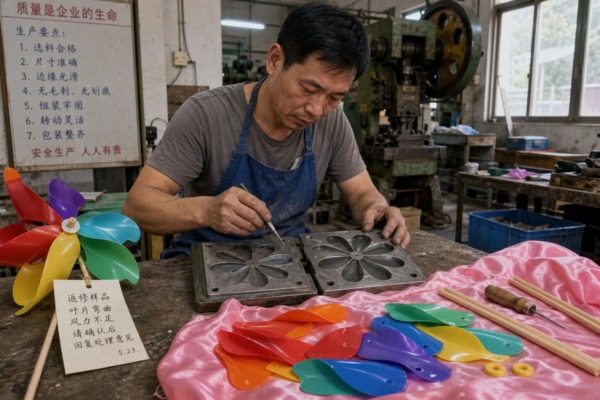
意愿不是个性特征。它是您可以在承诺之前测试的过程。以下是我推荐给每位参观我们车间的采购经理的五步测试。
- 发送一个小而具体的变更请求。 要求不同的花瓣曲线、更长的销钉或新的颜色渐变。故意保持微小。
- 观察他们如何回答。 认真的风力发电机组供应商讨论可行性、权衡和成本。弱小的供应商只是对一切说 yes,这通常意味着实际上什么都不会改变。
- 要求一个有记录的示例。 请求一个客户反馈导致设计或工艺变更的案例。当我们的分销商报告叶片松动时,我们添加了第二个黄色垫圈并调整了轮毂张力,然后分享了 根本原因分析 1 与买家。公开分享发现的供应商有助于防止每个客户机队中出现相同的故障。
- 检查反馈基础设施。 公用事业规模风机制造商依赖 SCADA系统分析 2 和O&M数据集成,将运行数据反馈到工程中。在消费规模上,等效的是结构化投诉日志、按SKU的退货率分析以及与分销商的定期评审电话。两者都是现场性能反馈循环;只是工具不同。
- 询问改造和升级可用性。 模块化架构在每个规模上都很重要。大型风力发电机组越来越多地支持即插即用组件改造,因此升级不需要更换整个机舱。我们的工艺套件遵循相同的逻辑:花瓣、垫圈、销钉和销钉是单独的可更换零件,因此改进的花瓣设计可以升级现有库存而不是报废。
如果供应商通过所有五个步骤,反馈不会死在收件箱中。它将成为您产品的下一个更好版本。
哪些质量控制实践能向我表明供应商致力于持续改进?
在我们出口业务的早期,我们运送了一批垫圈张力不一致的货物。昂贵的退货教会了我质量控制必须预防问题,而不仅仅是发现问题。
寻找PDCA、六西格玛或改善循环、8D问题解决法、更新的失效模式与影响分析、纠正和预防措施记录、组件可靠性测试,以及跟踪的关键绩效指标,如缺陷率和OTIF交付区间。这些实践证明改进是系统性的,而非偶然的。
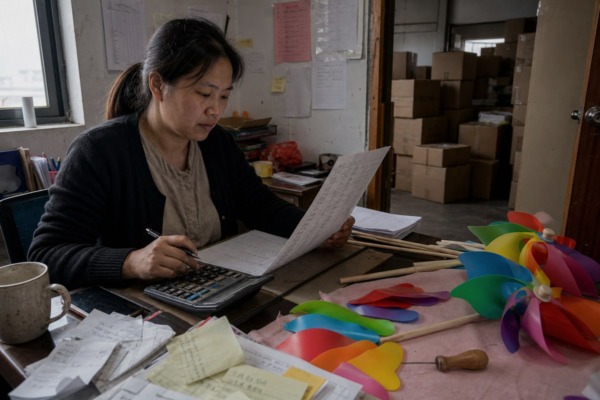
仅有认证本身说明不了什么。一家工厂可以持有证书,却仍然每个季度重复同样的错误。你需要的是活体系存在的证据:不断更新的文档、定期审查的指标,以及不再反复出现的故障。风电行业的尽职调查指南也提出了同样的观点,建议买家考察历史表现、产品项目成熟度和保修补救措施,而不是止步于证书。
证明活体系的文档
要求查看近期的8D报告或根本原因分析。询问 Failure Mode and Effects Analysis 3 was last revised and why. Ask how a defect triggers a control plan update. After our grommet tension problem, we added a spin-test station and a torque check to the assembly line, and both now appear in our control documents. That paper trail is what separates prevention from firefighting. It also supports supply chain transparency, because you can trace exactly which change fixed which problem.
Metrics Worth Requesting
| KPI | 它揭示的内容 | Good sign |
|---|---|---|
| Defect rate | Process stability | Falling trend across consecutive quarters |
| On-time in-full (OTIF) delivery | Planning discipline | A or B band under an A–D grading system, the approach Nordex applies to its suppliers |
| Field failure rate / MTBF | Design durability | Mean time between failures rising after each design revision |
| Complaint closure time | Corrective action speed | Measured in days, not months |
| Warranty claim frequency | Real-world quality | Declining with each product generation |
One more marker: component reliability testing 4 tied to recognized standards. Utility turbine performance claims are verified against standards such as IEC 61400-12. For decorative products, the equivalent is documented spin, UV, and colorfastness testing with pass criteria. Either way, the principle is identical. A supplier committed to continuous improvement measures, tests, and shows you the trend line.
当我请求产品变更时,如何评估供应商的响应能力?
Every change request forces a trade-off in our workshop: quote fast and risk errors, or verify carefully and seem slow. How a supplier balances this tells you everything.
通过计时供应商的首次技术回复、要求提供包含打样成本和交期的书面可行性答复,并对五个维度进行评分来评估响应能力:响应性、根因分析纪律、数据透明度、实施速度和已验证的改进成果,其中关键组件的权重更高。

Speed alone is a trap. I have seen competitors reply to a WhatsApp message in two minutes and then take two months to produce a corrected sample. Technical support responsiveness must be measured on substance: how quickly you receive a written answer that covers feasibility, sampling cost, and a delivery date. In our factory, we target a meaningful technical reply within one working day and a costed feasibility answer shortly after, because a change request cannot move until engineering has actually reviewed it.
A Simple Scoring Matrix
| Dimension | Suggested weight | What to score |
|---|---|---|
| Responsiveness | 20% | Time to first substantive technical reply, not first chat message |
| Root-cause discipline | 20% | Evidence of RCA and 8D behind past changes |
| Data transparency | 20% | Willingness to share KPIs, failure data, and cost breakdowns |
| Implementation speed | 20% | Actual sample and change lead times versus promises |
| Proven improvement results | 20% | Documented before-and-after gains, such as lower return rates |
For critical or high-volume items, raise the weight on implementation speed and proven results. A wind turbine supplier that scores well here protects your whole product lifecycle management plan, from first sample to end-of-line retrofit.
The Cost-First Objection, Answered
Many buyers push back at this point. One supplier-selection study in the wind sector even found that cost ranked as the most important criterion, ahead of quality and risk. I understand the budget pressure. But my honest position, after years of shipping pinwheels to the US, South America, and Europe, is this: the cheapest quote from a supplier who cannot prevent repeat failures becomes the most expensive line on your books. Returns, damaged packaging claims, and lost shelf space all land on you, not the factory. Improvement capability is not a soft extra. It is risk reduction you can price.
结论
A weak supplier will cost you repeat failures and lost customers. Evaluate improvement capability early, demand evidence, score responsiveness, and partner with factories that treat your feedback as fuel.
脚注
1. Authoritative guide on root cause analysis, a key method for systematic product and process improvement. ↩︎
2. IEEE is a leading authority on the technical standards and analytics systems used in utility-scale energy infrastructure. ↩︎
3. Detailed explanation of FMEA, a critical tool for identifying and preventing potential failures in manufacturing. ↩︎
4. The IEC provides the international standards for wind energy generation systems and component testing. ↩︎
更多文章
你可能也会觉得这些有帮助。

应该向锻铁嵌件供应商提出哪些问题以尽早识别不可靠的供应商?
通过有记录的OEM/ODM案例、透明的样品成本和结构化的质量流程来验证风力发电机供应商的产品改进支持……
阅读更多 → English
 Spanish
 German
 Arabic
 Chinese