
كيف أختبر إذا كانت عينات الدولاب الورقي تتشوه في البيئات الرطبة؟
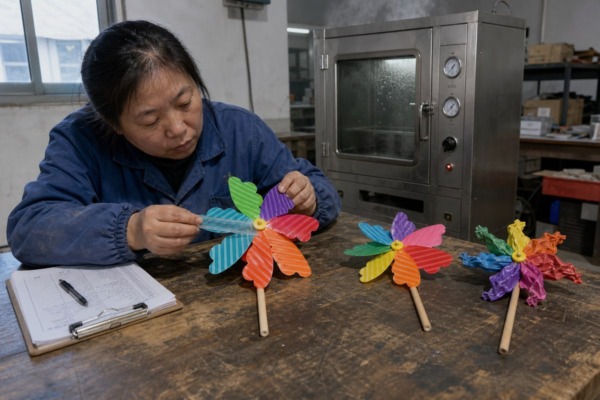
في الربيع الماضي، عادت دفعة من عينات الدولاب الورقي الخاصة بنا من فلوريدا بريش ملتف. تلك الشكوى الواحدة دفعت ورشتنا في تشجيانغ إلى إعادة بناء طريقة اختبارنا لمقاومة الرطوبة.
لاختبار ما إذا كانت عينات الدولاب الهوائي تتشوه في البيئات الرطبة، قم بقياس الأبعاد الأساسية، وعرّض العينات في غرفة رطوبة مُتحكَّم فيها عند رطوبة نسبية عالية أو انقعها، ثم أعد القياس بعد التجفيف. قارن التجعد والالتواء والبهتان والتغير البُعدي مقابل عينة ضابطة جافة لتأكيد التشوه الدائم.
هذا هو الجواب المختصر. لكن التفاصيل مهمة. مستوى الرطوبة، والمادة، ومدة الاختبار، وطريقة الفحص كلها تغير نتائجك. أدناه، أستعرض كل خطوة بالطريقة التي ننفذها بها في مختبرنا الخاص، حتى تتمكن من نسخ سير العمل لعيناتك الخاصة.
ما مستويات الرطوبة التي يجب أن أحاكيها لمطابقة مناخ سوقي المستهدف؟
سألت مديرة مشتريات في هيوستن ذات مرة لماذا بدت دولابيبها الورقية مثالية في تشجيانغ لكنها ترهلت في تكساس. كان الجواب هو الرطوبة النسبية، وقد غيّر ذلك محادثاتنا حول أخذ العينات.
حاكِ رطوبة نسبية 60–75% للأسواق المعتدلة مثل أوروبا، و80–90% رطوبة نسبية للمناطق الاستوائية أو الساحلية، واستخدم اختبار الفحص المتسارع عند 85% رطوبة نسبية لفحوصات أسوأ الحالات. طابِق إعدادات غرفتك مع أكثر المواسم رطوبةً التي تشهدها سوقك المستهدفة، وليس مع متوسطها السنوي.
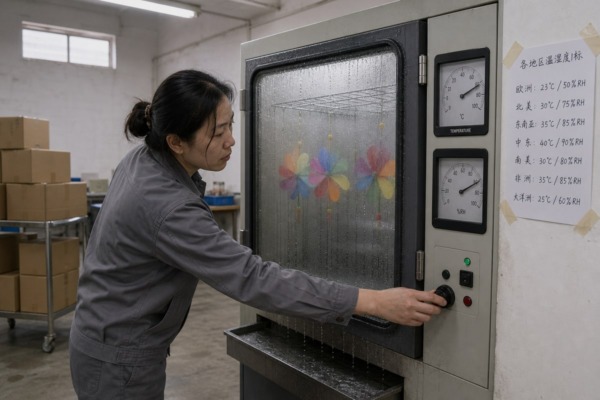
أكبر خطأ أراه من المشترين هو الاختبار عند رقم رطوبة عام واحد. خيط الدولاب الورقي المعلق في حديقة في ميامي يعيش في مناخ مختلف جدًا عن واحد في برلين. لذلك نبدأ دائمًا اختبار غرفة المناخ بسؤال واحد: أين سيُعرض هذا المنتج فعليًا؟
طابق الغرفة مع السوق
إليك الجدول المرجعي الذي نستخدمه عندما يخبرنا الموزع بمنطقة وجهته.
| السوق المستهدفة | الرطوبة النسبية المقترحة | درجة الحرارة المقترحة | نمط الاختبار |
|---|---|---|---|
| ساحل الخليج الأمريكي / فلوريدا | 85–90% | 35–40°م | ثبات ساكن مع دوري |
| أمريكا الجنوبية الاستوائية | 85–95% | 30–38°م | ثبات ساكن عالي الرطوبة |
| شمال ووسط أوروبا | 60–75% | 20–25°م | تقلبات دورية رطبة/جافة |
| فحص أسوأ الحالات | 85% | حرارة مرتفعة | تعتيق متسارع بنمط 85/85 |
اختبار الموثوقية المعياري في الصناعة عند 85% رطوبة نسبية / 85°C، والذي يُسمى غالبًا اختبار 85/85، هو معيار مرجعي مفيد. لكنني أضيف تحذيرًا هنا. عند 85°C، يمكن أن تتشوه ريش البلاستيك الرقيق وأفلام المايلار من الحرارة وحدها، وليس من الرطوبة. هذا يشوش بياناتك. بالنسبة لألعاب الحدائق، نحدد عادةً درجة الحرارة بحد أقصى 40–45°C ونحافظ على رقم 85% رطوبة نسبية، بحيث يكون أي تشوه نراه ناتجًا فعلاً عن الرطوبة.
هناك تحفظ ثانٍ يستحق الذكر. بعض المشترين يفترضون أن الرطوبة هي دائمًا السبب الرئيسي. تُظهر الأبحاث حول التعرض البيئي أن درجة الحرارة تكون أحيانًا المحرك المهيمن، مع الرطوبة كثانوية. وهذا بالضبط سبب اقتراننا الحرارة بالرطوبة في الغرفة بدلاً من اختبار الظروف الرطبة عند درجة حرارة الغرفة فقط. إذا اجتازت عيناتك اختبارًا مشتركًا رطبًا-حارًا، فستجتاز اختبارًا معتدلاً أيضًا.
أخيرًا، لا تنسَ الدورات. تتقلب الأسواق الساحلية بين أيام رطبة وتخزين جاف مكيف. يكشف التعرض الدوري بين حوالي 50% و90% رطوبة نسبية عن تشوه تراكمي قد يفوته النقع الثابت الواحد.
ما هي المواد التي تصمد بشكل أفضل عندما أختبر عجلات الهواء لمقاومة الرطوبة؟
كل عرض سعر نعده يتضمن مقايضة صامتة: فيلم المايلار يكلف أكثر من PVC الرقيق، لكنه يتجنب الرطوبة بشكل أفضل بكثير. الاختيار الخاطئ يعني مرتجعات لاحقًا.
فيلم PET/ميلار وشفرات البولي بروبيلين يقاومان الرطوبة بشكل أفضل، ويُظهران أدنى تمدد استرطابي. يحافظ PVC على شكله لكنه قد يبهت. تمتص المسامير الخشبية غير المطلية الرطوبة وقد تتشوه أو تنتفخ، لذا فإن الخشب المُحكم أو المطلي بالورنيش يؤدي بشكل أفضل. تتشوه عجلات الرياح الورقية والكرتونية بأسرع ما يمكن تحت الرطوبة العالية.
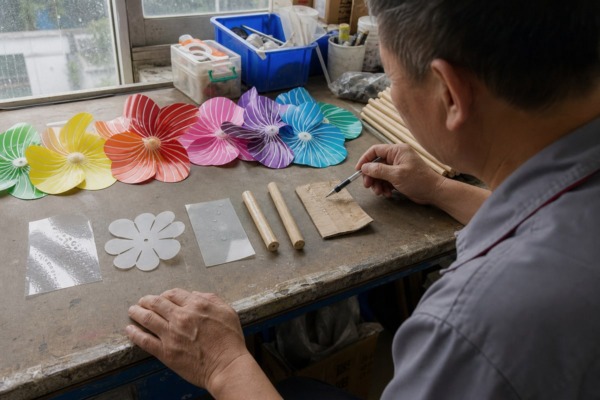
عندما نقوم باختبار عينات الدولاب الورقي لمقاومة الرطوبة, تصنيف المواد يأتي أولاً. إليك الترتيب الذي نراه غالبًا، من الأفضل إلى الأسوأ:
- ريش فيلم PET/مايلار
- بتلات بوليبيروبيلين مصبوبة
- ريش صفائح PVC
- أوتاد خشبية مختومة أو مطلية بالورنيش
- أوتاد خشبية غير مطلية
- ريش ورق أو كرتون
لماذا تتصرف كل مادة بشكل مختلف
تفشل المواد المختلفة بطرق مختلفة. يمكن للبلاستيك امتصاص كميات صغيرة من الماء تعمل كملدن، مما يلين الصفيحة بحيث تتدلى الريش تحت وزنها. الخشب ماص للرطوبة، لذا ينتفخ وينكمش مع محتوى الرطوبة 1 تغيرات. الورق يتجعد على الفور تقريبًا. يلخص الجدول أدناه ما نراقبه.
| المادة | الاستخدام النموذجي في الدولاب الورقي | ميل امتصاص الماء (وفقًا لاختبار بنمط ASTM D570) | فشل الرطوبة الشائع |
|---|---|---|---|
| PET/mylar film | شفرات البتلات | Very low | Slight curl at edges, minor fading |
| Polypropylene | Molded petals, hubs, grommets | Very low | Hub loosening if tolerances are tight |
| PVC sheet | Die-cut petals | منخفض | Softening, color bleed, gradual droop |
| Coated wood | عصا وتدية | معتدل | Slight swelling at exposed ends |
| Uncoated wood | عصا وتدية | عالية | Warping, splitting, grain raising |
| Paper/card | Budget blades | Very high | Wrinkling, sagging, delamination |
A few technical points deepen this picture. Molded hubs and grommets carry residual stress 2 from injection molding shrinkage, and moisture plasticization can release that stress and distort the part. Each polymer also has its own coefficient of moisture expansion, which is why a plastic petal riveted to a wooden stick can develop stress at the joint when the two expand at different rates. And for biodegradable options like PLA, humidity plus heat accelerates hydrolysis, a form of polymer degradation that makes parts brittle over time. On our export orders to South America, we default to PET blades with lacquered dowels for exactly these reasons.
كم من الوقت يجب أن أجري اختبارات الرطوبة قبل الوثوق بالنتائج؟
I once approved a sample after a 12-hour humidity check. Three weeks in a coastal warehouse proved me wrong. Since then, our lab never trusts short exposures.
قم بإجراء اختبارات غرفة الرطوبة العالية الثابتة لمدة 72–96 ساعة على الأقل، ومدد التعتيق الرطب الحار المتسارع إلى أسبوع أو أكثر لثقة بمستوى التصدير. يحتاج اختبار النقع إلى 24–48 ساعة. أضف دائمًا فترة تعافي جاف لمدة 24 ساعة قبل القياس النهائي لفصل الانتفاخ المؤقت عن التشوه الدائم.
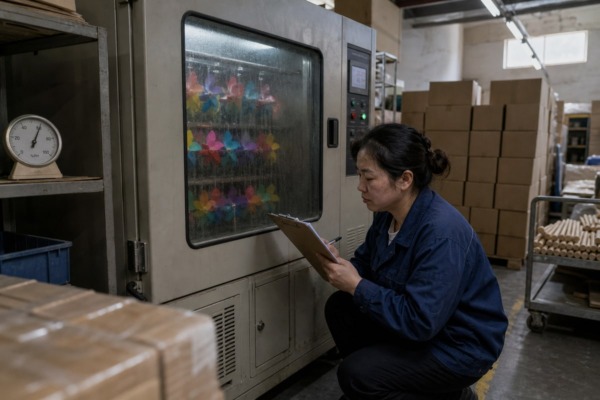
Duration is where most quick tests fail. Moisture moves into materials slowly, and the moisture absorption rate 3 flattens out only when the sample approaches equilibrium. Stop early, and you measure a half-saturated sample that looks fine. Here is the sequence we follow in our own lab.
- Precondition for 24 hours. Hold all samples at a known temperature and RH first. Uncontrolled starting moisture can hide or exaggerate deformation later.
- Record the baseline. Log dimensions, mass, and photos. Note how the hub spins and how the grommets fit.
- Expose the samples. Use a controlled chamber, not a damp corner of the office. Space the samples apart so they do not shield each other or create local microclimates. Record temperature and RH at defined intervals.
- Check mass and dimensions every 24 hours. When two consecutive readings match, the sample has stabilized. That is your true exposure endpoint, not an arbitrary clock time.
- Dry and recover for 24 hours. Re-measure after recovery. Change that remains after drying is permanent deformation. Change that disappears was reversible swelling.
- Compare against the dry control. A control sample handled on the same schedule separates humidity effects from handling effects.
For fluctuating climates, add cyclic rounds. Repeated wet/dry swings expose accumulative set that one soak misses. And when a buyer needs long-term assurance, we run hydrothermal aging, combining heat and humidity, because the pairing is more severe than humidity alone.
| Test Type | Typical Duration | ما الذي تثبته |
|---|---|---|
| Water soak | 24–48 hours | Basic surface resistance, fading, wrinkling |
| Static high RH hold | 72–96 hours minimum | Equilibrium swelling and softening |
| Cyclic wet/dry | 5–10 cycles | Accumulative deformation and residual set |
| Humid-hot aging | 1 week or more | Long-term durability, degradation pathways |
ما علامات التشوه التي يجب أن أراقبها عند فحص العينات الرطبة؟
During a final inspection last summer, our QC team caught faint wrinkles on purple petals that everyone else had missed. Those wrinkles taught us to inspect wet samples systematically.
افحص بحثًا عن تجعّد الشفرة أو التفافها أو انحنائها؛ أو انتفاخ أو تشقق العصا الخشبية؛ أو بهتان اللون أو نزيفه؛ أو ارتخاء المحاور الناتج عن التغير الأبعادي؛ أو تقرّح السطح أو تشققه. قِس السُمك والقطر قبل التعرض وبعده، لأن التغيرات الاسترطابية الصغيرة تفلت من الفحص البصري.

Our own pass/fail routine grew directly from a simple habit: place the samples in a humid environment or full soak, then check for wrinkling, deformation, and fading to judge moisture resistance. Over time we formalized that habit into the checklist below.
| Sign | Where to Look | What It Means | الخطورة |
|---|---|---|---|
| Wrinkling or rippling | Blade surfaces | Film has absorbed moisture unevenly | معتدل |
| Curling or bowing | Blade edges and tips | Differential expansion across the film | Moderate to high |
| Fading or color bleed | Printed stripes and gradients | Ink or dye is not humidity-stable | Cosmetic but critical for retail |
| Swelling or splitting | Wooden dowel, especially cut ends | Hygroscopic expansion of the wood | عالية |
| Loose or stiff hub | Center pin and grommets | Dimensional change has ruined the fit | High, kills the spin |
| Crazing or fine cracks | Around the pin hole | Environmental stress cracking at stress points | عالية |
| Blistering or delamination | Laminated or coated blades | Moisture trapped between layers | عالية |
Go Beyond the Eye
Visual inspection alone is not enough. Small dimensional changes hide from the naked eye, so we run a basic warpage analysis with digital calipers 4: blade thickness at three points, dowel diameter at both ends, and hub clearance. Weight change is the most sensitive early indicator of moisture uptake. A functional spin test matters too, since a pinwheel that no longer turns freely has failed even if it looks fine. Labs with bigger budgets can use Digital Image Correlation to map full-field surface strain and catch localized bowing that point measurements miss. Whatever tools you use, always distinguish temporary swelling from permanent loss of dimensional stability by re-checking after the dry recovery period.
الخاتمة
Humid climates quietly ruin unprepared pinwheels. Test pinwheel samples with controlled humidity exposure, baseline measurements, and dry controls, and you ship products that keep spinning wherever customers live.
الحواشي
1. Authoritative Wikipedia entry defining moisture content and its measurement across various materials. ↩︎
2. ISO standards provide methodologies for measuring and managing residual stress in molded plastic components. ↩︎
3. ASTM International develops the standard test methods for determining the moisture absorption rate of plastics. ↩︎
4. Wikipedia provides technical details on the use of digital calipers for precision measurement in quality control. ↩︎
المزيد من المقالات
قد تجد هذه مفيدة أيضًا.

كيفية التحقق عن بُعد من قدرات إنتاج المصنع لمكونات التوصيل المصنوعة من الحديد المطاوع؟
Learn how to test pinwheel samples for humidity-induced deformation using controlled chambers, RH levels, and dimensional checks to…
اقرأ المزيد →
كيفية تقييم قدرة إنتاج المصنع عند توريد إدخالات الحديد المطاوع؟
Learn how to test pinwheel samples for humidity-induced deformation using controlled chambers, RH levels, and dimensional checks to…
اقرأ المزيد →
ما الأسئلة التي يجب أن تطرحها على موردي إدخالات الحديد المطاوع لاكتشاف غير الموثوقين مبكرًا؟
Learn how to test pinwheel samples for humidity-induced deformation using controlled chambers, RH levels, and dimensional checks to…
اقرأ المزيد → English
 Spanish
 German
 Arabic
 Chinese