How Much Deposit Is Safe When Buying Pinwheel Skewers?
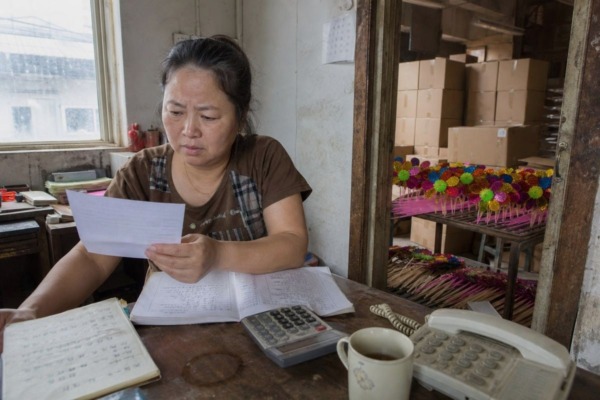
Your wire transfer 1 leaves the bank, and then silence. On our production floor in Zhejiang, I hear this deposit horror story from new pinwheel skewers buyers every single season.
عند شراء أسياخ الدولاب، يكون الإيداع الآمن 30٪ من قيمة الطلب للمشتريات المحلية الصينية و50٪ للطلبات الدولية، مع دفع الرصيد قبل الشحن. لا تقم أبدًا بتحويل 100٪ مقدمًا إلى مورد غير موثوق، واستخدم دائمًا طرق دفع آمنة وقابلة للتتبع مدعومة بعقد مكتوب.
That is the short answer. But the right deposit depends on who you are, where you buy, and how custom your order is. Let me walk you through each part, step by step, using the numbers we actually work with.
كم يجب أن أدفع كدفعة مقدمة عند طلب أسياخ البينويل من مورد صيني؟
Last spring, a U.S. procurement manager asked me point-blank on WhatsApp: "Stephen, why 50% and not 30%?" Her question deserved a full answer, and it starts with geography.
بالنسبة لأسياخ البينويل المطلوبة من مورد صيني، الدفعة المقدمة القياسية هي 30% للمشترين داخل الصين و50% للمشترين في الخارج، مع استحقاق الرصيد المتبقي مقابل مستندات الشحن. الودائع التي تتجاوز 50% قبل الإنتاج ليست طبيعية ويجب أن تثير التساؤلات.
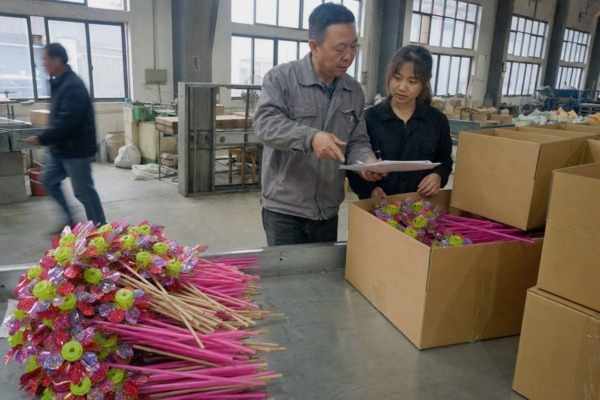
First, let me clear up a common mix-up. "Pinwheel skewers" can mean two very different things. Some readers land here looking for bulk appetizer orders — tortilla pinwheels on skewers for an event catering contract. Others, like most of my customers, mean the decorative toy: glittery flower-shaped spinners mounted on a plastic or wooden skewer stick for gardens and parties. The deposit logic differs between the two, so I will cover both honestly.
The manufacturing side: what we actually charge
At our factory, the rule is simple and has held for years: Chinese domestic buyers pay a 30% deposit, and overseas buyers pay 50%. Why the gap? Domestic orders carry less currency risk, shorter lead times, and easier legal recourse if either side defaults. Export orders tie up our line longer, involve custom foil colors and OEM packaging, and cannot be resold locally if a buyer walks away. A half-finished container of custom hot-pink skewer pinwheels with your brand printed on the header cards has almost zero salvage value to us.
The catering side: what the market charges
If you actually meant the food item, the norms look different. Here is a quick comparison:
| Order type | Typical deposit | Balance due |
|---|---|---|
| Chinese domestic pinwheel toy order | 30% | Before delivery |
| International pinwheel toy export order | 50% | Against shipping documents |
| Catering pinwheel skewers (appetizers) | 20%–50% catering deposit percentage | 7–10 days before the event |
| Small local butcher "ready-to-cook" packs | Flat $20–$50 | At pickup |
| Micro-catering orders under $250 | 100% upfront | N/A |
| Large events, guest count unconfirmed | Flat $500–$1,000 retainer | After final headcount |
Notice the pattern. Whether the seller is a caterer quoting party platter pricing or a factory like ours quoting per-carton, the deposit exists to cover raw-material risk 2 — foil, dowels, and grommets for us; perishable ingredients for them. A deposit that only covers that risk is a fair deposit. Anything far beyond it deserves scrutiny.
ما هي شروط الدفع القياسية لأسياخ البينويل لحمايتي من الاحتيال؟
Years ago, we lost a domestic order because a competitor offered "zero deposit" terms. Six months later, that competitor closed, leaving buyers with nothing. Cheap terms taught me an expensive lesson: structure protects both sides.
الشروط القياسية المقاومة للاحتيال لأسياخ البينويل هي إيداع 30%–50% T/T، والرصيد مقابل نسخة من بوليصة الشحن، يُدفع إلى حساب بنكي للشركة موثّق. منصات الضمان، وخطابات الاعتماد، والدفعات المرحلية المرتبطة بالفحص تضيف حماية إضافية للطلبات الأكبر.
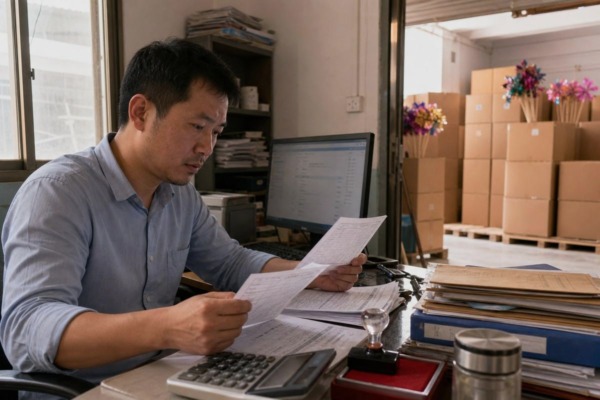
A deposit percentage means little without the structure around it. The payment schedule for vendors matters just as much as the number. Here is how I break it down for buyers comparing options.
Compare the main payment structures
| Payment method | Fraud protection | الأفضل لـ |
|---|---|---|
| T/T (30%–50% deposit, balance vs. B/L copy) | Medium–High | Repeat orders, verified factories |
| Third-party escrow platform | عالية | First orders, boutique vendors |
| Letter of credit | عالية | Large container orders |
| 100% upfront wire | Very low | Never with a new supplier |
| Irreversible transfer to personal account | None | Never, full stop |
Escrow deserves a special note. High-end boutique vendors — on both the toy and catering side — are increasingly adopting third-party escrow platforms 3 for deposits. The money sits with a neutral party until delivery is verified. It costs a small fee, but on a first order it is the safest middle ground for both buyer and seller.
Timing rules borrowed from catering contracts
The catering world has written its rules down clearly, and they are worth copying. A typical catering service agreement makes the deposit a non-refundable booking fee if cancellation happens within 10 to 14 days of delivery, and requires the final balance 7 to 10 days before the event so the caterer can buy fresh ingredients. We mirror that logic in exports: your 50% deposit becomes non-refundable once we cut custom foil, and the 50% balance is due before the container sails. Both sides know exactly where the point of no return sits.
One more clause to demand
Always insist the beneficiary name on the invoice matches the company name on the business license 4. Payment diverted to a "finance manager's personal account" is the single most common fraud pattern in this trade. Secure payment methods only protect you if the money goes to the real entity.
كيف يمكنني التحقق من مورد أسياخ البينويل قبل إرسال دفعة مقدمة؟
Our QC team photographs every production stage — petal die-cutting, grommet pressing, spin testing — precisely because verified evidence is what serious buyers ask for before any money moves. You should ask for the same.
Verify a pinwheel skewers supplier by checking their business license, requesting a live video factory tour, ordering paid samples, confirming the bank account matches the registered company name, and reviewing third-party audit reports or platform transaction history before wiring any deposit.
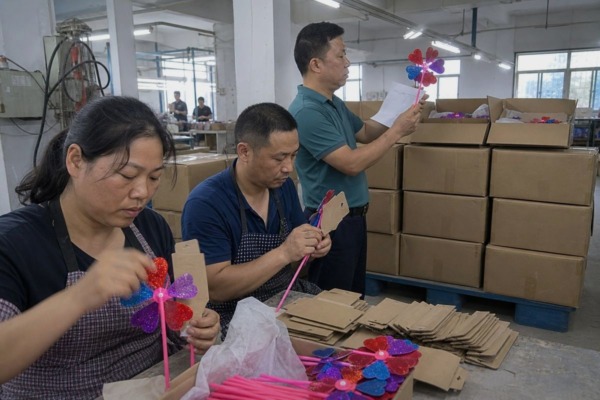
Verification is not paranoia. It is the step that makes a 50% deposit safe instead of reckless. I will show you the exact process I recommend to procurement managers, because I have watched buyers skip steps and pay for it.
A five-step verification process
- Check the legal entity. Ask for the Chinese business license and match the registered name against the invoice beneficiary. Cross-check the company on 1688.com or Alibaba, where transaction history and years of operation are visible.
- Demand a live video tour. Photos can be stolen. A live WhatsApp video walk through the workshop cannot. In five minutes you will see whether the flower-petal stamping machines, foil rolls, and assembly benches are real.
- Order paid samples first. A factory confident in its glittery foil coating, smiling-face caps, and spin balance will happily sell samples. Test them yourself: spin durability, colorfastness in sunlight, stick strength, packaging quality.
- Confirm minimum order quantity in writing. A real factory quotes a clear minimum order quantity per SKU. Vague answers like "any quantity is fine" often signal a trading middleman with no production control.
- Get the contract before the deposit. The proforma invoice should state product specs, tolerances, lead time, Incoterms, the deposit and balance schedule, and the refund conditions if the factory misses the date.
What each check actually catches
| Verification step | Fraud it prevents |
|---|---|
| Business license check | Fake or shell companies |
| Live video tour | Stolen photos, non-existent factories |
| Paid sample order | Quality bait-and-switch |
| Bank account name match | Payment diversion scams |
| Written contract with specs | Silent substitution of cheaper materials |
Do all five, and a standard 50% deposit becomes a calculated business decision rather than a gamble. Skip them, and even a 10% deposit is money at risk.
What should I do if my supplier asks for a deposit higher than the industry norm?
Every quotation forces me to weigh two things: our cash-flow need for custom foil purchases against the buyer's fear of losing money. When a supplier ignores that second half, buyers should push back.
If a supplier demands more than the 30%–50% norm, ask for a written justification, propose escrow or a letter of credit instead, split the order into smaller staged shipments, or walk away. High deposit demands without clear reasons often signal cash-flow trouble or fraud.
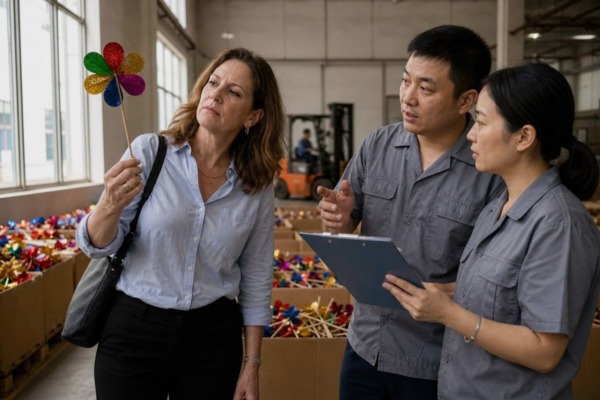
Not every high deposit request is a scam. Sometimes there is a legitimate reason, and knowing the difference saves good deals from dying. Let me separate the fair cases from the red flags.
When a higher deposit can be legitimate
A few situations genuinely justify more upfront money. Fully custom tooling — say, a new heart-petal die mold in your exclusive shape — is worthless to us if you cancel, so factories reasonably ask for tooling costs upfront. Tiny trial orders are another case: just as micro-caterers now take 100% upfront on orders under $250 to avoid the administrative cost of tracking partial deposits, a factory may ask full payment on a sample-sized run. And volatile materials matter too. In catering, tiered deposit structures charge more upfront for seafood pinwheel skewers than meat ones because prices swing harder; in our world, holographic sequin film behaves the same way when raw material prices spike.
When it is a red flag
Watch for these signals stacking together: pressure to pay within hours, refusal to accept escrow or a letter of credit, no written refund policy, a beneficiary account that does not match the company name, and a deposit demand of 70%–100% on a standard catalog product with no customization. Any one alone might be explainable. Two or more together, and I would tell you to walk — even if the unit price looks fantastic.
Your negotiation ladder
Start by asking why. Then counter with structure, not just a lower number: offer 50% with balance against documents, propose escrow, or suggest splitting one large order into two staged shipments so each deposit is smaller. Also ask whether the deposit converts to a non-refundable booking fee at a defined production milestone, and get that refund policy for catering-style clarity written into the contract. A supplier who engages with these options is managing risk. One who refuses everything is hiding something.
الخاتمة
Wire blindly and you risk everything; verify first and the risk shrinks fast. Stick to 30% domestic, 50% international, traceable payments, and a written contract — then order with confidence.
الحواشي
1. Authoritative definition of wire transfers from the Consumer Financial Protection Bureau. ↩︎
2. Definition of raw materials and their role in production costs and financial risk. ↩︎
3. Overview of escrow arrangements used to secure payments between two parties in a transaction. ↩︎
4. Official U.S. government guidance on conducting due diligence and verifying business licenses in China. ↩︎
المزيد من المقالات
قد تجد هذه مفيدة أيضًا.
كيفية التحقق عن بُعد من قدرات إنتاج المصنع لمكونات التوصيل المصنوعة من الحديد المطاوع؟
Learn the safe deposit range for pinwheel skewers orders (30% domestic, 50% international) and avoid wire transfer scams…
اقرأ المزيد →
كيفية تقييم قدرة إنتاج المصنع عند توريد إدخالات الحديد المطاوع؟
Learn the safe deposit range for pinwheel skewers orders (30% domestic, 50% international) and avoid wire transfer scams…
اقرأ المزيد →
ما الأسئلة التي يجب أن تطرحها على موردي إدخالات الحديد المطاوع لاكتشاف غير الموثوقين مبكرًا؟
Learn the safe deposit range for pinwheel skewers orders (30% domestic, 50% international) and avoid wire transfer scams…
اقرأ المزيد → English
  Spanish
  German
  Arabic