
Are Whirligig Strings Suitable for Seasonal Promotions in the US?
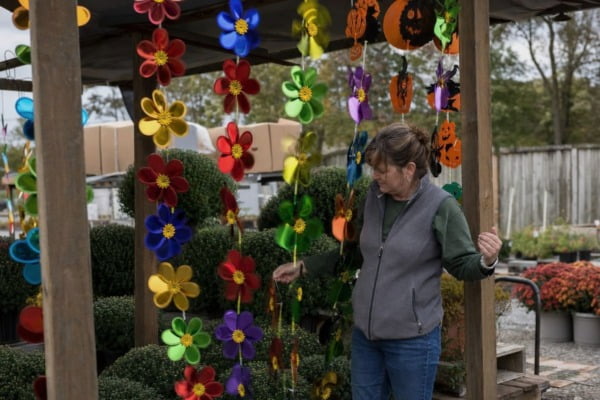
Whirligig strings for seasonal promotions are a question our export team hears weekly sharp-edge checks 1. Buyers worry the category is too niche, timing is too tight, and defects will kill peak-season margins.
Yes, whirligig strings are highly suitable for US seasonal promotions. They fit spring garden refreshes, summer outdoor events, Halloween, and Christmas displays. With themed designs, custom branding, strict QC, and early production scheduling, distributors can hit tight promotional windows profitably and reliably.
Let me walk you through the four questions that matter most. Customization, quality control, delivery timing, and packaging protection. Each one decides whether your seasonal campaign wins or fails.
How do I customize whirligig strings for different US seasonal holidays and events?
Last October, a buyer from Ohio sent us a single reference photo on WhatsApp. Three weeks later, our line was producing pumpkin-orange whirligig strings with bat-shaped petal blades for her fall program.
Customize whirligig strings by choosing seasonal color palettes, themed blade shapes, holiday-specific prints, and string lengths that match display spaces. Suppliers offering OEM/ODM services can produce Halloween, Christmas, patriotic, and spring designs, plus fully personalized versions from a buyer's artwork or logo.
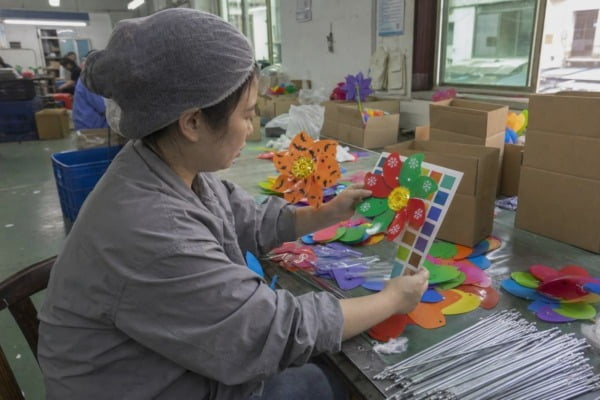
Customization is where whirligig strings earn their place in seasonal promotions. In our own catalog, we keep different styles of whirligig strings and pinwheels ready to ship. We have Halloween versions, Christmas versions, and more. We can also develop personalized designs based on each customer's request. That flexibility matters, because US retail calendars are unforgiving. A generic rainbow string sells in spring. It does not sell in December.
Match the design to the retail calendar
Here is how we usually map designs to US seasonal windows:
| Season / Event | Color Palette | Design Elements | Typical Use |
|---|---|---|---|
| Spring / Easter | Pastels, floral brights | Flower-petal blades, butterfly hubs | Garden refresh, porch decor |
| Summer / July 4th | Red, white, blue | Star prints, striped blades | Patriotic yard displays, fairs |
| Halloween | Orange, black, purple | Pumpkins, bats, ghost prints | Porch and storefront decor |
| Christmas | Red, green, gold, white | Snowflakes, candy-cane stripes | Holiday yard decor, gift bundles |
Go beyond color: branding and format
Whirligig strings also work as custom branded toys 2 and nostalgic promotional items. The spinning blades give you a kinetic branding surface. Print half a logo on each side of a blade, and the spin creates a composite image that holds attention longer than a static sign. We have printed retailer logos, event mascots, and QR codes for clients running promotional merchandise trends around store openings.
Format is flexible too. You can adjust the number of pinwheels per string, the string length, and the hanging hardware. Short strings suit indoor gift displays and holiday gift guides. Long cascading strands suit outdoor canopies, similar to the carnival-style garlands you see at garden centers. For eco-conscious buyers, we can quote paper-based blades and cotton string as eco-friendly giveaways, echoing the folk art toys tradition that makes whirligigs feel like traditional American playthings rather than disposable plastic.
What quality control measures should I request to avoid defects before peak season shipping?
A lesson we learned the hard way: one batch of hubs molded from off-spec resin froze up in cold weather. Since then, every seasonal order at our Zhejiang facility gets a spin test at low temperature before packing.
Request incoming material checks, in-line inspections during assembly, spin and rotation tests, color-fastness and UV checks, string tension pull tests, and a pre-shipment AQL inspection with photo or video reports. Add CPSC-aligned safety checks if the product may reach children.
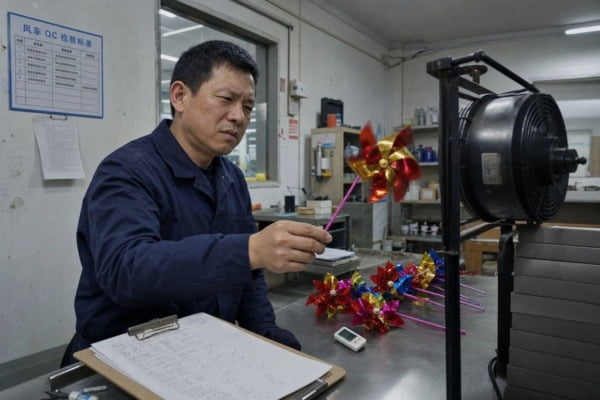
Quality control is the difference between a profitable Q4 and a warehouse full of returns. Peak season gives you no time to rework defective goods. If your Halloween stock arrives in late September with stuck spinners, you cannot fix it before October 31. So the QC plan must be agreed upon before production starts, not after problems appear.
The QC checkpoints we recommend buyers demand
- Incoming material inspection. Check the plastic film or coated paper for thickness, gloss, and color match against an approved sample. Off-spec film tears in wind.
- First-article approval. The factory produces a small batch first. You approve photos or a shipped sample before mass production runs.
- In-line inspection. Workers check hub assembly and blade alignment on the line. A misaligned blade means a pinwheel that wobbles instead of spins.
- Function testing. Every style gets a spin test. We simulate breeze with a fan and confirm free rotation. For winter programs, we test at low temperatures.
- String and connection pull test. Each pinwheel-to-string joint should hold a defined pull force so garlands survive hanging and wind load.
- Pre-shipment AQL inspection. A random-sample inspection against an agreed defect list, with a full photo report sent before the goods leave the factory.
Safety and compliance
If your whirligig strings could be sold near toys or handled by children, ask your supplier about CPSC safety regulations 3 and relevant testing, such as sharp-edge checks and surface coating requirements. This matters even more if you rebrand the product as STEM educational kits 4 for back-to-school promotions, because the toy classification becomes explicit. We advise our US distributor clients to define the intended use in writing early, so the compliance path is clear before production.
Also agree on an acceptable defect rate in your purchase order. Vague promises like "good quality" protect no one. A written AQL standard protects both sides.
Can I get my whirligig string orders delivered on time for tight seasonal promotion windows?
Timing trade-offs come up in almost every negotiation I handle. A buyer wants goods on shelves by October 1, but also wants the lowest ocean rate. Those two goals need a plan, not luck.
Yes, on-time delivery is achievable when you order 90 to 120 days before your selling window, confirm designs early, book freight in advance, and choose a supplier with in-house production. Air or expedited sea options can rescue compressed timelines at higher cost.
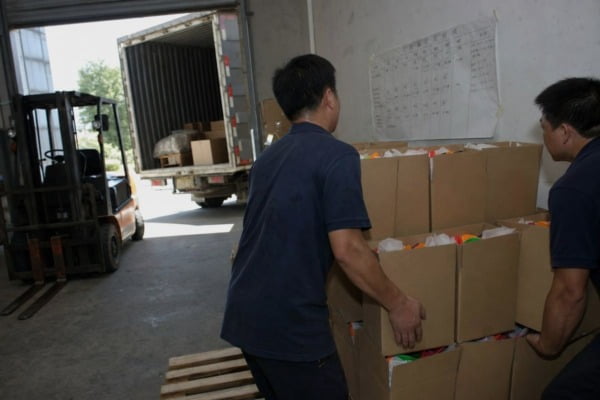
Shipping delays are the top pain point we hear from US procurement managers, and seasonal goods amplify the risk. A pallet of Christmas whirligig strings arriving on December 20 is nearly worthless. So let us break the timeline down honestly.
A realistic timeline for a US seasonal program
| Stage | Typical Duration | Notes |
|---|---|---|
| Design confirmation and sampling | 7–15 days | Faster if using existing seasonal molds and prints |
| Mass production | 20–35 days | Depends on order size and factory season |
| Ocean freight to US West Coast | 15–22 days | East Coast adds roughly 10–15 days |
| Customs clearance and inland delivery | 5–14 days | Buffer for port congestion during peak months |
| Total | ~60–90 days | Add a 2–3 week safety buffer for holiday goods |
The math is simple but strict. For a Halloween program, production should start by June. For Christmas, by July or early August. Our factory blocks capacity for repeat seasonal clients months in advance, because Q3 is when every decoration order in Zhejiang hits the lines at once.
How to protect a tight window
First, lock designs early. Most delays we see start with slow artwork approval 5, not slow production. Second, split shipments if needed. Send a partial order by faster routing to seed early displays, with the balance following by standard ocean freight. Third, use suppliers who manufacture in-house rather than trading companies 6 that subcontract, because subcontracting adds invisible queue time. Fourth, agree on penalty and communication terms. We give clients weekly production photos, so a Procurement Manager like our typical US buyer can track status from her phone without chasing anyone.
Whirligig strings have one built-in advantage here. They are lightweight and pack flat or nested, so even air freight rescue shipments remain affordable compared with bulky decor items.
How do I ensure my whirligig strings arrive without packaging damage after long-distance shipping?
A buyer once forwarded us photos of a competitor's shipment: crushed cartons, bent blades, tangled strings. Her exact words were, "Never let this happen to my order." That conversation reshaped our packing standard.
Prevent damage by using flat-packed or nested blade packing, individual polybags, dividers between strings, double-wall export cartons rated for stacking, moisture protection, and clear handling marks. Confirm a drop-test standard and request packing photos before container loading.
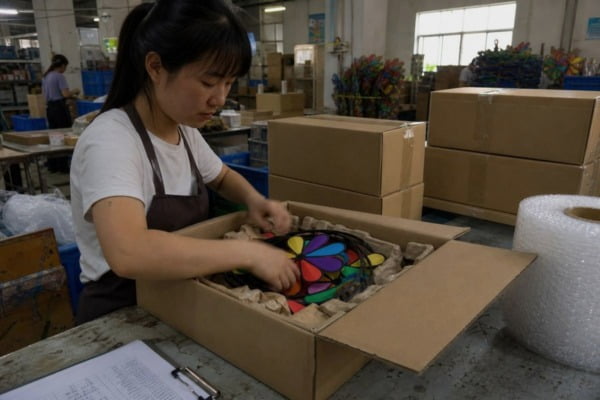
Packaging damage and the returns it triggers are quiet profit killers. Whirligig strings are light, but they are also delicate. Thin blades dent. Strings tangle. Hubs crack under compression. Long-distance shipping means your cartons will be stacked, dropped, and squeezed for weeks. The packaging must be designed for that reality.
Layered protection, from product to container
Think of protection in four layers, each solving a different failure mode:
| Layer | Method | Damage It Prevents |
|---|---|---|
| Product level | Blades packed flat or semi-assembled; individual polybags | Bent blades, scratches, tangled strings |
| Inner packing | Cardboard dividers, coiled strings secured with ties | Units crushing each other, knotting in transit |
| Carton level | Double-wall corrugated export cartons, correct fill rate | Carton collapse under container stacking |
| Container level | Proper stacking plan, desiccants, edge protection | Moisture damage, shifting loads, crushed bottom rows |
Practical steps buyers should take
Ask your supplier three questions before production. What is the carton burst strength? How many units per carton, and is there empty space that lets contents shift? Has this packing survived a drop test? A carton filled to the correct density protects itself. A half-empty carton collapses.
We also recommend semi-assembled packing for whirligig strings when possible. The buyer or end retailer clips blades into hubs on arrival. This cuts volume, lowers freight cost, and dramatically reduces blade damage. It borrows a page from handcrafted wooden toys and folk-craft kits, where flat-packing is standard practice.
Finally, put packaging specs in the purchase order, just like QC standards. Request loading photos before the container seals. In our experience exporting to the US, five minutes reviewing loading photos prevents weeks of damage claims later.
Conclusion
Whirligig strings suit US seasonal promotions when four things align: themed customization, written QC standards 7, early production timelines, and export-grade packaging. Get those right, and every season becomes a selling opportunity.
Footnotes
1. Official legal text for US sharp edge safety testing requirements (16 CFR 1500.49). ↩︎
2. Authoritative definition of promotional products used for branding. ↩︎
3. Comprehensive overview of the primary US statute governing consumer product safety and CPSC authority. ↩︎
4. US Department of Education resources on STEM learning and initiatives. ↩︎
5. Industry standard process for verifying designs before mass production. ↩︎
6. Definition of intermediaries in international trade. ↩︎
7. Official NIST resource for ISO 9001 and quality management system implementation. ↩︎
More Articles
You might also find these helpful.

What Fire Retardant Certifications Should I Check When Buying Pinwheels?
Discover why whirligig strings suit US seasonal promotions—custom holiday designs, strict QC, and on-time delivery keep campaigns profitable.
Read More →
How to Verify Authenticity of Test Reports When Purchasing Wind Turbines?
Discover why whirligig strings suit US seasonal promotions—custom holiday designs, strict QC, and on-time delivery keep campaigns profitable.
Read More →
How to Check if Pinwheel/Windmill Materials Contain Harmful Chemicals?
Discover why whirligig strings suit US seasonal promotions—custom holiday designs, strict QC, and on-time delivery keep campaigns profitable.
Read More → English
  Spanish
  German
  Arabic