How Do I Assess a Wind Turbine Supplier’s Quality Management System?
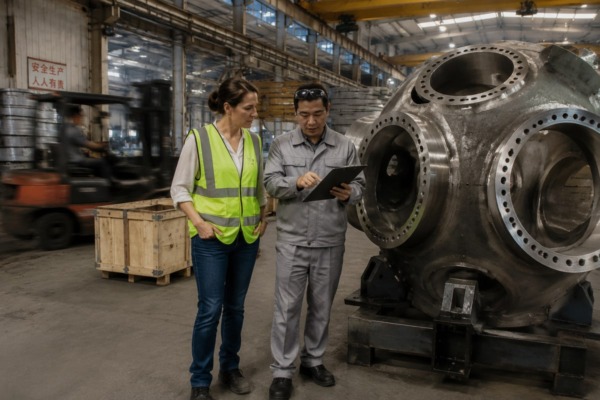
A weak wind turbine supplier quality management system can quietly destroy your margins independent type certification 1. One bad batch, and retail contracts vanish. I learned this watching buyers audit our Zhejiang line.
Assess a wind turbine supplier’s quality management system by verifying accredited ISO 9001 certification, reviewing inspection standards and quality manuals, auditing manufacturing process control on-site, examining non-conformance and CAPA records, and confirming a defective-product control mechanism supported by full supply chain traceability.
That single sentence covers a lot of ground. In this article, I will break it into four practical steps. Each step tells you exactly what to request, what to observe, and what should worry you. My core belief, shaped by years on the supplier side of audits, is simple: assess the system, not the certificate.
What Certifications and Documents Should I Request to Verify My Wind Turbine Supplier's Quality Management System?
A procurement manager in Ohio once asked me over WhatsApp for a single document: our ISO certificate. I told her honestly that one paper alone would not protect her order.
Request an accredited ISO 9001 certificate with matching scope, the quality manual, documented inspection standards, internal audit records, CAPA logs, calibration certificates, training matrices, and traceability records. For utility-scale machines, add IEC 61400 type certification, IECRE reports, and ISO 3834-2 welding compliance.
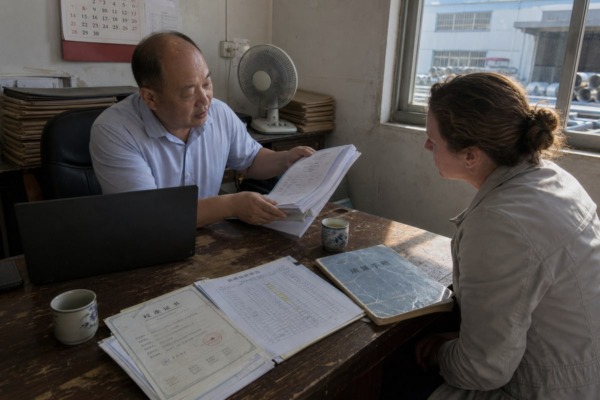
Documents are the fastest way to screen a supplier before you spend money on travel. But you have to know which documents actually predict quality. My own checklist, refined by hosting buyer visits at our factory, starts with one question: does this supplier have a complete quality inspection flow, written inspection standards, a defective-product control mechanism, and an ISO-style quality management system? If any of those four is missing, everything else is decoration.
Start with the certificate, but read it carefully
An ISO 9001 certification is the industry baseline. Major turbine OEMs like Nordex require suppliers to maintain a QMS meeting or exceeding DIN EN ISO 9001 2 across all production sites. Two details matter. First, check that the certificate comes from an accredited certification body, because unaccredited certificates are easy to buy and prove nothing. Second, check the scope. A certificate covering one product line at one site does not cover your product at a different site.
The core evidence pack
Here is the document set I recommend requesting, and what each item proves.
| المستند | ما الذي تثبته |
|---|---|
| ISO 9001 certificate + accreditation details | The QMS was externally audited by a legitimate body |
| Quality manual and procedures | Quality is systematized, not dependent on one operator |
| Written inspection standards | The supplier defines "good" before production starts |
| Internal audit records and management review minutes | Leadership actually monitors the system |
| CAPA logs | Problems are fixed at the root, not patched |
| سجلات المعايرة | Measurement equipment produces trustworthy data |
| Training matrix | Operators are competent for their assigned stations |
| Traceability records | Materials can be traced from raw input to shipment |
For utility-scale wind turbines, the bar rises further. IEC 61400 standards govern design and testing 3, independent type certification through schemes like IECRE confirms the product itself, ISO 3834-2 covers structural welding, and grid codes may demand proof of low-voltage ride-through capability. Environmental and safety credentials like ISO 14001 and ISO 45001 apply when your contracts require them.
How Can I Evaluate a Supplier's Production Process to Ensure Consistent Wind Turbine Quality?
Depth versus speed is the trade-off I weigh every season. Distributors want fast delivery, yet skipping process evaluation is how defective containers reach ports. We choose depth first.
Evaluate production by following a structured vendor qualification process: self-assessment, desk review, then on-site assessment. Examine manufacturing process control at high-risk stages, sub-tier supplier management, APQP4Wind-style preventive planning, and batch-level capability data proving the supplier delivers consistent output at scale.
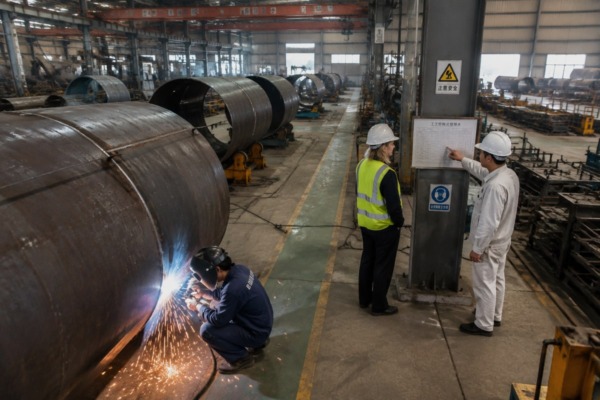
Consistency is the real product a supplier sells you. One perfect sample means nothing if unit ten thousand fails. On our line in Zhejiang, we learned that consistency comes from process design, not from inspecting harder at the end. That is exactly the philosophy behind APQP4Wind, the wind industry's preventive quality framework, which prioritizes advanced quality planning and cross-functional alignment over simple end-of-line inspections.
Follow the OEM qualification sequence
The world's largest turbine buyers do not improvise. Nordex and Vestas both run a staged vendor qualification process, and you can borrow it directly.
| المرحلة | What Happens | What You Learn |
|---|---|---|
| Registration and RFI | Supplier submits basic company and compliance data | Legal standing and capability claims |
| Self-assessment questionnaire | Supplier scores its own QMS maturity | How the supplier sees itself, and gaps it admits |
| Desk review | A cross-functional team reviews documents | Whether claims and evidence align |
| On-site assessment | Auditors verify the shop floor | Whether practice matches paper |
| Corrective actions and approval | Gaps are closed before orders flow | Whether the supplier responds to findings |
Notice that both OEMs use cross-functional review, not a one-person procurement decision. Engineering, quality, and sourcing all weigh in.
Target the high-risk process stages
Generic walkthroughs waste time. Focus your evaluation where failure is expensive. For composite turbine blades, that means resin infusion, laminate placement, and curing temperature consistency. For decorative wind turbines like ours, the equivalents are blade die-cutting tolerance, hub riveting force, and shaft alignment. Every product category has its critical stations, and the supplier's quality assurance plan should name them explicitly.
Also probe sub-tier management. Your supplier's quality is capped by its tier-2 and tier-3 component makers, so ask how requirements cascade downward. Some buyers worry that this level of structure squeezes out smaller, flexible vendors. In my experience, the opposite holds: a small factory with disciplined process documentation is a safer bet than a large one running on tribal knowledge, and the documentation burden is a one-time investment that pays back in every batch.
What Should I Check During a Factory Audit to Confirm My Wind Turbine Supplier Meets Reliable Manufacturing Standards?
Last spring, a visiting auditor spent forty minutes at one assembly bench, silently watching an operator pin blades to hubs. That quiet observation revealed more than our presentation did.
During a factory audit, verify calibration logs, operator training records, in-process inspection points, segregation of nonconforming products, NDT data integrity, and as-built records for serialized components. Compare shop-floor practice against documented procedures, because the gap between paper and practice predicts future defects.
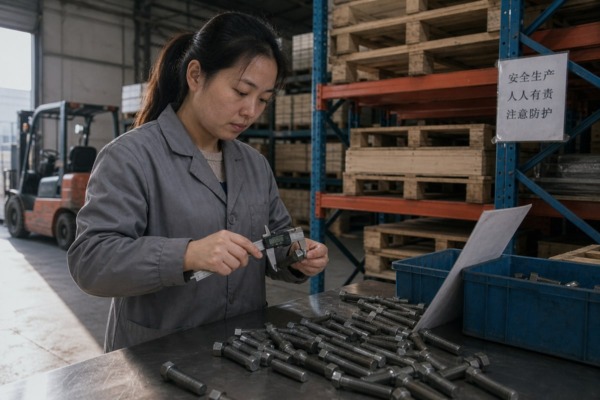
A factory audit is where the wind turbine supplier's quality management system either comes alive or falls apart. Documents tell you what should happen. The floor tells you what does happen. I have hosted enough audits at our own facility to know which auditors leave with real insight: they are the ones who follow a supplier audit checklist but keep their eyes on people, not binders.
Build your audit around evidence, not tours
Walk the process in production order, from incoming material to packed cartons. At each station, ask the operator, not the manager, three things: what is the standard here, how do you know you met it, and what do you do when you don't? Confident, specific answers signal a living system. Blank looks signal a paper system.
| Audit Area | كيف يبدو الجيد | إشارة تحذيرية |
|---|---|---|
| Calibration | Current stickers, logs matching instruments in use | Expired tags or missing instruments |
| Training | Matrix mapping each operator to certified skills | "Everyone knows everything" |
| In-process inspection | Defined checkpoints with recorded results | Inspection only at final packing |
| Nonconforming product | Clearly marked quarantine zone with disposition records | Rejects mixed near good stock |
| التتبع | Batch codes linking materials to finished units | No lot marking anywhere |
| Housekeeping | Organized stations, controlled documents at point of use | Uncontrolled printouts and clutter |
Check the modern data layer
For larger turbine components, audit how testing data flows. Automated NDT results from ultrasound or thermography should reach the record system without human filtering of marginal defects. Ask whether the supplier maintains as-built digital records of manufacturing deviations for every serialized component, since that data feeds predictive maintenance later. If the supplier ships anything with firmware, scrutinize how software updates are validated before release, because unverified updates can trigger mechanical fatigue or grid synchronization failures long after delivery.
How Do I Make Sure My Supplier's QC Process Reduces Defects, Returns, and Packaging Damage for My Wind Turbine Orders?
Crushed cartons taught me more about quality systems than any certificate ever did. Years ago, a shipment arrived in Miami with bent shafts, and we rebuilt our packaging protocol completely.
Confirm the supplier runs a closed-loop QC process: incoming material checks, in-process inspection, Factory Acceptance Tests, root cause analysis on every non-conformance report, corrective and preventive actions, defect trend tracking, and packaging drop tests validating cartons survive international transit without damage.
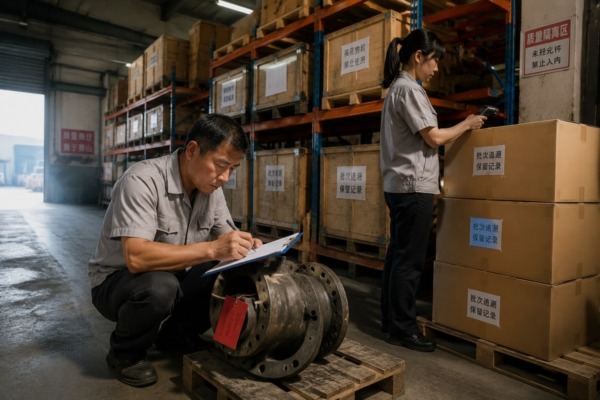
Defects, returns, and packaging damage are three symptoms of one disease: an open loop. In an open-loop system, problems are found, patched, and forgotten. In a closed-loop system, every problem changes the process so it cannot repeat. When distributors evaluate our factory, the closed loop is what I show them first, because it directly attacks their biggest pain points: quality complaints, product returns, and cartons that arrive damaged.
Trace one defect through the system
Do not review QC in the abstract. Pick one real defect from the supplier's non-conformance report 4 history and follow it. Was the تحليل السبب الجذري 5 genuine, digging into process settings and materials, or did it stop at "operator error"? Did corrective and preventive actions change a procedure, a fixture, or a training module? Did the defect rate for that failure mode actually drop afterward? A supplier who shares this history transparently is telling you they trust their own system. A supplier who hides NCR data is telling you something too.
This is also where I push back on certification-first thinking. Some buyers treat the certificate as the finish line. Real-world defect trends, traceability records, and audit findings predict supplier quality far better than any logo on a document. Ask for data-backed performance evidence, and score maturity rather than using pass or fail. You might set bands yourself: suppliers who merely comply, suppliers who are partially mature, and suppliers who demonstrably improve quarter over quarter. Structured questionnaires mapped to core process areas make this scoring repeatable across candidates.
Close the loop on packaging
Packaging deserves its own checkpoints, because a perfect product in a crushed box is still a return. At our facility, every new carton design goes through drop testing before a container ships, and moisture protection is specified for sea freight. Insist that your supplier's Factory Acceptance Test includes packaging verification, carton compression specs, and pallet stacking limits. For end-of-life thinking, forward-looking buyers now also check material traceability and design-for-disassembly practices that support recycling or remanufacturing, an emerging expectation across wind supply chains.
الخاتمة
A certificate is a gate, not a guarantee. Assess the system, verify the shop floor, track the data, and your wind turbine supplier becomes a partner, not a risk.
الحواشي
1. Official system for the conformity assessment and certification of renewable energy equipment and services. ↩︎
2. Authoritative resource for understanding and implementing the international quality management standard. ↩︎
3. Overview of the international standards governing the engineering and safety of wind turbine systems. ↩︎
4. Technical documentation used to record and track products that fail to meet specified quality standards. ↩︎
5. Professional association providing resources on quality improvement and systematic problem-solving methodologies. ↩︎
المزيد من المقالات
قد تجد هذه مفيدة أيضًا.

كيفية التحقق عن بُعد من قدرات إنتاج المصنع لمكونات التوصيل المصنوعة من الحديد المطاوع؟
Verify your wind turbine supplier's quality management system with ISO 9001 checks, on-site audits, and CAPA reviews to…
اقرأ المزيد →
كيفية تقييم قدرة إنتاج المصنع عند توريد إدخالات الحديد المطاوع؟
Verify your wind turbine supplier's quality management system with ISO 9001 checks, on-site audits, and CAPA reviews to…
اقرأ المزيد →
ما الأسئلة التي يجب أن تطرحها على موردي إدخالات الحديد المطاوع لاكتشاف غير الموثوقين مبكرًا؟
Verify your wind turbine supplier's quality management system with ISO 9001 checks, on-site audits, and CAPA reviews to…
اقرأ المزيد → English
  Spanish
  German
  Arabic