How to Verify a Wind Turbine Supplier’s Business Qualifications?

A buyer recently forwarded me a quote from a wind turbine supplier that did not legally exist. Our Zhejiang factory sees this often. One skipped check can cost your deposit.
Verify a wind turbine supplier’s business qualifications by requesting their business license, matching the licensed entity to the quoting entity, searching the Unified Social Credit Code in official registries, authenticating ISO 9001 and export certifications, and confirming factory location and production capacity through an audit or live video walkthrough.
Our pinwheels ship under many names — garden wind turbines, wind spinners, pinwheel strings. The verification steps are the same for all of them. A polished website or a fast quotation proves nothing on its own. Below, I walk through the exact documents, checks, and red flags I would use if I were sitting in your chair as a procurement manager. This is practical supplier due diligence, not theory.
What Documents Should I Request to Confirm My Pinwheel Supplier Is Legally Registered?
A procurement manager from Texas once opened our first call with a single request: send your business license before we talk price. She had the right order of operations.
Request the supplier's business license showing the Unified Social Credit Code, legal representative, registered capital, incorporation date, and business scope. Then cross-check every detail in the National Enterprise Credit Information Publicity System and confirm the licensed entity name matches the entity on your quotation and contract.

The simplest truth in this whole process is one I repeat to every new buyer: a real supplier has a business license, and that license can be searched online. If either half of that sentence fails, stop the deal. Everything else builds on this foundation.
Start With the License Itself
The Chinese business license is a single document, but it carries five details you must read. The company name, the Unified Social Credit Code 1, the legal representative, the incorporation date, and the registered business scope. Do not just file the scan. Read it line by line. The business scope matters most. It should explicitly permit manufacturing of toys, plastic products, or decorative items. If the scope only lists trade or general commercial services, you are talking to an intermediary, not the factory.
Cross-Check the Registry Yourself
Never rely on the supplier’s copy alone. Enter the Unified Social Credit Code into the National Enterprise Credit Information Publicity System, which is run by SAMR. A searchable, active record confirms the entity exists and is in good standing. This search takes five minutes and costs nothing.
Read the Numbers as a Financial Signal
The license also supports a basic financial stability assessment. Registered capital, incorporation date, and employee scale tell you whether the company can survive a full project cycle.
| Document | What It Proves | How to Verify |
|---|---|---|
| Business license | Legal existence and business scope | Search the code in the official SAMR registry |
| Registry extract | Active status, no abnormal listings | Pull it yourself, do not accept a supplier screenshot |
| Legal representative ID match | The signer has authority | Compare contract signatory to registry record |
| Incorporation date | Operating history and stability | Check it exceeds one full order-and-delivery cycle |
How Can I Check if My Supplier Has Valid Export Licenses and Certifications?
Before every US shipment leaves our line, we compile a folder: customs registration, CE files where needed, test reports, packing documents. Buyers who ask for this folder rarely get surprised.
Ask for the supplier's customs export registration, ISO 9001 certificate, and market-access documents such as CE marking or REACH files. Authenticate management-system certificates through the issuing body or IAF CertSearch, and confirm product certification standards match your destination market rather than accepting scanned PDFs.

Certificates are where fake suppliers get creative. A scanned PDF is easy to edit and hard to question over WhatsApp. So the rule I give every buyer is simple: authenticate, do not admire. A certificate you have not checked with the issuer is just a picture.
Separate Company-Level and Product-Level Proof
These are two different questions. A quality management system certificate like ISO 9001 2 tells you the company runs documented processes. It says nothing about whether a specific pinwheel batch is safe or compliant. For utility-scale equipment, IEC 61400 3 compliance and type certification through bodies like DNV, TÜV SÜD, or UL answer the product-level question for a genuine wind turbine supplier. For decorative pinwheels headed to Europe or the US, the product-level proof is CE marking where applicable, REACH documentation for materials, and current third-party test reports.
How to Authenticate Each Item
| Certificate or Document | Level | How to Authenticate |
|---|---|---|
| ISO 9001 | الشركة | Verify via IAF CertSearch or the issuing certification body |
| ISO 14001 / ISO 45001 | الشركة | Same route; relevant if you audit environmental and safety practices |
| CE marking and REACH files | المنتج | Review the technical file and test reports behind the mark |
| Third-party test reports | المنتج | Confirm directly with SGS, TÜV, or the named lab |
| Customs export registration | Trade | Ask for the registration record and check it against the licensed entity |
One more point on export documentation: consistency matters as much as existence. The entity name on the ISO certificate, the test reports, and the customs registration should all match the license. Inconsistent names across documents are how borrowed certificates reveal themselves. Also confirm the full document set will satisfy your customs broker and any downstream inspectors before goods ship, not after.
What Red Flags Should I Watch for When Verifying a New Pinwheel Manufacturer's Credentials?
Years ago, we lost a deal to a rival who undercut us by thirty percent. Six months later, that buyer messaged us about warped blades and vanished contacts.
Watch for entity names that differ between license and quote, business scopes limited to trading, certificates supplied only as PDFs, unsearchable registry records, refusal of video walkthroughs, prices far below material cost, vague references, and contracts that avoid clear warranty or replacement terms.
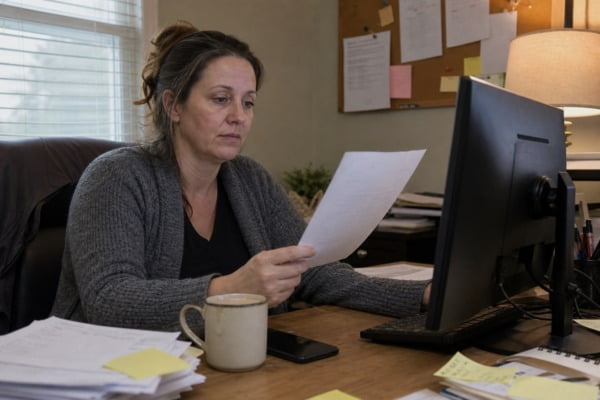
Red flags rarely appear alone. In my experience exporting to the US, South America, and Europe, one warning sign usually hides two more behind it. Here is the sequence I would check, in order of how fast each one exposes a problem:
- The registry search fails. If the company cannot be found in the official system, walk away. No exceptions, no explanations accepted.
- The quoting entity and licensed entity differ. This often means a trader is fronting for an unknown factory. Important nuance: a trading company can still be legitimate. But it requires different checks, because responsibility for warranty and O&M terms, production control, and documentation sits with someone you have not met. Ask who actually manufactures the goods, then verify that factory too.
- The business scope excludes manufacturing. A scope covering only trade means the "factory photos" belong to someone else.
- Certificates arrive only as PDFs and the supplier resists authentication. Genuine holders welcome third-party verification. Fakers stall.
- The price sits far below plausible material cost. Foil petals, dowels, pins, and grommets have a real cost floor. A quote thirty percent under market usually predicts a quality collapse or a bait-and-switch.
- References are generic. Ask for three named references from comparable projects and contact at least one directly. A real reference confirms scope, dates, equipment type, and post-shipment responsiveness. A supplier with no verifiable technical track record is asking you to be their first test.
- The contract dodges warranty language. Vague replacement terms today become disputed returns tomorrow.
None of these flags alone must kill a deal. Two or more together should.
How Do I Confirm My Supplier's Factory Location and Production Capacity Match Their Claims?
Every rush order forces a trade-off on our floor: promise a heroic lead time and risk quality, or quote honestly and risk losing the order. We quote honestly.
Compare the registered address on the license with the claimed factory site, then confirm through a visit, live video walkthrough, or third-party audit. Check production lines, QC stations, staffing, and inventory, and test whether stated monthly output realistically supports your order size and lead time.
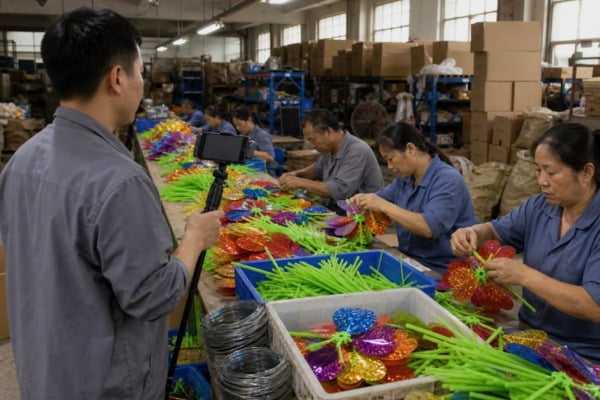
Capacity claims are the easiest lie in sourcing because they are the hardest to check from a laptop. A manufacturing facility audit closes that gap. You do not always need to fly to China. A scheduled live video walkthrough on WhatsApp shows most of what an in-person visit shows: real lines, real workers, real inventory. For material orders, a third-party verification visit 4 from an inspection firm like SGS or TÜV is cheap insurance relative to a lost season.
Match the Address First
Check whether the claimed production site matches the registered address on the license. A mismatch is not automatically fatal. A subsidiary or an authorized contract manufacturing arrangement can explain it. But that explanation must exist on paper. Undocumented gaps between the legal entity and the physical factory are exactly how a wind turbine supplier turns out to be a rented office.
Pressure-Test the Capacity Math
Our own operation runs with a team of 50, and I can tell any buyer precisely what monthly volume that supports and what it does not. Demand the same math from any supplier.
| Supplier Claim | How to Verify | What a Healthy Answer Looks Like |
|---|---|---|
| "We produce X units per month" | Count lines and staff during the walkthrough | Headcount and equipment plausibly support the number |
| "Our lead time is Y weeks" | Ask for recent order history backing that lead time | Actual shipments delivered within claimed windows |
| "We do full QC" | Ask to see QC stations and calibration records live | Dedicated stations, documented checks, traceable records |
| "This is our factory" | Match address, signage, and registry record | Location, license, and documentation all align |
Finally, watch the small details during the walkthrough: inventory control, packing areas, and how finished goods are protected. Damaged packaging on arrival usually starts as sloppy packing on the floor.
Conclusion
Supplier due diligence is cheap; a lost deposit is not. Verify the license, authenticate certificates, audit the factory, and call a reference before any money moves.
Footnotes
1. Explains the Chinese business identifier buyers must verify in official registries. ↩︎
2. Official ISO page defining the quality management standard referenced for supplier vetting. ↩︎
3. Background on the international wind turbine safety and design standard mentioned. ↩︎
4. SGS is a leading inspection body cited for independent factory and product audits. ↩︎
More Articles
You might also find these helpful.
What Fire Retardant Certifications Should I Check When Buying Pinwheels?
Learn to verify a wind turbine supplier's business qualifications with license checks, registry searches, and factory audits before…
Read More →
How to Verify Authenticity of Test Reports When Purchasing Wind Turbines?
Learn to verify a wind turbine supplier's business qualifications with license checks, registry searches, and factory audits before…
Read More →
How to Check if Pinwheel/Windmill Materials Contain Harmful Chemicals?
Learn to verify a wind turbine supplier's business qualifications with license checks, registry searches, and factory audits before…
Read More → English
  Spanish
  German
  Arabic