How Do I Verify a Windmill Supplier’s Transaction Records on Alibaba?

A windmill supplier’s transaction records on Alibaba can look flawless while hiding inflated numbers. I’ve watched buyers wire deposits to ghost factories before ever finding our Zhejiang pinwheel workshop.
To verify a windmill supplier’s transaction records on Alibaba, check the Transaction Level rating, the Transaction History tab, Trade Assurance fulfillment data, and the repeat buyer rate. Then cross-check the business license, customs data, and genuine overseas buyer reviews before sending any deposit.
That is the short answer. The longer answer matters more. Transaction records are one signal, not proof. In this guide, I will show you where the data lives, how to read it, and how to catch fake history before it costs you money.
How do I check a supplier's transaction history and ratings on Alibaba?
Last spring, a US procurement manager messaged me on WhatsApp and asked us to prove our own order history before requesting verify business partners 1 samples. Smart move. Here is exactly where she looked.
Open the supplier's Alibaba profile and check the Transaction Level diamond rating, the Transaction History tab showing completed orders and buyer countries, the Trade Assurance on-time shipment record, star ratings, and reviews tied to real transactions. A repeat buyer rate above 30% is a strong positive signal.

Each of these signals sits in a different corner of the storefront. So you need a map. The Transaction Level rating, shown as diamonds near the supplier's name, reflects order volume 2 and dollar value processed through Alibaba over the last six months. It resets constantly, which makes it hard to fake for long.
Where Each Signal Lives
| الإشارة | Where to Find It | ما الذي يخبرك به |
|---|---|---|
| Transaction Level | Profile header, diamond icons | Order volume and dollar value over the last six months |
| Transaction History tab | Company profile page | Completed orders, buyer countries, total export volume |
| Trade Assurance record | Product listing and profile | On-time shipment rate and fulfillment performance |
| Repeat buyer rate | Transaction section | Above 30% means customers come back |
| Buyer reviews | Below each listing | Feedback tied to completed, protected orders |
| Response rate and time | Profile overview | How seriously the team handles inquiries |
Read the Reviews Like an Insider
In our own export work, I always tell buyers to focus on real overseas buyer feedback, not the star count. A genuine review from a US or European distributor mentions specifics: petal colors holding up in sunlight, dowel sticks arriving unbroken, carton counts matching the packing list. Vague praise repeated across many reviews means little. Also check the fulfillment rate under Trade Assurance. A supplier who ships on time for two years straight is telling you something no marketing page can.
What red flags should I watch for in a windmill supplier's Alibaba profile?
Years ago we lost a bid to a rival whose glowing five-star reviews later turned out to be brushed. That sting taught me to read profiles with a colder eye.
Watch for sudden order spikes after long inactivity, clusters of identical five-star reviews, company names that differ between the profile and business license, a Gold Supplier badge with a thin profile, stock photos instead of factory images, and pressure to pay outside Trade Assurance.

Fake history follows patterns. Once you know the patterns, a windmill supplier's transaction records on Alibaba become much easier to judge. The most common trick is transaction brushing: a burst of small orders placed in one month to inflate the Transaction Level, often after months of silence. Real B2B activity is steady, because real distributors reorder on seasonal cycles.
Red Flags at a Glance
| إشارة تحذيرية | لماذا يهم | ما يجب فعله |
|---|---|---|
| Order spike after long inactivity | Classic sign of brushed transactions | Ask what drove the spike; real suppliers have a story |
| Identical reviews posted in clusters | Suggests fake feedback | Look for detailed reviews from named overseas markets |
| Company name mismatch across documents | Points to a middleman or shell entity | Request the business license and compare names |
| Gold Supplier badge with thin profile | The badge is a paid membership, not an audit | Look for third-party assessment reports instead |
| Only stock or rendered product photos | May not manufacture anything | Ask for a live video walkthrough during China hours |
| Pushing payment off-platform early | Removes Trade Assurance protection | Keep the first orders inside the platform |
How I Spot Brushed Reviews
My own screening habit is simple. I check the transaction records, buyer ratings, and fulfillment rate together, then read the reviews for authenticity. Brushed reviews share phrasing, land on the same dates, and never mention logistics. Real feedback complains a little. A distributor who mentions a delayed container and still reorders is the most trustworthy signal on the entire platform.
How can I verify if a supplier's past orders match my quantity requirements?
During peak season, our lines in Zhejiang turn out pinwheel windmills by the container load, and we plan that capacity months ahead. Real order history always mirrors real production rhythm.
Compare the supplier's last 12 months of orders against your target quantity. Look for consistent order values near your volume, matching buyer regions, and steady monthly activity. Then confirm with customs data, past Bills of Lading, and a live factory audit before committing.
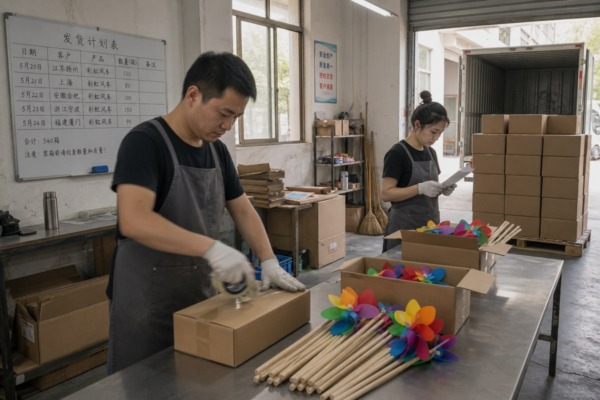
A supplier with 100+ orders is not automatically better than one with fewer. What matters is whether the record fits your order profile. Here is the process I recommend to every procurement manager who contacts us.
A Five-Step Quantity Match
- Pull the last 12 months of transaction history. Ignore lifetime totals. Recent consistency beats an old, padded number.
- Check order value ranges. If you need 50,000 units and their history shows only tiny sample-sized orders, the gap is a warning.
- Match buyer regions to yours. The Main Markets and Export Percentage fields should show real export volume to your region, not just domestic sales.
- Request past Bills of Lading. This customs data 4 proves actual shipments. Check the HS codes too. Industrial renewable energy equipment buyers audit for code 8502.31, wind-powered generating sets. Decorative garden windmills like ours ship under toy and decoration codes, so the codes should match the product category you are actually buying.
- Book a factory audit or live video call. Ask to see the production lines, workforce, and dated assets during local business hours.
Sanity-Check the Scale
| Your Requirement | What Their Record Should Show | How to Confirm |
|---|---|---|
| Full container orders | Repeated orders at similar value | Bill of Lading copies |
| Custom OEM designs | Past customized projects | Case photos and tooling evidence |
| Seasonal restocks | Steady activity across 12 months | Transaction History tab |
| Your export market | Shipments to your region | Customs data and consignee names |
Location adds context. Decorative windmill production clusters in Zhejiang, where our own factory sits, while utility-scale wind equipment concentrates in hubs like Jiangsu and Shandong. A supplier far outside the relevant cluster deserves extra questions.
Should I request references or case studies before trusting Alibaba transaction data?
Every time a buyer asks us for references, I weigh client confidentiality against proof. We share anyway, with permission, because transaction data alone never closed a serious deal for us.
Yes. Always request references or case studies before trusting Alibaba transaction data on any meaningful windmill order. Platform numbers can be inflated, but a reference call, a verified case study, and a matching business license connect the record to a real, accountable company.
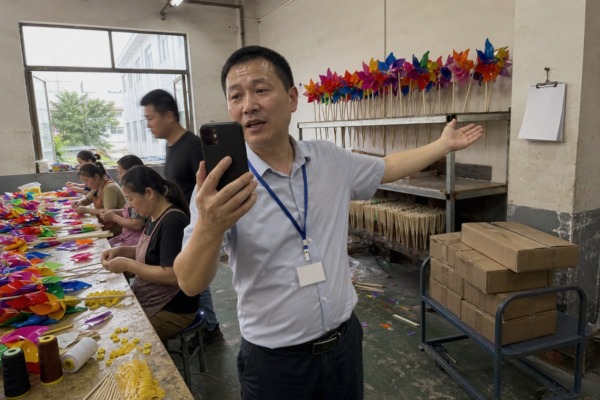
Think of verification in layers. The Alibaba profile is layer one. References and documents are layer two. The legal entity is layer three. A supplier who passes all three layers is worth your deposit. A supplier who fails any one of them is a gamble, no matter how many diamonds sit next to their name.
What to Ask a Reference
Keep the call short and specific. Ask about on-time delivery, packaging condition on arrival, defect rates, and how the supplier handled a problem shipment. Damaged cartons and slow claims handling are the pain points that never show up in a storefront. If the supplier only offers references from small general trading companies, and never from established distributors or brands, treat the transaction data with more doubt.
Documents That Outrank Any Badge
- Supplier assessment report. Verified Supplier status is based on فحصًا مستقلًا by firms like SGS or TÜV Rheinland, covering production capabilities and process controls. Download and read the actual report.
- Business license and registration number. The legal Chinese company name must match the Alibaba profile, the contract, and the bank account receiving your payment.
- ISO certification. Validate it through the issuer's registry, not a screenshot.
- IP records for OEM designs. For custom windmill designs, a CNIPA database check confirms the patents belong to the same legal entity.
We provide this full package to buyers on request, because a serious distributor will ask anyway. The suppliers who resist are telling you their transaction records may not survive scrutiny.
الخاتمة
Inflated records cost buyers real money. Verify the Transaction Level, screen for brushed reviews, match order history to your volume, then confirm the legal entity before any deposit leaves your account.
الحواشي
1. Replaces a 404 link with the updated official U.S. government resource for vetting international suppliers and performing due diligence. ↩︎
2. WTO provides authoritative global trade statistics used to benchmark order volumes and export trends. ↩︎
3. ISO 9001 is the global standard for verifying a manufacturer’s production capabilities and quality systems. ↩︎
4. Official US government resource for understanding how customs data verifies international shipments. ↩︎
المزيد من المقالات
قد تجد هذه مفيدة أيضًا.
كيفية التحقق عن بُعد من قدرات إنتاج المصنع لمكونات التوصيل المصنوعة من الحديد المطاوع؟
Verify a windmill supplier's transaction records on Alibaba by checking Transaction Level, Trade Assurance data, and repeat buyer…
اقرأ المزيد →
كيفية تقييم قدرة إنتاج المصنع عند توريد إدخالات الحديد المطاوع؟
Verify a windmill supplier's transaction records on Alibaba by checking Transaction Level, Trade Assurance data, and repeat buyer…
اقرأ المزيد →
ما الأسئلة التي يجب أن تطرحها على موردي إدخالات الحديد المطاوع لاكتشاف غير الموثوقين مبكرًا؟
Verify a windmill supplier's transaction records on Alibaba by checking Transaction Level, Trade Assurance data, and repeat buyer…
اقرأ المزيد → English
  Spanish
  German
  Arabic