
What Hidden Costs Affect The Final Price When Buying Wind Turbines?
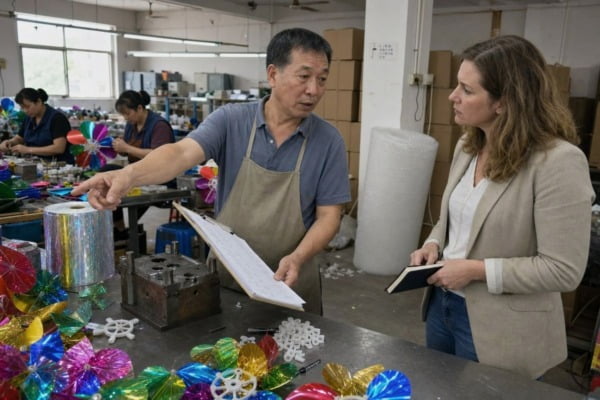
A quote for decorative wind turbines rarely tells the whole story. On our pinwheel production line in Zhejiang, I watch buyers get surprised by costs the sticker price never mentions.
The final price when buying wind turbines is shaped by hidden costs beyond the quoted unit price: custom mold and tooling fees, manual assembly labor, international freight and logistics surcharges, quality control inspections, and upgraded protective packaging. Smart buyers budget for all five before signing a purchase order.
This pattern is not unique to garden décor. In the utility-scale wind energy 1 world, industry data shows turbine hardware may be only about 40% of total capital expenditure. The rest goes to Balance of Plant (BoP) items, site preparation and foundations, grid connection fees, and permitting and licensing. Developers also budget for environmental impact assessments 2, interconnection studies, and land lease agreements long before a blade ships. The lesson scales down perfectly to our world of decorative wind turbines and pinwheels: the machine is not the project. Let me walk through the four hidden cost areas that matter most for import buyers, drawing on what we see every day in our own factory.
How do customization and OEM/ODM requests change my final pinwheel order cost?
Last spring, a US distributor sent me a sketch of a six-flower holographic spinner and asked for a quote. Her first question after seeing it: why the extra tooling line?
Customization and OEM/ODM requests add one-time mold and tooling fees, printing plate charges, and higher manual assembly labor to your pinwheel order. These costs are quoted separately from the unit price and are usually amortized once order volumes grow, so early orders carry the heaviest share.
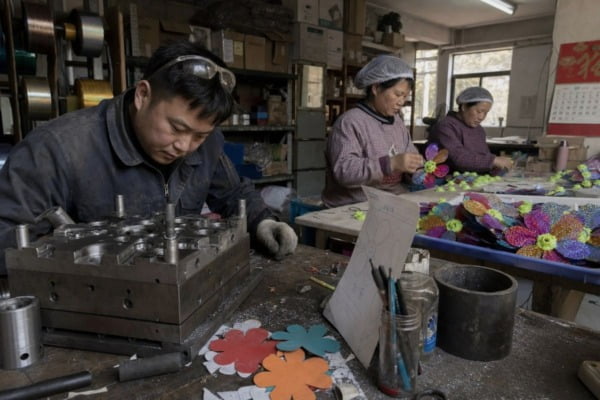
Customization is where the biggest gap between the quoted price and the final price appears. In my own experience, three specific charges catch first-time buyers off guard: custom mold opening fees 3, printing setup fees, and manual assembly labor. Just as site preparation and foundations are the invisible groundwork of a wind farm, tooling is the invisible groundwork of a custom pinwheel.
Why tooling fees exist
Our standard products, like the rainbow eight-petal spinner or the six-flower heart-petal windmill, run on existing dies and molds. When a buyer wants a new petal silhouette, a new smiling-face hub, or a unique plastic arm, we must cut new dies or open a new injection mold. That is a one-time cost, and it is real money the factory pays a toolmaker upfront.
The assembly labor factor
Design complexity also changes labor. A single-head pinwheel snaps together fast. A six-flower spinner with thirty-six heart-shaped petals, six hubs, and curved connecting arms takes several times longer at the assembly bench. That manual assembly labor is baked into the unit price, so complex designs cost more per piece even after tooling is paid.
| Customization Request | Hidden Cost Triggered | How to Reduce It |
|---|---|---|
| New petal shape or size | Die-cutting tooling fee | Adapt an existing die where possible |
| New plastic hub or connector | Injection mold opening fee | Use standard hubs with custom prints |
| Custom prints or holographic film | Printing plate and film sourcing fees | Choose from stocked film patterns |
| Multi-head or layered designs | Higher manual assembly labor per unit | Simplify the assembly sequence |
| Custom retail packaging | Artwork setup and carton tooling | Commit to volume so setup amortizes |
The good news is that tooling fees amortize. Once a mold exists, repeat orders pay only the unit price. Many of our long-term OEM/ODM partners recover the tooling investment within their first few reorders.
What logistics and shipping fees should I expect beyond the quoted unit price?
A delayed container taught me more about freight math than any textbook. Our lightweight spinners fill space fast, and shipping bills follow volume,
Footnotes
1. IRENA provides authoritative data on global wind energy technology and deployment costs. ↩︎
2. The EPA oversees the National Environmental Policy Act (NEPA) process for environmental impact assessments in the US. ↩︎
3. Wikipedia guide explaining the high initial investment required for custom manufacturing molds and tooling. ↩︎
More Articles
You might also find these helpful.
What Fire Retardant Certifications Should I Check When Buying Pinwheels?
Uncover the hidden costs behind wind turbine pricing—mold fees, freight, QC, and packaging—so you can budget accurately before…
Read More →
How to Verify Authenticity of Test Reports When Purchasing Wind Turbines?
Uncover the hidden costs behind wind turbine pricing—mold fees, freight, QC, and packaging—so you can budget accurately before…
Read More →
How to Check if Pinwheel/Windmill Materials Contain Harmful Chemicals?
Uncover the hidden costs behind wind turbine pricing—mold fees, freight, QC, and packaging—so you can budget accurately before…
Read More → English
  Spanish
  German
  Arabic