Wie erkläre ich einem Lieferanten die Materialanforderungen für Pinwheels?
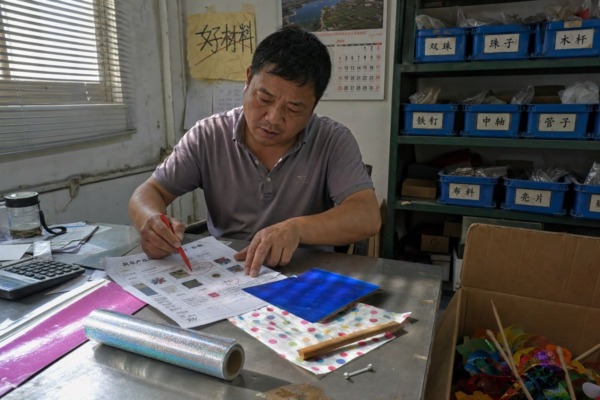
Bei den Materialanforderungen für Pinwheels geht bei den meisten Beschaffungsgeschäften etwas schief. In unserer Produktionslinie in Zhejiang sehe ich jeden Monat, wie vage Briefings zu falschen Angeboten, fehlgeschlagenen Mustern und schmerzhaften Rücksendungen führen.
Um einem Lieferanten die Materialanforderungen für Pinwheels zu erklären, geben Sie jede Komponente separat an: Klingenmaterial (PP, PET, Stoff oder Metall), Stieltyp, Nabenbefestigung, Dicke in Mikrometern, UV-Beständigkeit, Druckverfahren und Sicherheitsstandard. Fragen Sie niemals nach “gutem Material” — senden Sie stattdessen eine vollständige Spezifikation Komponente für Komponente.
Diese Antwort klingt einfach. Aber jedes dieser Elemente hat Details, die darüber entscheiden, ob Ihre Bestellung gelingt oder scheitert. Lassen Sie mich Sie durch alle hindurchführen, eines nach dem anderen.
Welche Terminologie sollte ich verwenden, um Windradmaterialien klar zu spezifizieren?
Ein Käufer bat unsere Fabrik einmal um "Plastik-Pinwheels". Wir stellen vier Arten von Plastik-Pinwheels her. Dieses eine Wort kostete uns zwei Wochen Hin-und-Her-E-Mails, bevor die Produktion überhaupt beginnen konnte.
Verwenden Sie exakte Materialnamen für jede Komponente: PP (Polypropylen) oder PET-Folie für Blätter, Polyestergewebe für weiche Blütenblätter, Eisen oder Draht für Metallteile und Holzdübel oder Kunststoffstab für Stützen. Geben Sie die Blattdicke in Mikrometern an und benennen Sie den Nabenbefestigungstyp explizit.
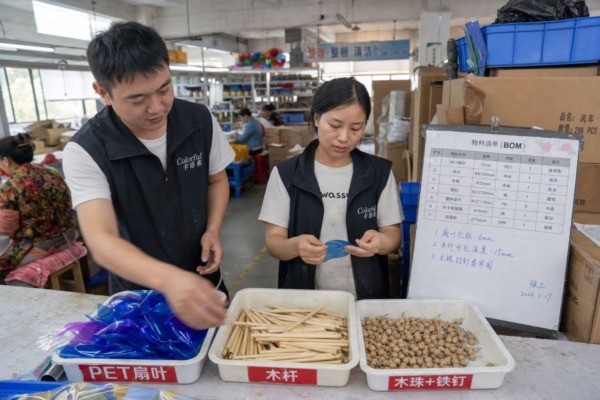
Ein Pinwheel ist nicht ein Material. Es ist ein kleines Bausystem, bei dem drei oder vier verschiedene Materialien zusammenwirken. Allein in unserem Katalog führen wir PP-Kunststoff 1, PET-Kunststoff, Polyesterstoff und Eisenteile — manchmal alles im selben Produkt. Wenn Sie nur ein Material nennen, muss Ihr Lieferant den Rest erraten. Beim Raten beginnen die Qualitätsprobleme.
Benennen Sie das Klingensubstrat präzise
Die Klinge ist der Teil, der sich dreht, also beginnen Sie dort. Verwenden Sie echte Polymerharz-Sorten und Branchenbegriffe, keine vagen Beschreibungen:
| Vage Anfrage | Präzise Spezifikation |
|---|---|
| "Plastik-Pinwheel" | "PP-Klingen, 250-Mikron-Folie, glänzende Oberfläche" |
| "Glänzendes Folien-Pinwheel" | "PET-Folie 2 -Klingen, 200 Mikron, metallisiertes Silber" |
| "Weiches Blumen-Pinwheel" | "190T Polyesterstoff-Blütenblätter, Punktdruck, heißgeschnittene Kanten" |
| "Stabiler Stiel" | "Naturholz-Rundstab, 5 mm Durchmesser, 40 cm Länge" |
| "Metallteile" | "Eisenachse-Stift, verzinkt, mit Nylonscheibe" |
Die Dicke ist genauso wichtig wie der Polymername. Internationale Käufer verwechseln oft mils, Mikrometer und gauge. Wir geben alles in Mikrometern an, um "gauge-Verwirrung" zu vermeiden. Bitten Sie Ihren Lieferanten, die Einheit schriftlich zu bestätigen.
Trennen Sie Stiel und Nabe von den Klingen
Der Stützstab und die Mittelnabe bestehen normalerweise aus anderen Materialien als die Klingen. Unsere geschichteten Regenbogen-Pinwheels zum Beispiel verwenden PET-Klingen, einen Naturholzstab und eine Holzkugel-Nabe über einem Eisenstift. Jedes Teil braucht seine eigene Zeile in Ihrer Stückliste. Wenn Sie die Nabe weglassen, erhalten Sie möglicherweise einen freiliegenden Metallstift an einem Produkt, das für Kinder gedacht ist. Legen Sie ausdrücklich fest, ob Sie eine Musterbeutelklammer, einen Kunststoffniet, eine Schraube mit Scheibe oder eine abgedeckte Kugelnabe wünschen. Diese eine Zeile schützt sowohl die Drehqualität als auch die Sicherheit.
Wie kommuniziere ich die Anforderungen an die Wetterbeständigkeit für meine Windräder?
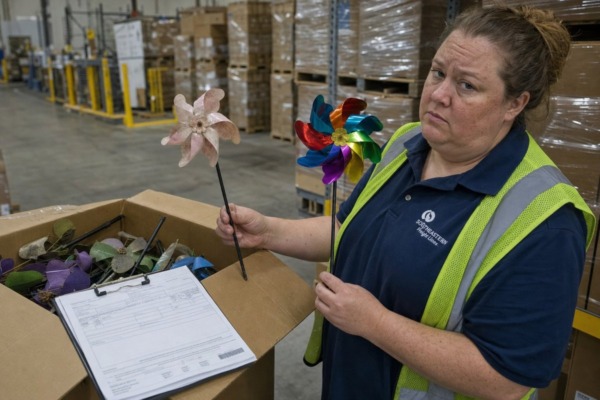
Letzten Frühling reichte ein US-Distributor eine Container-Reklamation bei uns ein: Garten-Pinwheels verblassten nach sechs Wochen im Freien. Die Ursache war einfach. Niemand hatte UV-Stabilisatoren im ursprünglichen Briefing spezifiziert.
Geben Sie zuerst die beabsichtigte Umgebung an: Innendekoration, überdachte Terrasse oder vollständige Nutzung im Außenbereich. Verlangen Sie dann UV-Stabilisatoren im Harz, feuchtigkeitsbeständige Materialien oder Beschichtungen, eine erwartete Lebensdauer im Außenbereich in Monaten und Rostschutz an allen Eisen- oder Drahtkomponenten.
Lieferanten können nicht die Gedanken Ihrer Kunden lesen. Ein Pinwheel, das als Gartenstecker verkauft wird — wie unser Sonnenblumen-Design auf einem Holzrundstab — lebt in Sonnenlicht, Regen und Bodenfeuchtigkeit. Ein Party-Pinwheel lebt einen Nachmittag lang auf einem Tisch. Beide können PET-Folie verwenden, aber nur eines braucht UV-Beständigkeit im Harz. Ihre Aufgabe ist es, dem Lieferanten zu sagen, in welcher Welt das Produkt lebt.
Definieren Sie die Einsatzumgebung in klaren Worten
Ich empfehle eine kurze, direkte Aussage in Ihrer Anfrage: "Dieses Produkt wird im Freien in direkter Sonne für mindestens drei Monate im Sommer ausgestellt." Dieser eine Satz ändert die Materialwahl, das Tintensystem und den Preis. Ohne ihn kalkuliert eine Fabrik die günstigste Standardfolie, denn das gewinnt den Angebotsvergleich.
Passen Sie das Material an die Belastung an
So vergleichen sich die gängigen Klingenmaterialien für den Außeneinsatz:
| Material | Sonnenverblassen | Regen / Feuchtigkeit | Typische Lebensdauer im Freien | Kostenniveau |
|---|---|---|---|---|
| Beschichtetes Papier / Karton | Schlecht | Sehr schlecht | Tage bis Wochen | Niedrigster |
| PP-Kunststoff | Mäßig (gut mit UV-Additiven) | Gut | 1–3 Saisons | Niedrig |
| PET-Folie | Gut mit UV-Stabilisatoren | Sehr gut | 2–4 seasons | Mittel |
| Polyester fabric | Good with treated dyes | Good, dries fast | 1–2 seasons | Mittel |
| Iron / metal | Excellent shape retention | Needs plating or rust risk | Multiple years | Highest |
Also cover the hidden parts. Wooden dowels can swell in wet soil. Iron pins can rust and streak the blades. Ask for zinc plating or a nylon washer at the axle. In our experience exporting to the US and Europe, these small callouts prevent most return claims. Finally, ask for tensile strength and weathering data on the material data sheet 3, so the promise is documented, not verbal.
Welche Details sollte ich über Farbechtheit und Druckmaterialien angeben?
Color is the first thing a retail customer sees on a pinwheel. It is also the first thing that fails when the printing spec is missing from the purchase order.
Geben Sie das Druckverfahren (Offset, Siebdruck oder Thermotransfer), Pantone-Farbcodes, einen Tintenhaftungstest wie den ASTM D3359 Kreuzschnitttest, die Dauer der Verblassungsbeständigkeit und die Zertifizierung für ungiftige Tinten an. Fordern Sie vor der Massenproduktion ein Vorproduktions-Druckmuster zur Farbfreigabe an.
When we developed our dot-patterned fabric flower pinwheels with the bee and ladybug centers, the buyer sent us exact Pantone references for the green, yellow, pink, and orange petals. That brief was a pleasure to work with. Production matched the mockups on the first sample round. Compare that to a brief that says "bright colors" — every factory interprets that differently, and disputes follow.
Lock Down Colors Before Production
Cover these five points in writing:
- Pantone codes for every color, not screenshots. Screens shift colors; Pantone does not.
- Print method matched to the substrate. Offset works for PET film. Heat transfer or dye sublimation suits polyester fabric. Silk screen suits thicker PP sheet.
- Ink adhesion standard. Request a cross-hatch tape test 4 so printed graphics do not peel when blades flex in the wind.
- Fade resistance. Tie this to your weather requirement: "printed colors must not visibly fade within one outdoor season."
- Ink safety. For children's items, require non-toxic inks and RoHS compliance 5 covering heavy metals in coatings.
Approve a Physical Sample, Not a PDF
Digital proofs cannot show how ink sits on glossy PET versus woven polyester. We always ship printed pre-production samples during prototype development, and I advise every buyer to demand the same. Check the sample outdoors in sunlight, because colors read differently under shop lights. Then have the supplier keep a signed "golden sample" on file. During mass production, our Qualitätssicherungsprotokolle 6 compare each batch against that retained sample. This one habit resolves nearly every "the color is wrong" dispute before it starts, because both sides agreed on a physical reference, not an interpretation.
Wie kann ich überprüfen, ob mein Lieferant meine Materialspezifikationen vor der Produktion versteht?
Confirmation is cheap; rework is expensive. Over years of running OEM projects for wholesalers, I have learned that a supplier repeating your spec back to you is worth more than a fast quote.
Überprüfen Sie das Verständnis, indem Sie eine schriftliche Spezifikationsbestätigung, eine vollständige Stückliste, vor der Produktion getestete Muster auf Schleuderverhalten und Haltbarkeit, ein Materialdatenblatt für jede Komponente und ein unterzeichnetes Golden Sample verlangen. Wenn der Lieferant Ihre Anforderungen nicht klar wiedergeben kann, fahren Sie nicht fort.
A quote that arrives suspiciously fast often means the factory skipped reading your technical specifications. Slow down the process on purpose. Verification is a sequence, and each step catches a different type of misunderstanding before money is committed.
Follow a Five-Step Verification Sequence
- Request a spec echo. Ask the supplier to restate your requirements in their own words: blade material, thickness, hub type, stick, print, and safety standard. Gaps show up immediately.
- Review the bill of materials. Every component should be listed with its material, grade, and dimensions. A missing washer or unnamed pin material is a warning sign.
- Collect documentation. Ask for a material data sheet per component, plus test reports for ASTM F963 7 or EN71 if the product is for children, and RoHS compliance where required.
- Test physical samples. Check spin behavior at low airflow, wobble at the hub, blade stiffness, and print adhesion. Blow on it, flex it, leave one on a windowsill in the sun.
- Sign the golden sample. Both sides keep an identical approved unit as the reference for mass production and inspection.
Ask Questions That Reveal Real Capability
Some questions expose whether a factory truly controls its process:
| Zu stellende Frage | What a Good Answer Includes |
|---|---|
| "How do you test rotation?" | A defined check for wobble, binding, and spin at low wind speed |
| "What are your manufacturing tolerances at the hub?" | A specific clearance figure preventing blade-to-hub friction |
| "How do you control color between batches?" | Retained golden samples and Pantone checks per run |
| "What is your defect inspection method?" | AQL-based sampling per carton, not "we check everything" |
| "Can you provide low-friction hub options?" | Named materials like nylon or POM washers, not "yes" |
On our own line, we welcome these questions. Serious factories do, because clear specs protect both sides. If a supplier dodges them or answers only with "no problem," treat that as your final warning before the deposit.
Fazit
Vague pinwheel briefs cause wrong quotes, faded products, and returns. Specify every component, demand documentation, test samples, and sign a golden reference — clarity before production saves money after it.
Fußnoten
1. Explains the polymer chemistry and properties of polypropylene commonly used for pinwheel blades. ↩︎
2. Background on PET material properties relevant to durability and UV resistance choices. ↩︎
3. OSHA’s hazard communication standard governs material data sheet requirements for safety documentation. ↩︎
4. ASTM publishes standardized adhesion test methods like the cross-hatch tape test cited here. ↩︎
5. Defines the regulatory standard restricting hazardous substances in manufactured components and inks. ↩︎
6. Comprehensive overview of the international standard for quality management systems and protocols. ↩︎
7. Official US toy safety standard referenced for testing children’s product materials. ↩︎
Weitere Artikel
Diese könnten Ihnen auch helfen.
Wie kann man die Produktionskapazitäten einer Fabrik für Schmiedeeisen-Steckkomponenten aus der Ferne überprüfen?
Stop guessing on pinwheel material requirements. Learn the exact terms for blades, sticks, and hubs to prevent failed…
Weiterlesen →
Wie beurteilt man die Produktionskapazität einer Fabrik bei der Beschaffung von Schmiedeeisen-Einsätzen?
Stop guessing on pinwheel material requirements. Learn the exact terms for blades, sticks, and hubs to prevent failed…
Weiterlesen →
Welche Fragen sollten Sie Schmiedeeisen-Einsatz-Lieferanten stellen, um unzuverlässige frühzeitig zu erkennen?
Stop guessing on pinwheel material requirements. Learn the exact terms for blades, sticks, and hubs to prevent failed…
Weiterlesen →12 Kommentare zu “How Do I Explain Pinwheel Material Requirements to a Supplier?”
Schreibe einen Kommentar
Du musst angemeldet sein, um einen Kommentar abzugeben.
 English
 Spanish
 German
 Arabic
 Chinese
[…] buyers hope digital printing will erase custom MOQs. It helps for graphics, but it cannot fix material minimums, die-cutting setup, or assembly line changeovers. Our production line still needs about the same […]
Thank you for your comments! Totally understand buyers’ expectation for lower custom MOQs with digital printing. While digital printing brings great flexibility for graphics, it can’t eliminate minimum requirements for raw materials, die-cut setup costs and assembly line switching. Our overall production setup still requires similar minimum order quantities for custom orders.
[…] Southwest or coastal South America. If returns cite fading, cracking, or rust, you may need custom fabrication materials and weather-resistant finishes rather than a new […]
Great tip! We upgraded materials and added weather-proof coatings for South American coastal orders to avoid fading, cracking & rust. Custom anti-rust materials are supported too~
[…] the exact thing shoppers want to verify: the vividness of the pinks, yellows, and blues, and the quality of the plastic film. Transparent product showcasing, through a clear bag or a generous window cutout, lets customers […]
Exactly! Buyers mainly check color brightness and plastic film quality. Clear packaging with transparent bags or big windows lets them see the product clearly, which greatly boosts trust. We’ve started using this packaging method already.
[…] tier you choose, get the quality specifications in writing: blade material and thickness, hub type, line strength, and colorfastness 3. On our QC line, we […]
Thanks for the professional advice.
For every tier clients order, we supply formal written specifications: blade material & thickness, hub structure, hanging wire strength and color fastness parameters.
Furthermore, our QC line carries out full inspections to control defects.
Send us a message if you need detailed specification sheets for our pinwheel garlands 📩
[…] every supplier onto the same spec sheet. Ask each one to confirm, in writing: material type and thickness, blade count per pinwheel, pinwheels per string, hub material, cord strength, packaging method, and […]
Thanks for your valuable advice.
We implement unified specification standards across all production lines, and obtain written confirmation of each indicator: material type & thickness, blades per pinwheel, pinwheel quantity per garland, hub material, cord strength, packaging solution and follow-up technical indicators.
If you need our official specification document for reference, feel free to send us a private message anytime 📩
[…] define the exact spec in your RFQ evaluation process. State the string length, pinwheel count, petal material, rope material, quantity, and packaging. When all suppliers answer the same scope, comparison […]
Exactly. Consistent specifications are critical for meaningful supplier comparison. Our factory can provide clear documented specs covering string length, pinwheel count, petal material, rope material, quantity and packaging. We are ready to match your standardized RFQ requirements for direct side‑by‑side evaluation.