
How Do I Calculate Landed Cost for Wrought Iron Fittings to My Warehouse?
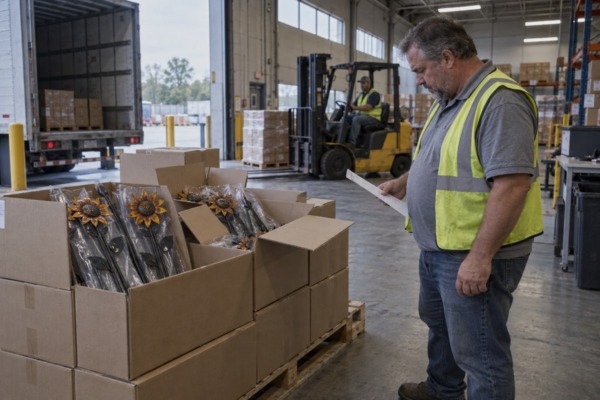
Last year, a buyer priced our wrought iron garden fittings off the factory invoice alone. Her margin vanished at customs. Calculating [landed cost](https://zhufengpinwheels.com/?p=930) for wrought iron fittings prevents that shock.
To calculate landed cost for wrought iron fittings, add factory price, inland trucking, export declaration, ocean freight, insurance, destination clearance, customs duties and tariffs, port fees, warehouse devanning, and damage allowance. Divide the total by sellable units received to get your true per-unit cost to warehouse.
That formula sounds simple. In practice, most importers miss two or three line items. Below, I break down every cost layer, show a worked example, and flag the fees that quietly kill margins.
What Costs Should I Include When Calculating Landed Cost for Wrought Iron Fittings?
My costliest early lesson came from quoting a garden stake order EXW and watching the buyer's forwarder bill her twice for origin charges. Cost stacking starts with clear definitions.
Include the factory invoice value, domestic trucking to port, export customs declaration, ocean freight, cargo insurance, destination clearance fees, customs duties and taxes, port charges, warehouse devanning, and a damage-loss allowance. Every one of these costs must be allocated down to the single unit.

Here is the working formula I share with every distributor who buys metal garden décor from our Zhejiang factory. Unit landed cost = factory value ÷ quantity + domestic trucking + export declaration + ocean freight 1 + insurance + destination clearance, duty and Section 301 tax + port miscellaneous fees + warehousing and devanning + damage-loss allocation. The key discipline is allocating every charge to a single product. Many buyers only count the factory price. They skip taxes and logistics. Then their gross margin forecast falls apart at the warehouse door.
A Worked Example for 500 Fittings
Assume you buy 500 wrought iron fittings at $4.00 FOB Ningbo. Here is how the stack builds:
| Cost Line | Amount | Per Unit |
|---|---|---|
| Factory invoice (500 × $4.00) | $2,000 | $4.00 |
| Ocean freight (LCL share) | $450 | $0.90 |
| Import insurance premiums (0.4% of value) | $8 | $0.02 |
| Duties, 301 tariffs, MPF, HMF | $760 | $1.52 |
| Brokerage, terminal, port fees | $280 | $0.56 |
| Inland delivery and devanning | $350 | $0.70 |
| Damage allowance (2%) | — | $0.15 |
| True landed cost | ~$3,848 | ~$7.85 |
That $4.00 fitting really costs almost double at your dock.
Watch Your Incoterms
Incoterms decide which costs already sit inside the supplier quote. An EXW price pushes origin trucking and export declaration onto you. FOB includes them. CIF also includes freight and insurance. Double counting freight is one of the most common errors I see. Also decide upfront which inventory valuation methods your accountant will use, because capitalized landed cost flows straight into your balance sheet.
How Do I Factor in Customs Duties and Tariffs When Importing Wrought Iron Fittings from China?
A procurement manager in Ohio once messaged me on WhatsApp, shocked that duties on her iron fittings order nearly matched the factory invoice. Tariff stacking on Chinese steel is real.
Classify wrought iron fittings under the correct HS code, typically heading 7307, then stack the base duty rate, Section 301 tariffs on Chinese goods, possible Section 232 steel tariffs, MPF at 0.3464%, and HMF at 0.125% for ocean shipments onto your customs value.

Duty math starts with HS code classification. Wrought iron fittings generally fall under Chapter 73 2, and often heading 7307 specifically. Do not guess based on the product name. A wrong code can trigger penalties, retroactive duty bills, or shipment holds. We always confirm the code with the customs broker before our clients place large orders, because one digit changes the entire calculation.
The Duty Layers That Stack on Chinese Iron
| Duty Layer | Typical Rate | Applies When |
|---|---|---|
| Base HTS duty | Varies by subheading | Always |
| Section 301 tariff | Often 25% | Goods of Chinese origin |
| Section 232 steel tariff | 25%+ | Covered steel/iron articles |
| MPF | 0.3464% (with min/max caps) | Most formal US entries |
| HMF | 0.125% | Ocean freight arrivals |
| AD/CVD | Can exceed 100% | Products under trade remedy orders |
The Two Traps Buyers Miss
First, anti-dumping duties and countervailing duties. Iron pipe fittings are frequent targets of trade remedy orders. These duties are not shown on basic landed cost calculators, and they can exceed 100% of value. Always run an AD/CVD scope check before ordering.
Second, customs valuation assists. If you supply your Chinese factory with proprietary molds, dies, or tooling, US customs requires you to add that tooling value to your declared customs value. We remind our OEM clients of this whenever we build custom tooling for their designs.
Which Shipping Method Gives Me the Most Accurate Landed Cost for Wrought Iron Fittings?
Every season, our export team weighs the same trade-off: fill a full container from our Zhejiang warehouse, or ship smaller LCL lots faster. The choice changes cost accuracy dramatically.
Full container load (FCL) ocean freight gives the most accurate landed cost for wrought iron fittings because rates are fixed per container, weight limits are clear, and per-unit allocation is simple. LCL adds variable handling fees, while air freight is rarely economical for heavy iron.

Wrought iron is heavy, dense, and bulky relative to its value. That profile makes freight the second-biggest cost driver after duties. Here is how the three main methods compare for cost predictability:
| Method | Cost Predictability | Best For | Watch Out For |
|---|---|---|---|
| FCL ocean | High — one fixed container rate | Large orders that fill 20'/40' | Container weight limits on dense iron |
| LCL ocean | Medium — charged by CBM/weight | Small trial orders | Layered handling and devanning fees |
| Air freight | Low value for money | Urgent samples only | Chargeable weight punishes dense metal |
Why FCL Wins on Accuracy
With FCL, one container rate covers thousands of units. You divide once and your allocation is done. With LCL, freight forwarding charges arrive in fragments: origin consolidation, destination deconsolidation, and warehouse fees that appear after booking. Each fragment blurs your per-unit math.
Surcharges You Must Model
Base ocean rates are never the full story. Add the Bunker Adjustment Factor (BAF) for fuel volatility and Peak Season Surcharges (PSS) from roughly August through October. For heavy fittings, also confirm your inland drayage carrier can handle the container weight, because overweight iron loads sometimes require tri-axle chassis at extra cost.
For mixed shipments, allocate freight by weight across SKUs. Weight-based allocation is defensible for dense iron goods. Use value-based allocation for insurance and ad valorem duties instead.
What Hidden Fees Do I Often Miss When Estimating Landed Cost for My Wrought Iron Fittings Order?
During one devanning inspection at a client's warehouse, we counted chipped coatings, bent stakes, and a surprise chassis fee on the drayage invoice. Hidden costs hide in plain sight.
Commonly missed fees include terminal handling charges, customs brokerage fees, chassis and drayage surcharges, demurrage, warehouse devanning, damage-loss allowances, currency conversion spreads, and the inventory carrying cost of capital tied up during long ocean transits. Each one silently erodes your projected gross margin.

Small fees do the most damage on budget-priced hardware. A $150 brokerage bill 3 barely matters on electronics. On low-margin iron fittings, it can erase the profit on dozens of units. Run through this checklist before you finalize any landed cost estimate:
- Terminal handling charges at both origin and destination ports.
- Customs brokerage fees for entry filing, document handling, and any inspection charges.
- Demurrage and detention if your container sits at the port or your dock too long.
- Chassis fees and liftgate service on the final delivery leg — heavy palletized iron often needs both.
- Devanning and receiving labor at your warehouse, especially for floor-loaded containers.
- Damage and shortage losses — divide by sellable units received, never units ordered.
- Currency conversion spreads — convert every invoice to one base currency using a consistent policy.
The Costs Finance Teams Add
Two forward-looking items deserve a line in your model. First, the inventory carrying cost of capital. Ocean transit for iron fittings can tie up cash for five to eight weeks, and that opportunity cost belongs in the true cost to warehouse. Second, carbon border rules. The EU's Carbon Border Adjustment Mechanism 4 already requires importers to report embedded emissions on iron and steel goods, and a carbon price will follow. If you sell into Europe, start collecting emissions data from your supplier now. Some logistics teams keep landed cost narrow for customs purposes, while finance teams extend it for pricing. Both views are valid — just pick one definition and align your inventory valuation methods with it.
Conclusion
Landed cost is a decision-making number, not a customs formula. Stack every cost, allocate per unit, and your margins on wrought iron fittings will survive contact with reality.
Interested in sourcing the products mentioned in this article? See details and request a quote here:
Footnotes
1. Official US agency regulating oceanborne international transportation for the protection of importers. ↩︎
2. Authoritative US government database for Harmonized Tariff Schedule codes and duty rates. ↩︎
3. Official US government resource for understanding customs broker roles and import entry fees. ↩︎
4. Official European Commission portal for the Carbon Border Adjustment Mechanism affecting iron and steel imports. ↩︎
More Articles
You might also find these helpful.

How to Remotely Verify a Factory's Production Capabilities for Wrought Iron Plug-In Components?
Calculate landed cost for wrought iron fittings by adding freight, duties, and fees to factory price, then divide…
Read More →
How to Assess a Factory's Production Capacity When Sourcing Wrought Iron Inserts?
Calculate landed cost for wrought iron fittings by adding freight, duties, and fees to factory price, then divide…
Read More →
What Questions Should You Ask Wrought Iron Insert Suppliers to Spot Unreliable Ones Early?
Calculate landed cost for wrought iron fittings by adding freight, duties, and fees to factory price, then divide…
Read More → English
  Spanish
  German
  Arabic