
How to Determine a Reasonable Initial Order Quantity for Pinwheels?
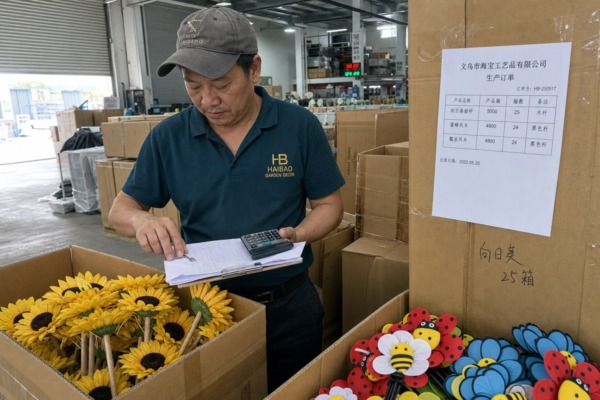
Choosing an initial order quantity for pinwheels stumps many first-time buyers Minimum Order Quantity 1. On our production line in Zhejiang, I see new distributors either overbuy or underbuy almost every season.
A reasonable initial order quantity for pinwheels covers one to three months of forecasted sales, meets the supplier’s Minimum Order Quantity (MOQ) — often just one carton — and still leaves healthy margin after shipping, duties, and storage costs are included.
Order too many, and cash sits in a warehouse. Order too few, and freight eats your margin while shelves go empty colorfastness 2. The fix is a simple decision framework. Let me walk you through it, step by step, using real numbers from our export experience.
What Factors Should I Consider Before Placing My First Pinwheel Order?
A buyer from Texas once asked me for "whatever quantity everyone else orders." I told her honestly: there is no universal number, only factors that shape your number.
Before placing a first pinwheel order, evaluate five factors: your market demand forecast, the supplier's MOQ and carton pack size, seasonal timing, landed cost per unit, and your storage and carrying costs. Together, these determine a quantity that is both safe and profitable.

Every first order is a bet on demand you have not yet proven. So the goal is to shrink the bet without making it useless. Here is how I break the factors down when I advise new distributors.
Demand Comes First, Not the Unit Count
Start with market demand forecasting, not a number pulled from intuition. Estimate how many pinwheels you can sell per month. Use comparable products, your channel traffic, and category signals. Pinwheels are event-driven. In the US market, demand spikes hard around the spring gardening window and the 4th of July. If you launch in February, your first order should carry you into that peak, not past it.
Supplier MOQ vs. Your Business MOQ
Our factory ships by the carton — one carton is the minimum order. But carton quantities differ by product. A sunflower garden stake packs differently from a fabric flower pinwheel with a bee or ladybug character, because petal shapes and stick lengths change the box dimensions. Your business MOQ is different. It is the smallest quantity your own economics can support. Never assume the factory minimum automatically fits your cash flow.
Key Factors at a Glance
| Factor | Question to Ask | Why It Matters for Pinwheels |
|---|---|---|
| Demand forecast | How many units sell per month? | Seasonal, event-driven product |
| Supplier MOQ | What is one carton for this SKU? | Pack counts vary by design |
| Lead time | How long from PO to delivery? | Sea freight can take 30–45 days |
| Landed cost 3 | What is the true per-unit cost? | Freight can dwarf a low unit price |
| Storage cost | How much space per 100 units? | Pinwheels are bulky, not stackable |
Lead time management matters more than most buyers expect. If restocking takes six weeks by sea, your first order must bridge that gap. If it cannot, you will stock out right when demand peaks.
How Do I Calculate the Right MOQ Without Overstocking My Inventory?
In our warehouse, I have watched containers of leftover seasonal stock teach expensive lessons. Pinwheels take up space fast, and space is never free.
Calculate your right quantity with this formula: projected monthly sales × test horizon of one to three months + safety stock, then round up to the nearest carton to meet the supplier MOQ. Cut the number if storage costs or demand uncertainty are high.
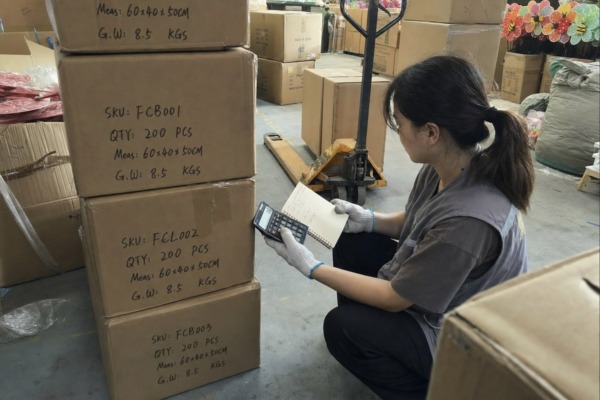
The math is simple. The discipline is what buyers skip. Let me show the full sequence I recommend to procurement managers who source from us.
The Five-Step Calculation
- Estimate monthly sell-through. Say 80 pinwheels per month based on your channel size.
- Pick a test horizon. Two months is a common middle ground, so 160 units.
- Add a safety stock 4 calculation. Add 15–25% for demand swings during your lead time. That brings you to roughly 190 units.
- Round to the carton. If our carton for that SKU holds 200 pieces, your order becomes 200.
- Sanity-check the carrying cost. Ask whether the extra 10 units create real storage pain. Usually they do not.
Why Overstocking Hurts More With Pinwheels
Pinwheels have a poor storage-to-value ratio. They are low-priced but bulky. The layered petal designs — like our rainbow five-piece sets on wooden sticks — cannot be crushed or restacked without damage. That means storage and carrying costs per dollar of inventory are higher than for compact goods. A slow inventory turnover rate 5 on a bulky, seasonal product ties up both cash and cubic meters.
Worked Example
| Scenario | Order Quantity | Landed Cost/Unit | Risk Profile |
|---|---|---|---|
| Under-order | 100 units | Highest (freight spread thin) | Stockout during peak |
| Balanced | 200 units (1 carton) | Moderate | Covers 2 months + safety stock |
| Over-order | 500 units | Lowest per unit | Aging stock after July |
Economic Order Quantity 6 (EOQ) models can refine this later, once you have real sales data. For a first order, EOQ is a baseline, not the answer. Real-world constraints — carton sizes, seasonality, and lead time — should override the textbook number.
What Sample Testing Steps Should I Take Before Committing to a Bulk Order?
When we develop a new design — like our fabric flower pinwheels with caterpillar and ladybug centers — we always push buyers to sample before scaling. Skipping this step is the costliest shortcut.
Before a bulk order, request physical samples of each design, test spin performance and colorfastness outdoors, run a small market test across colors and patterns, and confirm packaging survives transit. Only then lock quantities based on which SKUs actually sell.

Sampling is not just quality checking. It is your cheapest form of sales velocity analysis. Here is the sequence I recommend, refined over years of OEM projects with US and European wholesalers.
Step 1: Physical Quality Testing
Get samples of every variant you are considering. Leave them outdoors for two weeks. Check whether the glossy coated petals fade in sunlight. Spin them in real wind, not just by hand. Check that the wooden bead hub does not loosen and that sticks insert cleanly into soil. Our QC team does this on every new print run, but you should verify against your own market's conditions too.
Step 2: Packaging and Transit Testing
Damaged packaging is one of the top complaints I hear from distributors. Ask your supplier to ship samples in the actual export carton. Inspect for bent petals, scratched print, and crushed corners. If the sample survives international courier handling, a palletized sea shipment will usually fare better.
Step 3: Small Market Test
List two to four designs in small quantities. Sunflower stakes, character pinwheels, and rainbow layered sets appeal to different buyers. Track which colors and patterns move fastest over 30–60 days. Watch micro-trends too — the cottagecore and DIY garden aesthetic has shifted color preferences noticeably in recent seasons. Your bulk order should weight quantities toward the proven winners, not split evenly across all designs.
Step 4: Convert Data Into Quantities
If pink fabric pinwheels sell three times faster than green in your test, mirror that ratio in your bulk order. This one adjustment does more for your inventory turnover rate than any formula.
How Can I Balance Cost Efficiency and Risk When Choosing My Initial Order Size?
The hardest trade-off I discuss with buyers is this: bigger orders lower unit cost but raise inventory risk. There is a rational middle, and it is findable with numbers.
Balance cost and risk by choosing the smallest bulk pricing tier that still meets your target margin after landed costs. Increase quantity only when demand is proven, lead times are long, or a price break materially improves unit economics. Otherwise, stay small.
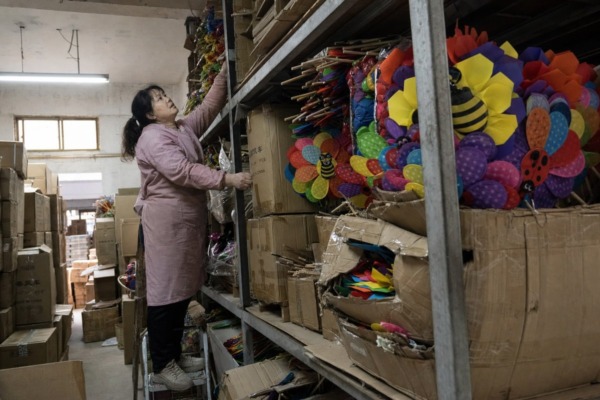
Every supplier, including us, offers bulk pricing tiers. The temptation is to chase the deepest discount. But a discount you cannot sell through is not a discount. It is a storage bill.
Run the Break-Even Math First
Unit cost optimization starts with landed cost, not FOB price. Add sea or air freight, customs duties, inbound handling, and marketing spend. Then run a break-even analysis 7: fixed costs divided by contribution margin per unit tells you the minimum units you must sell. If your test order cannot realistically reach break-even within your season, the order is too big — no matter how good the tier price looks.
When Bigger Is Actually Rational
Larger first orders make sense in three cases. First, when lead times are long and stockouts would kill your peak season. Second, when demand is already proven through a sample test or an existing channel. Third, when a price break shifts your margin meaningfully. Customized OEM designs also justify larger runs, because setup costs amortize across more units.
Scenario Comparison
| Decision Path | Cost Efficiency | Inventory Risk | Best For |
|---|---|---|---|
| One carton minimum | Lower efficiency | Lowest risk | Unproven SKUs, new markets |
| Two to three cartons | Balanced | Moderate | Tested designs, seasonal ramp-up |
| Next bulk pricing tier | Highest efficiency | Highest risk | Proven demand, long lead times |
One more practical lever: attach pinwheels to anchor products. If you sell planters or patio sets, order pinwheels at a fixed ratio to those higher-margin items. This anchors your quantity to demand you already understand, which lowers forecasting risk substantially.
Conclusion
Guessing your first order wastes cash or loses sales. The answer: forecast demand, size for one to three months, respect the carton MOQ, and scale only with proven data.
Footnotes
1. Authoritative e-commerce guide explaining MOQ for inventory management. ↩︎
2. Comprehensive Wikipedia entry defining colorfastness and its industrial standards. ↩︎
3. U.S. government trade resource explaining landed cost components like duties and freight. ↩︎
4. Background concept for the buffer inventory calculation described in the formula. ↩︎
5. Explains the financial metric used to evaluate how fast stock sells through. ↩︎
6. Explains the classic inventory model referenced as a baseline for order sizing. ↩︎
7. Authoritative business finance source explaining the break-even calculation method cited. ↩︎
More Articles
You might also find these helpful.

What Fire Retardant Certifications Should I Check When Buying Pinwheels?
Learn how to set a reasonable initial order quantity for pinwheels using MOQ, demand forecasts, and landed costs…
Read More →
How to Verify Authenticity of Test Reports When Purchasing Wind Turbines?
Learn how to set a reasonable initial order quantity for pinwheels using MOQ, demand forecasts, and landed costs…
Read More →
How to Check if Pinwheel/Windmill Materials Contain Harmful Chemicals?
Learn how to set a reasonable initial order quantity for pinwheels using MOQ, demand forecasts, and landed costs…
Read More → English
  Spanish
  German
  Arabic