How Do I Know If I Need a Custom Windmill (Pinwheel) Design?
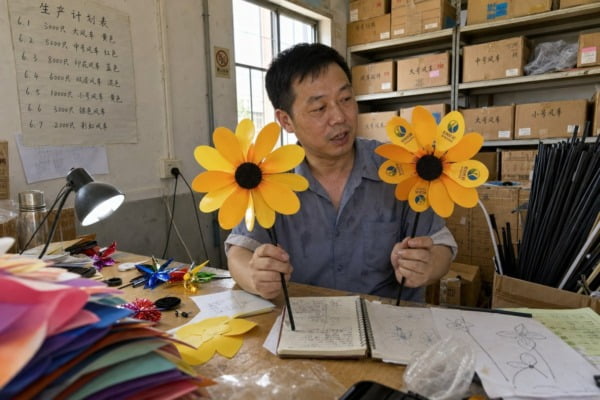
Buyers ask me about custom windmill (pinwheel) design almost weekly. Many overpay for customization they never needed. Others skip it and lose brand impact. Our Zhejiang production line sees both mistakes constantly.
You need a custom windmill (pinwheel) design only when you require a specific logo, a specific style or shape, unusual dimensions, or special materials that stock products cannot deliver. For general garden décor, retail resale, or event use, standard pinwheel designs are cheaper, faster, and equally effective.
That is the short answer. But the decision has layers. Let me walk you through the warning signs, the real costs, [the order quantities](https://zhufengpinwheels.com/?p=450), and the quality control steps, so you can decide with confidence.
What Signs Indicate My Standard Pinwheel Designs Aren't Meeting My Customers' Needs?
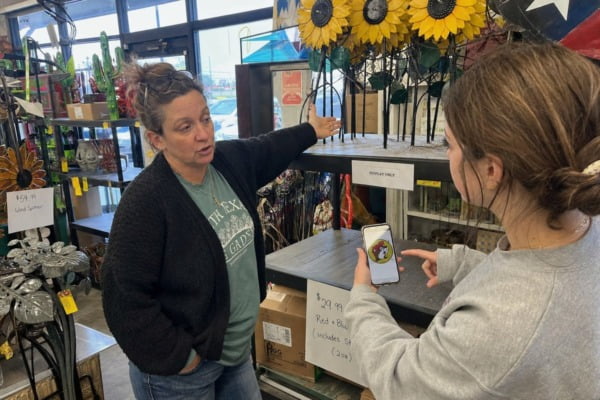
A distributor in Texas once told me her sunflower garden stakes sold well, but customers kept asking for versions with her store's mascot. That question was her first signal. In our export experience, the signals usually arrive from the market before they arrive from the factory.
Clear signs include repeated customer requests for branded or themed versions, competitors offering exclusive styles, stock colors clashing with a client's landscape aesthetic integration, poor spin performance in your region's wind conditions, and rising returns caused by materials that fail outdoors.
Standard pinwheels serve most markets well. Our flower-petal spinners, layered rainbow pinwheels 1, and character-topped garden sets cover the majority of retail demand. So before you jump to custom, look for concrete evidence that the stock line is falling short. In my experience, the evidence falls into four buckets.
Market Signals
Customers vote with their wallets and their questions. If retail buyers repeatedly ask for a shape, character, or logo you cannot supply, that is direct demand. If a competitor launches an exclusive bee or ladybug design and pulls your shelf space, that is competitive pressure. Both justify exploring custom work.
Performance Signals
Pinwheels must spin. A design tuned for gentle European garden breezes may stall in low-wind inland areas or shred in coastal gusts. Blade pitch adjustment changes the rotational torque 2 needed to start spinning. If your customers complain that units sit still on calm days, the aerodynamic efficiency 3 of the stock blade geometry may be wrong for their local wind speed requirements. A simple site-specific wind analysis of your main sales regions can confirm this.
Durability Signals
Sun and rain are brutal. Standard coated paper or thin plastic fades after one season in high-UV markets like the American Southwest or coastal South America. If returns cite fading, cracking, or rust, you may need custom fabrication materials and weather-resistant finishes rather than a new shape.
| Signal Type | Example | Custom Needed? |
|---|---|---|
| Repeated logo requests | Retailers want branded blades | Yes |
| Style gap | No mascot or theme match in stock | Yes |
| Spin complaints | Stalls in low wind | Sometimes — blade tweak may suffice |
| Fading or cracking | Fails after one summer | Sometimes — material upgrade only |
| Price pushback | Customers want cheaper | No — custom raises cost |
Notice the last row. Price complaints almost never justify customization. Custom work adds cost; it does not remove it.
How Much Does Custom Pinwheel Design Typically Cost Compared to Stock Options?
Pricing is the trade-off I discuss most often on WhatsApp with procurement managers. One buyer wanted a bespoke kinetic sculpture look for a hotel chain; another just wanted her logo printed on our existing rainbow spinner. Their cost gaps were enormous, and understanding why saves you money.
Custom pinwheel design typically costs 15–50% more per unit than stock options, plus one-time charges for tooling, artwork setup, and sampling. Simple logo printing on existing shapes adds the least; new molds, new materials, or new blade geometries add the most.
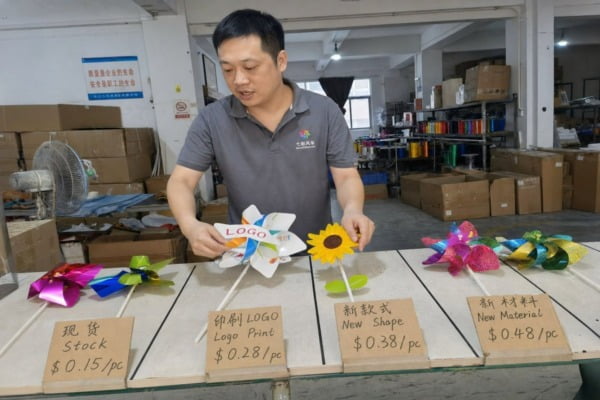
The key insight is that "custom" is not one price. It is a ladder. Each rung adds cost and lead time, so climb only as high as your market actually requires.
The Customization Cost Ladder
At the bottom sits color and print customization. We swap artwork on our existing die-cut petals 4 — say, replacing our sunflower's orange stripes with your brand palette. Setup fees are modest, and per-unit cost barely moves. In the middle sits shape modification 5: new petal counts, new center characters, or blade pitch adjustment for better spin. This may require new cutting dies. At the top sits full custom development: new molds, custom fabrication materials such as UV-stable polyester or marine-grade films, and structural changes to sticks and hubs.
| Customization Level | Typical Unit Cost Increase | One-Time Fees | Lead Time Added |
|---|---|---|---|
| Custom print/logo on stock shape | 5–15% | Low (artwork setup) | 1–2 weeks |
| New colors + minor shape tweaks | 15–25% | Medium (new dies) | 2–4 weeks |
| New shape or character design | 25–40% | Medium–High (dies + samples) | 4–6 weeks |
| Full custom (materials, mold, structure) | 40–50%+ | High (tooling) | 6–10 weeks |
Hidden Costs to Watch
Sampling rounds cost time even when the fee is small. Custom packaging often gets forgotten in quotes. And a custom item cannot be liquidated as easily as stock if a retail program fails. Factor that risk in. On the other hand, custom designs support higher retail margins and cannot be price-matched by competitors, which often repays the premium within one season.
My honest advice: unless you need a specific logo or a specific style your market demands, stock designs from an established line deliver a better value-to-cost ratio.
What Minimum Order Quantity Should I Expect When Requesting a Custom Windmill Design?
Early in our export history, we accepted a tiny custom order to win a new European client. We lost money on the run but learned exactly where MOQ lines must sit — and why. Those lines exist to cover setup waste, not to inflate profit.
Expect an MOQ of roughly 3,000–5,000 pieces for custom-printed pinwheels on existing shapes, 5,000–10,000 pieces for new shapes or dies, and 10,000+ pieces for fully custom molds or materials. Stock designs, by contrast, often start at 500–1,000 pieces.
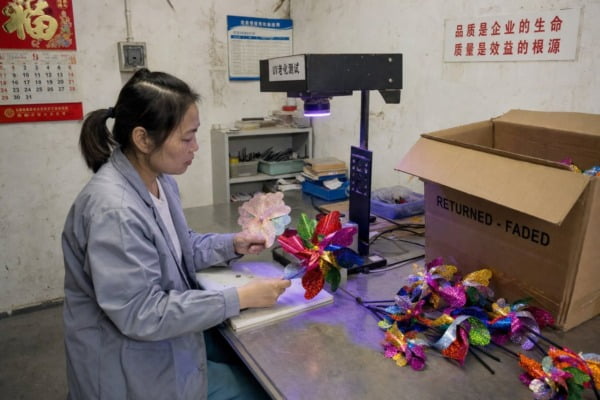
MOQ is driven by physics and printing economics 6, not stubbornness. Understanding the drivers helps you negotiate intelligently.
Why MOQs Rise With Customization
Printing presses waste material during color calibration. Die-cutting machines need setup runs. New molds must be tested. On a 50,000-piece stock run, that waste is invisible. On a 1,000-piece custom run, it can consume the entire margin. Material minimums matter too: custom fabrication materials like specialty polyester film or weather-resistant finishes are purchased in full rolls or drums. If your order uses a quarter roll, someone pays for the rest.
| Order Type | Typical MOQ | Why |
|---|---|---|
| Stock pinwheels | 500–1,000 pcs | No setup; pulled from running production |
| Custom print, stock shape | 3,000–5,000 pcs | Print plate setup and calibration waste |
| New shape/character | 5,000–10,000 pcs | New cutting dies and sample rounds |
| Custom material or mold | 10,000+ pcs | Material roll minimums, tooling amortization |
How to Negotiate a Lower MOQ
You have options. First, consolidate colorways: four colors of one custom shape can often share one die and one MOQ. Second, piggyback on stock production by choosing customization that reuses existing components 7 — sticks, hubs, and beads rarely need to change. Third, offer a rolling forecast; factories accept lower first orders when a second order is credible. Fourth, accept a slightly higher unit price on the first run in exchange for a smaller quantity. We routinely structure deals this way for US distributors testing a new retail program, because a successful test becomes a repeat customer.
One warning: an unusually low MOQ for full custom work is a red flag. It often means the factory is outsourcing your job or cutting corners on sampling.
How Do I Ensure Quality Control When Developing a Custom Pinwheel Design With My Manufacturer?
Quality control is where custom projects live or die. I once watched a beautiful custom sample fail its outdoor spin test because the hub bead was a half millimeter too tight — the rotational torque needed to start spinning doubled. Our QC team caught it before mass production. Your process should catch things like that too.
Ensure quality by approving a physical golden sample, writing measurable specifications for materials, colors, spin performance, and finishes, requiring in-line inspections during production, and conducting a pre-shipment inspection against the golden sample with an agreed AQL defect standard.
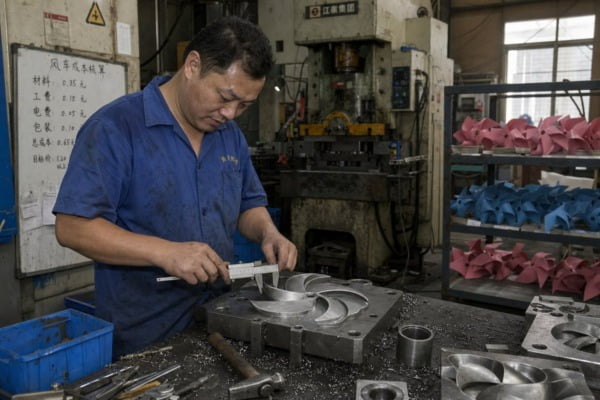
Custom pinwheels have failure modes that stock products have already ironed out over thousands of runs. A new blade shape changes aerodynamic efficiency. A new material behaves differently under sun and rain. So your QC process must be more rigorous for custom work, not less. Here is the process we run with our most demanding US buyers, and it works.
The Five-Stage QC Process
- Specification lock. Write everything down: Pantone colors, material thickness, stick length, weather-resistant finishes, and packaging. For garden stakes, include basic structural load calculations for the stick — it must survive soil insertion without snapping.
- Sample approval. Never approve from photos alone. Request physical samples. Test them outdoors: spin behavior at low wind, fade resistance in sunlight, and hub friction. This is your informal site-specific wind analysis for the end market.
- Golden sample sign-off. Both sides sign and keep an identical approved sample. Every future dispute is settled against it.
- In-line inspection. Check the first 5–10% of production against the golden sample. Blade pitch adjustment errors, print misregistration, and assembly issues surface here, when they are still cheap to fix.
- Pre-shipment inspection. Inspect finished cartons using an AQL standard you agreed in writing. Check drop resistance of packaging too — damaged packaging is a top complaint we hear from US procurement managers, and it is preventable.
What to Test on a Custom Pinwheel
Focus on function, not just looks. Spin start-up at low breeze. Hub durability after continuous rotation. Color fastness under UV. Stick strength in soil. Petal edge safety for children's products. A design intended for landscape aesthetic integration must also be checked for color accuracy under natural daylight, not warehouse lighting, because printed tones shift outdoors.
Finally, keep communication fast and documented. We share short videos of spin tests and inspection photos over WhatsApp so overseas buyers see exactly what we see, within hours, not weeks.
Conclusion
Custom windmill (pinwheel) design pays off only when logos, exclusive styles, or special conditions demand it. Otherwise, stock designs win on cost, speed, and risk. Check the signals, respect MOQs, and lock quality with a golden sample.
Footnotes
1. General overview of the traditional pinwheel toy, its history, design, and common variations in the market. ↩︎
2. Reliable Wikipedia source defining the physics of rotational force and torque. ↩︎
3. Scientific analysis of how blade design and geometry impact the efficiency of wind-driven rotation. ↩︎
4. Explanation of the industrial die-cutting process used to create precise shapes in mass production. ↩︎
5. Wikipedia page detailing the process and impact of product design modifications. ↩︎
6. Comprehensive Wikipedia article explaining cost advantages related to production scale. ↩︎
7. Authoritative Wikipedia entry explaining supply chain components and logistics. ↩︎
More Articles
You might also find these helpful.
What Fire Retardant Certifications Should I Check When Buying Pinwheels?
Struggling with faded pinwheels or generic designs? Learn the key signs that signal it's time for a custom…
Read More →
How to Verify Authenticity of Test Reports When Purchasing Wind Turbines?
Struggling with faded pinwheels or generic designs? Learn the key signs that signal it's time for a custom…
Read More →
How to Check if Pinwheel/Windmill Materials Contain Harmful Chemicals?
Struggling with faded pinwheels or generic designs? Learn the key signs that signal it's time for a custom…
Read More →ردان على “How Do I Know If I Need a Custom Windmill (Pinwheel) Design?”
اترك تعليقاً
يجب أنت تكون مسجل الدخول لتضيف تعليقاً.
 English
  Spanish
  German
  Arabic
[…] petals, six hubs, and curved connecting arms takes several times longer at the assembly bench. That manual assembly labor is baked into the unit price, so complex designs cost more per piece even after tooling is […]
Thanks for pointing this out.
Products equipped with numerous petals, six hubs and curved connecting support arms need prolonged hand assembly work at workstations. Manual labor expense is calculated into the unit price, which explains why elaborate styles have a higher unit cost, no matter the tooling is completed or not.
We can adjust structures properly to cut assembly time and lower costs if clients have budget demands.