
How to Negotiate Better Prices When Purchasing Wind Turbines From Suppliers?

Wind turbine prices can wreck a project budget overnight. After years of quoting overseas buyers from our Zhejiang factory floor, I know how suppliers build prices — and where they bend.
To negotiate better wind turbine prices, create competitive tension through structured tenders, offer volume commitments and long-term contracts in exchange for tiered pricing, negotiate the full package — payment milestones, warranties, and delivery terms — and benchmark every quote against raw material cost indices before signing.
That is the short version. The long version is more useful. Below, I break down what to check before you negotiate, how volume and contracts create leverage, how to protect quality while cutting cost, and how to lock down shipping terms. I sit on the supplier side of these talks every week, so I will also show you how the other side thinks.
What Factors Should I Consider Before Negotiating Wind Turbine Prices With Suppliers?
Every quote I send involves a trade-off between headline price and hidden scope. Wind turbine suppliers work the same way, just with far bigger numbers and longer contracts.
Before negotiating wind turbine prices, study the Levelized Cost of Energy, not just unit cost, clarify scope boundaries between turbine supply and Balance of Plant work, benchmark regional market rates, run a should-cost analysis on steel and copper, and assess each supplier's current order backlog.
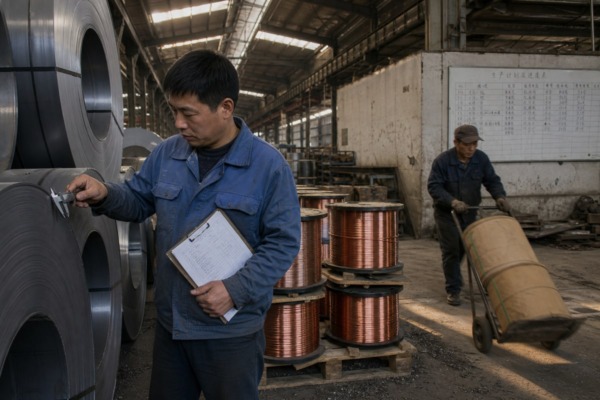
The biggest mistake buyers make is treating the sticker price as the deal. It is not. Suppliers price at the project level. They look at your region, your project type, and how much competition they feel. If they sense you have no alternative, the quote rises. So your first job is homework, not talking.
Know the Market Before You Quote
Market conditions decide how hard you can push. In Europe, offshore turbine selling prices 1 reportedly rose 40–45% since 2020, while manufacturing costs rose only 20–25%. That gap tells you margin exists — and margin can be negotiated. It also reflects supply concentration: with GE Vernova pausing new offshore orders, Siemens Gamesa and Vestas effectively supply most of that market, which weakens buyer leverage there. China looks very different. Persistent price competition has pushed onshore pricing down, with one 2026 market report projecting roughly 1,400–1,600 yuan/kW in 2025 and 1,500–1,800 yuan/kW in 2026–2027, while offshore sits around 2,500–3,000 yuan/kW.
| Factor | Why It Moves the Price | Your Action |
|---|---|---|
| Regional competition | Tier 1 OEM suppliers price by geography and buyer profile | Benchmark quotes across regions |
| Scope definition | Vague lines between turbine supply and Balance of Plant costs hide charges | Define scope in writing |
| Raw materials | Steel and copper drive the cost base | Run a should-cost analysis |
| Supplier backlog | Full factories discount less | Time your tender to soft periods |
| Grid connection requirements | Unclear responsibility creates disputes | Assign it explicitly in the contract |
Price the Whole Project, Not the Nameplate
Some buyers argue the lowest upfront price is the best deal. I disagree, and so do most experienced developers. The right metric is the Levelized Cost of Energy 2. A cheap turbine with weak performance, thin service coverage, or a soft warranty raises lifetime cost. Compare offers on total value delivered per unit of energy, then negotiate.
How Can I Use Order Volume and Long-Term Contracts to Get Better Pricing?
Last spring, a US procurement manager asked me for a discount on her first trial container. I said yes — because her forecast showed twelve containers a year.
Use order volume and long-term contracts by requesting tiered pricing at set quantity breaks, converting trial orders into committed bulk orders, signing multi-year framework agreements that guarantee the supplier production stability, and bundling multiple project sites into one procurement pipeline for volume discounts.
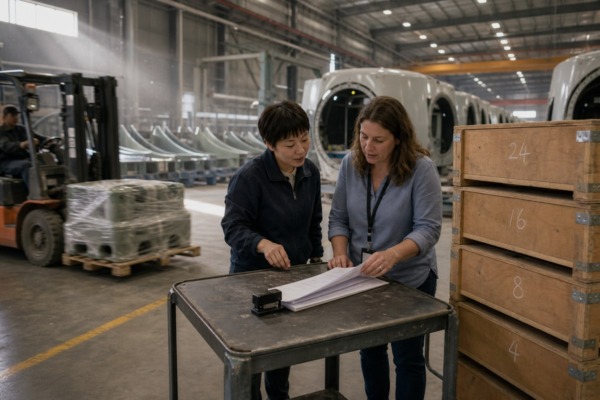
This is the part of the negotiation I know best, because buyers use these exact levers on our factory. Volume and commitment are the two things every supplier will trade price for. Here is how to use them properly.
Ask for a Tiered Quote
Never accept a single flat price. Ask the supplier to quote a ladder: one price at the trial quantity, a lower price at the first volume break, and lower prices again at higher breaks. In my own business, we call this 阶梯报价 — tiered quotation — and we prepare one for every serious buyer. A tiered quote does two things. It shows you the supplier's real cost curve. And it puts your future growth on the table as a bargaining chip today.
| Commitment Level | What You Offer | What You Ask For |
|---|---|---|
| Trial order | A real order, fast decision | Discounted or waived sample and tooling fees |
| First bulk order | Confirmed volume after trial approval | The first tier-price break |
| Annual commitment | Forecast volume across the year | Deeper tier pricing plus priority production slots |
| Multi-year framework agreement | Production stability for the supplier | Reduced margin, locked pricing formula |
Turn Trial Orders Into Leverage
Tell the supplier plainly: the trial order is the audition, and the bulk order is the prize. On my side of the table, I routinely waive sample fees and cut mold or prototyping charges when a buyer credibly links the trial to a larger program. Ask for the same. Sample fees, prototyping fees, and setup charges are almost always negotiable when future volume is visible.
Framework Agreements Beat One-Off Tenders
A bulk procurement strategy works best when you move from project-specific tenders to multi-year framework agreements. You give the supplier stable factory loading; the supplier gives you thinner margins. Bundling multiple project sites into one procurement pipeline multiplies this effect. Some large buyers go further and propose creative swaps, such as supplying low-cost renewable power to the supplier's factories in exchange for a direct unit-price reduction.
What Negotiation Strategies Help Me Balance Low Costs With Strict Quality Control?
Our QC team once rejected a full batch of blades over a color deviation most buyers would miss. That decision cost us money but kept a five-year client.
Balance low cost with quality by keeping multiple qualified vendors in competition, tying payments to inspection and commissioning milestones, demanding turbine performance guarantees and availability warranties in writing, and bundling supply agreements with O&M service agreements so suppliers stay accountable after delivery.
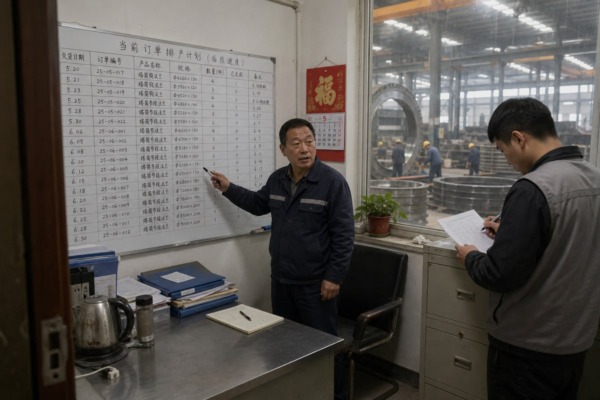
Cheap and good are not opposites — but only if the contract makes quality enforceable. From what I see across export deals, the buyers who get both follow a repeatable playbook.
- Run a structured tender with at least two or three qualified vendors. Transparent benchmarking prevents technical lock-in and drives aggressive bidding. Score suppliers on commercial and technical criteria together, not price alone.
- Tie money to proof. Typical structures start with a down payment, then release milestone payments at shipment, site delivery, commissioning, system testing, and final sign-off. Every payment gate is a quality gate. A supplier who has not been fully paid answers the phone.
- Put performance in writing. Turbine performance guarantees, availability guarantees, and clear liability caps matter as much as price. Weak warranty language is a discount you pay back later, with interest.
- Bundle the supply agreement with service. Combining the Turbine Supply Agreement with long-term O&M service agreements optimizes the Levelized Cost of Energy and keeps the supplier invested in how the machines actually run. Ask for spare parts packages and extended warranties as concessions — they are often worth more than a small headline discount.
- Secure your data and your exit. Negotiate full SCADA data sovereignty and unlocked software rights so third parties can service and optimize the fleet. Consider circular economy buy-back clauses that guarantee residual value for blades and rare-earth magnets at decommissioning.
One more point. Align these terms with your project financing terms early. Lenders scrutinize completion obligations and performance guarantees during EPC contract negotiation, and a contract that satisfies your bank strengthens your credibility — and your leverage — with the supplier.
How Do I Negotiate Shipping and Packaging Terms to Avoid Unexpected Costs?
A crushed carton taught me more about export packaging than any manual. One damaged shipment can erase the margin from three good ones, whatever the product size.
Negotiate shipping and packaging by fixing the Incoterm and delivery point in writing, assigning transit damage risk clearly, agreeing packaging specifications and pre-shipment inspection rights, capping logistics surcharges with risk-sharing clauses, and considering self-performed last-mile logistics to strip out supplier delivery markups.
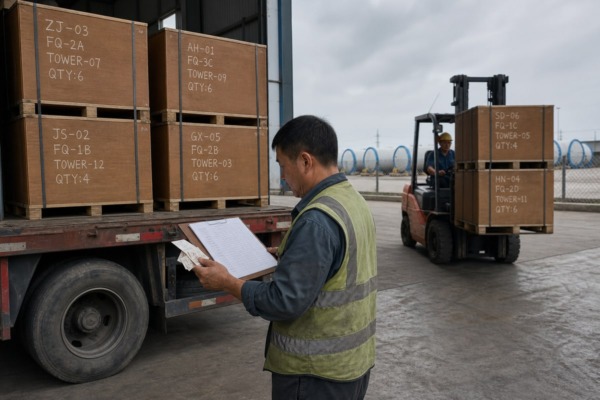
Shipping is where good deals quietly die. Turbine blades, towers, and nacelles are oversized cargo, and supply chain logistics 3 for them involve ports, cranes, escorts, and specialized trailers. Every unclear line in the contract becomes a surcharge later. I have shipped containers to the United States, South America, and Europe for years, and the pattern never changes: what is written survives, what was assumed gets billed.
Fix the Incoterm First
The Incoterm decides who pays and who carries risk at each stage. Choose it deliberately, not by habit.
| Term | Supplier Covers | Your Risk Starts | Best When |
|---|---|---|---|
| EXW | Nothing beyond the factory gate | At the factory | You self-perform all logistics |
| FOB | Inland transport and loading at origin port | On board the vessel | You control ocean freight rates |
| CIF | Freight and basic insurance to destination port | At destination port | You want simplicity, accept markup |
| DDP | Everything to your site | At final delivery | You want one throat to choke |
Strip Out the Logistics Markup
OEMs often add high-risk delivery and port-management overhead to their price. If you have strong local capability, offer to self-perform the specialized last-mile logistics and port handling. That single move can remove a padded risk premium. Also negotiate dynamic risk-sharing clauses for freight inflation, so the supplier cannot bake a worst-case scenario premium into the base price.
Make Packaging a Specification, Not a Hope
Agree packaging standards in the contract: bracing, moisture protection, impact indicators, and labeling. Demand pre-shipment inspection rights and photographic evidence before loading. Define the damage claim process — who inspects, within how many days, and who pays. On our own lines, packaging drawings are approved before mass production begins, and I recommend every buyer require the same discipline from turbine suppliers.
Conclusion
Weak negotiation quietly inflates every wind turbine deal. Build competition, trade volume for tiered pricing, lock quality and logistics terms in writing — and price follows your leverage.
Footnotes
1. Global energy authority providing data on wind power market trends and technology costs. ↩︎
2. Authoritative source for renewable energy cost analysis and global LCOE benchmarking data. ↩︎
3. International organization providing standards for global trade facilitation and supply chain logistics management. ↩︎
More Articles
You might also find these helpful.

What Fire Retardant Certifications Should I Check When Buying Pinwheels?
Cut wind turbine costs with proven negotiation tactics: volume commitments, tiered pricing, and raw material benchmarking that suppliers…
Read More →
How to Verify Authenticity of Test Reports When Purchasing Wind Turbines?
Cut wind turbine costs with proven negotiation tactics: volume commitments, tiered pricing, and raw material benchmarking that suppliers…
Read More →
How to Check if Pinwheel/Windmill Materials Contain Harmful Chemicals?
Cut wind turbine costs with proven negotiation tactics: volume commitments, tiered pricing, and raw material benchmarking that suppliers…
Read More → English
  Spanish
  German
  Arabic