
How to Calculate Landed Cost for Shipping Windmills from China to the US?
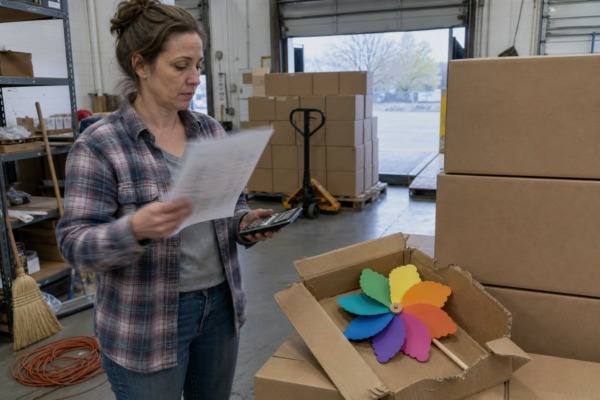
Buyers often ask why their landed cost for shipping windmills from China to the US runs over budget. After years running pinwheel production lines in Zhejiang, I understand exactly why.
To calculate landed cost for shipping windmills from China to the US, add product value, China inland charges, ocean or air freight, cargo insurance, customs duties and clearance fees, and US local delivery. Then divide the total by units shipped to find your true per-piece cost.
The invoice price is only the starting point. Real profit depends on everything that happens between our factory gate and your warehouse door. Below, I break the whole calculation into four practical questions.
What Costs Should I Include When Calculating Landed Cost for Windmill Imports?
Last spring, a US distributor sent me her landed cost sheet. It listed only product price and freight. Half of her real costs were missing from the page.
A complete landed cost for windmill imports includes product value, Chinese domestic and export fees, international freight, cargo insurance, customs clearance charges, import duties, and final US delivery. Buyers should model every CIF or DDU line item, then divide by quantity for per-unit cost.
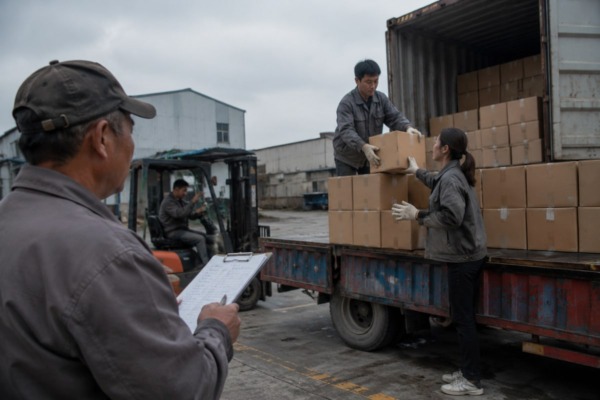
At our factory, we teach every new buyer the same six-part formula. Complete landed cost equals goods value, plus China domestic fees, plus ocean freight, plus insurance, plus customs clearance 1, plus US local delivery. We account for the full CIF or DDU chain, not just the sticker price. Some sources present landed cost as a quick two-line formula. That works for a rough first pass. But if you skip the smaller layers, the "cheap" quote quietly becomes an expensive one.
The Six Cost Buckets
| Cost Bucket | What It Covers | Who Usually Pays Under FOB |
|---|---|---|
| Product value | Pinwheel units, packaging, cartons | Buyer, via invoice |
| China domestic fees | Trucking to port, export docs, origin handling 2 | Seller |
| International freight | Ocean or air freight to US port | Buyer |
| Cargo insurance | Marine insurance, often 0.5%–2% of cargo value | Buyer |
| Customs clearance | Import duties, government fees, customs broker 3age fees | Buyer |
| US local delivery | Drayage, trucking to warehouse | Buyer |
Your Incoterms decide which buckets sit inside the supplier quote. Under EXW, you fund inland transit in China yourself. Under FOB, we cover everything up to the vessel. Under DDP, the seller carries all import risk, which gives you the most cost transparency.
Per-Unit Math
Once you total all six buckets, divide by sellable units. If a shipment of 50,000 pinwheels lands at a given total, that division tells you the real per-piece cost you must beat at resale. I always tell buyers to price from this number, never from the invoice alone.
How Do I Estimate Tariffs and Duties for Shipping Pinwheels from China to the US?
Early in our export business, we shipped a pinwheel order under a vague product description. The clearance delay that followed taught me to respect HS Code classification forever.
To estimate duties on pinwheels, first confirm the HS Code classification, then apply the base MFN duty rate plus any Section 301 tariffs for China-origin goods. Add the Merchandise Processing Fee of 0.3464% and the 0.125% Harbor Maintenance Fee for ocean shipments.
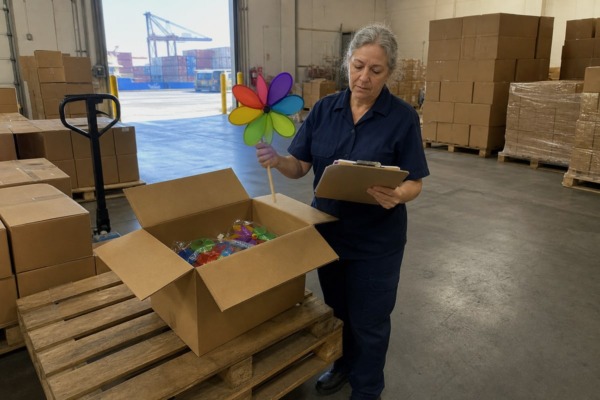
Classification comes first, always. Decorative pinwheels and garden windmill toys sit in a very different tariff line than industrial wind turbines, so do not copy duty advice written for heavy equipment. Our team supplies the exact product description, material breakdown, and intended use to your customs broker before we quote. That small step protects you from misclassification penalties and surprise duty bills. Any duty figure you see online is illustrative until your broker verifies the code against the current schedule.
Tariff Stacking Explained
For China-origin goods, importers must check for tariff stacking. The base MFN rate is only layer one. Section 301 tariffs can add a China-specific surcharge on top, and other tariff layers may apply depending on the current trade rules for your exact HS line. I encourage every buyer to run the full stack check with a licensed broker before signing a purchase order, because the stack changes over time.
Government Fees You Cannot Skip
| Fee | Rate | Notes |
|---|---|---|
| Merchandise Processing Fee (MPF) | 0.3464% of customs value | Capped per entry, with a listed maximum of $634.62 |
| Harbor Maintenance Fee (HMF) | 0.125% of cargo value | Applies to ocean-borne shipments only |
| Customs brokerage fees | Flat fee per entry | Often estimated in the hundreds of dollars, not a percentage |
| Customs bond | Annual or single-entry | Required for formal entries |
The customs value basis matters too. Duties are calculated on the declared value of the goods, so keep your commercial invoice accurate and consistent with your payment records.
Which Shipping Method Gives Me the Best Landed Cost for Bulk Windmill Orders?
Every quarter, we weigh the same trade-off at our Zhejiang warehouse: faster transit or lower ocean freight rates. For bulk pinwheel orders, the answer rarely changes.
For bulk windmill orders, ocean freight delivers the lowest landed cost per unit. LCL suits trial orders under 15 CBM, while a full container gives the best rate for large volumes. Air freight only makes sense for urgent, small replenishment shipments.

Here is the comparison I walk every procurement manager through before booking:
| Method | Best For | Cost Level | Typical Transit |
|---|---|---|---|
| Ocean FCL | Large seasonal orders, full 20ft/40ft loads | Lowest per unit | Slowest, plan weeks ahead |
| Ocean LCL | Trial orders, smaller volumes | Low, but with per-CBM handling fees | Slow, plus consolidation time |
| Air freight | Urgent restocks, promotions | High | Days, not weeks |
| Express courier | Samples, tiny top-ups | Highest per kilo | Fastest |
Pinwheels are light but volumetric. The long wooden dowels and shaped petal blades eat cubic meters fast, so carriers charge on chargeable weight, which usually means volume for our product. That is why packing strategy matters as much as carrier choice.
Why Knock-Down Packing Wins
Industrial wind turbine blades need breakbulk shipping 4 or out-of-gauge flat racks, and those specialized moves carry heavy handling fees. Decorative windmills avoid all of that, and we push the advantage further with a knock-down approach. We ship many orders as flat DIY kits: die-cut petal pieces stacked flat, dowel sticks bundled, and assembly pins packed separately. On our production line, this modular packing cuts carton volume dramatically compared with pre-assembled pinwheels. Fewer CBM means fewer containers, and fewer containers mean a lower landed cost per unit. It also reduces transit damage, since assembled pinwheel heads are the most fragile part of the load. If your retail model allows kit-format products, ask your supplier to quote both packed formats and compare the freight difference before you decide.
How Can I Avoid Hidden Fees That Increase My Landed Cost from Chinese Suppliers?
During a packing audit last year, our QC team caught oversized cartons that would have inflated a client's chargeable weight. Hidden costs usually start with details that small.
Avoid hidden fees by requesting all-inclusive quotes, confirming Incoterms in writing, verifying chargeable weight before booking, and budgeting for terminal handling, drayage, customs brokerage, and demurrage charges. A written cost checklist agreed with the supplier prevents most surprise invoices.

Hidden fees are rarely secret. They are simply line items nobody asked about before booking. In our experience exporting to the US, South America, and Europe, the same handful of charges surprise buyers again and again.
The Fees Buyers Forget Most Often
| Hidden Fee | Why It Appears | How to Prevent It |
|---|---|---|
| Terminal handling charges | Port operators bill container moves at origin and destination | Ask for quotes that state THC explicitly |
| Drayage | Container trucking from US port to warehouse is quoted separately | Get door delivery pricing upfront |
| Demurrage and detention | Containers sit at congested ports past free days | Buffer extra days using current port congestion data |
| Brokerage add-ons | Extra entry lines, ISF filing, disbursement fees | Request a full fee schedule per entry |
| Carrier surcharges | Fuel, peak season, and emerging low-emission fuel fees | Ask carriers which surcharges apply this quarter |
| Currency conversion loss | Exchange-rate swings between deposit and balance payment | Fix currency terms in the contract |
Use Incoterms as Your Shield
Your Incoterm choice controls exposure. EXW pushes China inland trucking, export docs, and origin handling onto you, often through an unfamiliar agent. FOB keeps origin costs on the seller, which is what we recommend for most distributors. DDP offers the fullest transparency because the seller carries all import steps, though you should still see the fee breakdown. I also advise adding a small contingency reserve to every landed cost model. Freight markets move, demurrage windows tighten, and a modest buffer keeps one delayed container from erasing the margin on an entire seasonal program.
Conclusion
Landed cost decides your real margin, and guessing it wrongly hurts. Model all six cost buckets, verify duties, choose ocean freight wisely, and lock every fee in writing.
Footnotes
1. The WTO Trade Facilitation Agreement aims to expedite the movement, release, and clearance of goods across borders. ↩︎
2. Official ICC rules defining global trade terms for delivery and risk transfer between buyers and sellers. ↩︎
3. Official CBP guidance on the role and licensing requirements for customs brokers in the United States. ↩︎
4. Explains specialized breakbulk shipping used for oversized cargo like industrial wind turbine blades. ↩︎
More Articles
You might also find these helpful.
What Fire Retardant Certifications Should I Check When Buying Pinwheels?
Calculate landed cost for shipping windmills from China to the US by summing product value, China fees, freight,…
Read More →
How to Verify Authenticity of Test Reports When Purchasing Wind Turbines?
Calculate landed cost for shipping windmills from China to the US by summing product value, China fees, freight,…
Read More →
How to Check if Pinwheel/Windmill Materials Contain Harmful Chemicals?
Calculate landed cost for shipping windmills from China to the US by summing product value, China fees, freight,…
Read More → English
  Spanish
  German
  Arabic