
How to Tell if a Low Wind Turbine Price Signals a Quality Risk?
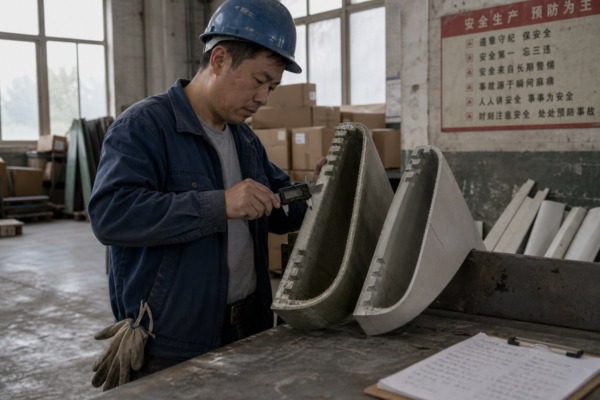
A low wind turbine price just landed in your inbox, far under every competitor. Tempting? On our Zhejiang production line, we see daily how underpricing hides shortcuts buyers pay for later.
A low wind turbine price signals quality risk when it falls far below market benchmarks without a clear explanation. Check for downgraded materials, missing IEC 61400 certification, weak warranty terms, and absent after-sales support. Legitimate discounts come from scale and efficiency; suspicious ones come from hidden cuts.
Here is my honest position, built from years of factory-floor experience: when a price sits far below the market average, be alert. In most cases, something was sacrificed — downgraded materials, shrunken processes, skipped quality inspection, or inferior raw inputs. A turbine must perform for 20 to 25 years. So the real question is never just the sticker price. It is whether the machine will deliver reliable energy 1 at the lowest total cost over its life. The sections below give you a practical way to test any suspiciously cheap quote.
What Materials and Components Should I Check to Spot a Cheap Wind Turbine Build?
Last summer, our QC team rejected mylar pinwheel film that faded after weeks of sun testing. If UV degrades a toy blade, imagine what it does to turbine blades.
Check blade material first: unreinforced thermoplastic blades degrade under UV and delaminate. Verify bearings are specialized high-load wind bearings, not standard industrial ones. Compare rated power against rotor swept area, and confirm redundant safety systems like mechanical furling and secondary aerodynamic braking exist.
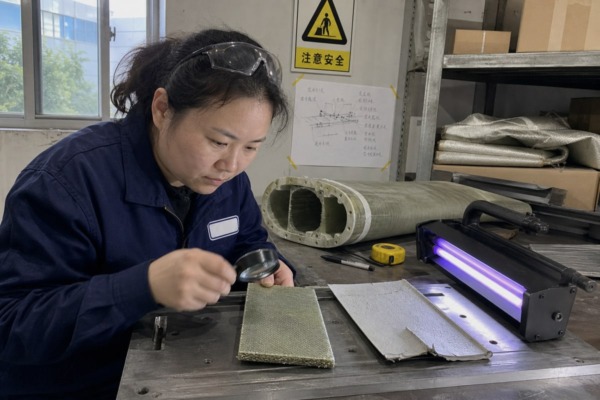
Material downgrades are the most common way a supplier hides cost cuts, and I say that as someone who runs a factory where material choice is the whole game. Even at our small scale, swapping one film grade for a cheaper one changes how long a product survives outdoors. At turbine scale, the stakes multiply.
Blades and Rotor Geometry
Turbine blade durability starts with reinforcement. Unreinforced thermoplastic blades are cheap to mold, but they are vulnerable to UV degradation and structural delamination within a few seasons. Ask what resin system 2 and fiber reinforcement the blades use, and ask for weathering test data. Then do the physics check: compare the advertised rated power against the rotor's swept area. If the rated power looks too high for the rotor diameter, the spec sheet is marketing, not engineering, and your annual energy production will disappoint.
Bearings, Drivetrain, and Safety Systems
Cheap builds often integrate standard industrial bearings instead of specialized high-load wind bearings. That single swap drives up component failure rates dramatically. Also confirm redundancy: mechanical furling, secondary aerodynamic braking, and active damping against aero-elastic resonance.
| Component | Cheap-Build Warning Sign | What a Quality Build Uses |
|---|---|---|
| Blades | Unreinforced thermoplastic, no UV data | Fiber-reinforced composite with weathering reports |
| Bearings | Standard industrial catalog bearings | High-load, wind-rated bearings |
| Braking | Single electrical brake only | Mechanical furling plus aerodynamic backup |
| Structure | No resonance analysis | Active damping against aero-elastic resonance |
| Rating | Power inflated vs. swept area | Power curve matched to rotor diameter |
How Can I Verify a Supplier's Certifications Before Trusting Their Low Price?
A procurement manager in the US messaged us on WhatsApp: your price is low — prove it. She was right. Paper claims are cheap; verified certificates are not.
Request IEC 61400 certificates with certificate numbers, then verify them directly with the issuing body. Confirm the wind class rating matches your site, check structural integrity testing reports, review grid connection compliance including inverter THD limits, and reject suppliers offering only self-issued documents.

We serve buyers in the United States, South America, and Europe, and every serious one asks for documentation before price talk gets far. That instinct is correct, because quality infrastructure and IEC certification standards are the strongest defense against failure-prone products. A supplier whose low wind turbine price is honest will hand over verifiable proof without hesitation.
The Five-Step Verification Process
- Ask for the full IEC 61400 type certificate, including the certificate number and issuing body. Non-compliance with independent IEC 61400 safety and performance certification is a hard stop.
- Contact the certifying body directly and confirm the certificate is valid, current, and issued for the exact model and variant you are buying — not a sibling product.
- Check the wind class rating on the certificate against your site's wind conditions. A Class III machine on a Class I site will fail early no matter the price.
- Request structural integrity testing and type-test reports, including blade fatigue and load testing performed by an independent lab.
- Review grid connection requirements. Ask for inverter test data showing total harmonic distortion within your grid operator's limits, because high THD can destabilize local grid connections and trigger compliance penalties.
If a supplier resists any of these steps, that resistance is your answer. In my experience, factories with real test data love showing it, and factories without it change the subject.
What Red Flags Should I Watch for During Sampling and Factory Communication?
We learned early in our export business that a perfect sample means little. What matters is whether the factory can repeat that quality across ten thousand units.
Watch for golden samples that outclass production units, evasive answers on component failure rates, refusal of third-party inspection, missing line-item scope documents, unencrypted turbine firmware, and no documented spare-parts supply chain. Each signals a factory cutting corners under price pressure.
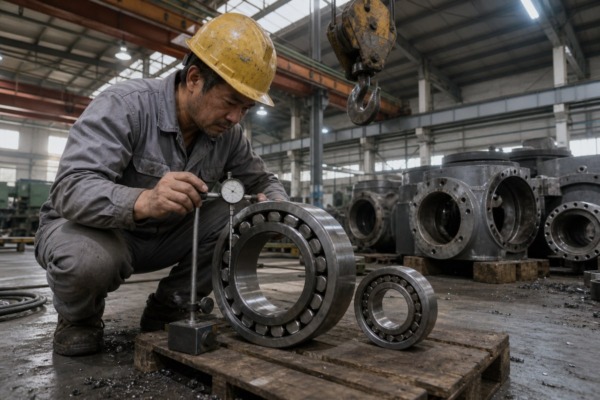
Running OEM and ODM projects for global wholesalers taught me that communication style predicts production quality. A factory that answers slowly, vaguely, or defensively before you pay will not improve after you pay.
The Price-War Context Behind the Quote
Understand where aggressive quotes come from. In China's onshore turbine market, bid prices fell from over 4,000 yuan/kW in 2020 to around 1,000 yuan/kW at the low end in early 2024, with monthly averages dipping below 1,300 yuan/kW. Industry reporting directly links that price war to squeezed margins and rising quality complaints 3. When margins get that thin, some firms cut materials, process control, testing, or R&D. So a rock-bottom quote may not reflect efficiency at all — it may reflect underbidding that later surfaces as missed performance guarantees or higher component failure rates.
Red Flags Versus Reasonable Behavior
| Red Flag | What It Likely Means | What You Should Do |
|---|---|---|
| Sample outperforms production spec | Golden sample, not mass output | Insist on random-batch third-party inspection |
| No line-item scope of supply | Hidden exclusions inflate real cost | Demand a full itemized quote |
| Vague answers on failure rates | No reliability data exists | Request field references for the same model |
| Unencrypted IoT controller firmware | Cyber-attack vulnerability | Require encrypted firmware and update policy |
| No spare-parts supply chain evidence | Long downtime after any failure | Verify parts stocking and after-sales technical support |
One more tip from our own sampling routine: ask the same technical question twice, a week apart, to two different contacts. Consistent answers signal real engineering depth. Contradictions signal a sales desk guessing.
How Do I Compare Price Against Warranty and After-Sales Support to Avoid Hidden Costs?
Every quarter we weigh the same trade-off in our own pricing: shave cents from materials, or protect our reputation. Turbine suppliers face that choice at far bigger scale.
Compare quotes on total cost of ownership, not sticker price. Add expected maintenance and repair costs, downtime losses, and warranty gaps to each bid. Research shows lifetime failure risk can reach 52% of initial capex, so weak manufacturer warranty coverage erases any upfront saving.
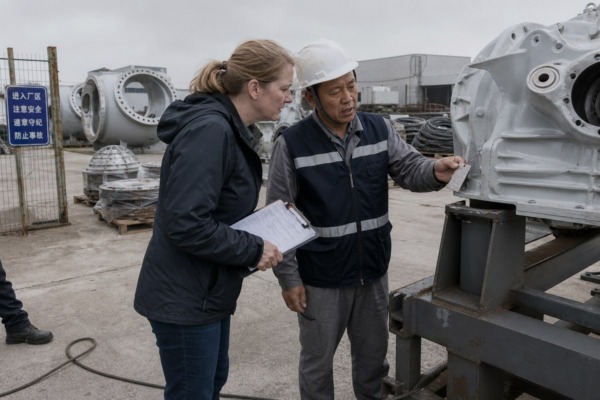
Let me address the strongest objection first, because I hear it from buyers constantly: is not wind a mature industry where prices legitimately fall? Yes — manufacturing learning, bigger machines, and better supply chains have driven real cost reductions. One LBL summary puts turbine prices around $775 to $850 per kW as a US-market reference point. A quote below your other bids is not automatically suspect. But that is exactly why the burden of proof matters. A legitimate discount comes with an explanation: higher volume, simpler scope, local content, or a strategic push for market share. A dangerous discount comes with silence.
Run the Lifecycle Math
The levelized cost of energy 4, not the purchase price, decides whether you win. One study estimates the 95% lifetime value-at-risk of a turbine at 52% of initial capex, and a broader review names reliability and O&M inefficiency as the main drivers of downside risk. A high ratio of unplanned maintenance costs relative to initial capital investment is the classic signature of a cheap build.
| Factor | Ultra-Cheap Quote | Fairly Priced Quote |
|---|---|---|
| Upfront price | Lowest | Moderate |
| Manufacturer warranty coverage | Short, broad exclusions | Long, availability guarantee |
| Power curve guarantee | None or unenforceable | Guaranteed with penalty terms |
| After-sales technical support | Undefined | SLA with response times |
| Spare parts | No stocking plan | Documented supply chain |
| 20–25 year outcome | Downtime eats savings | Predictable levelized cost of energy |
Weigh warranty length, exclusions, availability guarantees, power-curve penalties, and remote-monitoring support as cash values. When you price those terms honestly, the cheapest quote rarely stays cheapest.
Conclusion
A low wind turbine price is a question, not an answer. Demand the explanation, verify certifications, test the warranty, and model lifecycle cost. Cheap hardware that fails is expensive energy.
Footnotes
1. International agency providing global data and policy advice on the transition to reliable renewable energy systems. ↩︎
2. Official U.S. government resource for technical information on wind energy components and manufacturing technologies. ↩︎
3. Global energy authority providing reports on market trends and industrial challenges in the renewable sector. ↩︎
4. Primary research institution for the wind energy market data and levelized cost analysis cited in the text. ↩︎
More Articles
You might also find these helpful.

What Fire Retardant Certifications Should I Check When Buying Pinwheels?
Learn how to spot quality risks behind a low wind turbine price, from missing IEC 61400 certification to…
Read More →
How to Verify Authenticity of Test Reports When Purchasing Wind Turbines?
Learn how to spot quality risks behind a low wind turbine price, from missing IEC 61400 certification to…
Read More →
How to Check if Pinwheel/Windmill Materials Contain Harmful Chemicals?
Learn how to spot quality risks behind a low wind turbine price, from missing IEC 61400 certification to…
Read More → English
  Spanish
  German
  Arabic