How Do I Explain Pinwheel Material Requirements to a Supplier?
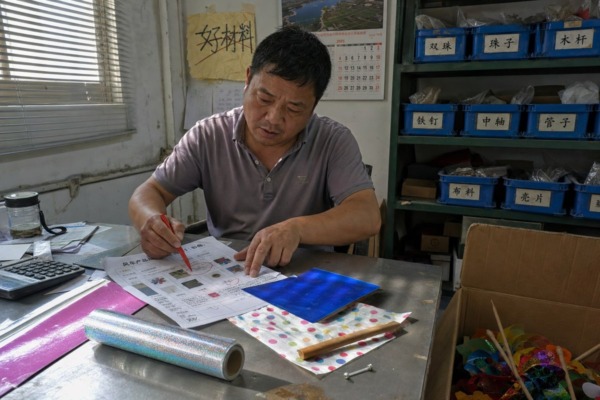
Pinwheel material requirements are where most sourcing deals go wrong. On our production line in Zhejiang, I see vague briefs cause wrong quotes, failed samples, and painful returns every month.
To explain pinwheel material requirements to a supplier, specify each component separately: blade material (PP, PET, fabric, or metal), stick type, hub fastener, thickness in microns, UV resistance, print method, and safety standard. Never ask for “good materials” — send a complete component-by-component specification instead.
That answer sounds simple. But each of those items has details that decide whether your order succeeds or fails. Let me walk you through all of them, one by one.
What Terminology Should I Use to Specify Pinwheel Materials Clearly?
A buyer once asked our factory for "plastic pinwheels." We make four kinds of plastic pinwheels. That single word cost us two weeks of back-and-forth emails before production could even start.
Use exact material names for each component: PP (polypropylene) or PET film for blades, polyester fabric for soft petals, iron or wire for metal parts, and wooden dowel or plastic stick for supports. Specify blade thickness in microns and name the hub fastener type explicitly.
A pinwheel is not one material. It is a small build system with three or four different materials working together. In our catalog alone, we run PP plastic 1, PET plastic, polyester fabric, and iron components — sometimes all in the same product. If you only name one material, your supplier has to guess the rest. Guessing is where quality problems begin.
Name the Blade Substrate Precisely
The blade is the part that spins, so start there. Use real polymer resin grades and industry terms, not vague descriptions:
| Vague Request | Precise Specification |
|---|---|
| "Plastic pinwheel" | "PP blades, 250-micron sheet, glossy finish" |
| "Shiny film pinwheel" | "PET film 2 blades, 200 microns, metallized silver" |
| "Soft flower pinwheel" | "190T polyester fabric petals, dot print, heat-cut edges" |
| "Sturdy stick" | "Natural wooden dowel, 5mm diameter, 40cm length" |
| "Metal parts" | "Iron axle pin, zinc-plated, with nylon washer" |
Thickness matters just as much as the polymer name. International buyers often mix up mils, microns, and gauge. We quote everything in microns to avoid "gauge confusion." Ask your supplier to confirm the unit in writing.
Separate the Stick and Hub From the Blades
The support stick and center hub are usually different materials from the blades. Our layered rainbow pinwheels, for example, use PET blades, a natural wooden stick, and a wooden bead hub over an iron pin. Each part needs its own line in your bill of materials. If you skip the hub, you may receive an exposed metal pin on a product meant for children. Spell out whether you want a brad, a plastic rivet, a screw with washer, or a covered bead hub. That one line protects both spin quality and safety.
How Do I Communicate Weather Resistance Requirements for My Pinwheels?
Last spring, a US distributor returned a container claim to us: garden pinwheels faded after six weeks outdoors. The root cause was simple. Nobody had specified UV stabilizers in the original brief.
State the intended environment first: indoor décor, covered patio, or full outdoor garden use. Then require UV stabilizers in the resin, moisture-resistant materials or coatings, an expected outdoor lifespan in months, and rust protection on any iron or wire components.
Suppliers cannot read your customer's mind. A pinwheel sold as a garden stake — like our sunflower design on a wooden dowel — lives in sunlight, rain, and soil moisture. A party pinwheel lives on a table for one afternoon. Both can use PET film, but only one needs UV resistance built into the resin. Your job is to tell the supplier which world the product lives in.
Define the Use Environment in Plain Terms
I recommend a short, direct statement in your inquiry: "This product will be displayed outdoors in direct sun for at least three months in summer." That single sentence changes the material choice, the ink system, and the price. Without it, a factory will quote the cheapest standard sheet, because that is what wins the quote comparison.
Match the Material to the Exposure
Here is how the common blade materials compare for outdoor duty:
| Material | Sun Fading | Rain / Moisture | Typical Outdoor Life | Cost Level |
|---|---|---|---|---|
| Coated paper / cardstock | Poor | Very poor | Days to weeks | Lowest |
| PP plastic | Fair (good with UV additives) | Good | 1–3 seasons | Low |
| PET film | Good with UV stabilizers | Very good | 2–4 seasons | Medium |
| Polyester fabric | Good with treated dyes | Good, dries fast | 1–2 seasons | Medium |
| Iron / metal | Excellent shape retention | Needs plating or rust risk | Multiple years | Highest |
Also cover the hidden parts. Wooden dowels can swell in wet soil. Iron pins can rust and streak the blades. Ask for zinc plating or a nylon washer at the axle. In our experience exporting to the US and Europe, these small callouts prevent most return claims. Finally, ask for tensile strength and weathering data on the material data sheet 3, so the promise is documented, not verbal.
What Details Should I Include About Color Fastness and Printing Materials?
Color is the first thing a retail customer sees on a pinwheel. It is also the first thing that fails when the printing spec is missing from the purchase order.
Specify the print method (offset, silk screen, or heat transfer), Pantone color codes, an ink adhesion test such as the ASTM D3359 cross-hatch test, fade resistance duration, and non-toxic ink certification. Require a pre-production printed sample for color approval before mass production.
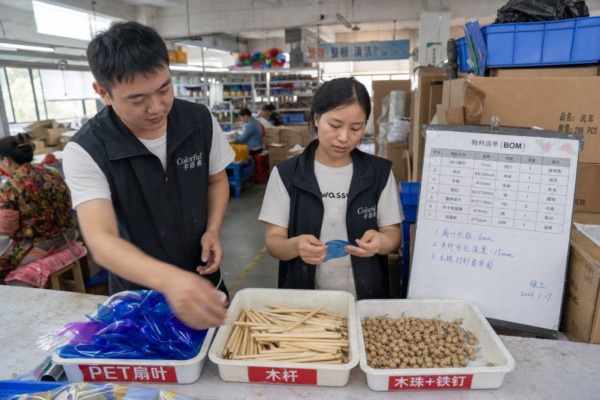
When we developed our dot-patterned fabric flower pinwheels with the bee and ladybug centers, the buyer sent us exact Pantone references for the green, yellow, pink, and orange petals. That brief was a pleasure to work with. Production matched the mockups on the first sample round. Compare that to a brief that says "bright colors" — every factory interprets that differently, and disputes follow.
Lock Down Colors Before Production
Cover these five points in writing:
- Pantone codes for every color, not screenshots. Screens shift colors; Pantone does not.
- Print method matched to the substrate. Offset works for PET film. Heat transfer or dye sublimation suits polyester fabric. Silk screen suits thicker PP sheet.
- Ink adhesion standard. Request a cross-hatch tape test 4 so printed graphics do not peel when blades flex in the wind.
- Fade resistance. Tie this to your weather requirement: "printed colors must not visibly fade within one outdoor season."
- Ink safety. For children's items, require non-toxic inks and RoHS compliance 5 covering heavy metals in coatings.
Approve a Physical Sample, Not a PDF
Digital proofs cannot show how ink sits on glossy PET versus woven polyester. We always ship printed pre-production samples during prototype development, and I advise every buyer to demand the same. Check the sample outdoors in sunlight, because colors read differently under shop lights. Then have the supplier keep a signed "golden sample" on file. During mass production, our quality assurance protocols 6 compare each batch against that retained sample. This one habit resolves nearly every "the color is wrong" dispute before it starts, because both sides agreed on a physical reference, not an interpretation.
How Can I Verify My Supplier Understands My Material Specifications Before Production?
Confirmation is cheap; rework is expensive. Over years of running OEM projects for wholesalers, I have learned that a supplier repeating your spec back to you is worth more than a fast quote.
Verify understanding by requiring a written spec confirmation, a complete bill of materials, pre-production samples tested for spin and durability, a material data sheet for each component, and a signed golden sample. If the supplier cannot restate your requirements clearly, do not proceed.
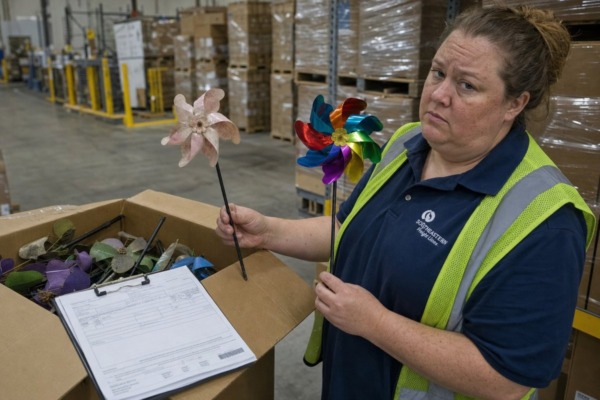
A quote that arrives suspiciously fast often means the factory skipped reading your technical specifications. Slow down the process on purpose. Verification is a sequence, and each step catches a different type of misunderstanding before money is committed.
Follow a Five-Step Verification Sequence
- Request a spec echo. Ask the supplier to restate your requirements in their own words: blade material, thickness, hub type, stick, print, and safety standard. Gaps show up immediately.
- Review the bill of materials. Every component should be listed with its material, grade, and dimensions. A missing washer or unnamed pin material is a warning sign.
- Collect documentation. Ask for a material data sheet per component, plus test reports for ASTM F963 7 or EN71 if the product is for children, and RoHS compliance where required.
- Test physical samples. Check spin behavior at low airflow, wobble at the hub, blade stiffness, and print adhesion. Blow on it, flex it, leave one on a windowsill in the sun.
- Sign the golden sample. Both sides keep an identical approved unit as the reference for mass production and inspection.
Ask Questions That Reveal Real Capability
Some questions expose whether a factory truly controls its process:
| Question to Ask | What a Good Answer Includes |
|---|---|
| "How do you test rotation?" | A defined check for wobble, binding, and spin at low wind speed |
| "What are your manufacturing tolerances at the hub?" | A specific clearance figure preventing blade-to-hub friction |
| "How do you control color between batches?" | Retained golden samples and Pantone checks per run |
| "What is your defect inspection method?" | AQL-based sampling per carton, not "we check everything" |
| "Can you provide low-friction hub options?" | Named materials like nylon or POM washers, not "yes" |
On our own line, we welcome these questions. Serious factories do, because clear specs protect both sides. If a supplier dodges them or answers only with "no problem," treat that as your final warning before the deposit.
Conclusion
Vague pinwheel briefs cause wrong quotes, faded products, and returns. Specify every component, demand documentation, test samples, and sign a golden reference — clarity before production saves money after it.
Footnotes
1. Explains the polymer chemistry and properties of polypropylene commonly used for pinwheel blades. ↩︎
2. Background on PET material properties relevant to durability and UV resistance choices. ↩︎
3. OSHA’s hazard communication standard governs material data sheet requirements for safety documentation. ↩︎
4. ASTM publishes standardized adhesion test methods like the cross-hatch tape test cited here. ↩︎
5. Defines the regulatory standard restricting hazardous substances in manufactured components and inks. ↩︎
6. Comprehensive overview of the international standard for quality management systems and protocols. ↩︎
7. Official US toy safety standard referenced for testing children’s product materials. ↩︎
More Articles
You might also find these helpful.

¿Qué certificaciones de resistencia al fuego debo verificar al comprar molinetes?
Stop guessing on pinwheel material requirements. Learn the exact terms for blades, sticks, and hubs to prevent failed…
Read More →
¿Cómo verificar la autenticidad de los informes de prueba al comprar turbinas eólicas?
Stop guessing on pinwheel material requirements. Learn the exact terms for blades, sticks, and hubs to prevent failed…
Read More →
¿Cómo comprobar si los materiales de los molinetes contienen químicos dañinos?
Stop guessing on pinwheel material requirements. Learn the exact terms for blades, sticks, and hubs to prevent failed…
Read More →12 respuestas a “How Do I Explain Pinwheel Material Requirements to a Supplier?”
Deja un comentario
Lo siento, debes estar conectado para publicar un comentario.
 English
  Spanish
  German
  Arabic
[…] buyers hope digital printing will erase custom MOQs. It helps for graphics, but it cannot fix material minimums, die-cutting setup, or assembly line changeovers. Our production line still needs about the same […]
Thank you for your comments! Totally understand buyers’ expectation for lower custom MOQs with digital printing. While digital printing brings great flexibility for graphics, it can’t eliminate minimum requirements for raw materials, die-cut setup costs and assembly line switching. Our overall production setup still requires similar minimum order quantities for custom orders.
[…] Southwest or coastal South America. If returns cite fading, cracking, or rust, you may need custom fabrication materials and weather-resistant finishes rather than a new […]
Great tip! We upgraded materials and added weather-proof coatings for South American coastal orders to avoid fading, cracking & rust. Custom anti-rust materials are supported too~
[…] the exact thing shoppers want to verify: the vividness of the pinks, yellows, and blues, and the quality of the plastic film. Transparent product showcasing, through a clear bag or a generous window cutout, lets customers […]
Exactly! Buyers mainly check color brightness and plastic film quality. Clear packaging with transparent bags or big windows lets them see the product clearly, which greatly boosts trust. We’ve started using this packaging method already.
[…] tier you choose, get the quality specifications in writing: blade material and thickness, hub type, line strength, and colorfastness 3. On our QC line, we […]
Thanks for the professional advice.
For every tier clients order, we supply formal written specifications: blade material & thickness, hub structure, hanging wire strength and color fastness parameters.
Furthermore, our QC line carries out full inspections to control defects.
Send us a message if you need detailed specification sheets for our pinwheel garlands 📩
[…] every supplier onto the same spec sheet. Ask each one to confirm, in writing: material type and thickness, blade count per pinwheel, pinwheels per string, hub material, cord strength, packaging method, and […]
Thanks for your valuable advice.
We implement unified specification standards across all production lines, and obtain written confirmation of each indicator: material type & thickness, blades per pinwheel, pinwheel quantity per garland, hub material, cord strength, packaging solution and follow-up technical indicators.
If you need our official specification document for reference, feel free to send us a private message anytime 📩
[…] define the exact spec in your RFQ evaluation process. State the string length, pinwheel count, petal material, rope material, quantity, and packaging. When all suppliers answer the same scope, comparison […]
Exactly. Consistent specifications are critical for meaningful supplier comparison. Our factory can provide clear documented specs covering string length, pinwheel count, petal material, rope material, quantity and packaging. We are ready to match your standardized RFQ requirements for direct side‑by‑side evaluation.