
What Questions Should You Ask Wrought Iron Insert Suppliers to Spot Unreliable Ones Early?

A deposit wired to the wrong wrought iron insert suppliers can wreck an entire selling season. In our Zhejiang workshop, we powder-coat metal garden décor, and we’ve seen it happen.
Ask five things: tube wall thickness tolerance, powder coating thickness with salt spray test hours, maximum monthly capacity, compensation terms if bulk goods differ from the sealed sample, and whether they accept third-party inspection. Suppliers who answer vaguely, dodge testing, or refuse inspections should be deprioritized immediately.
Those five questions are not random. They are the ones I use myself when I vet steel tube and coating sub-suppliers for our own production line. Good questions do more than gather information. They expose weak suppliers before your money is at risk. Below, I break the vetting process into four practical areas so you can run the same test on any supplier you are considering.
What Should I Ask About Their Quality Control Process Before Placing an Order?
Last spring, we cut open a rusted garden stake a buyer returned to us for analysis. The coating layer was thinner than office paper. Cheap finishing always tells on itself.
Ask what coating thickness in microns they apply, how many hours their finish survives salt spray testing, how welds and dimensions are inspected before packing, whether inspection records exist per batch, and if they accept third-party verification. Specific numbers signal reliability; vague assurances signal risk.

Quality control is where unreliable wrought iron insert suppliers fall apart fastest. A weak factory can talk about design all day. It cannot fake batch records, coating measurements, or salt spray reports. So push hard here, and push for numbers.
The Coating and Corrosion Questions That Matter Most
Powder coating 1 quality decides how long an outdoor iron product survives. In my own experience running finishing lines for garden décor, multi-stage powder coating outlasts traditional liquid paint by a wide margin, because the film bonds electrostatically and cures into a harder shell. Ask whether the supplier uses zinc galvanizing under the powder layer, or a nano-ceramic topcoat above it for extra UV and chemical resistance. Then ask the question I always lead with: how many hours does your finish pass in salt spray testing 2? A factory that meets real rust resistance standards will quote a number without hesitation. A factory that says "our coating is very good" is telling you it has never tested anything.
Structure, Steel, and Documentation
Coating protects the metal, but the metal itself must be right. High-quality inserts typically use 12–14 gauge steel, because that steel gauge thickness 3 resists warping over time. Domestic, higher-purity steel also resists pitting better than the cheapest imported stock. If the insert includes glass, confirm it is tempered safety glass, not annealed glass that shatters dangerously.
| Question to ask | Strong answer | Weak answer |
|---|---|---|
| Coating thickness? | A specific micron range, measured per batch | "Thick enough" |
| Salt spray hours? | A stated hour figure with test reports | "We never get complaints" |
| Steel gauge? | 12–14 gauge, specified in writing | "Standard material" |
| Weld inspection? | Visual plus dimensional checks, recorded | "Workers check everything" |
| Third-party inspection? | "Yes, any agency you choose" | "Not necessary, trust us" |
That last row is decisive for me. In our factory, we welcome third-party inspection because our records already exist. A supplier who refuses outside verification is hiding something, and I drop them to the bottom of my list immediately.
How Can I Tell If a Supplier Will Meet My Customization Requirements?
Every custom job forces a choice on our line: retool for bespoke scrollwork, or bend a stock design to fit. Only one of those deserves to be called customization.
Ask whether they build bespoke dimensions and scrollwork or only modify stock designs, what tube wall thickness tolerance they hold, how samples are sealed against production, and what compensation applies if bulk goods deviate. True custom fabrication shows in drawings, tooling, and tolerance commitments.

Genuine custom manufacturing is rarer than supplier catalogs suggest. Many wrought iron insert suppliers simply stretch or trim a pre-existing stock design and call it custom. That shortcut creates fit problems later, because the proportions were never engineered for your dimensions. When I quote a custom garden décor project for an overseas distributor, the first thing my engineers produce is a dimensioned drawing, not a price. Ask for the same. If a supplier quotes a custom job in ten minutes with no drawing, they are guessing.
Tolerances Are the Real Test of Custom Capability
My favorite filter question is simple: what wall thickness tolerance can you hold on this tube? A capable factory answers with a range. A trading company reselling someone else’s work usually cannot answer at all. The same logic applies to technical features. If your market needs thermal break technology 4 to stop condensation in cold climates, or internal frame reinforcements to carry the torque of heavy smart lock systems, ask how those are built and tested. For dual-pane glass inserts, ask about sealant chemistry and desiccant capacity, because those two factors decide whether the glass fogs within a ten-year horizon. Buyers selling into premium markets can even ask about Sound Transmission Class ratings, an overlooked metric for noise blocking.
Lock the Sample Before You Pay
Sample-to-bulk variation is one of the biggest risks in this trade. Here is the process I recommend, and the one we follow ourselves:
- Approve a physical sample, then have both sides sign and seal it.
- Write measurable acceptance criteria into the purchase order.
- Ask directly: if the bulk goods differ from the sealed sample, how do you compensate me?
- Get the compensation answer in writing before the deposit.
| What to verify | Why it matters |
|---|---|
| Bespoke drawings, not catalog edits | Confirms real custom fabrication options |
| Stated wall thickness tolerance | Exposes resellers who lack production control |
| Sealed sample procedure | Prevents "beautiful sample, sloppy bulk" |
| Written deviation compensation | Gives you leverage if quality slips |
A supplier who accepts all four points has skin in the game. One who resists any of them is asking you to carry all the risk.
What Questions Reveal Whether a Supplier Has Reliable Shipping and Logistics?
A US procurement manager once messaged us on WhatsApp: her previous supplier went silent for three weeks mid-production. Her retail launch missed Easter. Logistics questions could have prevented that.
Ask their maximum monthly production capacity, realistic manufacturing lead times for your order size, on-time delivery rate, how delays are communicated, whether shipping and handling insurance covers transit damage, and how packaging is drop-tested. Capacity that barely fits your order guarantees delays during peak season.
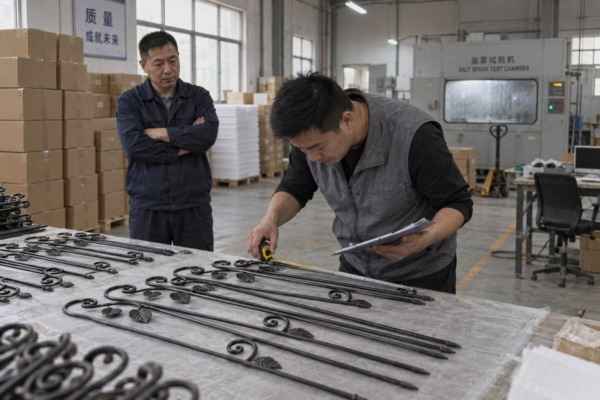
Shipping failures usually start months before the container leaves port. They start when a supplier accepts an order bigger than their real capacity. That is why maximum monthly capacity is one of my five core vetting questions. I ask it early, and I compare the answer against the workforce and machinery I can see in a factory video walkthrough. If a workshop with a handful of welders claims enormous monthly output, the math does not work, and neither will your delivery date.
Lead Times, Milestones, and Honest Scheduling
Unreliable suppliers quote aggressive manufacturing lead times 5 to win the order, then renegotiate reality after your deposit clears. Reliable ones build a schedule with visible milestones: design approval, sample sign-off, production start, pre-shipment inspection, and loading. In our export operation, we send photo updates at each stage, because buyers in the United States and Europe cannot walk our floor. Any serious supplier can offer the same. Ask them to commit to those milestones in the order contract, and ask what their historical on-time delivery rate actually is.
Packaging and Transit Protection
Iron inserts are heavy, and heavy goods punish weak packaging. Damaged corners and scratched coatings are among the most common causes of product returns. Ask these questions before booking anything:
| Question | Red flag answer | What you want to hear |
|---|---|---|
| Maximum monthly capacity? | A vague or inflated number | A figure consistent with their staff and equipment |
| Lead time for my volume? | "Very fast, no problem" | A dated schedule with milestones |
| How are delays reported? | Silence until you ask | Proactive updates at fixed intervals |
| Transit damage coverage? | "The forwarder handles that" | Shipping and handling insurance plus drop-tested packaging |
One more accountability signal worth borrowing from the door industry: suppliers who control their own downstream work, such as in-house installation teams in domestic markets, tend to take fitment and packaging more seriously, because problems come straight back to them.
Which Communication Red Flags Should I Watch for When Vetting a New Supplier?
I learned early in our export business that how a supplier answers matters more than what they answer. Hesitation around test data taught me to read behavior, not brochures.
Watch for vague answers to technical questions, refusal to allow third-party inspection, reluctance to show the factory, dodging test data, unexplained low prices, and pressure to pay deposits fast. Any supplier showing two or more of these behaviors should drop to your lowest priority tier.

Communication is the cheapest audit you will ever run. Every question in this article doubles as a behavioral test, and the pattern of answers matters more than any single reply. When I evaluate a sub-supplier, I apply a simple rule from my own sourcing playbook: if the answers are vague, if they avoid testing, or if they refuse inspection, that supplier is immediately deprioritized. No exceptions, no matter how attractive the quote.
The Behavioral Red Flags, Ranked by Severity
- Refusing third-party inspection. This is the most serious flag. Verification costs the supplier almost nothing if their goods are genuine.
- Dodging test data. "Our quality is famous" is not a salt spray report. Suppliers meeting real rust resistance standards keep documents and share them.
- No factory access. A live video walkthrough takes fifteen minutes. Reluctance to offer one suggests the "factory" may be a trading office.
- Unexplained low pricing. If a quote is far below the market and the supplier cannot explain which process or material makes it possible, something was cut. Usually it is coating thickness or steel gauge.
- Fuzzy warranty coverage details. A supplier who cannot state what is covered, for how long, and how claims are handled has no intention of standing behind defects.
- Deposit pressure. Urgency tactics exist to stop you from finishing your due diligence.
Some buyers argue that decorative inserts are simple products, so heavy scrutiny and paid inspections just add cost. I understand the instinct, because speed and price matter in distribution. But I have watched the opposite math play out: one failed container of rusting, mismatched product costs more than years of inspection fees, and it damages your reputation with your own retail customers. Verification is not overhead. It is insurance you control.
Conclusion
Weak suppliers hide behind vague answers. Strong ones quote tolerances, salt spray hours, capacity, and compensation terms in writing. Ask the five core questions, verify independently, and deprioritize anyone who dodges.
Interested in sourcing the products mentioned in this article? See details and request a quote here:
Footnotes
1. This reference explains the technical process and benefits of powder coating for durable metal finishing. ↩︎
2. ISO standards provide the international framework for salt spray testing to verify metal corrosion resistance. ↩︎
3. ASTM International develops the technical specifications for metal thickness and material quality used in manufacturing. ↩︎
4. The NFRC provides standards for thermal performance and energy efficiency in building components like window inserts. ↩︎
5. The WTO establishes international trade principles that govern manufacturing standards and global supply chain transparency. ↩︎
More Articles
You might also find these helpful.

How to Remotely Verify a Factory's Production Capabilities for Wrought Iron Plug-In Components?
Ask five key questions before wiring a deposit to wrought iron insert suppliers, from coating thickness to inspection…
Read More →
How to Assess a Factory's Production Capacity When Sourcing Wrought Iron Inserts?
Ask five key questions before wiring a deposit to wrought iron insert suppliers, from coating thickness to inspection…
Read More →
How to Verify a Chinese Wrought Iron Supplier's License and Export Qualifications?
Ask five key questions before wiring a deposit to wrought iron insert suppliers, from coating thickness to inspection…
Read More → English
  Spanish
  German
  Arabic