
How to Evaluate Logistics Convenience When Sourcing Windmills From China?
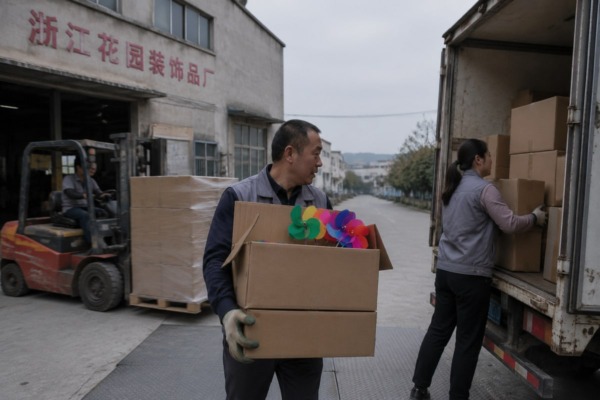
Sourcing windmills from China looks easy until a container lands late with crushed blades. After years running our Zhejiang pinwheel production line, I know logistics decides whether orders succeed.
To evaluate logistics convenience when sourcing windmills from China, compare shipping modes and transit times, verify export packaging standards, measure factory-to-port distance in regions like Zhejiang and Guangdong, confirm customs clearance readiness, and check the supplier’s documented on-time delivery record before placing any order.
Price gets all the attention. Logistics gets ignored. Yet a cheap ex-factory quote means nothing if the goods arrive late or broken. This guide walks through the four questions I encourage every buyer to ask. Each one is drawn from real shipments we have moved to the United States, South America, and Europe.
What Shipping Options Should I Compare Before Sourcing Windmills From China?
Last spring, a US buyer messaged me on WhatsApp asking why her pinwheel quote doubled once freight was added. We spent an hour comparing options from our Ningbo shipping desk.
Compare four options before sourcing windmills from China: sea freight FCL for bulk orders, sea LCL for trial quantities, air freight for urgent restocks, and express courier for samples. Sea freight typically takes 25–40 days; air freight takes roughly 5–10 days depending on destination.

Here is the comparison I sketch out for every new buyer. Start with this table, then match it to your order size and your selling season.
| Shipping Option | Best For | Typical Transit Time | Cost Profile |
|---|---|---|---|
| Sea freight (FCL) | Full-container bulk orders | 25–40 days | Lowest cost per unit |
| Sea freight (LCL) | Trial orders and mixed SKUs | 25–40 days plus consolidation | Low, but with handling fees |
| Air freight | Urgent seasonal restocks | 5–10 days | High; billed by volumetric weight |
| Express courier | Samples and approvals | Fastest option | Highest per kilogram |
Why Decorative Windmills Do Not Need Project Cargo Logistics
There is good news hidden in this topic. Utility-scale wind turbines require breakbulk shipping, oversized cargo handling, and full project cargo logistics for blades that now exceed 100 meters. Decorative garden windmills need none of that. Our pinwheels, pinwheel strings, and hot air balloon decorations pack flat into standard cartons and load into ordinary containers. That keeps your rates predictable and your booking options wide open. No route surveys. No heavy-lift vessels. No special permits.
Incoterms Decide Who Controls the Journey
The next choice is your Incoterms. Under EXW, you handle everything from our factory door. Under FOB, we truck the goods to port and clear export customs, and you control the ocean leg. Under DDP, the supplier manages the whole chain. Most of our repeat distributors choose FOB Ningbo. It gives them rate control while we absorb the inland risk.
Multimodal Transport Still Matters
Even for cartons, the journey is multimodal transport 1: factory truck, port handling, ocean vessel, destination drayage. Every handoff is a chance for delay. Lead time optimization means counting all four legs, not just the ocean transit. I always advise buyers to add buffer days before their retail launch date.
How Can I Make Sure My Windmill Orders Arrive Without Damage?
Years ago, we packed a pinwheel string order in single-wall cartons to save cost. The return photos from Ohio still hang in our QC room as a warning.
Prevent damage by requiring export-grade double-wall cartons, individual poly bags for mylar blades, bundled and padded wooden dowels, carton drop testing, photographed container loading, a pre-shipment inspection, and marine insurance covering the full invoice value plus freight.
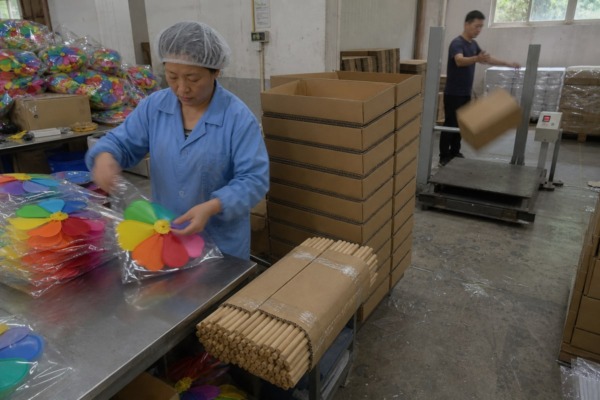
Damage is the pain point I hear about most from procurement managers. Pinwheels look tough, but they combine three fragile elements: thin mylar or plastic petal blades, slender wooden dowel sticks, and small pin-and-grommet assemblies. Each fails in a different way. Blades crease under pressure. Dowels snap when cartons flex. Loose pins scratch printed surfaces. So packaging has to answer all three risks at once.
Here is the process we follow on our own line, and it doubles as a checklist you can send to any supplier:
- Inner protection first. Each pinwheel head slides into its own poly bag so the mylar petals cannot rub or crease against neighbors.
- Bundle the dowels. Wooden sticks get banded in small groups and wrapped, because a loose dowel acts like a lever inside a moving carton.
- Double-wall master cartons. Single-wall board sags under container humidity on a 30-day voyage. Double-wall holds its shape.
- Drop test before approval. We drop sample cartons from waist height on corners and edges. If anything shifts, we redesign the void fill.
- Photograph the loading. Container loading photos prove carton condition and stacking pattern before the seal goes on. They also settle disputes fast.
- Inspect before shipment. A pre-shipment inspection 2, whether third-party or buyer-appointed, catches problems while they can still be fixed.
Marine Insurance Is Cheap Peace of Mind
Even perfect packaging cannot control a rough sea crossing or a dropped container. Marine insurance on the full invoice value plus freight costs very little relative to the order. I consider it non-negotiable, and I tell our buyers the same. Ask your supplier who arranges the policy under your chosen Incoterms, and confirm the coverage in writing before the vessel sails.
What Should I Ask Suppliers About Their Factory Location and Port Access?
Every quote we prepare weighs one hidden number: the kilometers between the factory and the port. That trucking leg quietly shapes cost, transit time, and damage risk.
Ask suppliers to name their nearest seaport, state the factory-to-port distance and trucking time, compare Zhejiang versus Guangdong production regions on inland transport cost, and confirm their customs clearance setup, export licenses, and experience loading containers at that specific port.
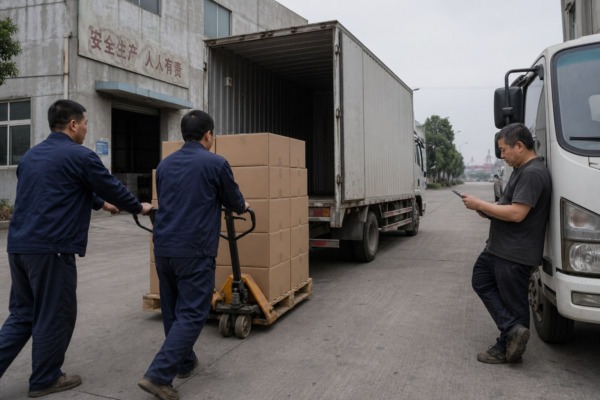
In my own sourcing conversations, I always compare production regions directly. China's decorative windmill supply concentrates in two clusters, and their port access profiles differ. Weigh the factory-to-port distance, then evaluate the domestic trucking cost and transit-time differences between them. That is the core of logistics convenience when sourcing windmills from China.
| Factor | Zhejiang Cluster | Guangdong Cluster |
|---|---|---|
| Nearest major ports | Ningbo-Zhoushan, Shanghai | Shenzhen (Yantian), Guangzhou (Nansha) |
| Port infrastructure | Among the world's busiest container hubs with dense sailing schedules | Deep sailing options, especially for the Americas |
| Typical inland leg | Short-haul trucking for factories near Ningbo | Short-haul within the Pearl River Delta; longer from inland cities |
| Product cluster strength | Pinwheels, festive decorations, small commodity crafts | Plastics, toys, broader consumer goods |
| What to verify | Actual distance to Ningbo or Shanghai, not just the province name | Peak-season congestion and booking backlogs |
Questions That Reveal Real Port Access
Province names can mislead. A "Zhejiang supplier" could sit hours from any terminal. So ask precise questions. Which port do you load from? How long does the truck leg take? Who pays if the truck misses the container cut-off? Our own facility trucks finished cartons to Ningbo port in hours, not days, and that short leg is a genuine cost and reliability advantage we pass to buyers.
Customs Readiness Cuts Hidden Days
Then probe customs clearance capability. Ask whether the supplier or its broker holds Authorized Economic Operator 3 status, because AEO-certified exporters in free trade zones can access expedited "green channel" clearance. Also confirm the HS classification. Decorative windmills are not electricity-generating turbines, so the wind turbine code 850231 does not apply; your pinwheels should classify under toy or decoration headings. A wrong code invites inspection delays and duty disputes.
How Do I Check a Supplier's Track Record for On-Time Delivery?
One late shipment taught me more than a decade of smooth ones. Since then, I tell every buyer to verify delivery history before trusting any promised lead time.
Check a supplier's on-time record by comparing bill of lading dates against contracted ship dates, requesting references from repeat buyers, reviewing third-party inspection reports, asking about peak-season performance, and confirming which freight forwarders they use and how they handle booking delays.
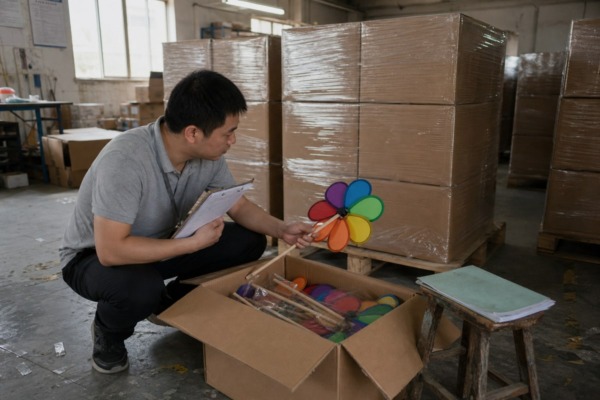
Promises are easy. Paper trails are not. When a distributor evaluates our factory, I actually respect the ones who ask for evidence, because that is exactly what I would do. The documents below tell the real story of any supplier's delivery discipline.
| What to Request | What It Proves | Red Flag |
|---|---|---|
| Past bills of lading | Actual ship dates versus promised dates | Refusal to share or heavy redaction |
| Repeat-buyer references | Consistency across multiple seasons | Only one-time customers offered |
| Third-party inspection reports | QC discipline before container loading | No inspection history at all |
| Pre-season shipment records | Performance during the spring garden rush | Vague answers about busy months |
| Named freight forwarding partners | Stable booking relationships with carriers | A different forwarder on every order |
Documents Do Not Lie
The bill of lading is the single most honest witness. It records when cargo actually sailed. Compare a few of them against the contracted ship dates and you will know within minutes whether "we always ship on time" is true. Pair that with third-party inspection reports, which show whether goods passed QC on schedule or scrambled at the last minute.
Peak Season Is the Real Test
Garden windmills are seasonal. Orders for spring and summer retail pile into the same production window, and that is when weak suppliers slip. Ask directly: how many orders did you ship in your busiest recent quarter, and how many left on the contracted date? Also ask how their freight forwarding partners secure container space when bookings tighten. A supplier with an established forwarder relationship can protect your slot. One who shops for the cheapest rate every time cannot. That difference is the heart of lead time optimization, and it rarely shows up in a price quote.
Conclusion
Cheap quotes hide expensive journeys. Judge shipping options, packaging discipline, factory-to-port distance, and documented delivery records together, and sourcing windmills from China becomes predictable instead of risky.
Footnotes
1. UNCTAD provides the international policy framework and technical definitions for multimodal transport systems in global trade. ↩︎
2. The WTO Agreement on Pre-shipment Inspection sets the international standards for verifying goods before they are exported. ↩︎
3. The World Customs Organization (WCO) manages the global standards for the Authorized Economic Operator (AEO) security program. ↩︎
4. Wikipedia explains the legal function of a bill of lading as a document of title and receipt. ↩︎
More Articles
You might also find these helpful.
How to Remotely Verify a Factory's Production Capabilities for Wrought Iron Plug-In Components?
Compare shipping modes, transit times, and packaging standards to evaluate logistics convenience when sourcing windmills from China, and…
Read More →
How to Assess a Factory's Production Capacity When Sourcing Wrought Iron Inserts?
Compare shipping modes, transit times, and packaging standards to evaluate logistics convenience when sourcing windmills from China, and…
Read More →
What Questions Should You Ask Wrought Iron Insert Suppliers to Spot Unreliable Ones Early?
Compare shipping modes, transit times, and packaging standards to evaluate logistics convenience when sourcing windmills from China, and…
Read More → English
  Spanish
  German
  Arabic