How to Optimize Future Procurement Using Lessons from Your First Wind Turbine Purchase?
Your first wind turbine purchase probably hurt. On our production line in Zhejiang, I watch buyers repeat the same quality, lead-time, and logistics mistakes — until they audit that first order.
Optimize future procurement by auditing your first wind turbine purchase across four areas: quality deviations, delivery performance, logistics costs, and Total Cost of Ownership. Convert each failure into a written standard, a supplier scorecard metric, and a contract clause before you issue your next RFP.
That is the short answer. The longer answer is more useful. Your first order is not just an asset. It is data. It shows you exactly where your specs, contracts, and logistics assumptions were wrong. In this article, I will walk through the four biggest lesson areas — quality control, shipping delays, supplier vetting, and packaging — and show you how to turn each one into a repeatable procurement playbook.
What Quality Control Lessons Did My First Wind Turbine Purchase Teach Me?
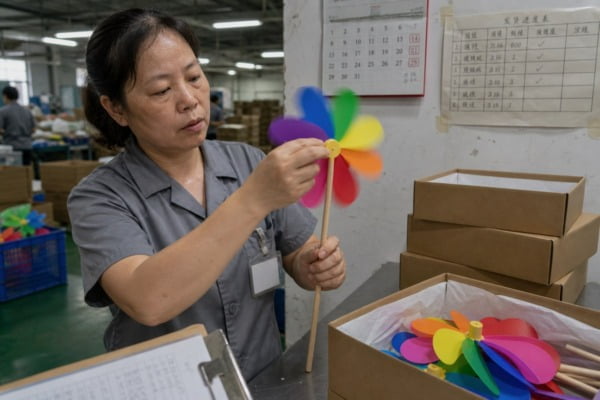
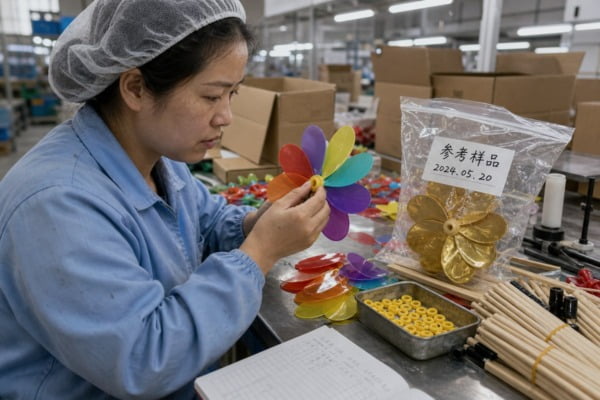
Last spring, an inspection of our garden wind turbines flagged one note: three hubs out of two hundred spun stiff. That single note rewrote our entire QC checklist.
Your first purchase teaches you to define acceptance criteria in writing, verify performance claims against real operating conditions, inspect before shipment rather than after arrival, and score vendor performance on measured data. Quality control fails when specifications live in emails instead of contracts.
The pattern I see most often is simple. Buyers on their first order trust the sample. Then they trust the invoice. They never write down what "acceptable" means. When the goods arrive, there is no standard to argue from. Every dispute becomes a negotiation instead of a checklist item.
Document Deviations, Not Impressions
After your first delivery, sit down and list every gap between what was quoted and what arrived. Track deviations between bid assumptions and real-world performance. This is the core of vendor performance evaluation. Feelings fade. Documented deviations become negotiating leverage on the next order.
Here is how one of our US distribution clients turned her first-order pain into second-order standards:
| First-Order Failure | Root Cause | New Standard for the Next Order |
|---|---|---|
| Blades warped outdoors within weeks | No material or UV spec in the PO | Material grade and UV resistance written into the contract |
| Hubs spun stiff or seized | No rotation test defined | Pre-shipment spin test with AQL sampling |
| Colors faded versus the sample | Approval sample never sealed | Sealed golden sample held by both sides |
| Real output below rated claims | Relied on lab-condition performance tables | Claims validated against site-specific wind conditions |
That last row matters at every scale. Utility-scale buyers now validate manufacturer power curves against site turbulence and wind shear data instead of generic laboratory tables. Site suitability analysis is the same discipline whether the rotor is 15 meters or 15 centimeters: test claims where the product will actually run.
Move from Unit Price to Total Cost of Ownership
Some buyers push back here. They argue the lowest capital cost should win and the market will sort out quality. In my experience, that math collapses fast. One returned container of defective goods erases the savings from three cheap orders. A Total Cost of Ownership model — covering rework, returns, replacements, and lost selling seasons — almost always favors the supplier with real QC discipline over the one with the lowest quote.
How Can I Avoid Shipping Delays in My Next Wind Turbine Procurement?
A US distributor once messaged me on WhatsApp at 2 a.m.: her container had missed the spring season. We rebuilt her entire logistics and transportation planning calendar together.
Avoid shipping delays by engaging suppliers early to secure production slots, booking freight before peak season, writing lead times and liquidated damages into contracts, diversifying between regional and global suppliers, and building buffer stock ahead of seasonal demand windows.
Shipping delays rarely start at the port. They start months earlier, in decisions the buyer never sees. The whole wind sector proves this point. In offshore wind, supply constraints remain most acute for floating foundations, HVDC cables, converter stations, installation vessels, and the turbines themselves. Developers' top concern has shifted to turbine availability, not price. When the biggest buyers in the world worry about securing capacity, smaller buyers should take the hint.
Start Earlier Than Feels Necessary
Early supplier engagement is now a core strategy across the industry. Big developers lock manufacturing slots, co-plan schedules, and share risk before contracts are even signed. You can copy this at any scale. In our export business, buyers who confirm seasonal orders four to six months out get guaranteed production windows. Buyers who order late compete for whatever capacity is left.
There is some good news to plan around. Certain lead times are easing — UK transformer and 400kV equipment lead times have fallen versus 2024 — but planning permission and grid interconnection requirements remain major constraints for large projects. The lesson: never assume last year's bottleneck is this year's bottleneck. Re-map the chain before every order.
| Delay Driver | Early Warning Sign | Prevention Lever |
|---|---|---|
| Production slot lost to a larger buyer | Vague confirmation dates from the supplier | Reserve capacity in writing before peak season |
| Freight crunch on key routes | Rising spot rates and rolled bookings | Book space early; fix cutoff dates in the PO |
| Customs and documentation holds | Paperwork requested after loading | Complete the document checklist at PO stage |
| Upstream component shortages | Supplier will not name sub-suppliers | Map the sub-supply chain; qualify a second source |
Global Sourcing vs. Regional Sourcing
Buyers often ask me whether they should diversify toward regional suppliers. The global-sourcing view 1 says international competition keeps prices down. The localization view says regional sourcing cuts geopolitical, transport, and service risk even if upfront cost rises. My honest answer: do not pick a side. Build supply chain resilience by keeping a competitive global source for volume and a regional or backup source for continuity. The blend costs a little more. A missed selling season costs far more.
What Should I Ask Suppliers Before Placing My Next Wind Turbine Order?
Every quote we issue involves a trade-off: the cheapest spec or the most durable one. Smart buyers ask questions that expose that trade-off before signing anything.
Ask suppliers about guaranteed lead times, availability definitions and exclusions, warranty scope, spare parts stock, O&M service agreements, price indexing for raw materials, end-of-life buy-back options, and references from buyers in your market. Their answers reveal execution certainty, not just price.
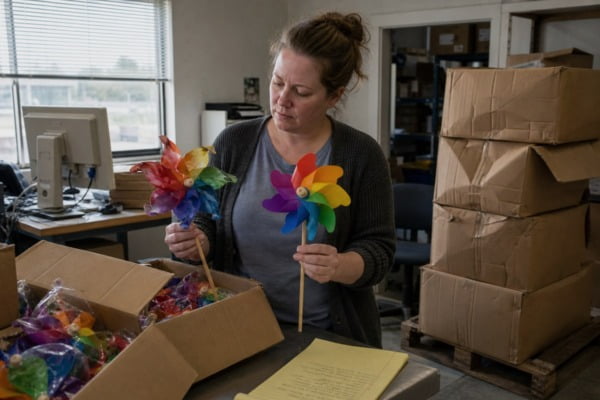
The market has changed since your first order, and your questions should change with it. Procurement across the wind industry has shifted from "lowest bid" to "execution certainty." The earlier turbine size race 2 has cooled, with the market settling around the 15 MW class, and developers now rank turbine availability as their top worry. There is even relief on cost: Wood Mackenzie expects 2026 to deliver the first turbine cost reductions since 2020. Meanwhile, demand keeps scaling — France's 10 GW offshore tender includes 5 GW of floating wind 3, and the Netherlands expanded its 2026 offshore tender to 2 GW. In a market this busy, the supplier who can actually deliver beats the supplier who quotes lowest.
Here are the questions I would want a buyer to ask me:
| Question to Ask | Why It Matters | Red-Flag Answer |
|---|---|---|
| What lead time will you guarantee, with what penalty? | Converts a promise into an obligation | "It depends on the season" |
| How do you define availability, and what is excluded? | Exclusions for grid events or Balance of Plant issues can hollow out a guarantee | A long, vague exclusion list |
| Will pricing index to steel, copper, and rare earths? | Dynamic indexing shares volatility risk fairly | Refusal to discuss any mechanism |
| What O&M service agreements and local spare parts do you offer? | Uptime depends on service reach, not just build quality | No local inventory or technicians |
| Do you offer end-of-life buy-back or recycling? | Circularity clauses shift disposal cost back to the OEM | "Not our responsibility" |
| Can you share test data or digital twin models? | Enables predictive maintenance and fatigue tracking from day one | Lab-only data with no site context |
Standardize Where You Can, Customize Where You Must
One objection I hear: "Every site is different, so standardization hurts performance." There is truth in it. Over-standardization can create poor technical fit. But the opposite extreme — tendering every project from scratch — wastes money and time. The practical middle ground is to standardize your technical specifications 4 and contract templates across the portfolio, then negotiate framework agreements, while keeping site-specific parameters open. Utility buyers do this to protect Levelized Cost of Energy across projects and to simplify EPC contract management. Distributors can do the same thing to protect margin across SKUs. If future flexibility matters, specify hybrid-ready architectures now — it is far cheaper than retrofitting later.
How Do I Prevent Packaging Damage When Sourcing Wind Turbines Again?
The most expensive photo I ever received showed crushed cartons on a Miami dock. That claim taught our packing team more than any manual ever did.
Prevent packaging damage by specifying carton strength and drop-test requirements in your purchase order, separating fragile blades from shafts, requiring pre-shipment packing photos, adding clear handling labels, and holding suppliers financially responsible for transit damage through inspection-linked payment terms.
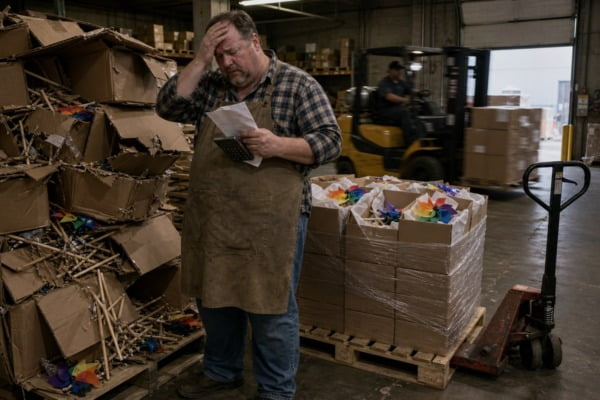
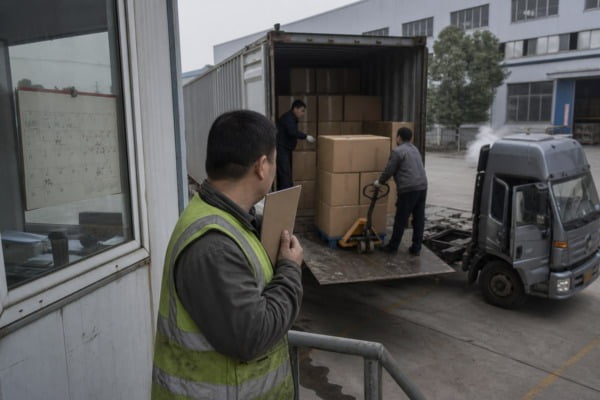
Packaging is the least glamorous part of wind turbine procurement, and the most commonly skipped. On your first order, you probably accepted the supplier's "standard export packing" without asking what that meant. On your next order, define it yourself. In our workshop, the fragile parts are the thin blades and the long shafts — light, but easy to crease, snap, or scratch. Utility-scale buyers face the same physics at a bigger scale: blades and towers drive the hardest transport constraints in the whole logistics chain.
Here is the five-step process we now follow with every export buyer, built directly from past damage claims:
- Specify the carton, not just the product. Put board grade, wall count, and maximum stacking load into the purchase order. Vague packing terms produce vague packing.
- Separate components by fragility. Blades pack flat with dividers between layers. Shafts bundle separately with end protection. Mixed loose packing is the number-one cause of scratched and bent parts.
- Demand a drop-test and compression check. A carton that survives a defined drop and a stacked container simulation will survive most real handling. Ask for the test video.
- Require packing photos before container doors close. Photos of internal layout, pallet wrapping, and container loading give you evidence for any later claim — and they force discipline on the packing line.
- Link payment to arrival condition. Tie a portion of payment to inspection at destination. When the supplier shares the financial risk of transit damage, packing quality improves immediately.
One more lesson from experience: track your damage rate by lane and by season. Humid summer sailings and transshipped routes damage more cartons than direct winter sailings. Feed that data back into your logistics and transportation planning, and packaging stops being a cost line and becomes part of your TCO advantage.
Conclusion
Your first wind turbine purchase already paid for these lessons. Don't waste them. Document the failures, rewrite your standards, and let every future order start smarter than the last.
Footnotes
1. WTO’s Agreement on Government Procurement addresses international competition and global sourcing standards. ↩︎
2. IEA analysis of wind technology trends and the stabilization of turbine dimensions. ↩︎
3. IRENA resource on the development and scaling of floating offshore wind technology. ↩︎
4. ISO is the global authority for developing international technical and quality specifications. ↩︎
More Articles
You might also find these helpful.
How to Remotely Verify a Factory's Production Capabilities for Wrought Iron Plug-In Components?
Turn your first wind turbine purchase into a procurement playbook: fix quality gaps, shipping delays, and supplier risks…
Read More →
How to Assess a Factory's Production Capacity When Sourcing Wrought Iron Inserts?
Turn your first wind turbine purchase into a procurement playbook: fix quality gaps, shipping delays, and supplier risks…
Read More →
What Questions Should You Ask Wrought Iron Insert Suppliers to Spot Unreliable Ones Early?
Turn your first wind turbine purchase into a procurement playbook: fix quality gaps, shipping delays, and supplier risks…
Read More → English
  Spanish
  German
  Arabic