How Can I Tell If a Supplier Has an Independent Quality Inspection Department?
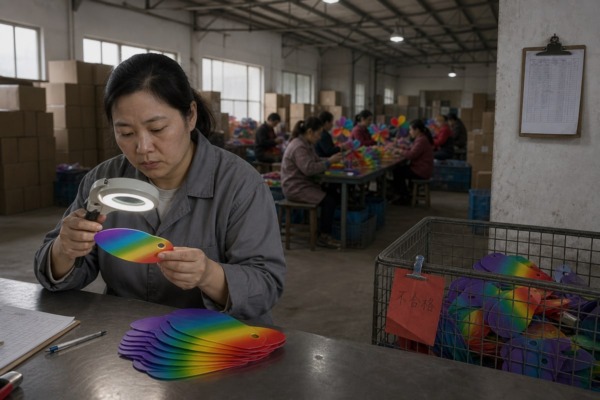
[Ordering pinwheels from a supplier](https://zhufengpinwheels.com/?p=781) without an independent quality inspection department is a gamble. I learned that painfully in our early years running a Zhejiang workshop.
A supplier has an independent quality inspection department when inspectors report to quality leadership, not production; hold documented authority to stop or reject goods; and run three separate checks—incoming materials, in-process, and final shipment. Verify this through org charts, inspection SOPs, signed QC records, and factory audits.
That short answer covers the core idea. But you need practical steps to test it before wiring a deposit. Below, I break down the questions to ask, the documents to request, the audits you can arrange, and the red flags that expose a fake QC setup.
What Questions Should I Ask to Verify a Supplier's QC Team Is Truly Independent?
Last spring, a US procurement manager grilled me on WhatsApp for an hour about our QC structure. Her questions were sharp, and honestly, every buyer should ask them.
Ask who the QC lead reports to, whether inspectors can stop production without management approval, how rejected lots are segregated, and who signs final release. Independent QC teams answer instantly with names, documented procedures, and examples; dependent ones deflect to the production manager.

The word "independent" has a plain meaning in a factory. It means inspection can say no without asking production for permission. When my team rejects a batch of petal film because the rainbow gradient bleeds, nobody on the production floor can overrule that decision. Only our quality lead can release the hold. That is the standard you should test with your questions.
Start With the Organizational Reporting Structure
Ask for the organizational reporting structure 1 first. In a real setup, the Quality Manager reports directly to the General Manager or CEO, never to the Production Manager. In our 50-person team, the quality lead sits outside the production hierarchy on purpose. If the org chart shows QC boxed under production, independence is already compromised, no matter what the supplier claims.
Then confirm the three checkpoints my own factory runs. This is the single most useful filter I know: does the supplier have a dedicated inspection role covering incoming materials, in-process quality control, and outgoing shipment checks—or do production workers simply self-check their own output? Self-checks alone are not inspection. They are a helpful habit, not a control.
Seven Questions That Expose the Truth
| Question | What a strong answer sounds like |
|---|---|
| Who does your QC lead report to? | "Directly to the GM," with a name given immediately |
| Can inspectors stop the line? | "Yes, our Authority to Stop protocol needs no prior management sign-off" |
| Do you inspect at incoming, in-process, and final stages? | "Yes, three separate stations with separate records and signatures" |
| How are QC bonuses calculated? | "Decoupled from shipping targets and production volume" |
| Do inspectors rotate across lines? | "Yes, we rotate to prevent personal relationships from softening judgments" |
| What happens when QC and production disagree? | "Our Quality Escalation Matrix routes the dispute to top management" |
| Who signs the final release? | "Only an authorized quality sign-off releases goods for shipment" |
Ask for the Standard Operating Procedures behind each answer. A genuine team can show them within minutes.
Which Certifications or QC Reports Can I Request Before Placing My Order?
Every new distributor who contacts us gets a document pack before any deposit changes hands. We built it after one client's audit exposed gaps in our own record-keeping.
Request the ISO 9001:2015 certificate, an organizational chart, inspection SOPs, calibration logs, recent incoming/in-process/final inspection reports with signatures, nonconformance and CAPA records, and any third-party factory audit report. Together these prove the quality management system works in practice, not just on paper.

Documents matter because they leave a trail that words cannot fake. When a buyer asks me for last quarter's inspection records on wooden dowel shafts, I either have signed sheets showing splinter checks and diameter tolerances, or I do not. There is no middle ground.
Certificates That Signal Structural Separation
ISO 9001 certification is the baseline. ISO 9001:2015 requires that responsibilities and authorities are defined, records are controlled, and nonconforming product is identified and managed. Those clauses are exactly what supplier audits probe. For inspection bodies themselves, ISO/IEC 17020 2 goes further and mandates structural separation between inspectors and the processes they evaluate. For products like our garden pinwheels, buyers in the US and Europe also ask for reports from an accredited product testing laboratory to confirm the manufacturing compliance standards of their market are met.
One honest warning from my side of the table: a certificate proves a Quality Management System 3 was audited once. It does not prove the inspection department functions independently today. A supplier may have an inspection department in name only. The records below tell you if it is alive.
Records That Show the System Is Alive
| Document | What it proves | Warning sign |
|---|---|---|
| Organizational chart | QC reports outside production | QC boxed under the Production Manager |
| Inspection SOPs | Repeatable, defined methods | Generic templates with no product specifics |
| Calibration logs | Measuring tools are trustworthy | Expired or missing calibration dates |
| Nonconformance reports (NCRs) | Failures are recorded honestly | Thin, vague entries suggesting a rubber-stamp department |
| Corrective and Preventive Actions records | Failures trigger real fixes | Repeated defects with no closed-loop action |
| Signed three-stage inspection reports | Incoming, in-process, and final checks happen | Records that mirror production paperwork exactly |
| Third-party factory audit report | External eyes verified the setup | Refusal to share any external assessment |
One powerful cross-check: compare the factory's internal QC reports against independent third-party inspection results on a past shipment. If the internal defect rate is always near zero while external inspectors keep finding issues, the internal department is decorative.
Can I Arrange a Factory Audit or Virtual Inspection to Confirm the QC Setup Myself?
Travel budgets rarely cover a flight to Zhejiang for a garden toy order. That is exactly why we started offering live video walkthroughs of our inspection stations.
Yes. You can book an on-site factory audit yourself, hire third-party inspection services, or request a live virtual inspection. Ask the supplier to walk you through incoming, in-process, and final inspection stations in real time, showing records, calibrated tools, and the rejected-goods quarantine area.
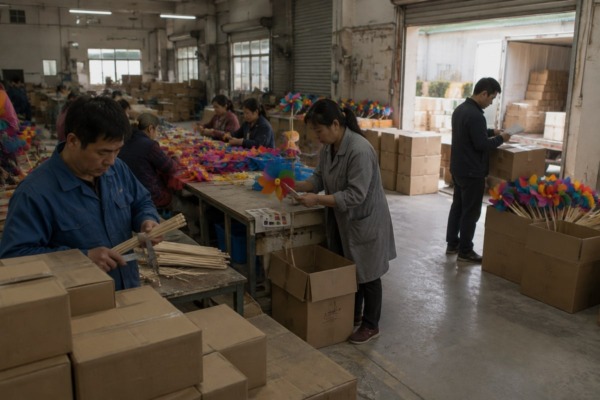
Each verification route has a different cost and a different blind spot. Here is how I would compare them if I were sitting in your chair as a buyer.
| Method | Cost | Best for | Main weakness |
|---|---|---|---|
| On-site audit by your team | High (travel, time) | New supplier onboarding, large programs | Expensive; factories can prepare a "show day" |
| Virtual inspection via live video | Low | Quick supplier verification process checks, reorders | Camera goes where the supplier points it |
| Third-party inspection services | Moderate, per visit | Shipment release on high-risk or custom orders | Verifies output more than daily QC structure |
Risk-based auditing is now the norm. Buyers are expected to inspect not just final output but process controls 4, traceability, calibration, and CAPA discipline. Digital audit templates and remote evidence collection make this easier, but the core expectation is unchanged: documented proof that inspection is objective and repeatable.
What to Verify, On Site or On Camera
Watch where inspectors physically sit—under quality, or embedded in production? Confirm they have independent sampling and retest authority. Find the quarantine zone and check that rejected lots are physically segregated with hold tags. Ask whether final release requires a separate quality sign-off. Some factories now use digital quality gates, where software blocks the next manufacturing step until an authorized QC account logs approval. That is a strong structural signal.
A Simple Virtual Inspection Sequence
- Request the org chart and SOP list before the call, so you can cross-check live answers.
- Start at incoming inspection. For our pinwheels, that means petal film thickness, color consistency, and dowel smoothness checks.
- Move to the in-process station and ask an inspector, not a salesperson, to explain the sampling plan.
- Visit final inspection and the quarantine shelf. Ask to see this week's hold tags.
- Pull a random past order and ask for its three-stage records on camera.
- Interview one floor inspector alone about deadline pressure.
For low-risk commodity items, robust self-inspection plus a virtual check may be enough. For custom, regulated, or high-liability products, insist on an on-site audit or third-party verification before release.
What Red Flags Tell Me a Supplier Doesn't Have a Real Quality Inspection Process?
One competitor's factory I toured years ago had a beautiful QC office—and an empty defect log. That contrast taught me more about fake inspection than any textbook.
Major red flags include one person handling both production and final acceptance, inspection records that mirror production paperwork with zero recorded defects, QC bonuses tied to shipping volume, no quarantine area for rejected goods, and no traceable corrective-action loop when failures occur.
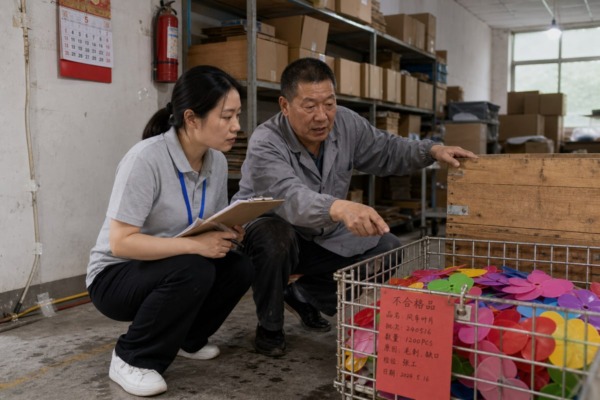
Some suppliers will push back on this whole topic. They argue a separate inspection department is unnecessary if operators self-check and process controls are strong. They frame it as leaner and faster. I understand the appeal—an extra department costs money, and our margins on budget-friendly pinwheels are thin too. But here is why that argument fails for you as the buyer: production incentives bias results. A worker paid by output will not fail his own batch at 5 p.m. on shipping day. Self-checks are fine for in-process control. Final inspection, nonconformance decisions, and release authority need independence, because that is where your money and your customer claims sit.
Warning Signs I Would Never Ignore
- The same person runs production and signs final acceptance.
- Inspection sheets copy production paperwork line for line, with zero defects ever logged.
- The "customer QC" contact turns out to be controlled by the factory manager.
- No physical quarantine area exists for rejected lots.
- Nobody can show a closed Corrective and Preventive Actions loop for a past failure.
- Inspectors cannot name their sampling standard or acceptance limits.
- Disputes between quality and production are settled by the production manager.
- The supplier refuses third-party inspection or delays it repeatedly.
Paper Department vs. Real Department
| Signal | Paper department | Real independent quality inspection department |
|---|---|---|
| Defect logs | Empty or spotless | Honest entries with dispositions |
| Rejected goods | Mixed back into stock | Tagged, segregated, traceable |
| Release authority | Production signs off | Quality signs off separately |
| Floor behavior | Inspectors defer to supervisors | Inspectors hold lots without asking |
The name on the door means nothing. Functional independence, documented authority, and a reliable evidence trail mean everything.
Conclusion
Independence is not a department name; it is structure, authority, and evidence. If a supplier's inspectors cannot say no to production, your shipment carries their risk. Verify before you order.
Footnotes
1. Standard reference for understanding how companies define hierarchy and reporting lines. ↩︎
2. Official standard for the operation of various types of bodies performing inspection. ↩︎
3. Official ISO page explaining the global standard for quality management systems. ↩︎
4. Technical overview of systems used to maintain output quality within specified limits during production. ↩︎
More Articles
You might also find these helpful.
How to Remotely Verify a Factory's Production Capabilities for Wrought Iron Plug-In Components?
Learn how to verify a supplier's independent quality inspection department through org charts, QC records, and factory audits…
Read More →
How to Assess a Factory's Production Capacity When Sourcing Wrought Iron Inserts?
Learn how to verify a supplier's independent quality inspection department through org charts, QC records, and factory audits…
Read More →
What Questions Should You Ask Wrought Iron Insert Suppliers to Spot Unreliable Ones Early?
Learn how to verify a supplier's independent quality inspection department through org charts, QC records, and factory audits…
Read More → English
  Spanish
  German
  Arabic