
How to Confirm Wrought Iron Fittings Match Your Dimensions and Style?

A container of wrought iron fittings that don’t fit is dead inventory. On our Zhejiang production line, we’ve seen one missing dimension sketch 1 cost a buyer an entire season.
To confirm wrought iron fittings match your dimensions and style, measure actual OD, ID, and center-to-end dimensions with calipers, verify the thread standard (NPT or BSP), compare against manufacturer spec sheets, request a pre-production sample, and seal a written-confirmed reference sample before bulk production begins.
That is the short answer. The long answer is a workflow. I will walk you through it step by step, from first measurement to final sealed sample. Each section below covers one stage of the process. Follow them in order and you will avoid the most expensive mistakes in ornamental ironwork sourcing.
How can I verify wrought iron fitting dimensions before placing a bulk order?
Last spring, our QC team caught a batch of stake fittings that measured 2mm over spec. The caliper found what the label hid. Nominal sizes lie more than buyers think.
Verify dimensions by measuring the actual outer and inner diameters with a digital caliper, checking thread type against NPT or BSP charts, comparing center-to-end figures on the spec sheet with your layout, and confirming wall thickness such as Schedule 40 versus Schedule 80 before ordering.
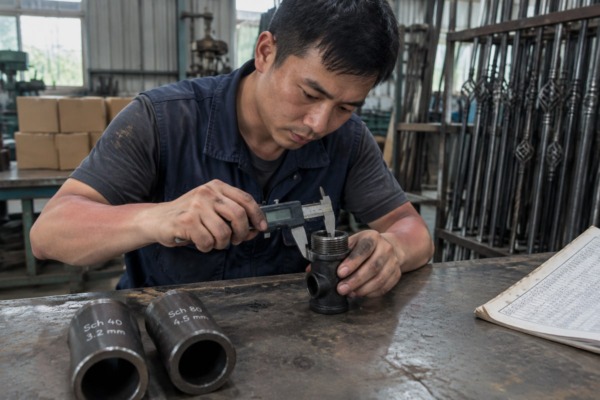
The single biggest trap in this business is nominal pipe size. Nominal labels are conventions, not literal measurements. Galvanized wrought-iron and black iron pipe are conventionally sized by inside diameter, not the outside diameter most beginners expect. So a fitting labeled the "same size" as your pipe can still refuse to mate. I tell every buyer the same thing: trust the caliper, not the catalog number.
Start With Real Measurements, Not Labels
Use a digital caliper. Measure the outer diameter on male threads and the inner diameter on female openings. Then match those readings to a standard fitting chart. For elbows and tees, measure center-to-end dimensions rather than overall length. For reducers, check thickness and concentricity. For gate and fence hardware, measure the opening width, post spacing, and clearances against the product's stated fit.
Check the Connection Standard as a Separate Step
Here is a common buyer objection: "If it screws in, it matches." Not true. A partial thread engagement can still be wrong if the taper or pitch is off. NPT is standard in North America, while BSP dominates many international projects. Ordering by diameter alone when the thread standard 2 differs is one of the most common mistakes we see. A forced fit is a red flag for leaks, damage, or misalignment.
| Fitting Type | Critical Dimensions to Verify | Reference Standard |
|---|---|---|
| Threaded pipe fittings | Male OD, female ID, thread pitch and taper | ANSI/ASME B16.3 (malleable iron 3) |
| Elbows and tees | Center-to-end, elbow angle, wall thickness | ASME B16.9 |
| Reducers | Thickness, alignment, concentricity | ASME B16.9 |
| Gate and fence hardware | Opening width, post spacing, clearances | Product fit guidance |
| Decorative stakes and brackets | Rod diameter, stake length, mount hole spacing | Supplier drawing |
Also confirm wall thickness. Schedule 40 and Schedule 80 look different once installed, so cross-reference the pressure rating and wall thickness to keep a consistent visual profile. If your project carries structural load requirements, this step is non-negotiable. Architectural metalwork standards exist precisely so buyers can anchor every dimension to a published reference instead of a vague label.
A US procurement manager once sent us three words: rustic sunflower style. Our design team produced four different interpretations. That WhatsApp exchange taught us both how vague style briefs are.
Share annotated photos with key dimensions marked, reference images of scroll shape and bar thickness, the exact finish type such as powder coating or black-oxide, RAL or Pantone color codes, material specification like ASTM A197 malleable iron, and CAD drawings or dimension sketches for written confirmation.

Style is not subjective, no matter what people say. In our export work on decorative garden stakes and kinetic ornaments, we break every "look" into measurable attributes. Once the look is written down as numbers and marked-up images, arguments disappear. My rule from years of OEM projects: text plus annotated images, always together. A written description alone gets misread. A photo alone hides scale. Combine them and the factory sees exactly what you see.
Describe the Look in Measurable Terms
Decorative scrollwork has a scroll radius. Bars have a thickness. Petals and leaves have proportions. High-end architectural pieces often feature tapered or decorative shoulder profiles that differ sharply from standard industrial plumbing fittings, so call out the shoulder profile explicitly. If your project involves curves, send physical or digital templates so the sweep of elbows and curved elements aligns with the architectural style of the space. Some of our buyers now use mobile 3D scanning apps to create a digital twin of the installation site. That lets them simulate how the fitting's bulk and shadow lines interact with their ambient lighting before anything is forged.
Nail Down Material and Finish
Many products sold as "wrought iron" today are actually malleable iron, cast iron, or steel. A malleable iron comparison matters here: hand-forged hardware shows a different grain and surface porosity than cast imitations, and a simple spark test or chemical swab can distinguish them. Also specify the finish. A powder coating finish 4, a black-oxide treatment, and plain black paint all age differently, so ask which one you are getting and what patina to expect. For outdoor pieces, request corrosion resistance ratings in writing.
| Detail to Share | Example | Why It Matters |
|---|---|---|
| Annotated photos | Dimensions marked directly on images | Removes ambiguity about scale and placement |
| Material specification | ASTM A197 malleable iron | Controls texture, sheen, and strength |
| Finish type | Powder coating vs. black-oxide | Determines durability and how patina develops |
| Color reference | RAL or Pantone code | Prevents shade drift between batches |
| CAD design specifications | 2D drawing or 3D file | Locks geometry before tooling starts |
| Style references | Scroll shape, bar thickness, shoulder profile | Matches period and architectural character |
Send all of this in one document. Then ask the supplier to confirm each line item by email.
Can I request samples to confirm the fittings meet my size and design needs?
Years ago, we shipped a bulk order approved only by phone. The buyer rejected half of it. Since then, our factory refuses to start production without a sealed sample.
Yes. Always request a pre-production sample or hand prototype before bulk ordering. Measure every key dimension on the sample, photograph the results, and have both parties sign a written sealed-sample confirmation. That sealed sample then becomes the binding quality reference for the entire mass-production run.
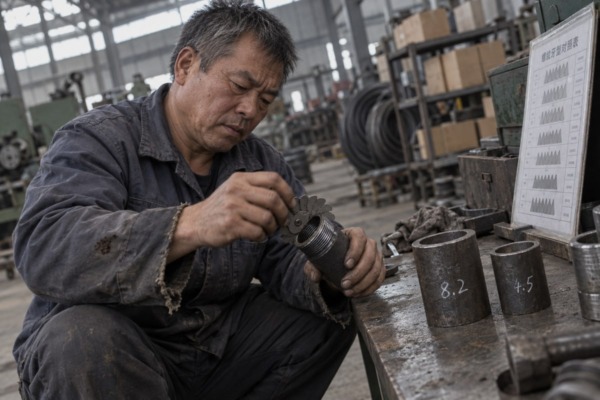
Sampling is where dimensional checks and style checks finally meet in one physical object. In my own process, developed over years of running OEM projects for US and European distributors, the sealed-sample workflow has five fixed steps. I never skip any of them, and I advise buyers not to either.
- Request a dimension sketch first. Before any metal is cut, ask the factory to produce a sketch with every key dimension annotated. Review it, then confirm it by reply email. This sketch becomes the baseline document.
- Order a hand prototype. A prototype or pre-production sample costs a small fee and a short wait. That cost is trivial compared to a rejected container.
- Measure everything on the sample. When the sample arrives, put a caliper on every key dimension yourself. Do not assume the factory's numbers. Record each reading next to the sketch.
- Photograph the results. Shoot the sample from all angles, with measurements visible in frame where possible. Photos plus recorded numbers create an evidence trail both sides can reference later.
- Seal the sample in writing. Both parties confirm the sample by written agreement. One sealed piece stays at the factory, one stays with you. From that moment, the sealed sample is the standard every mass-production unit must match.
One more tip from our QC floor: dry-fit the sample against your actual mating part or opening, not just the drawing. A gate hinge should swing on your gate. A stake fitting should seat in your rod. And remember the hard rule I learned the expensive way — verbal confirmation counts for nothing. If it is not in writing, it did not happen.
How do I avoid mismatched wrought iron fittings when working with an overseas manufacturer?
Every overseas order forces a trade-off between speed and certainty. In our export work to the US and Europe, we always choose one extra confirmation round over one refunded container.
Avoid mismatches by demanding annotated dimension sketches confirmed by email, agreeing metric or imperial units upfront, defining tolerances in writing, sealing a signed reference sample, and inspecting mass production against that sample before shipment. Never rely on verbal confirmations with an overseas factory.

Distance amplifies every small ambiguity. A dimension that a local buyer would catch in a showroom visit becomes a surprise in a shipping container. Our team ships decorative metal products across three continents, so we have seen every failure mode. The good news is that each one has a simple, documented prevention.
| Mismatch Cause | What Goes Wrong | How to Prevent It |
|---|---|---|
| Unit confusion | Millimeters read as inches on a sketch | Agree on one unit system in the first email |
| Thread assumption | NPT ordered, BSP delivered | State the thread standard on every drawing |
| Undefined tolerances | "Close enough" parts rejected on arrival | Put custom fabrication tolerances in the PO |
| Finish drift | Bulk finish differs from sample sheen | Seal the sample; specify the powder coating finish spec |
| No final inspection | Defects discovered after sea freight | Inspect against the sealed sample pre-shipment |
Put Every Confirmation in Writing
The workflow I enforce on our own line applies doubly overseas. Require the factory to produce a dimension sketch with all key dimensions annotated, then confirm it by return email. Keep that email thread as your contract trail. When wrought iron fittings involve structural load requirements or safety-critical gate and fence hardware, attach the relevant standards charts to the same thread so there is one source of truth.
Inspect Before the Container Closes
Before shipment, compare random bulk units directly against the sealed sample. Check dimensions with calipers, check the finish under daylight, and check corrosion protection if the goods will cross an ocean. For large orders, a third-party inspection 5 is cheap insurance. Ask for photos and video of the packed goods too — damaged packaging and transit knocks are among the top complaints we hear from procurement managers, and both are preventable with a documented pre-shipment check.
Conclusion
Mismatched wrought iron fittings drain budgets and delay launches. Measure real dimensions, confirm thread standards, document style details, and seal a written-approved sample. Get everything in writing — every time.
Interested in sourcing the products mentioned in this article? See details and request a quote here:
Footnotes
1. ISO provides international standards for technical product documentation and dimensioning used in sketches. ↩︎
2. ASME establishes the standards for screw threads and pipe fittings used globally. ↩︎
3. ASTM International defines the material properties and testing standards for malleable iron. ↩︎
4. Official resource for powder coating technology and finishing standards. ↩︎
5. US government resource providing guidance on international trade and quality verification. ↩︎
More Articles
You might also find these helpful.

How to Remotely Verify a Factory's Production Capabilities for Wrought Iron Plug-In Components?
Confirm wrought iron fittings match your specs with calipers, thread checks, and a sealed pre-production sample to avoid…
Read More →
How to Assess a Factory's Production Capacity When Sourcing Wrought Iron Inserts?
Confirm wrought iron fittings match your specs with calipers, thread checks, and a sealed pre-production sample to avoid…
Read More →
What Questions Should You Ask Wrought Iron Insert Suppliers to Spot Unreliable Ones Early?
Confirm wrought iron fittings match your specs with calipers, thread checks, and a sealed pre-production sample to avoid…
Read More → English
  Spanish
  German
  Arabic