How to Determine If a Supplier’s MOQ for Wrought Iron Accessories Is Reasonable?
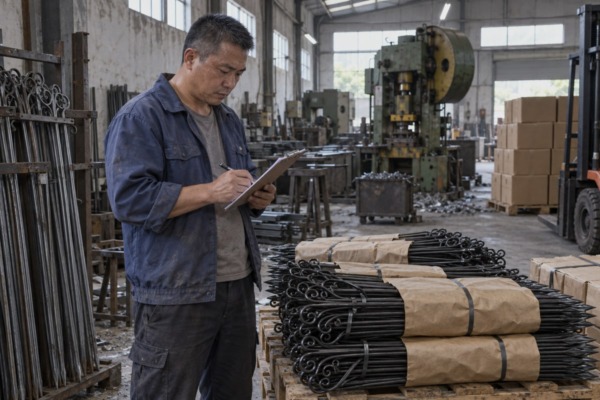
Is that supplier’s MOQ for wrought iron accessories fair or inflated? Guess wrong and your cash drowns in dead stock. Our production floor taught me a quicker way to judge.
A supplier’s MOQ for wrought iron accessories is reasonable when it reflects real setup costs—cutting, tooling, and finishing—matches comparable market listings of 100–2,000 pieces per design, and leaves you acceptable inventory risk. High MOQs are normal for new molds; on existing molds, they usually signal reluctance, not economics.
That answer sounds simple. Applying it takes a bit more work. In this guide, I will walk you through the exact checks I use on our own factory floor. We make metal garden stakes 1, wind spinners, and decorative iron components every day, so I see both sides of the MOQ table. Let us break it down step by step.
What Factors Should I Consider When Evaluating a Supplier's MOQ for Wrought Iron Accessories?
Last month our stamping line switched dies three times in one day for small custom stake orders. Each changeover cost us two hours. That downtime is where MOQ math begins.
Evaluate a supplier's MOQ for wrought iron accessories against five factors: material cutting and die-change costs, whether tooling is new or existing, finish batch sizes, packaging efficiency, and supplier type. For standard iron insert designs, a few hundred to 2,000 pieces per style is the normal market range.
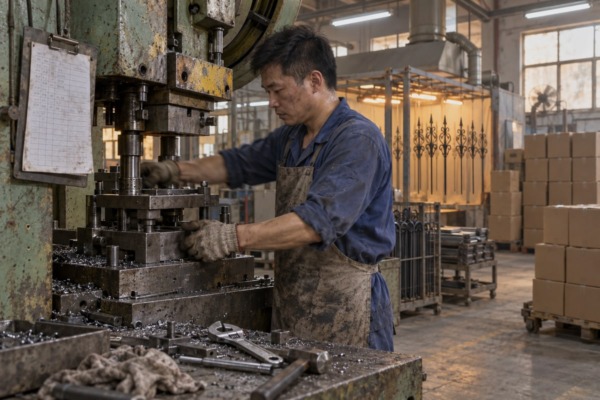
I judge any MOQ with two checks first, because they explain most of the number. These come straight from how we run our own lines in Zhejiang.
Check One: Cutting and Changeover Costs
Every production run starts with waste. Steel sheets get cut to size. Dies get swapped and calibrated. Powder coating lines get purged between colors. These setup costs are fixed. They do not shrink for small orders. So the factory spreads them across the run. For common wrought iron insert accessories, this math lands the MOQ between a few hundred and 2,000 pieces per design. That range is normal. A quote inside it deserves the benefit of the doubt.
Check Two: New Tooling or Existing Molds
This is the sharper test. If your design needs brand-new molds, a high MOQ is legitimate. The factory must amortize custom ironwork fabrication 2 and tooling costs across your units. But if the supplier already owns the mold and still quotes a very high MOQ, the message is different. They simply do not want your small order. That is a business choice, not a cost reality.
| Factor | Why It Drives MOQ | What to Ask |
|---|---|---|
| Cutting and die changeover | Fixed setup time per run | How long is one changeover? |
| Tooling status | New molds must be amortized | Is this an existing mold? |
| Finish batches | Powder coating and galvanizing run in batch sizes | What is your minimum coating batch? |
| Packaging and pallets | Heavy iron needs full-pallet efficiency | How many pieces fill one pallet? |
| Supplier type | Manufacturers need full runs; traders can aggregate | Do you produce this in-house? |
Also watch raw material fluctuations. When steel prices swing, some factories raise MOQs to lock in bulk material purchases. That is a supply chain logistics 3 issue, not a trick. A supplier who explains these drivers openly is usually a safe partner.
How Can I Tell If a Low MOQ Means Compromised Quality or Hidden Costs?
A US distributor once forwarded me a rival quote: 50-piece MOQ on custom stakes, suspiciously cheap. She asked if it was too good to be true. It was.
A low MOQ signals trouble when the wholesale unit price is far above market, tooling and sample fees appear later, or the supplier is a middleman with no factory. Verify coating thickness, material grade, and packaging specs before ordering; honest low MOQs come from stocked catalog items, not custom work.

That rival quote fell apart in three weeks. The "factory" was a trading office. The stakes arrived with paint so thin it chipped in transit. My client came back to us, but she lost a season. Here is how to avoid repeating her story.
Where Hidden Costs Hide
A low MOQ can be honest. Marketplace listings for wrought iron accessories genuinely run from 1 piece to 1,000 pieces depending on the item. Stock catalog products carry low minimums because the inventory already exists. The danger appears when a low MOQ is attached to custom work. Somebody must pay the setup costs. If the quantity does not cover them, the money comes from somewhere else.
| Hidden Cost | How It Appears | Question to Ask |
|---|---|---|
| Inflated unit price | Quoted price 30–50% above comparable listings | What is your price at 500 pieces? |
| Separate tooling fee | Invoice line added after you commit | Are mold costs included? |
| Thin or skipped coating | Chipping, rust complaints, returns | What is the coating thickness spec? |
| Cheap packaging | Damage in transit, no pallet plan | Can you share packaging photos? |
| Stretched production lead times | Your small order waits behind big ones | What is the confirmed ship date? |
Run a Vendor Reliability Assessment
Before any order, do a basic vendor reliability assessment. Ask for a factory video call. Request their sample order policy in writing. Check whether the low-MOQ item is stock or made-to-order. In our experience exporting to the US and Europe, honest suppliers answer these questions in one day. Evasive answers are the real red flag, not the MOQ number itself.
Is It Possible to Negotiate a Supplier's MOQ Without Losing Customization Options?
Every week we weigh the same trade-off: accept a small custom order and eat changeover losses, or hold the MOQ line and lose a future big buyer.
Yes, MOQs are negotiable without sacrificing customization. Offer a trial order at a higher unit price, request mixed-SKU minimums across colors, ask about shared production runs, or phase tooling costs. Suppliers protect total order value and line efficiency, not the quantity number itself.
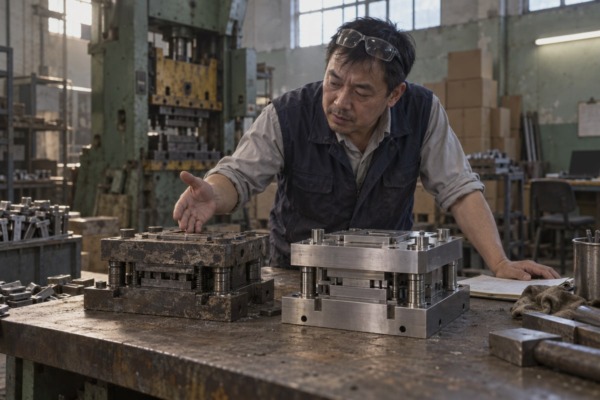
Because we sit on the factory side, I can tell you what actually moves us in a negotiation. It is never the plea for fewer pieces. It is a structure that protects our economics while lowering your risk. Here are the levers, in the order I recommend using them.
Negotiation Levers That Work
- Propose a paid trial order. Offer to pay a higher unit price for a small first batch. This covers our changeover losses. Most factories accept this because it signals a serious buyer, not a bargain hunter.
- Ask for mixed-SKU minimums. If the MOQ is 1,000 pieces, request 4 colors at 250 each. The dies stay the same; only the coating batch changes. We approve this often for our sunflower stake sets.
- Request shared production runs. Your order gets batched with other clients using the same mold or iron grade. Your individual minimum drops while the factory keeps a full run.
- Trade volume for bulk discount tiers. Commit to an annual quantity, take delivery in split shipments, and lock tiered pricing. Your cash flow stays healthy and the factory gets predictability.
- Phase the tooling cost. Pay part of the mold fee upfront in exchange for a lower MOQ. You keep full customization rights.
- De-risk the design first. For complex decorative shapes, verify the pattern with a printed prototype before committing. Catching errors pre-production makes everyone comfortable with smaller first runs.
What Not to Push On
Do not ask a factory to break its coating batch minimum or ship half-empty pallets. Those requests raise real costs and sour the relationship. A good procurement conversation respects production lead times and line logic. Negotiate structure, not physics.
How Do I Compare MOQ Requirements Across Different Wrought Iron Suppliers to Avoid Overpaying?
Early in my export career, I lost a client because a competitor quoted a lower MOQ. Later I learned their landed cost per piece was actually higher. Comparison needs method.
Compare at least two to three similar factories on total landed cost, not MOQ alone. Benchmark against market ranges—100–300 pieces for simple components, 300–1,000 for gate accessories, up to 2,000 for custom designs—then divide all fees, freight, and tooling by usable units to reveal true cost.
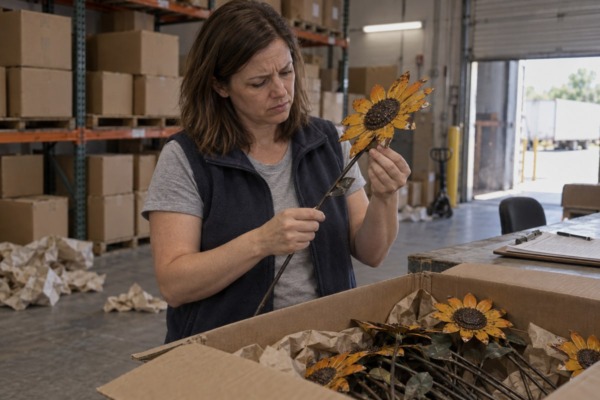
Start with the market map. The wrought iron category has no single standard MOQ, so you must compare within the right product class. Here is the benchmark table I share with procurement managers who source from us.
| Product Type | Typical MOQ Range | Notes |
|---|---|---|
| Stock decorative pieces | 1–20 pieces | Inventory already exists |
| Simple metal components | 100–300 pieces | Common component-only benchmark |
| Iron garden stakes and inserts | A few hundred–2,000 pieces | Normal per-design range |
| Gate accessories and ornaments | 300–1,000 pieces | Common in low-unit-price listings |
| Fully custom forged designs | 500–2,000+ pieces | New tooling justifies the high end |
Build a Landed-Cost Worksheet
My core advice: get quotes from two to three factories of the same type, then compare total landed cost. A lower MOQ with a higher wholesale unit price, separate tooling fees, and inefficient freight and shipping costs 4 can easily overtake a bigger order. Heavy iron pieces have a punishing weight-to-volume ratio, so per-unit freight drops sharply on full pallets. Factor in your inventory carrying costs too. A 2,000-piece order that sits in your warehouse for eighteen months is not a bargain.
| Comparison Line | Supplier A | Supplier B |
|---|---|---|
| MOQ | 300 pieces | 1,000 pieces |
| Unit price | $2.80 | $1.90 |
| Tooling fee | $600 | Included |
| Freight per unit | $0.65 (part pallet) | $0.30 (full pallets) |
| Landed cost per piece | $5.45 | $2.20 |
This is the heart of a sound procurement strategy. The right question is never "who has the lowest MOQ?" It is "which order structure gives me the lowest true cost at a quantity I can actually sell?" Run that math before you sign anything.
Conclusion
A reasonable MOQ mirrors real production economics. Check tooling status, benchmark two or three factories, calculate landed cost, and negotiate structure—not just numbers—before you commit your cash.
Interested in sourcing the products mentioned in this article? See details and request a quote here:
Footnotes
1. ITC offers market intelligence and trade support for small-scale manufacturers and exporters. ↩︎
2. ISO provides international standards for manufacturing and fabrication quality management. ↩︎
3. The WTO establishes global rules for international trade and supply chain transparency. ↩︎
4. Trade.gov provides resources for calculating landed costs and managing international shipping logistics. ↩︎
More Articles
You might also find these helpful.

How to Remotely Verify a Factory's Production Capabilities for Wrought Iron Plug-In Components?
Learn the 5 factors—tooling, die changes, finish batches—that reveal if a wrought iron accessories MOQ is fair or…
Read More →
How to Assess a Factory's Production Capacity When Sourcing Wrought Iron Inserts?
Learn the 5 factors—tooling, die changes, finish batches—that reveal if a wrought iron accessories MOQ is fair or…
Read More →
What Questions Should You Ask Wrought Iron Insert Suppliers to Spot Unreliable Ones Early?
Learn the 5 factors—tooling, die changes, finish batches—that reveal if a wrought iron accessories MOQ is fair or…
Read More → English
  Spanish
  German
  Arabic