
How to Handle Customs Delays When Purchasing Windmills?
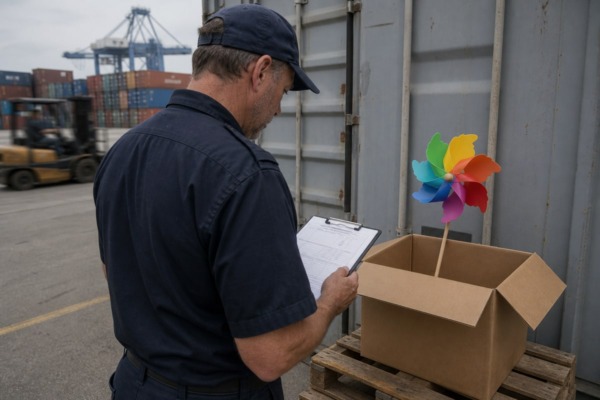
Last spring, a container of our rainbow pinwheels sat at a U.S. port for eleven days. Customs delays when purchasing windmills drain money, wreck deadlines, and damage buyer trust.
To handle customs delays when purchasing windmills, verify your clearance documents immediately, correct the commercial invoice and HS code, supply missing certification or labeling files, pay any import duties and taxes promptly, and hire a local customs clearance agent if the hold escalates.
One quick note before we start. The word “windmill” covers two very different products: decorative pinwheels like ours, and industrial wind turbines bill of lading documentation 1. The clearance logic is similar, but the paperwork differs. This guide walks through both, with a focus on pinwheel imports. Let’s break it down section by section.
What documents do I need to prevent customs delays when importing pinwheels?
Before every container leaves our Zhejiang workshop, our QC lead pulls the paperwork one final time. That habit started years ago, after one missing certificate froze an entire shipment.
To prevent customs delays when importing pinwheels, prepare a commercial invoice, packing list, bill of lading, certificate of origin, proof of payment, and any toy safety or labeling certificates before shipping. Make sure every document shows matching values, quantities, and HS codes.
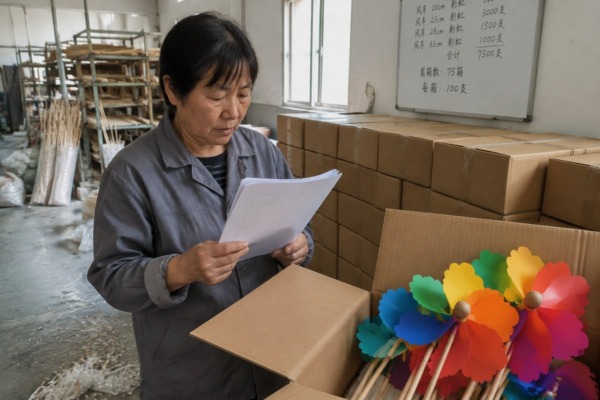
Most customs delays start with paperwork, not with the product. I have seen this pattern for over a decade of shipping pinwheels to the United States, South America, and Europe. Customs officers rarely care how pretty the petals are. They care whether the file in front of them is complete and consistent.
Match Every Document to Every Other Document
Customs systems cross-check your commercial invoice, packing list 2, and bill of lading documentation against each other. A carton count of 480 on the invoice and 500 on the packing list looks like a small typo to you. To an officer, it looks like a possible misdeclaration. Commercial invoice accuracy is the single cheapest insurance you can buy. Check names, values, quantities, weights, and descriptions line by line before departure.
Get the Harmonized System Codes Right
Classification is where "windmill" confusion bites hardest. Industrial wind turbine buyers use component-specific Harmonized System codes 3, such as 8502.31 for wind-powered generating sets and 8412.90 for blade parts, and they face renewable energy import regulations on top. Decorative pinwheels classify as toys or festive articles instead. If your broker files a pinwheel under a turbine code, expect questions, wrong duty rates 4, and a hold.
| Document | What customs checks | Who prepares it |
|---|---|---|
| Commercial invoice | Buyer, seller, item description, declared value | Supplier |
| Packing list | Carton count, dimensions, gross and net weight | Supplier |
| Bill of lading | Consignee details, matching shipment data | Forwarder |
| Certificate of origin | Country of manufacture, FTA eligibility | Supplier or chamber |
| Proof of payment | Value matches the real transaction | Buyer |
| Toy safety or labeling certificates | Compliance for children's products | Supplier, verified by buyer |
If your pinwheels are marketed for children, add safety test documentation to the file. Some markets also check age labeling and warning text on retail packaging. Build this clearance pack before the goods leave origin, never after customs stops them.
How can I choose a reliable freight forwarder to avoid customs holdups?
A procurement manager from Texas once asked me why her previous pinwheel order sat at port for weeks. Her forwarder, it turned out, had never cleared toys before.
Choose a freight forwarder with proven customs brokerage services, experience with decorative or toy products, transparent demurrage and detention fees, in-house pre-arrival filing, and fast communication. Ask for references from importers in your market and confirm they handle document checks before departure.
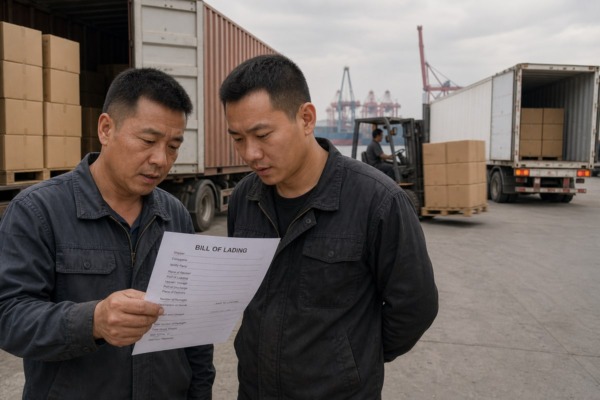
The forwarder is your first line of defense against a hold. In our experience exporting to the US and Europe, good freight forwarder coordination matters more than the freight rate. A cheap forwarder who files late costs far more than the few dollars saved per cubic meter.
Five Things I Check Before Recommending a Forwarder
| Criterion | Why it matters | Question to ask |
|---|---|---|
| Product category experience | Toys and decorations have their own classification and labeling rules | "Have you cleared toy or festive products at this port?" |
| In-house customs brokerage services | Fewer handoffs mean fewer errors and faster answers | "Do you file entries yourself or subcontract?" |
| Pre-arrival filing | Declarations lodged before arrival cut days off release | "Do you pre-file, and how early?" |
| Fee transparency | Hidden demurrage and detention fees explode during holds | "What are the daily storage charges at this terminal?" |
| Response speed | Customs requests often carry short deadlines | "Who answers me within hours, not days?" |
Match the Forwarder to the Product Scale
Industrial windmill buyers need something different from us. Turbine shipments demand oversized cargo logistics: route permits, inland clearances, and brokers with renewable energy sector expertise. Some ports even hold nacelles until last-mile transport is verified, or arrange virtual remote inspections to avoid moving fragile units. Pinwheel imports are far simpler, but the principle is identical. Pick a partner who knows your exact cargo type.
One more practical point. Ask your forwarder about port of entry congestion before booking. During peak season, a less crowded secondary port can beat a congested hub, even with slightly higher trucking costs. And always keep a small contingency budget for storage charges. Delays you cannot control still generate fees you must pay.
What should I do if my pinwheel shipment gets stuck in customs?
Years of exporting taught me one hard rule: when goods get detained, check the clearance file first, before blaming anyone. That single habit has rescued several of our shipments.
If your pinwheel shipment gets stuck in customs, verify the clearance documents first, then supply any missing certification or labeling files, cooperate fully with customs requests, pay outstanding duties quickly, and hire a local clearance agent if the hold does not resolve within days.
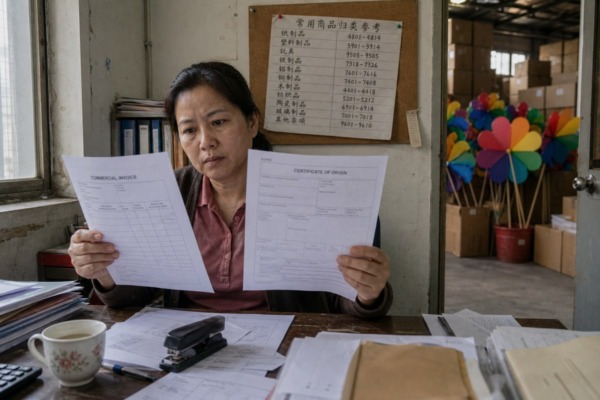
This is exactly how we handle detentions on our side. The moment we learn a shipment is held, we pull the entire clearance file and audit it line by line. Nine times out of ten, the answer is sitting right there: a value mismatch, a vague product description, or a missing certificate. Here is the plan I follow, and the one I coach our buyers through.
My Seven-Step Release Plan
- Confirm the hold is real. Check tracking carefully. Many "customs delays" are actually transit delays or port of entry congestion, and they need no action at all.
- Contact the forwarder or broker. Ask one precise question: what exactly is customs waiting for?
- Get the missing-item list in writing. Never guess. Guessing wastes days.
- Audit your clearance documents immediately. Compare invoice, packing list, and bill of lading against what was filed.
- Supply clean copies fast. Send readable scans of the corrected invoice, certification, or label files within hours, not days.
- Pay import duties and taxes promptly. Many routine holds are simply payment holds. Settle them and the cargo moves.
- Escalate to a local clearance agent if stuck. When a hold drags on, a local agent who knows that specific customs office is worth every dollar.
Routine Holds Versus Examination Holds
Routine holds involve paperwork or payment and usually clear quickly once you respond. Examination holds are heavier. If customs physically inspects the cargo, release can take days or even weeks. Cooperate fully, answer every question honestly, and keep records of all communication in case the hold escalates into a formal detention. Also watch the clock on demurrage and detention fees, because storage charges keep running while you negotiate.
How can I work with my supplier to speed up customs clearance for future orders?
Every OEM order forces a trade-off in our planning meetings: ship fast now, or spend two extra days building a bulletproof clearance file. We always choose the file.
Work with your supplier to build a complete clearance file before each shipment, agree on accurate HS codes and declared values, request certificates of origin, standardize labeling, and archive every document. This shared preparation lets future orders clear customs faster and more predictably.
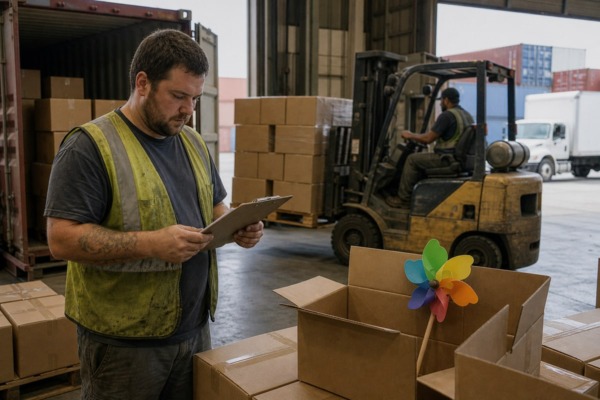
Prevention beats rescue every time. When our long-term buyers stopped treating clearance as the forwarder's problem and started treating it as a shared task, their hold rates dropped sharply. This is supply chain risk management at its most practical. The trick is splitting the work clearly so nothing falls between the two sides.
Divide the Clearance Tasks Clearly
| Task | Supplier's job | Buyer's job |
|---|---|---|
| HS code agreement | Propose the correct toy or decoration code | Verify with a local broker before the first order |
| Declared value | Invoice the real transaction value | Keep proof of payment ready for customs |
| Certificate of origin | Issue an authenticated certificate | Use it to claim preferential FTA duty rates |
| Labeling and safety files | Print compliant labels, hold test reports | Confirm destination-market requirements early |
| Pre-arrival filing | Send documents right after loading | Push the broker to pre-file the declaration |
| Document archive | Keep copies of every shipment file | Mirror the archive for audits and disputes |
Build the File Into the Order Process
At our factory, the clearance file is part of the OEM workflow, not an afterthought. We lock the product description, HS code, and declared value at the proforma stage. We send draft documents for buyer review before the container is sealed. For repeat orders, we reuse the approved template, so every shipment looks identical to customs. Consistency itself speeds clearance, because officers see a clean, familiar pattern. Large industrial windmill projects go further and even split invoices by assembly phase so simple kits clear while high-value units undergo review. For pinwheels, a clean, consistent, pre-filed package achieves the same goal at a fraction of the effort.
Conclusion
Customs delays stall projects and burn cash. But most holds are preventable. Prepare a complete clearance file, verify documents fast when detained, and partner closely with your supplier.
Footnotes
1. Comprehensive overview of the legal and logistical functions of a bill of lading. ↩︎
2. Authoritative guide on the requirements and purpose of a packing list in international trade. ↩︎
3. Official international nomenclature for the classification of products from the World Customs Organization. ↩︎
4. Official U.S. Customs and Border Protection guidance on determining and applying correct import duty rates. ↩︎
More Articles
You might also find these helpful.
How to Remotely Verify a Factory's Production Capabilities for Wrought Iron Plug-In Components?
Fix customs delays when purchasing windmills: check documents, correct HS codes, and clear duties fast to keep your…
Read More →
How to Assess a Factory's Production Capacity When Sourcing Wrought Iron Inserts?
Fix customs delays when purchasing windmills: check documents, correct HS codes, and clear duties fast to keep your…
Read More →
What Questions Should You Ask Wrought Iron Insert Suppliers to Spot Unreliable Ones Early?
Fix customs delays when purchasing windmills: check documents, correct HS codes, and clear duties fast to keep your…
Read More → English
  Spanish
  German
  Arabic